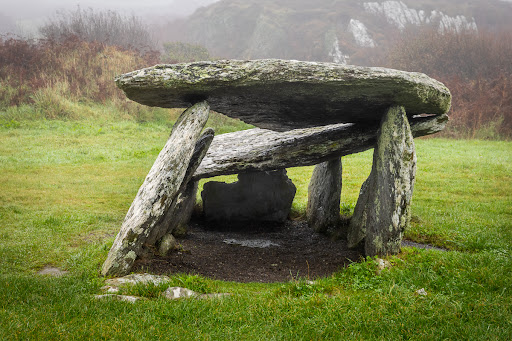
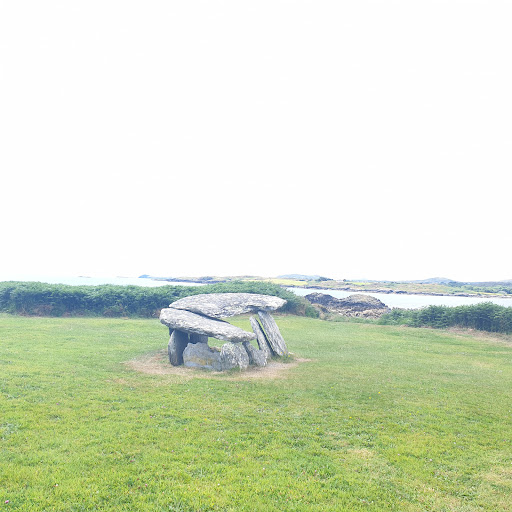
It's true that ancient sites like the Altar Wedge Tomb often accumulate layers of stories and beliefs over time, and this one is no exception. Here's how mystical elements intertwine with its history:
Connections to the Ancient World:
The very nature of megalithic tombs evokes a sense of mystery. These structures were built by people with beliefs and practices very different from our own.
The alignment of the tomb, potentially with celestial events like the setting sun at Samhain, suggests a deep connection to natural cycles and possibly to the "otherworld." This naturally leads to mystical interpretations.
There are suggestions that these types of sites where seen as portals to other worlds.
Later Layers of Belief:
The tomb's later use as a "mass rock" during the Penal Laws adds another layer of sacredness. This period of clandestine religious practice has its own aura of mystery and resilience.
There are some stories that have linked the site to "Druidical sacrifice" though there is no archeological evidence to support those claims. These types of stories are common around many ancient sites.
It has been stated that the site has been seen as a sacred place for thousands of years, and that it was seen as a place that housed ancestral remains, and that it was a type of community shrine. This also lends itself to mystical ideas.
In essence, while concrete evidence of specific mystical practices may be limited, the Altar Wedge Tomb's long and varied history, its connection to ancient burial rituals, and its later use in clandestine religious ceremonies all contribute to its mystical atmosphere.
.
A "mass rock" is a term that refers to a rock or stone used as an altar for Catholic Mass in Ireland during periods when the practice of Catholicism was suppressed. Here's a more detailed explanation:
Historical Context:
During the 17th and 18th centuries, particularly during the Penal Laws, Catholic religious practices were outlawed in Ireland.
To continue practicing their faith, Catholics held secret religious services in secluded locations.
The Role of Mass Rocks:
These "mass rocks" served as makeshift altars in these hidden locations.
Priests would celebrate Mass in the open air, often with lookouts posted to warn of approaching authorities.
These locations where often in remote areas.
Significance:
Mass rocks are powerful symbols of the resilience and perseverance of the Irish Catholic faith in the face of persecution.
They represent a significant part of Irish history and cultural heritage.
In essence, mass rocks are tangible reminders of a time when religious freedom was denied, and people risked their lives to maintain...
Read more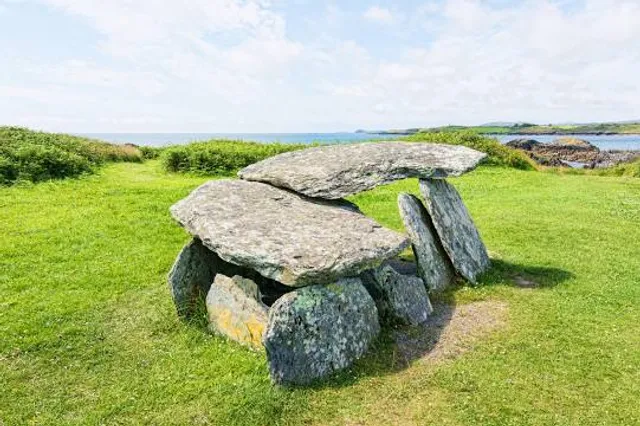
 Learn more insights from Wanderboat AI.