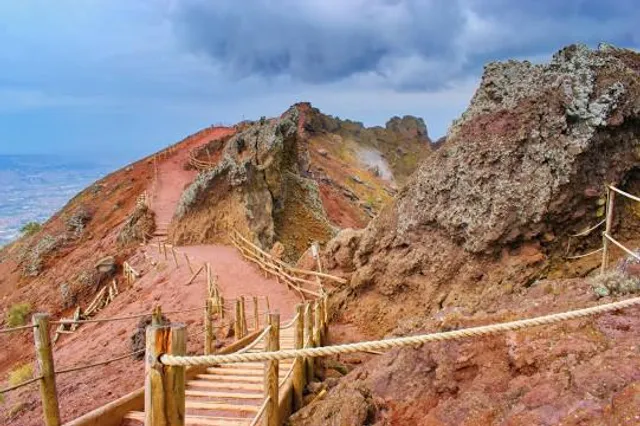
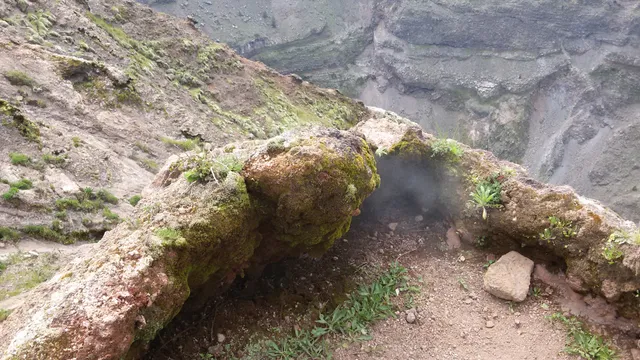
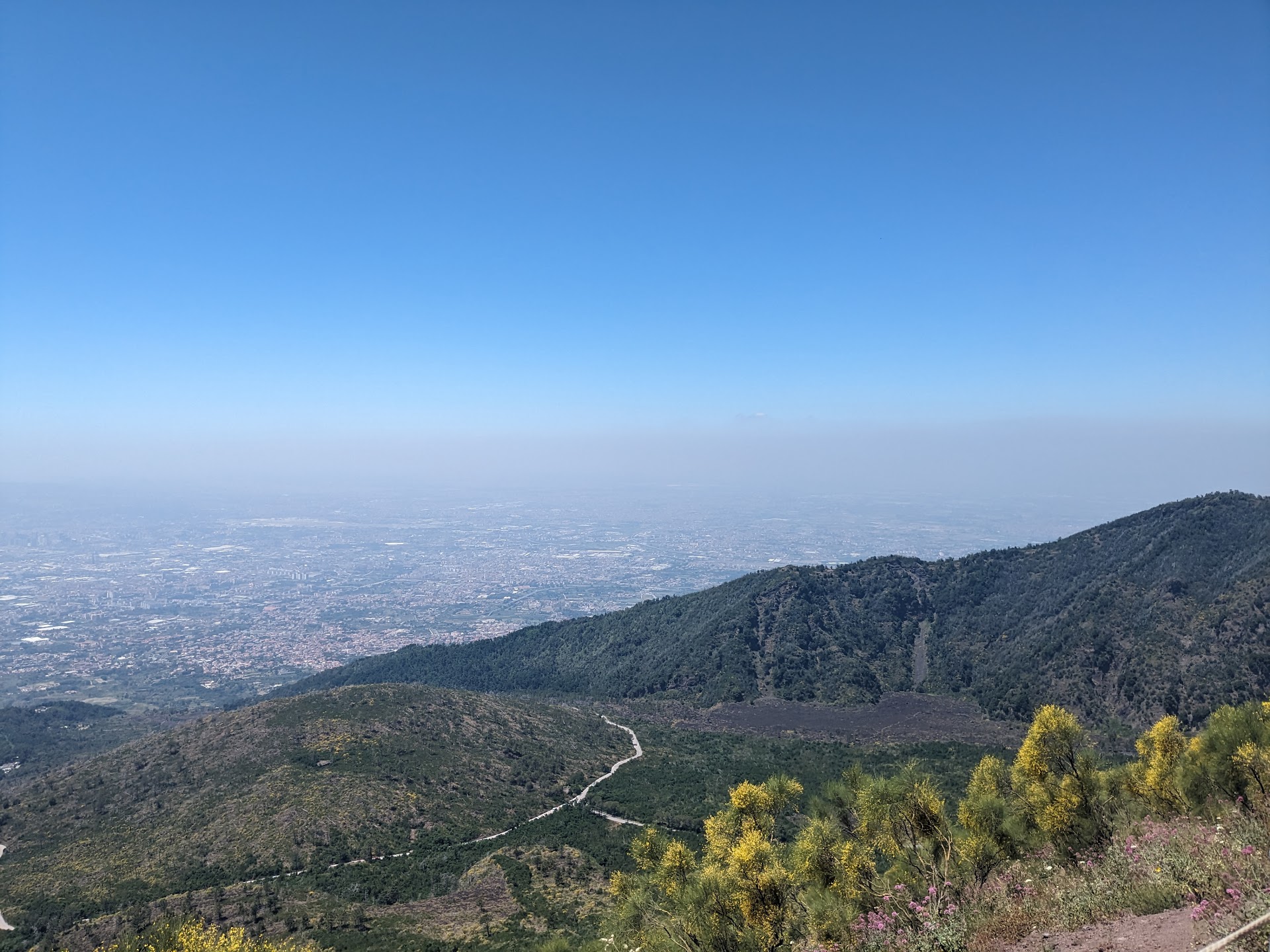
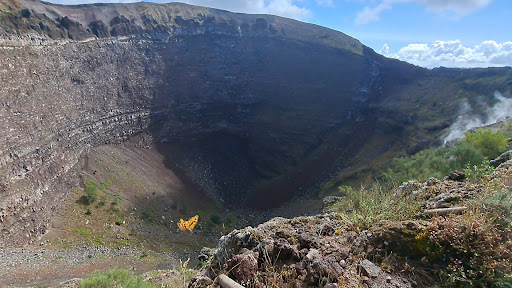
To begin with, the paid entrance to the volcano is 11.68 euro to see the crater which is facing the west side towards Naples and Pompeii.
There is an option to NOT see the crater and instead hike along the northeast side of the volcano to the seismologist station which is free. The entrance to this hike is at this coordinate. 40°49'45.1"N 14°25'48.5"E
If you come to the crater entrance without a booked ticket, you will have an impossible time procuring a last minute ticket online. The system to procure last minute tickets at the entrance of the Vesuvius crater is very disorganized and ruins the experience of this historical mountain. In addition, the volcano area is very commercialized with shops at the entrance and at two locations along the hike up the crater. The shops sell drinks (alcohol and non alcohol), souvenirs, and snacks but surprisingly, they don't have garbage bins. They sell you stuff to eat and drink but nowhere do you see a garbage bin and expect you to take it back down. You will see mini suvs that transport food and shop employees up to the top of the crater and back to the entrance yet they can't transport garbage because they are making money from tourists.
The system to enter a national park should be easy without so much headache. You shouldn't need to book online days in advance and come within 100 minutes of the allotted time. When you book your ticket, you have to choose a day and a timeslot. Then you will have 100 minutes grace after the allotted time to use the ticket before it expires.
The ticket for the entrance should be purchased at the entrance. Imagine if you traveled thousands of kilometers hoping to hike up the crater to find out you cannot buy a ticket because the website doesn't allow you to. I saw many tourists who were very disappointed about this situation and had to leave the mountain without seeing the crater. Shame on the system that commercialized this mountain.
When you drive up the mountain, there will be a person who will flag you to turn right and park in the blue lanes for 6 euro. You will need to pay this parking fee online at (www.parkingsuvio.it) but there will be no internet signal in the area. You will need to go to the entrance of the volcano where there is a QR code so that you can get free wifi in order for you to gain access to the internet. At the parking lot, you have the choice of paying 3 euro for a round trip to shuttle from the parking lot to the crater entrance and back or you can hike on foot to the entrance from the parking lot.
Buy your tickets in advance (https://vesuviopark.vivaticket.it/en/). Do not go try to buy last minute because you will not get tickets. The system releases last minute tickets every half hour and those get snatched up fast due to everyone standing at the entrance with their phone trying to buy the tickets. If you do try to buy last minute tickets, remember the website requires you to verify your phone number. They will send a verification code through text message so ensure your phone can receive text messages internationally when you are in Italy. This is critical because I saw many tourists not being able to receive text messages to verify their identity. The guards at the entrance will not let you through without a ticket. You can try to talk to the tour guides in the area or shopkeepers and see if you can pay double the regular ticket price for them to help you get admission. This depends on your luck.
The last option to visit the volcano crater is to book a tour either through a tour guide in Naples or through online purchase. They will offer tickets and shuttle transfers which you will have to ask where the pick up point is. The price will probably be...
Read moreVisiting Mount Vesuvius was a top priority during our recent 5-day trip to Italy, especially after exploring Pompeii and other nearby attractions. However, our experience with the ticketing system left us deeply frustrated and disappointed.
The Ticketing System: A Barrier for Tourists
Access to Mount Vesuvius is exclusively through online ticket purchases via the official Vivaticket platform, with tickets released exactly 30 days in advance. For instance, on May 3rd, only tickets for June 3rd became available. This rigid system poses significant challenges for travelers with fixed itineraries, making spontaneous visits nearly impossible. Moreover, the limited release schedule creates a bottleneck, as many visitors find that tickets are already sold out well before their intended visit dates .
Exploitation by Third-Party Vendors
Compounding the issue, it appears that third-party tour operators are purchasing large quantities of tickets as soon as they become available, only to resell them at inflated prices—sometimes up to four times the original cost. This practice not only exploits tourists but also undermines fair access to a public natural site. Such concerns have been echoed by other travelers who have encountered similar issues with ticket availability and inflated prices .
The "Last-Minute" Ticket Gamble
While there is an option to obtain last-minute tickets released periodically throughout the day, this process is fraught with uncertainty. To attempt this, visitors must travel to the park entrance, often a 40-minute uphill walk from the nearest parking area, and connect to the park's Wi-Fi to check for availability. There is no guarantee of securing a ticket, making this a risky and time-consuming endeavor, especially for families or those with limited mobility.
Our Experience: A Missed Opportunity
Despite our efforts, we were unable to secure tickets through any channel, including the official website and third-party vendors. The lack of transparency and the monopolization of ticket sales by certain companies prevented us from experiencing the iconic volcano. This was a significant letdown, as visiting Mount Vesuvius was a key highlight we had anticipated for our trip.
A Call for Reform
The current ticketing system for Mount Vesuvius is not only inefficient but also susceptible to exploitation, disadvantaging genuine tourists. We urge the responsible authorities to reevaluate this system to ensure fair and accessible opportunities for all visitors. Implementing measures such as limiting bulk purchases by third parties, offering on-site ticket sales, or introducing a more flexible booking window could significantly improve the visitor experience.
Until such reforms are enacted, potential visitors should be aware of these challenges and plan accordingly. We hope that by sharing our experience, we can contribute to positive changes that will allow future travelers to fully enjoy the wonders of...
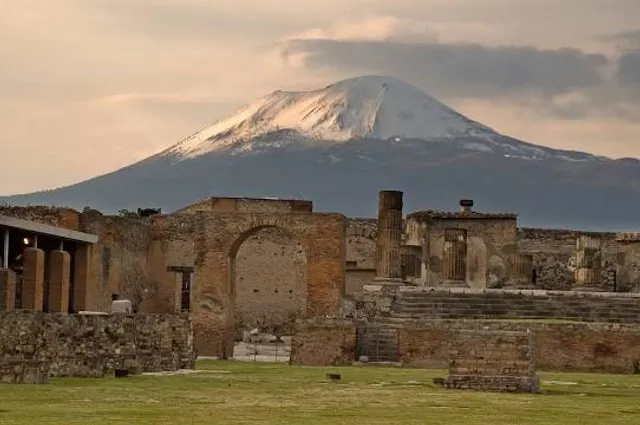
Read moreMount Vesuvius, known in Italian as "Monte Vesuvio," is a stratovolcano located on the Gulf of Naples in Campania, Italy. It is one of the most famous and dangerous volcanoes in the world due to its historical eruptions, notably the catastrophic eruption in 79 AD that destroyed the ancient Roman cities of Pompeii and Herculaneum.
Critical features of Mount Vesuvius:
Location: Mount Vesuvius is located about 9 kilometres (5.6 miles) east of Naples and dominates the skyline of the surrounding region. It is part of the Campanian volcanic arc, including the Campi Flegrei volcanic complex to the west.
Geological Characteristics: Vesuvius is a stratovolcano, characterised by its steep-sided cone and periodic explosive eruptions. It comprises alternating layers of lava, ash, and volcanic rocks, including basalt, andesite, and pyroclastic materials.
Historic Eruptions: The most famous eruption of Mount Vesuvius occurred in 79 AD, burying the cities of Pompeii and Herculaneum under a thick layer of volcanic ash and pumice. This eruption, along with subsequent eruptions over the centuries, has shaped the landscape and cultural history of the region.
Volcanic Activity: While Mount Vesuvius is currently dormant, it is considered one of the most dangerous volcanoes in the world due to its proximity to densely populated areas, including Naples and the surrounding towns. The volcano is closely monitored by scientists for signs of renewed activity.
Tourism: Mount Vesuvius is a popular tourist destination, with visitors coming to hike to the crater rim and admire the panoramic views of the Bay of Naples and the surrounding countryside. Guided tours and excursions are available to explore the volcano and learn about its geological history.
Environmental and Cultural Importance: Mount Vesuvius and its surroundings are designated as a national park, protecting the diverse flora and fauna of the volcanic landscape. The region is also of cultural significance, with UNESCO World Heritage Sites such as Pompeii and Herculaneum showcasing the archaeological remains of ancient Roman civilisation.
Mount Vesuvius remains an iconic symbol of the power and unpredictability of nature, serving as a reminder of the importance of scientific research, preparedness, and disaster mitigation in...
Read more