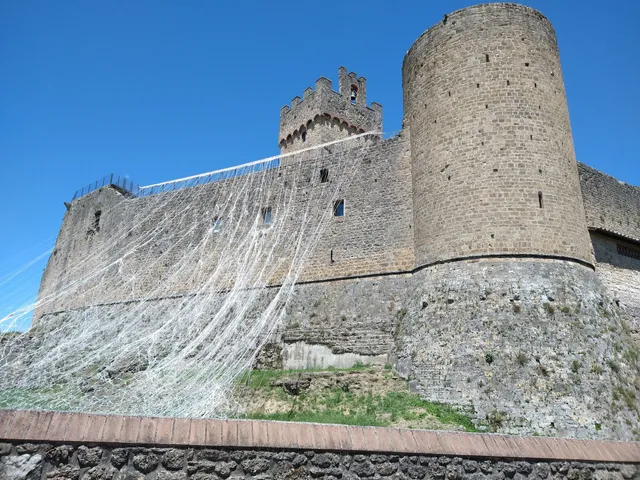
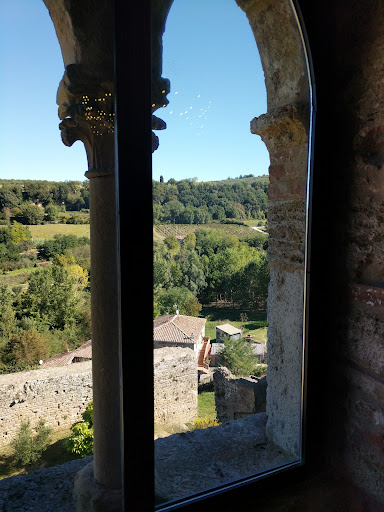
We really enjoyed our visit there. I was in charge of locating a small medieval castle to visit while traveling between two cities and picked this one pretty much randomly. They area is completely tourists-free. There's a free parking very close to the castle. As it is a private castle, you have to take a guided tour. We were very lucky to be there the day the only French-speaking guide was on call. We got an amazing visit with a lot of details on the history of the region, why and how the castle was built, and tons of little details about living on the very border of Sienna and Florence in the Middle-Ages.
Instead of filling the rooms with old furniture, there is a permanent exposition of modern Art based on the story of the castle.
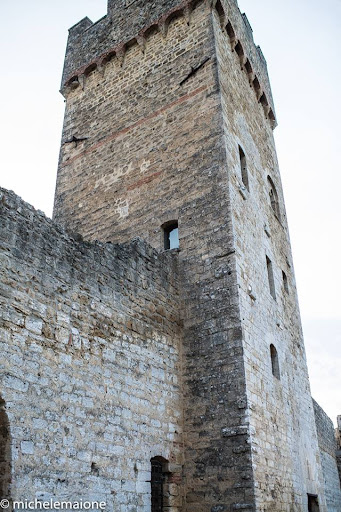
For those interested in ancient architecture, the round tower is one of the only 4 surviving ones with such an...
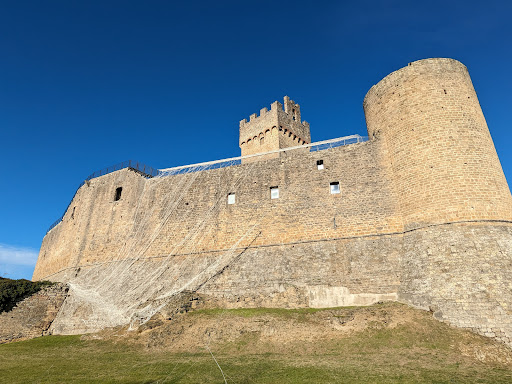
Read moreThey area is completely tourists-free. There's a free parking very close to the castle. As it is a private castle, you have to take a guided tour. A museum would seem appropriate. Cute little city with some interesting buildings and lots of parking. Very nice fortress town with full castle at one end. Very beautiful castle, both outside and inside to visit. Their home was a protected but precarious nest in the hollow trunk of a Tower. Like a summer tree. La Rocca di Staggia, also known as the Franzesi Castle, is a medieval castle in the walled town of Staggia, Tuscany, Italy. It's located in the commune of Poggibonsi, near the exit "Colle Valdelsa Sud" of the Florence-Siena speedway. The castle's history is intertwined with the Abbey of Abbadia ad Isola and is situated along the...
Read moreNell’isolamento del Medioevo, l’uomo è alla ricerca di un luogo sicuro. Nascono abitazioni fortificate, le TORRI, come alberi di pietra si innalzano a toccare le nuvole. Appollaiati sulle travi come uccelli su un ramo, gli uomini controllavano, non visti, intorno. Era la loro dimora un nido protetto, ma precario, nel tronco cavo di una Torre. Come albero d’estate, la Torre in tempo di pace ramificava in ballatoi, ponti, terrazze, camminamenti, che permettevano di ampliare lo spazio. Pronta a potare se stessa in caso di guerra per rinchiudersi a spiare da feritoie il mondo. A STAGGIA, nasce prima del 1000, un CASTELLO a proteggere sul fiume il Ponte, e con il Ponte la Strada e accanto il Mulino. Luoghi strategici per la sopravvivenza dell’andare e dello stare. La ricchezza del CASTELLO e del BORGO sarà legata ai CEREALI, non solo coltivati, arriveranno da lontano ad alimentare un importante mercatale. Staggia, nome del fiume e del borgo viene da staio, la misura del grano. Il CASTELLO, non solo si innalza a controllare il territorio, ma sia apre nel CORTILE all’incontro, al mercato, allo scambio. La Torre, MASTIO GUERRIERO, si fa ALBERO DELLA VITA, conservando in sé preziosi semi per seminare. BANCA DELLE BIO-DIVERSITÀ, l’architettura diventa spazio simbolico a suggellare l’incontro tra la Torre (l’uomo) e i Semi (la donna). La pioggia che nel Medioevo scorreva nelle grondaie interne verso le radici della Torre a creare cisterna d’acqua, già nell’800 evocava l’intenerimento della pietra germogliando sulle COLONNE in FOGLIE DI ACANTO. Dà vita oggi a creazioni “acquatiche” contemporanee: FONTANA DI LUCE, SPECCHI D’ACQUA. Le mura si lasciavano attraversare dall’acqua a creare una CANALA vicino alla porta per dissetare i viandanti. Vocazione all’accoglienza aveva il Castello che di notte si illuminava come FARO a guidare il cammino creando tra Torri lontane, costellazioni di luce, rete di messaggi di fuoco che usavano i LONGOBARDI per comunicare nel loro vasto dominio. Non di sole pietre è costruito il Castello, ma dall’intreccio delle relazioni di chi lo abita prende...
Read more