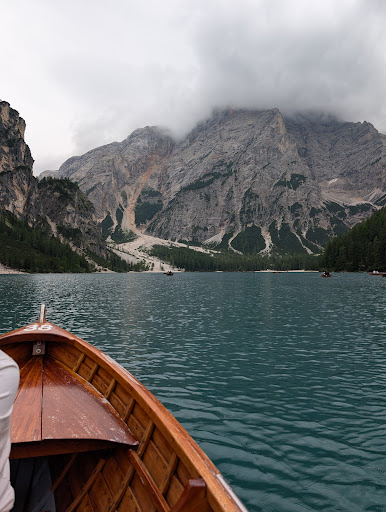
The Fanes-Senes-Braies/Fanes-Sennes-Prags Nature Reserve comprises an area of approximately 25,453 hectares (62,069 acres). The Val di Landro/Höhlensteintal Valley forms its eastern limit, while towards the west it extends to San Vigilio di Marebbe/St. Vigil in Enneberg, and to the south as far as San Cassiano/St. Kassian, where it follows South Tyrol's southern border with the province of Belluno.
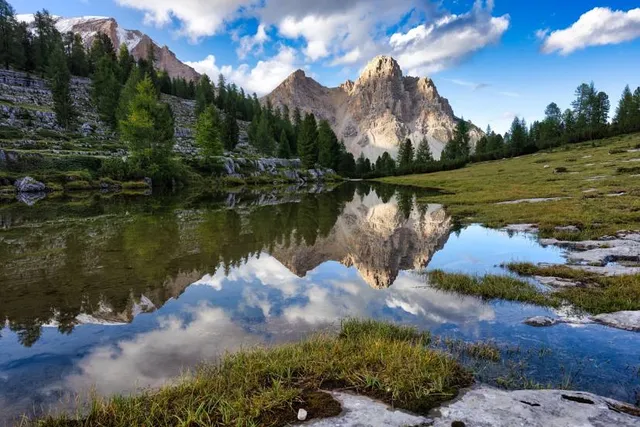
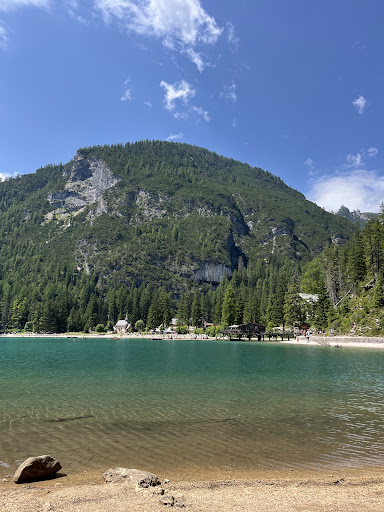
Clusters of old log-built farmsteads adorn the mountainsides called Viles and are a typical feature of the Ladin-speaking valleys. These tiny communities were once self-sustaining, with outbuildings, baking ovens shared communally. The language of these people is called Ladin (no relation to the Judeo-Spanish language called Ladino) It developed from a mixture of the old Rhaetian and Celtic languages strongly influenced by vulgar Latin and has survived in the seclusion of the Dolomite valleys. The Fanes high plateau is a popular walking and hiking area with a typical karstic limestone landscape, characterized by caves, fissures, underground streams and small lakes. Rugged rocks eroded by the action of wind and weather rise in all directions. Generally considered the most picturesque lake in the Dolomites, the Lago di Braies/Pragser Wildsee is contained within a wild and romantic rock basin and towered over by the majestic Seekofel. The Prato Piazza/Plätzwiese, an extensive area of high Alpine pastures, and the Picco di Vallandro/Dürrenstein which towers above it, are favourite hiking and walking destinations. The Fanes-Senes-Braies Nature Reserve Visitor Centre is situated in the village of San Vigilio/St Vigil in Enneberg in the Rautal Valley. Here the main theme is the formation of the Dolomites, agriculture on the high pastures and fossils, especially those of cave bears found in the nature reserve. The centrepiece of the exhibition is a model of the cave Caverna delle Conturines. The terrarium with small animals living in a simulated natural environment is especially popular...
Read moreUnfortunately the lake is too easily reachable by bus or car, leading to masses of people present at almost all times. We had the impression of arriving at a public "pool" rather than a special mountain lake. The lake itself is beautiful for sure and the further you walk, the more likely it is to find a silent spot for a moment, but the we still disliked the lake being sold as public tourist attraction. As a starting point for hikes its probably nice though, as well as for families or people who need an easy access due to limited mobility or other reasons. What we were also not aware of was the already limited access to the lake by car! Timewise the carabinieri (local police) will deny access to cars (all roads that lead to the lake will be blocked). You have to come back another time, take the (incredibly overcrowded) bus, or stop at a hotel restaurant and consume 20€+ after which you get written permission to enter the else...
Read moreHow do you spell "tourist trap"? Try 'lake Braies'. Don't get me wrong; if you ignore the tourists, the insanely overpriced food and the 'look at me I am so original' stone stacks, which every influenced-by-Instagram dunce seems to build, the lake and its surroundings are beautiful. Nothing 'out of the ordinary' beautiful, but still.
What is impressive is how they managed to fully automate the booking and access process to the area (very well done), but for the toilets (far too few I may add, you have to pay cash. Please make it make sense.
In short, yes, the lake is beautiful, but if you value nature, dislike being ripped off I strongly recommend to give...
Read more