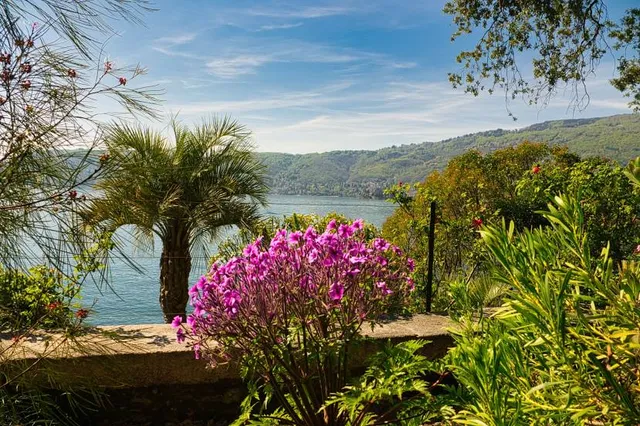
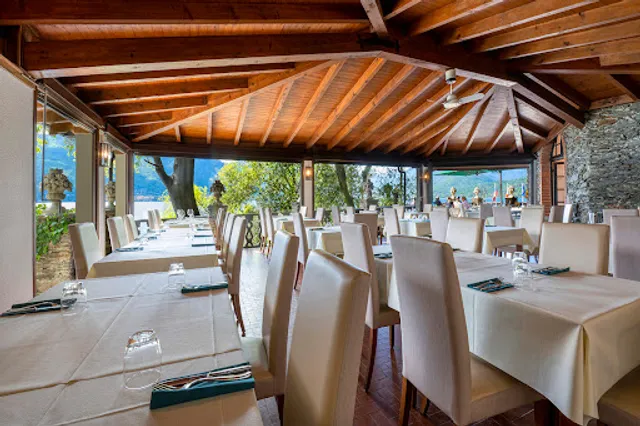
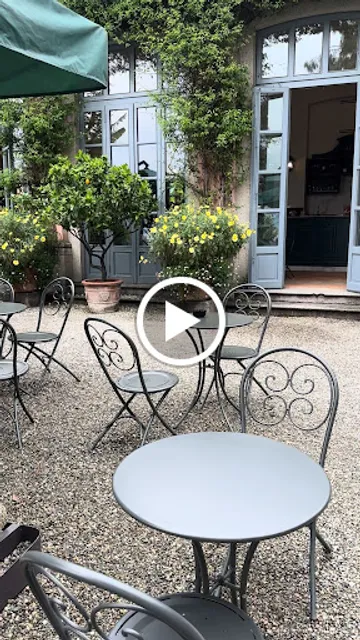
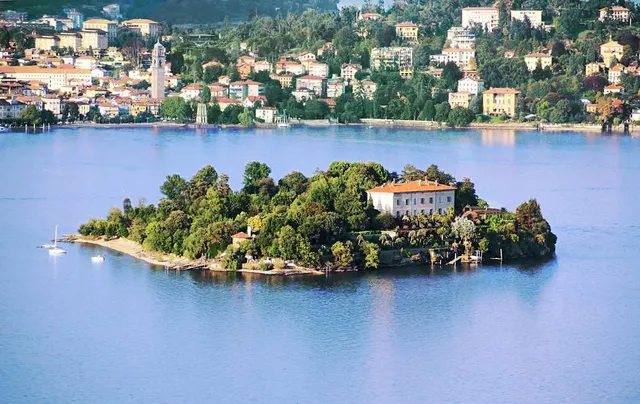
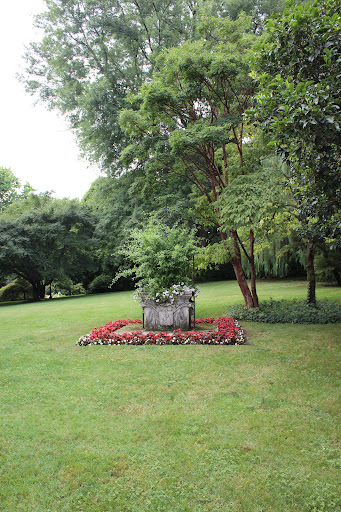
First we bought a one-day ferry ticket for all three islands, which was a rather tight time schedule to enjoy the gardens. So then we took another trip, only to Bella and Pescatori, and one more half-day trip to Madre. It is better to reserve a longer time and to be able to relax there than to run around chasing time. We always took the small boat of the private company, Summer Islands, so we don't have experience with that large ferry boat line. You need to watch for the time schedule and for the symbol of your ferry company since different companies stop at different molos. Gardens on Isola Madre and Isola Bella are totally different, Isola Madre means huge trees, greens and pathways, different nice birds, nice views, lot of shadow and lot of places to sit with a book etc. Also on Madre there is a restaurant and a bar, outside of the paid area, close to the molo (no experience with these). Isola Bella means huge palace with a picture gallery, several grottos etc.,and a unique ilalian baroque garden. Terraces, statues, white peacocks, orange and lemon trees, but not many large trees, not much shadow. No restaurant, but there is a coffee, inside the paid area, in one of the two towers. Isola Pescatori is freely accessible, no paid area. There are restaurants, shops, bars, and a...
Read moreL'Isola Madre (in dialetto locale Isola Mader) è la più grande dell'arcipelago delle Borromee sul Lago Maggiore. Larga 220 metri e lunga 330, l'isoletta è occupata da alcune costruzioni e soprattutto da giardini. Anticamente era chiamata Isola di San Vittore e successivamente Isola Maggiore. « L'Isola Madre. È il luogo più voluttuoso che abbia mai visto al mondo. » (Gustave Flaubert, 1845) Le fonti storiche indicano che nella metà del IX secolo sull'isola è presente la chiesa con abside a pianta quadra (edificio probabilmente costituente il riferimento alla matrice di una macropieve verbanese dedicata a S: Vittore), un cimitero (il cui ricordo si perpetua nella cosiddetta ‘scala dei morti'); non si esclude che vi potesse sorgere anche un piccolo apprestamento militare, in analogia e assonanza con il castrum di Sant'Angelo sito sull'Isolino di San Giovanni. Per certo si sa che vi erano coltivazioni di ulivi, la cui produzione veniva forse impiegata per usi sacri. A partire dal 1501 Lancillotto Borromeo, uno dei cinque figli di Giovanni III e Cleofe Pio di Carpi, introduce nell'isola le prime coltivazioni di agrumi fatti arrivare dalla Liguria insieme con un giardiniere ("hortolano") che li accudisca; ordina la costruzione di un primo nucleo della dimora gentilizia, che viene successivamente ampliata in forma rinascimentale negli anni ottanta del Cinquecento da Renato I Borromeo. Sono gli anni in cui si avvicendano nella cura dei giardini gli esponenti di una dinastia di "hortolani", i Della Torre, che risiederanno all'Isola Madre sino al primo Ottocento.[2] A partire circa dal 1823-1825, per decisione dei conti Giberto V e Vitaliano IX Borromeo Arese, ad opera di Renato I, Giacomo e Francesco Rovelli, famiglia di giardinieri originaria di Monza, pur preservando il bosco nella parte verso Nord-Ovest dell'isola, i settori tenuti a frutteto vengono convertiti in giardino romantico all'inglese, che ancora viene considerato tra i migliori esempi di quest'arte in Italia. Palazzo Borromeo (edificato nel XVI secolo sui resti della primitiva chiesa, cimitero - e fors'anche castello - di S. Vittore) e relativo giardino all'inglese Cappella gentilizia del 1858 (al contrario di quella dell'Isola Bella, non contiene cenotafi o monumenti funebri) Il grande e scenografico giardino all'inglese di 8 ettari, progettato su un precedente agrumeto, produttivo sino alla fine del Settecento. Famosa è la "scala dei morti", che negli ultimi decenni è stata arricchita con un'importante collezione di Wisteria (glicine). Da Wikipedia,...
Read moreDer Garten ist bestimmt hübsch, ich bewerte hier die Erfahrung auf Isola Bella & Madre mit zwei kleinen Kindern: man bezahlt als Familie für die Überfahrt zu zwei oder drei Inseln etwa 30-40€. Dazu muss man wissen, es ist kaum realistisch alle drei Inseln an einem Tag zu besichtigen, wenn man nicht sehr früh dran ist. Die letzte Fähre zurück geht schon um 16 Uhr. Das bekamen wir erst nach Ticketkauf gesagt. Am Informationsschalter des Fährenunternehmens hätten wir gerne eine Beratung zu den passenden Tarifoptionen bekommen (macht ein Familienticket für alle Inseln in unserem Fall / um 11 Uhr Sinn?) und bekamen nur gesagt, wir sollten uns einfach entscheiden was wir wollen. Okay, danke für das Gespräch. Eintritt zu den Attraktionen (botanischer Garten und Palast) ist nicht inklusive, das kostet jeweils (!) auch nochmal ca. 20€ für Erwachsene, Kinder zahlen hier erst ab 6 J., dann aber auch nicht wenig. Wir hätten also 80€ ohne jegliche Verpflegung für Parkspaziergänge gezahlt. wer also überlegt sich die Inseln einfach so ohne weiteren Eintritt anzusehen: es lohnt sich nicht! Besonders die isola Madre braucht man gar nicht erst ansteuern, wenn man nicht in den Garten möchte. Der Rest der Insel besteht aus wenigen Metern, einem teuren Restaurant und einem WC. Isola Bella: wie gesagt, man kann den Eintritt zum Palast zahlen, ist bestimmt sehenswert aber sicher nicht preiswert... ansonsten kann man sich auf dieser insel wenigstens ein bisschen die Beine vertreten, durch die Gassen laufen (sehr viele treppen) oder sich verpflegen. Restaurants natürlich auf für solche Tourimagnete typisch hohem Preisniveau. Es gibt ansonsten ein paar Souvenir- und kleidungsgeschäfte und -stände. Alles ist sehr überlaufen. Kinderwagen kann man eigentlich komplett daheim lassen, sonst trägt man sowohl Kind als auch Wagen die vielen Treppen rauf und runter und navigiert ihn durch Menschenmengen. Fähre fährt nur stündlich, muss man gut abpassen/planen. Sie ist zudem sehr voll, man bekommt selten einen Sitzplatz, wenn man nicht lange im voraus in der Schlange ansteht. Das ist toll mit kleinen Kindern, die dann dann auf dem boot herumpurzeln. Die Krönung: wir wurden von der Fähre auf dem Rückweg nach Stresa an einer anderen Anlegestelle herausgelassen, also nicht dort, wo wir gestartet sind. Da stand aber das Auto. Bis dorthin zurück mussten wir über 1 km laufen. Auch das wäre eine gute information gewesen am Ticketschalter.
Ich denke man kann den Tag entspannter...
Read more