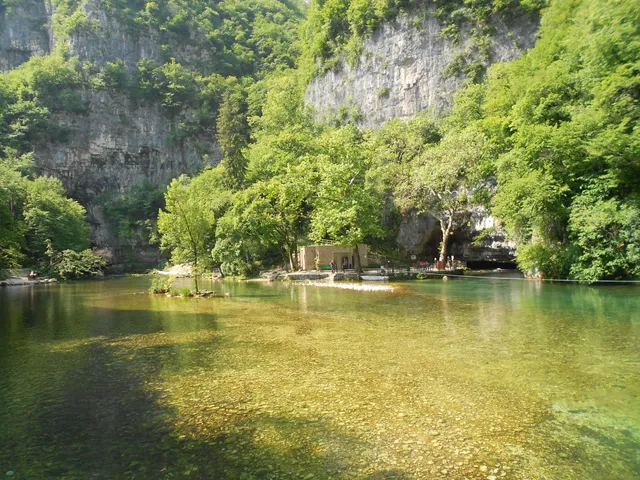
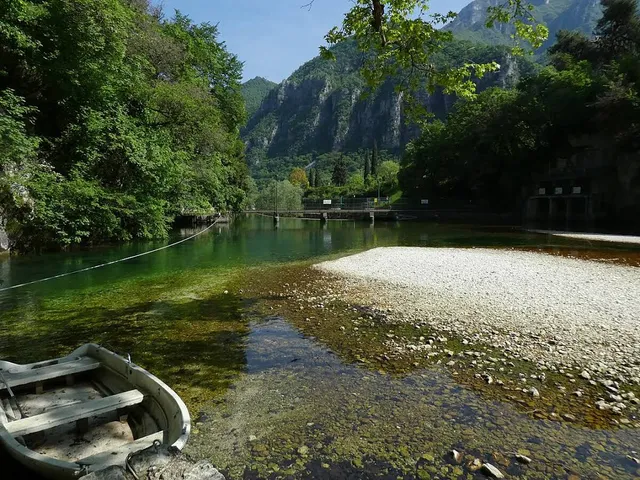
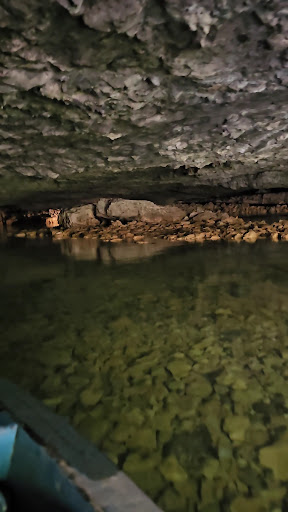
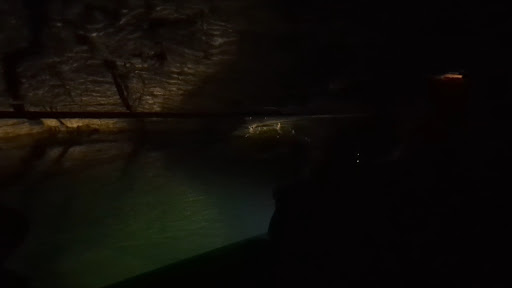
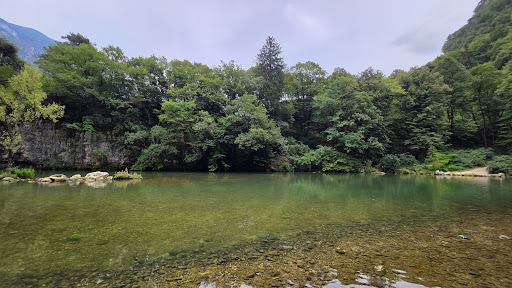
The Grotte di Oliero are several caves which are the springs of the short fiume Oliero (Oliero river), a tributary of fiume Brenta (Brenta river). The most interesting is the Grotta Parolini, originally called Covolo dei Siori (Cave of the Lords), but renamed Grotta Parolini in honor of the first explorer Alberto Parolini. The trail on the left side of the river also leads to two dry caves, located on the slopes above the spring. The Covolo degli Assassini (Grotto of the Murderers) and the Covolo delle Sorelle (Grotto of the Sisters). Back at the river Oliero, it is possible to cross it on the old mill dam and follow the right shore of the river upstream to the other spring of the Oliero. This deep blue pot at the foot of a limestone cliff is called Cogol dei Veci. Wooden boat brings visitors continually across the lake and back to quay. So these caves unite a subterrean river, a boat cruise a short walk inside the cave with the main spaleotherms of a carstic cave. To return to the entrance, the visitors have the choice between four hikes to do. You can admire the most important exo- and endocarstic forms during a half-day trip from Bassano del Grappa or Trento. The prices are moderate and the team is very friendly...
Read moreInteresting park and application! Good for a short stop. Every member of the staff we interacted with (probly about 9 by the end of the visit) was top notch! Great, enthusiastic, friendly, knowledgable, helpful and accomodating. Can't recommend them more. Can recommend arriving early, the place seemed to fill up steadily after we got there. We arrived about 25 minutes after opening (mostly do to parking, which is very limited). We were able to get right on the next boat to get into the main attraction cave. After the ~30 minute tour (3 stopping and talking points after debarking the craft) you ride back out the way you came in. The tempurature was fantastic for a hot Aug day! The paper museum celebrating 500 years of making paper and cardboard(?), had some interesting mechanical models and is on the historical paper mill site (no longer producing). The ecological/cave museum had some interesting points, and the amphibians were cool to see swimming around the environment. Feedback for the museums: tours are offered in English, any chance the museum display descriptions could have English translations? That would be great....
Read moreLe Grotte di Oliero rappresentano un'esperienza naturalistica unica nel suo genere. Si tratta di un complesso carsico di grande importanza, dove le acque provenienti dall'Altopiano di Asiago riemergono, dando vita al suggestivo fiume Oliero. Il punto di forza della visita è senza dubbio il percorso in barca all'interno della grotta principale, il Covol dei Siori. L'accesso, basso e stretto, crea subito un'atmosfera di avventura, la barca naviga silenziosamente sulle acque limpide del fiume sotterraneo, scivolando in un mondo di silenzio e penombra. L'ambiente è fresco, con una temperatura costante di circa 12°C, il che rende l'escursione piacevole anche nelle giornate più calde. Durante il tragitto, la guida illustra con competenza le formazioni geologiche, le stalattiti e le stalagmiti che si sono formate nel corso di millenni, l'illuminazione interna esalta le forme e i colori delle rocce, creando giochi di luce e riflessi sull'acqua che sono a dir poco affascinanti. La navigazione dura circa 30 minuti, si sbarca su un piccolo molo interno per ammirare più da vicino alcune delle concrezioni più imponenti, prima di fare ritorno all'esterno. Oltre alla visita in grotta, l'area circostante offre un bellissimo parco naturale, perfetto per una passeggiata rilassante. Il sentiero si snoda tra una ricca vegetazione e conduce alla scoperta di altre grotte minori, non visitabili all'interno ma comunque interessanti da osservare. Ci sono anche aree attrezzate per pic-nic, ideali per le famiglie che vogliono trascorrere una giornata intera immersi nella natura. All'interno del complesso si trovano anche due piccoli ma interessanti musei: il Museo di Speleologia e Carsismo, che offre un'ottima panoramica sulla formazione delle grotte e la fauna che le abita , e il Museo delle Cartiere, che racconta la storia della produzione della carta nella zona, strettamente legata all'energia idrica del fiume Oliero. Per chi è appassionato di speleologia, è interessante sapere che alcune parti del complesso sono esplorabili solo dagli speleosub, a testimonianza della vastità del...
Read more