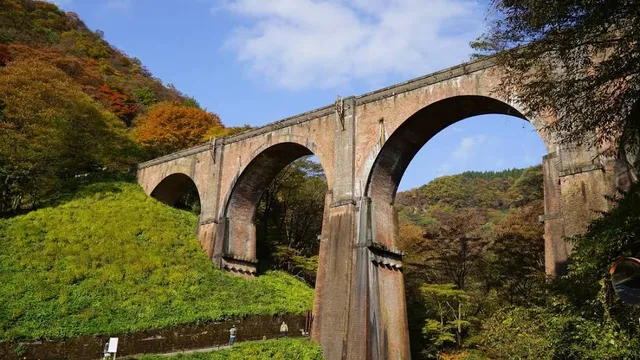
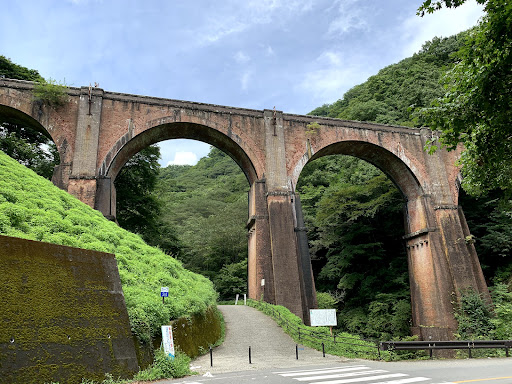
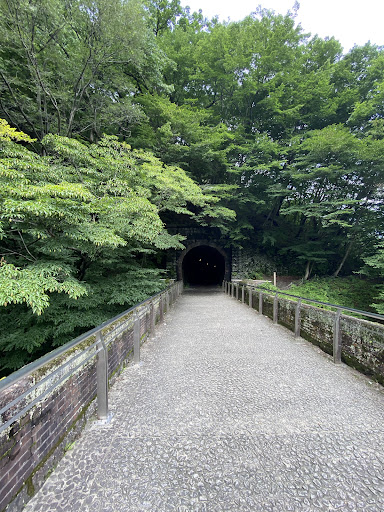
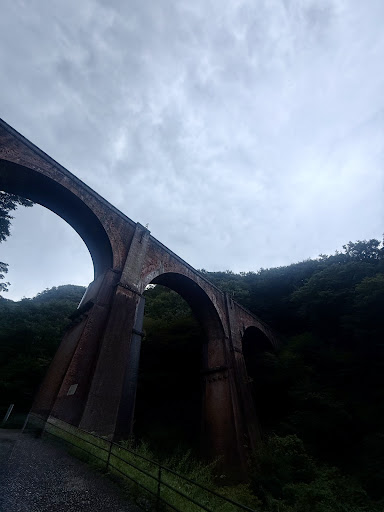
An impressive railway bridge completed in 1892 (the description that it is a 17th-century stone bridge is incorrect; see below). In Edo period, Nakasen-do (中仙道 or 中山道) was an important road connecting the capital Edo (present-day Tokyo) to Western Japan through the mountainous region in Central Japan. (The other major road was Tokai-do along the Pacific Ocean.) The climb from the Kanto plain to Usui-Toge (pass) at the edge of the high plateau was one of the most difficult part of the journey. After the "Meiji Restoration", the new Meiji government was keen to modernize Japan, and railways are an important part of the modernization. After railways were built from Tokyo to Yokokawa (bottom of the slope), and from Karuizawa to Nagano and beyond, the steep Usui-Toge section between Yokokawa and Karuizawa was left unfinished. Since It was difficult to build the track with a sufficiently low grade for regular trains, they decided to adopt the "Abt system" (rack railway system developed by a German engineer Carl Roman Abt). Still they had to construct many tunnels and bridges, this "Megane-bashi" (eyeglass bridge) officially named Usui No. 3 bridge being one of them. In 1963, new tracks bypassing this bridge were built and the Abt system was discontinued. After that, this bridge has not been used by trains. (And after the Shinkansen bullet train line was constructed, the conventional railway service between Yokokawa and Karuizawa was discontinued in 1997.) Now the former "Abt system railway track" was converted to a footpath; you can not only walk on the bridge but continue walking into tunnels on both sides of the bridge and beyond. A short and easy access (although with some climbing on stairs) from the nearby parking or...
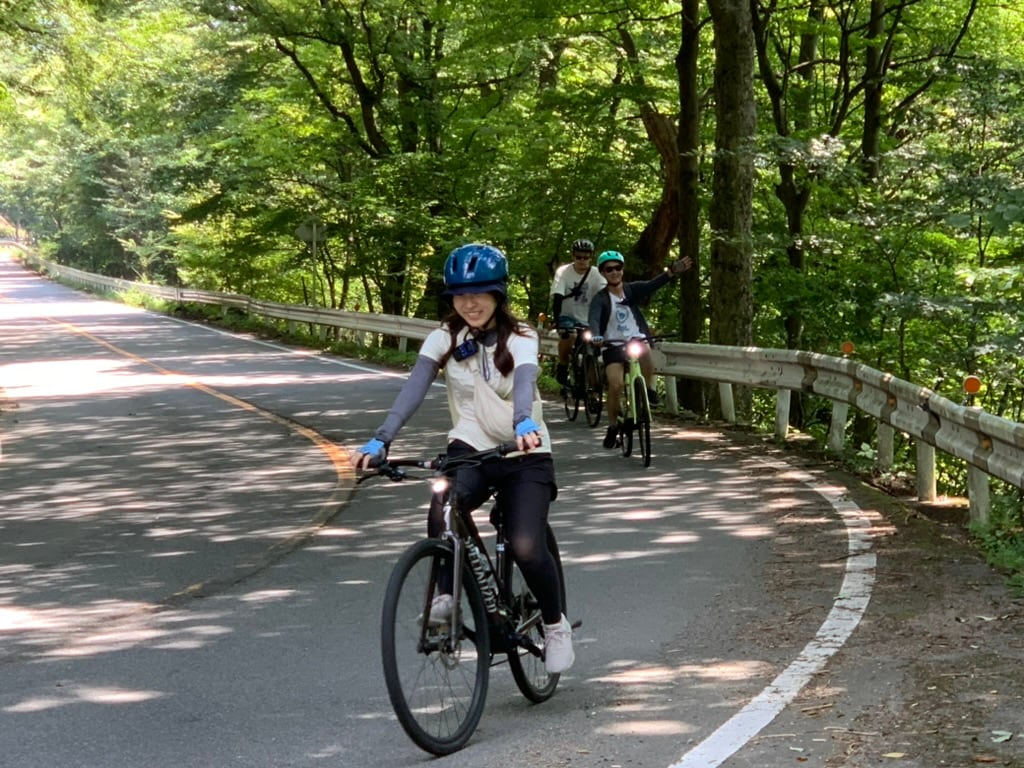
Read morereally nice place to visit. You can walk both sides to rail road many kilometers. When u go to top of the bridge area you can see two caves of your both sides. the one in bridge side tunnel is small but if you go that side around 1km and you see nice nice lake with red bridge. Good view. But main part is other tunnel in the opposite side of the bridge. It more than 1km and really nice to go through it. You must go there. Inside is too cold. I went there in summer and inside is awesome. Leaches may be there. So be careful. Of course they have sign board about leaches and Bear. Few years ago thwre were some bear attack. So better be careful that too. Access road is really narrow. Within 12 kilometers there 179 bends. Each bwnd they habe...
Read moreJapan's largest brick arch bridge in Usui Pass, Gunma Prefecture
This is one of the brick arch rail bridges in Japan, completed in 1892. The appearance is majestic and elegant. The Japanese government designated the bridge as an important cultural property. After the railroad was discontinued in 1963, the abandoned track was converted into a trail on which people can walk. Local people call the bridge Megane-bashi (glasses bridge) because of its shape.
Stunning views change by season
Megane-bashi is a majestic and heavy-looking bridge that is 91 meters long and 31 meters high. The bridge always provides a breathtakingly beautiful view against the backdrop of shining fresh foliage, vivid autumn leaves or the...
Read more