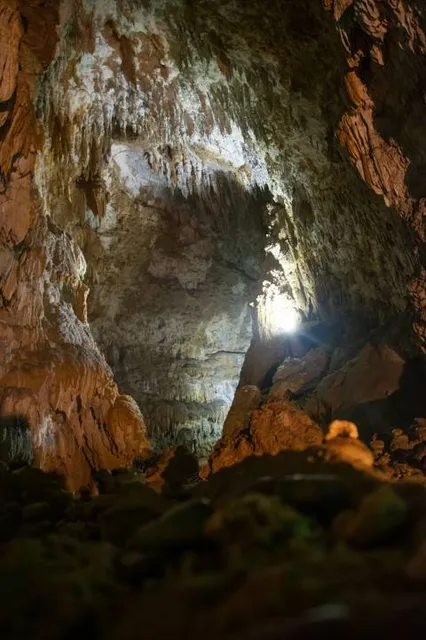
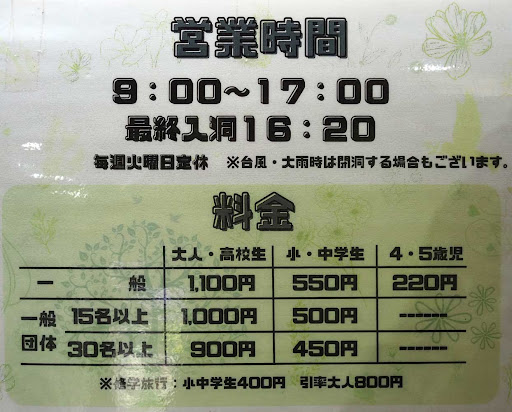
Shoryudo Limestone Caves features a developed 600-meter section with a trail and lights. It's self-guided. (The trail is largely wet, but I didn't find it slippery.) The caverns, discovered in 1963, extend more than 3.5 kilometers and are part of Amami Gunto National Park. They’re spectacularly beautiful with an estimated 300,000 stalactites and Japan’s largest flowstone. I paid the modest 1,100 fee, then entered the gaping entrance and descended to the small stream that runs through the cave. Cave features cover the ceilings and walls, many with tiny calcite crystals that sparkle in the light. Although the cave is well lit, I found my powerful cycling light handy to see the cave details and for photography. (Lights may be available at the ticket counter; I think they are free to use.) Although the suggest tour length is 30 minutes, I spent more than an hour slowly making my way through on a gentle descent beside the stream. Many of the cave features have names—that’s just human nature—and a woman’s recorded voice provided a narration in Japanese. The trail exits the cave at a sinkhole, and I could see the dark opening where the stream continues into another section of cave but without trail access. The route climbs out of the sinkhole and follows the road back to the start. I highly recommend a visit if you enjoy caves! Note that the caverns close on Tuesday. You can easily combine them with a visit to Ōyama Botanical Park Observatory, about 3 kilometers away; follow signs and take the gravel and concrete road on the north side of the Observatory (not the south as Google maps may suggest). I came here from Wadomari on a bicycle, making good use of the...
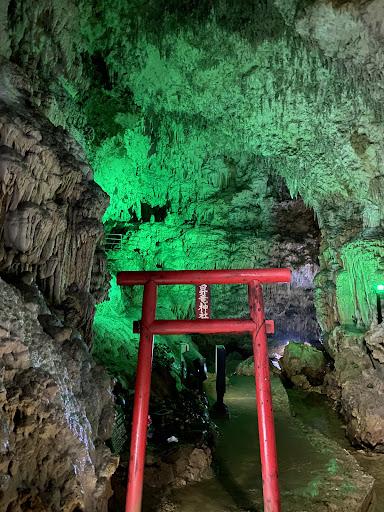
Read moreAbsolutely stunning and must-do if you visit Okinoerabujima! I’ve been to many caves around Japan so it says a lot that this one left me in awe! Most of the formations are white and sparkling against the light, and there are all sorts of formations. Of course the torii gate is cool to see as well. I don’t have many more words, just see it for yourself! Entry was 1200yen, the flashlight they gave was a bit dim so if you have your own that’s brighter I’d recommend bringing...
Read more1963年に発見された鍾乳洞で、わかっているだけで全長は3,500mに及びます。現在そのうちの約600mが公開されています。その後近隣では水連洞、永良部洞、大山水鏡洞などが相次いでみつかっています。ご興味のある方は併せてどうぞ。 宮古島、石垣島そして沖永良部島のような隆起サンゴ礁の島には、しばしば発達した鍾乳洞が確認されます。しかし秋芳洞や龍泉洞、日原鍾乳洞のように、海から離れた一見サンゴ礁とは無縁な地域にも鍾乳洞は存在します。これは熱帯・亜熱帯に発達したサンゴ礁の残骸から成る「石灰岩地層」が、プレートの動きで日本まで運ばれたためなのです。そして、それが移動先の日本で浸食を受け鍾乳洞が形成されたのです。 ちなみにセメントの材料の石灰岩も珊瑚礁由来です。埼玉県の秩父地方では大正時代から石灰岩が採掘されていました。で、その「石灰岩層」はハワイ諸島近くで形成されたモノがここまで移動してきたと考えられています。特に武甲山周辺からは良質の石灰岩が採掘され、西武鉄道によって都心へ輸送されていました。昭和40年代までは西武鉄道池袋線に「チチブセメント」のロゴの入った車両が運用されていました。以前従兄が西武線沿線に住んでいて、よく池袋線に乗りました。「準急」や「普通」の合間にセメント列車が走ってくるのです。鉄オタではないのですが、その列車が通るとなんとなくワクワクしたものです。 しかし石灰石の鉄道輸送は1996年に終了して、トラック輸送に切り替えられまし...
Read more