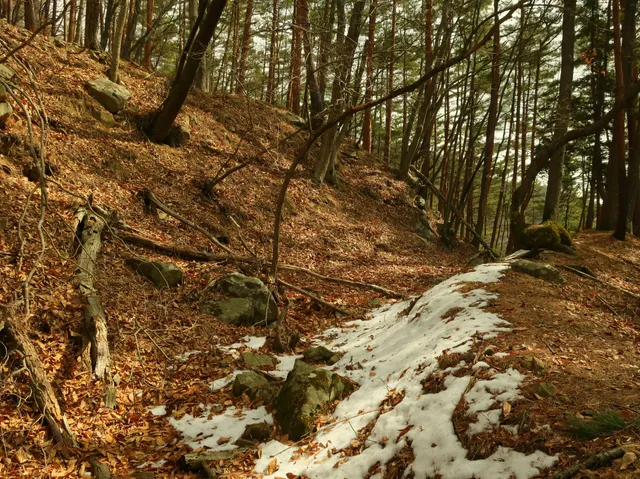
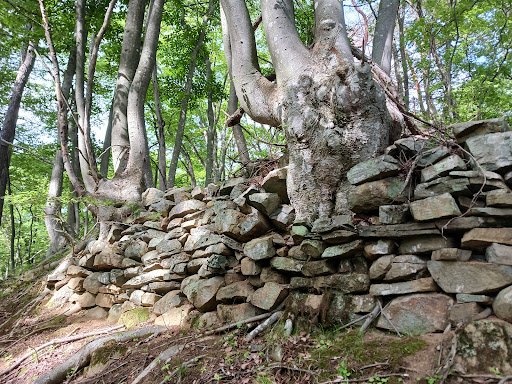
Kiriharajō, the quiet majesty of its ruins completely overwhelmed my expectations. Light, lackadaisical in afternoon, filtered through the autumnal shroud of the canaopy onto Kiriharajō's stone-clad terraces. The honkuruwa (main bailey) is like a fountainhead streaming its terraced baileys down the mountainside. Perhaps we may say there are at least seventeen tiers of earthworks throughout, with some nine of them ensconced by ishigaki (stone-piled ramparts).
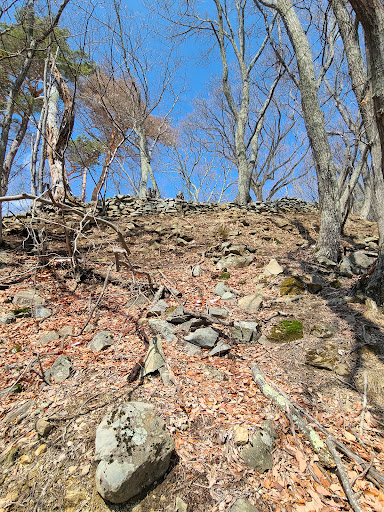
I entered at a point somewhat short of the main trail and clambered up the mountainside, but not before passing some suggestive features, including a long row of ishigaki at the very foot of the mountain (is this a part of the castle, perhaps bordering some former lower residence?). I came up from the slopes, emerging suddenly like, I imagined, a wild-eyed sasquatch. I saw a large tatebori (climbing trench) running up the length mountain, as if to tear it asunder, and I knew that I had found my quarry. I began to ascend the castle mount in earnest.
First there is a horikiri (trench), and then a series of small terraced baileys situated either side of the main path up to the castle. There are about seven or eight tiers here, and it is quite similar to the ascent up Hayashiôjō. This arrangement of small terraces is one of two legs of the lower castle - the castle's left one - and is mirrored on the right by terraces of baileys which lie eitherside of the super long tatebori. The baileys increase in area as they approach the honkuruwa, and at a point we may call the right thigh, the stone-pilings start and move on all the way up like a staircase. Some of the stone blocks used in the walls are fluffy with moss. Others glow orange beneath the outspread boughs of trees beautiful in fall. Several gate ruins are evident as one works one's way into the center of the citadel, which is pre-empted by a large sub-bailey beneath the honkuruwa. The honkuruwa has a large embankment at the rear and beyond this are a series of embankments and trenches protecting the mountainside rear...
Read more県史跡の「小笠原氏城跡」のひとつ桐原城は素晴らしい城址である。標高950mの山間に位置し、麓からの比高は約190m程度である。
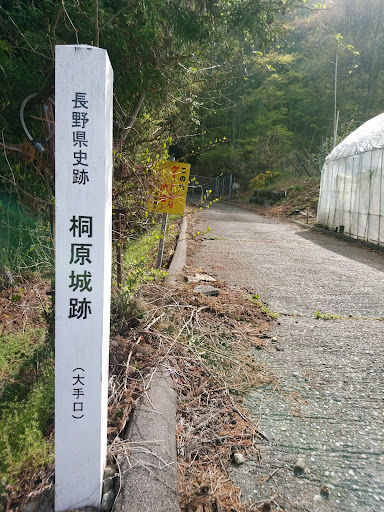
桐原城の遺構は素晴らしいのだが、入口がとにかくわかりにくい。大手入口の防獣柵から先がわかりにくく、間違った方向に進んでしまう人も多くいるだろう。自分も間違った道をかなり進んでしまった。松本市周辺の県市指定史跡の山城は遺構は素晴らしいのだが、整備が及んでなかったり、案内板がほとんどなかったりと不親切なものが多い。強く改善を促したい。
桐原城もルートの案内はほぼ皆無である。しかし、城内の整備はされており、遺構も素晴らしく藪などは皆無である。構造は小笠原氏系の城のセオリーに沿っており、山頂部に主郭を配しその前面に段郭を配している。大手口近くにある段状に小郭を並べているのも小笠原氏系の特徴である。防御遺構は竪堀と堀切を多用しており、桐原城は特に竪堀の大きさ、本数ともに規模が大きい。また、小笠原氏系の城は石垣を用いているが、この桐原城の石垣は見事である。主要部に石垣を多用しており、その残存状態もかなり良い。
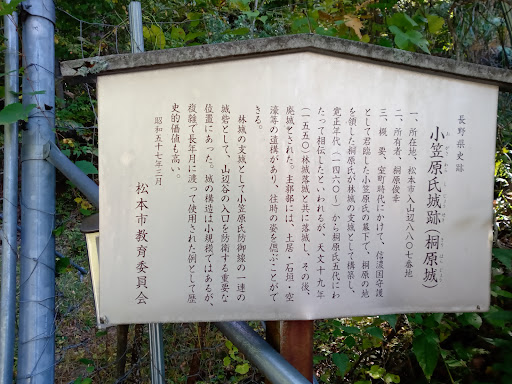
桐原城は室町時代に小笠原氏家臣の桐原氏によって築かれた。戦国期にも桐原氏が在城していたが、1550年の武田氏の信濃侵攻時にまず埴原城が落とされ、桐原城も周辺の小笠原氏の各城とともに自落したという。その後の経緯は不明。
桐原城は周辺の小笠原氏系の城の中でも必見である。石垣や竪堀の規模、残存状態ともぜひ見てほしい。ただし、ここも熊の出...
Read more10/25/2023 山辺ワイナリーに車を止め、ひたすらに坂を登った。柴宮社という飛鳥時代の「霧原の牧」から続くという神社を過ぎ、「桐原城址」の掲示がある登山口まで30分ほどか。 入口には鉄製の大きな開閉門があり、そこを開けて中に入る。山のシカが果樹園に出てこないための措置と思われる。 桐原城は室町時代、1460年に信濃守護として甲州からやってきた小笠原氏の幕僚となった桐原氏が、5代にわたって居城とした山城。1550年塩尻峠を超えて雪崩込んだ武田信玄の軍勢に恐れをなした小笠原が林城から逃散し、桐原城も戦うことなく城を明け渡し、以後廃城になった。 鉄扉から中に入って1時間は歩いたろうか。ガードレールの付いた舗装道から、未舗装の道と歩き続け、道はどんどん狭くなったが、案内板などは一切ない。 ただ、古い石垣の跡がそこかしこに見えるようになった。城は山の中腹にあったと言うが、風景から想像すると城の上部はほとんどが石垣に囲まれていたのではないか。 500年前を思い浮かべ、また挑戦しようと思...
Read more