In Taoism, the Five Precepts (Chinese: 五戒; pinyin: Wǔ Jiè; Jyutping: Ng5 Gaai3) constitute the basic code of ethics undertaken mainly by lay practitioners. For monks and nuns, there are more advanced and stricter precepts. The Five Precepts are nearly the same as the Five Precepts of Buddhism; however, there are minor differences to fit in with Chinese society.
According to the Zhengtong daozang (1445), the five basic precepts are:
The first precept: No Killing;
The second precept: No Stealing;
The third precept: No Sexual Misconduct;
The fourth precept: No False Speech;
The fifth precept: No Taking of Intoxicants.
Their definitions can be found in an excerpt of Zhengtong daozang (1445) : Laozi said: "The precept against killing is: All living beings, including all kinds of animals, and those as small as insects, worms, and so forth, are containers of the uncreated energy, thus one should not kill any of them."
Laozi said: "The precept against stealing is: One should not take anything that he does not own and is not given to him, whether it belongs to someone or not."
Laozi said: "The precept against sexual misconduct is: If a sexual conduct happens, but it is not with your married spouse, it is a Sexual Misconduct. As for a monk or nun, he or she should never marry or practice sexual intercourse with anyone."
Laozi said: "The precept against false speech is: If one did not witness what happened himself but telling something to others, or if one lies with knowing it's a lie, this constitutes False Speech."
Laozi said: "The precept against taking of intoxicants is: One should not take any alcoholic drinks, unless he has to take some to cure his illness, to regale the guests with a feast, or to conduct religious ceremonies."
Laozi had said: "These five precepts are the fundamentals for keeping one's body in purity, and are the roots of the upholding of the holy teachings. For those virtuous men and virtuous women who enjoy the virtuous teachings, if they can accept and keep these precepts, and never violate any of them till the end of their lifetimes, they are recognized as those with pure faith, they will gain the Way to Tao, will gain the holy principles, and will forever achieve Tao —...
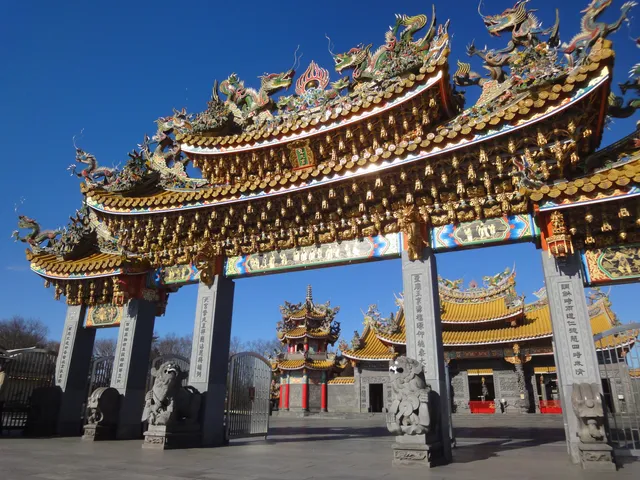
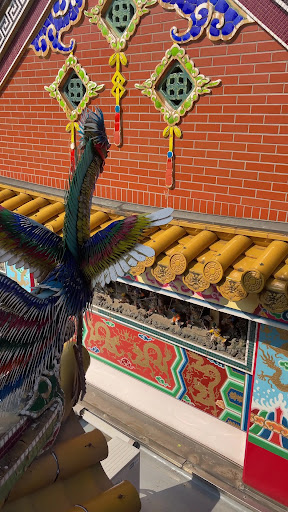
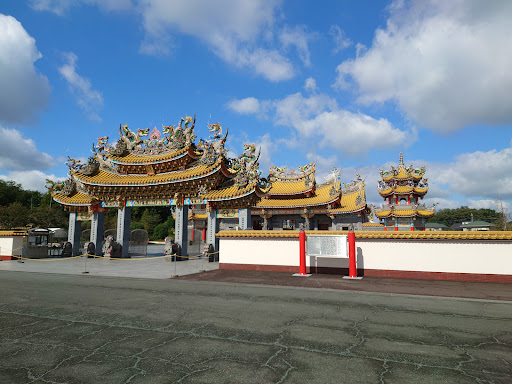
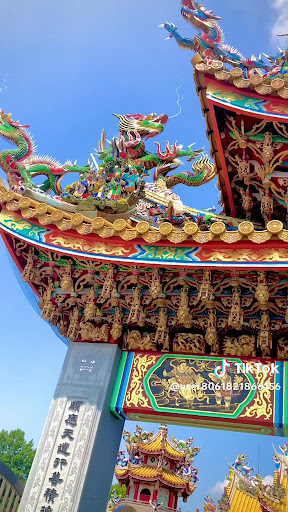
Read moreA Slice of Taiwan in Saitama! I was completely captivated by 聖天宮 in Saitama. This is a must-visit for anyone looking for a unique and beautiful cultural experience. The moment you step onto the grounds, you're transported to Taiwan, with the temple's vibrant colors and intricate carvings standing in stunning contrast to the surrounding Japanese landscape.
What really stood out was the strong religious aspect. The temple is a genuine place of worship for Taoism, and the atmosphere is both grand and peaceful. I was fortunate enough to have a guide who was incredibly kind and courteous. He provided a concise yet comprehensive explanation of the temple's history, its religious significance, and the proper way to pay respects to the deities. This really enhanced my visit and deepened my appreciation for the architecture and cultural practices.
The facilities were also excellent. It was a hot day, so the air-conditioned rest area was a lifesaver, providing a comfortable space to relax and escape the heat. I also appreciated the cleanliness of the toilets, which were well-maintained and easy to find. For those who smoke, there's a designated smoking area, which keeps the main grounds pleasant for everyone.
And for a fun and unexpected surprise, the vending machines were stocked with a variety of Taiwanese products! I was able to grab a few unique drinks and snacks, which was a great way to enjoy a small taste of Taiwan on the go. Overall, 聖天宮 is a beautifully maintained and welcoming place that offers a truly authentic Taiwanese experience. I highly...
Read morean intriguing place in that it suddenly appears in the middle of idyllic fields in Saitama, not in Taiwan. The pamphlet says that this taoist temple was founded and funded solely by a Taiwanese millionaire who received a prophecy to build a taoist temple exactly in this place. The construction began in the early 80s with hands of traditional carpenters hired directly from Taiwan and the temple was inaugurated in the early 90s. I am still not sure if 500 yen are worth paying to enter...
Read more