HTML SitemapExplore
Find Things to DoFind The Best Restaurants

AlDayr — Attraction in Maan

Name
AlDayr
Description
Nearby attractions
Ed-Deir Trail
8CPP+FG9, The Monastery Rte, Uum Sayhoun, Jordan
Lion Triclinium
8CMQ+XF7 Petra District, Uum Sayhoun, Jordan
Back Door hiking route to the Monastery
8CWM+G69, Uum Sayhoun, Jordan
Nearby restaurants
Nearby hotels
Related posts
Keywords
AlDayr tourism.AlDayr hotels.AlDayr bed and breakfast. flights to AlDayr.AlDayr attractions.AlDayr restaurants.AlDayr travel.AlDayr travel guide.AlDayr travel blog.AlDayr pictures.AlDayr photos.AlDayr travel tips.AlDayr maps.AlDayr things to do.
AlDayr things to do, attractions, restaurants, events info and trip planning
AlDayr
JordanMaanAlDayr

Basic Info

AlDayr

Jordan
4.9(1.7K)
Open 24 hours
Save
spot

Ratings & Description

Info

Cultural
Adventure
Scenic
Off the beaten path
attractions: Ed-Deir Trail, Lion Triclinium, Back Door hiking route to the Monastery, restaurants:
logoLearn more insights from Wanderboat AI.
Phone
+962 3 215 6044
Website
visitpetra.jo

Plan your stay

hotel
Pet-friendly Hotels in Maan
Find a cozy hotel nearby and make it a full experience.
hotel
Affordable Hotels in Maan
Find a cozy hotel nearby and make it a full experience.
hotel
The Coolest Hotels You Haven't Heard Of (Yet)
Find a cozy hotel nearby and make it a full experience.
hotel
Trending Stays Worth the Hype in Maan
Find a cozy hotel nearby and make it a full experience.

Reviews

Nearby attractions of AlDayr

Ed-Deir Trail

Lion Triclinium

Back Door hiking route to the Monastery

Ed-Deir Trail

Ed-Deir Trail

4.8

(69)

Open 24 hours
Click for details
Lion Triclinium

Lion Triclinium

4.5

(74)

Open 24 hours
Click for details
Back Door hiking route to the Monastery

Back Door hiking route to the Monastery

4.7

(112)

Open 24 hours
Click for details

Things to do nearby

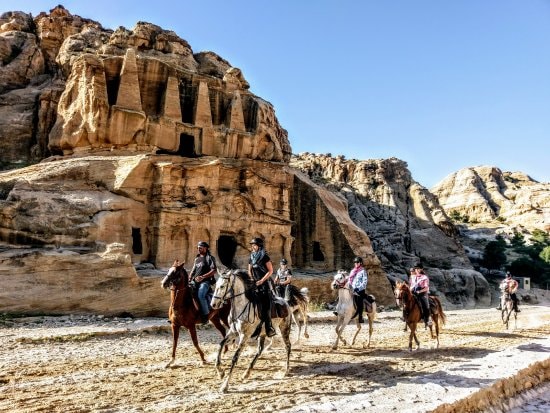
Explore Petra wonders
Sat, Dec 20 • 1:00 PM
Petra District, Ma'an Governorate 00962, Jordan
View details
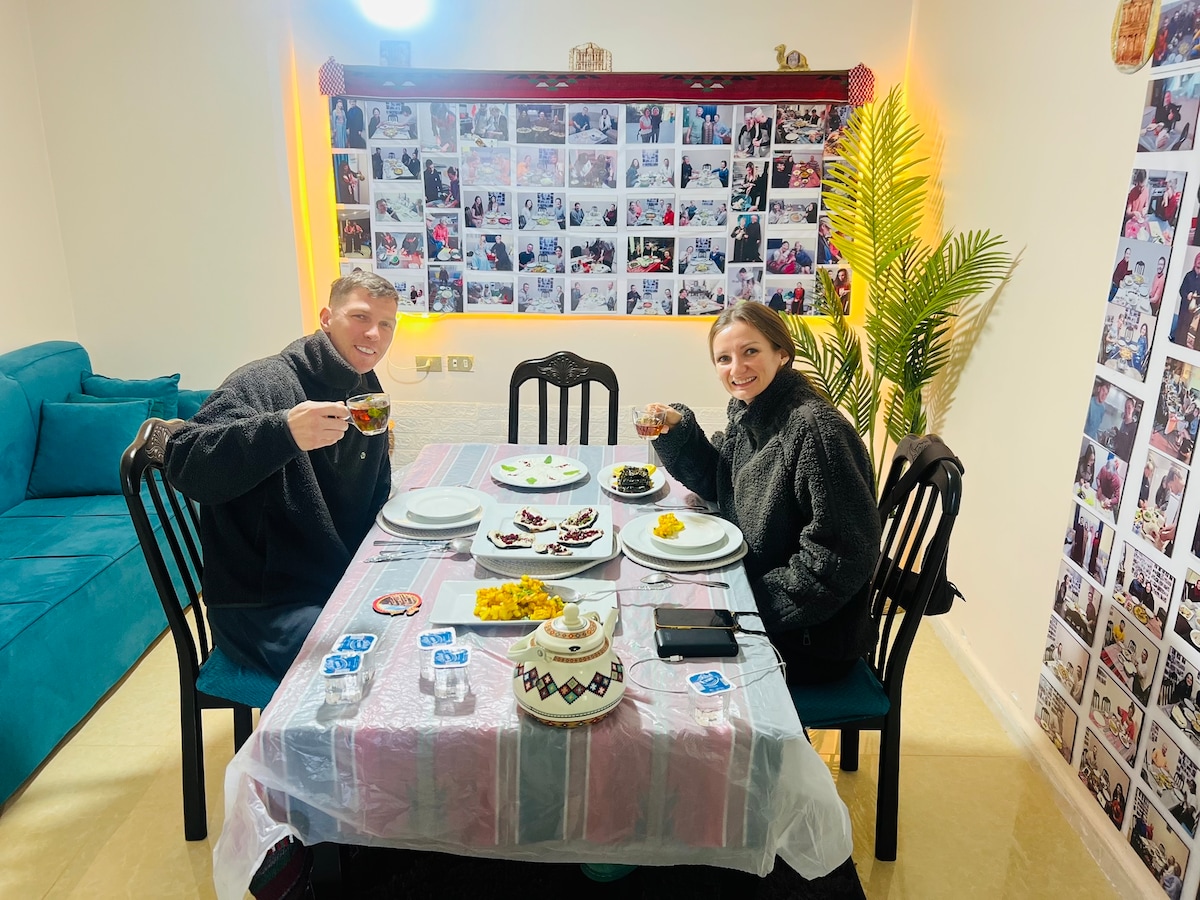
Cook and dine with a Jordanian family
Sat, Dec 20 • 7:00 PM
Wadi Musa, Ma'an Governorate 71810, Jordan
View details
Get the Appoverlay
Get the AppOne tap to find yournext favorite spots!
Wanderboat LogoWanderboat

Your everyday Al companion for getaway ideas

CompanyAbout Us
InformationAI Trip PlannerSitemap
SocialXInstagramTiktokLinkedin
LegalTerms of ServicePrivacy Policy

Get the app

© 2025 Wanderboat. All rights reserved.

Reviews of AlDayr

4.9
(1,657)
avatar
5.0
2y

Out and back from entrance it is around 20km. But worth the hike. If you spend here 1 day only this is the path worth checking out.

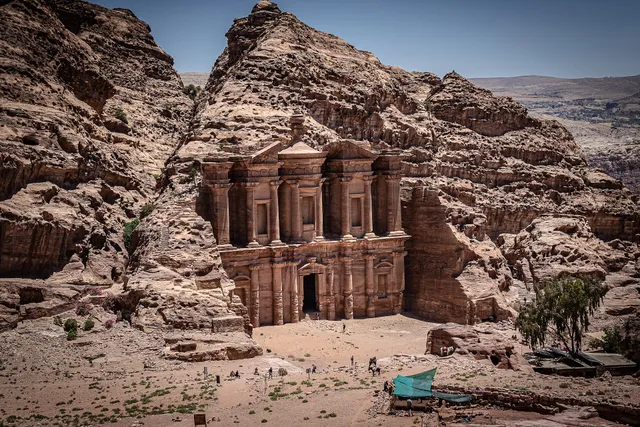
Ad Deir ("The Monastery"; Arabic: الدير ), also spelled ad-Dayr and el-Deir, is a monumental building carved out of rock in the ancient Jordanian city of Petra.[1] The Deir was probably carved in the mid-first century AD.[2]

Arguably one of the most iconic monuments in the Petra Archaeological Park, the Monastery is located high in the hills northwest of the Petra city center. It is the second most commonly visited monument in Petra, after the Khazneh or "Treasury".[3]

The huge façade, the inner chamber and the other structures next to it or in the wider area around the Deir probably originally served a complex religious purpose, and was possibly repurposed as a church in the Byzantine period.

Ad Deir in location, 2018 Location The Monastery can be reached by ascending a nearly 800-step path (40-minute walking time) from the Basin. The Wadi Kharrubeh, the Lion's tomb, and small biclinia and grottos can be seen en route to the Monastery.[citation needed] From the Monastery, one can view the valleys of Wadi Araba and the gorges along with the semi-arid territory immediately around Petra.[4]

Exterior design Scholars believe that the flat area in front of the Monastery was levelled through human action in order to make the area suitable for social gatherings or religious occasions. Near the entrance of the structure are the remains of a wall and a colonnade.[5]

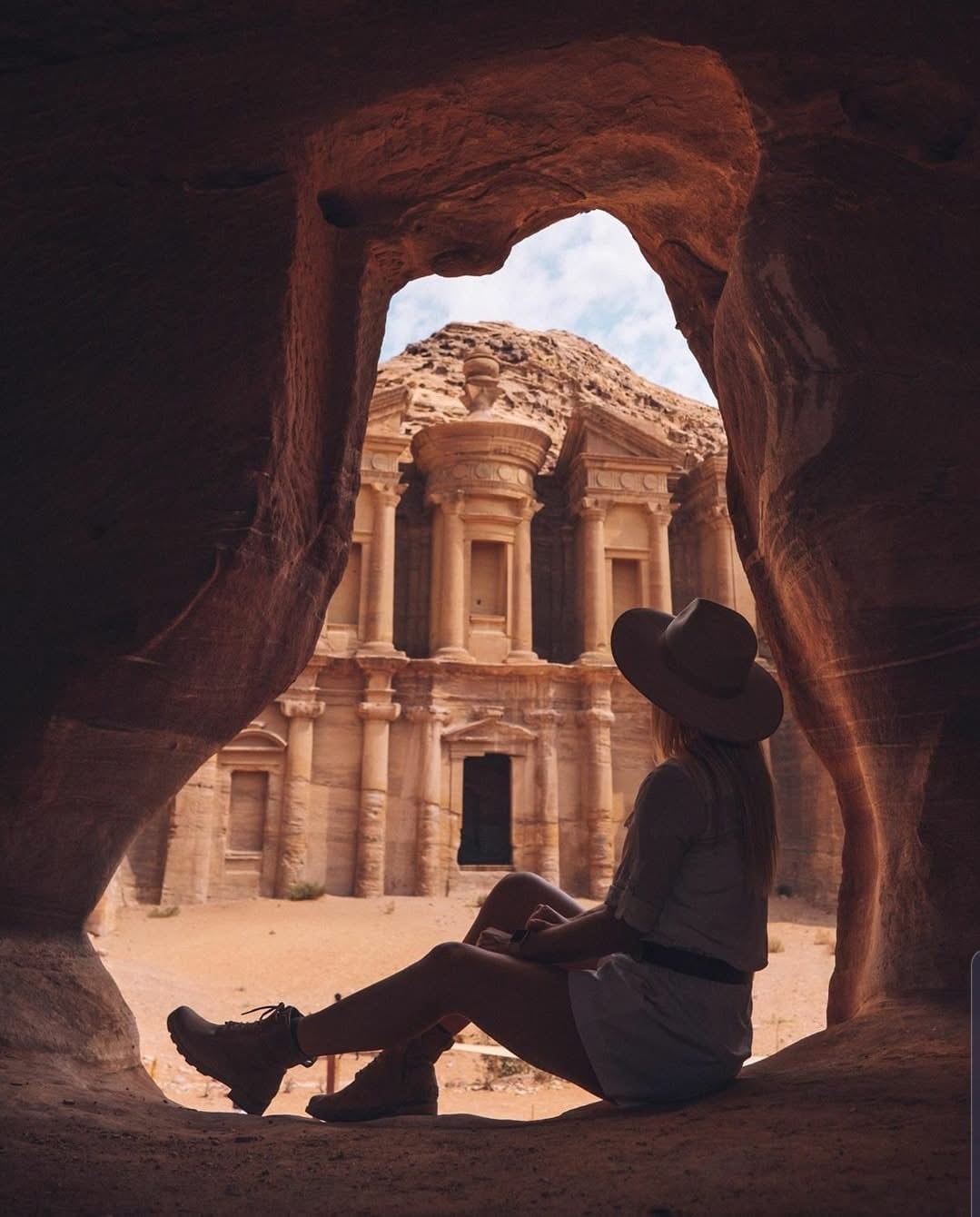
The rock-cut façade of the Monastery, 47 m (154 ft) high and 48 m (157 ft) wide, has a broken pediment, the two sides of which flank a central tholos-shaped element. This element has a conical roof that is topped by an urn.

Architectural style The monastery is an example of Nabataean architecture. Its blending of architectural styles is a hallmark of the dynamic and hybridised nature of Petra as a whole.

Architecturally, the Monastery follows classical Nabataean style, which is represented by a mixture of Hellenistic and Mesopotamian styles of construction.[citation needed] The Hellenistic influence can be seen in the columns of the Monastery, which are constructed in an abstracted Corinthian style. These columns are thought to have been included for aesthetic purposes, as the entire structure is carved directly into the sandstone cliff and does not require the support that columns would traditionally provide in freestanding Hellenistic structures. The façade as a whole boasts a Doric entablature (superstructure containing moldings and bands lying above the capitals), but does not have figures in the metope, only simple roundels.

Mesopotamian style is evident in the single, large entrance and the plain, window-like depressions of the facade. The door to the main chamber of the monastery is 8 metres high and provides the sole portal for the entry of light into the structure. The presence of square-topped tower structures on either side of the Monastery also demonstrate the Mesopotamian influence present in the...

   Read more
avatar
5.0
6y

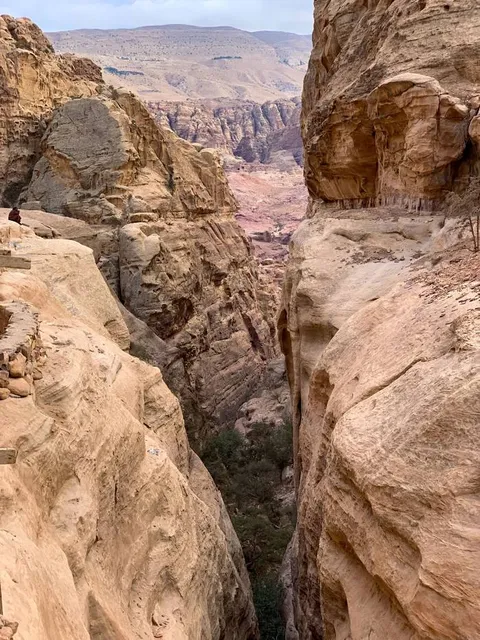
The Monastery. We were a large group of relatively elderly people. Ranging in age from few around 30-45, to couple of us around 75. Our local guide right from the Treasury. through the walk, kept repeating that "Please do not go to the Monastery as it will take around 2 hours plus for a return trip from there. Also, it is very very hard and difficult climb with no help whatsoever available if you have any sort of problem and are unable to carry on either forward or to return" When group reached a place marked on map as Basin and had a restaurant and cafe, guide informed us this was the last point he would be with us. Pointed towards Winged Lion Temple, Byzantine Church the trail leading to the Monastery. Once again emphasising the hardships and how tough the climb was. Further telling us that the group would wait for two and half hours near treasury after which they would return to hotel. Two men around 40, a woman around 30 said they would got to Monastery. I am a person who does not let a challenge go unchallenged. Decided to go to Monastery. We were together for almost half way after that the men drew ahead of me and the woman lagged behind. It is very difficult stiff climb of almost 4 kilometers, along worn out steps, rocky slopes where steps were either nonexistent or have totally worn-out. Twisting turning trail presents differing scenic beauty at every turn and twist. One has no choice but to take a break in between for a sip of water and catch ones breath. That is the time look back the way you have climbed and you are rewarded with awesome beauty. The trail twists and turns so much that you cannot see it beyond 5 to 10 meter. Still way down if observed carefully you can spot the way you have come. Truly that scene is really unforgettable. I personally found last 5 minutes climb really hard to negotiate. Finally did reach the Monastery and met the fellow group members who had reached there 5 -10 mts before me. Monastery is almost same in appearance as the Treasury with minor differences. Closer look reveals it is much bigger and wider and grander than the treasury ! Still the feeling I had at that instant was The joy and happy feeling of having successfully overcome a Challenge ! Having looked back at every pause and a seen the awesome beauty of the way, the panoramic view of the hills and the valleys and the gorges. I had climbed. Truly an experience you can never forget. My advice is if you are not totally fit and have medical problems it is...

   Read more
avatar
3.0
39w

Petra: The Rose-Red City of Jordan

Petra is an ancient archaeological city in southern Jordan, famous for its rock-cut architecture and water conduit system. It was the capital of the Nabataean Kingdom and a major trading hub around the 4th century BCE.

History

Petra was established by the Nabataeans, an Arab tribe that settled in the region and developed a sophisticated civilization. They controlled trade routes and prospered by taxing caravans carrying spices, silk, and other goods between Arabia, Egypt, and the Mediterranean. The city flourished until the Romans took control in 106 CE, and its importance declined after a series of earthquakes and changes in trade routes.

Architecture & Monuments

Petra is famous for its rock-hewn buildings and tombs. Some of the most iconic structures include:

Al-Khazneh (The Treasury) – A stunning temple carved into sandstone cliffs, believed to be a royal tomb.۔۔۔۔۔

Ad Deir (The Monastery) – One of the largest monuments in Petra, located high in the mountains.

The Siq – A narrow, winding gorge that serves as the main entrance to Petra.۔۔۔۔۔

The Royal Tombs – A collection of grand burial sites carved into the cliffs.۔۔۔۔

The Roman Theater – A massive amphitheater that could accommodate around 8,500 people.۔۔۔۔

Rediscovery & UNESCO Status

Petra was largely forgotten by the outside world until Swiss explorer Johann Ludwig Burckhardt rediscovered it in 1812. It was designated a UNESCO World Heritage Site in 1985 and is now one of the New Seven Wonders of the World.۔۔۔۔

Tourism & Cultural Significance

Today, Petra is Jordan’s top tourist attraction, drawing visitors from around the world. It has also been featured in popular films like Indiana Jones and the Last Crusade. The site reflects the ingenuity of the Nabataeans and remains a symbol of Jordan’s rich history.۔۔۔۔

Would you like more details on visiting Petra or its historical...

   Read more
Page 1 of 7
Previous
Next

Posts

János IskiJános Iski
Out and back from entrance it is around 20km. But worth the hike. If you spend here 1 day only this is the path worth checking out. Ad Deir ("The Monastery"; Arabic: الدير ), also spelled ad-Dayr and el-Deir, is a monumental building carved out of rock in the ancient Jordanian city of Petra.[1] The Deir was probably carved in the mid-first century AD.[2] Arguably one of the most iconic monuments in the Petra Archaeological Park, the Monastery is located high in the hills northwest of the Petra city center. It is the second most commonly visited monument in Petra, after the Khazneh or "Treasury".[3] The huge façade, the inner chamber and the other structures next to it or in the wider area around the Deir probably originally served a complex religious purpose, and was possibly repurposed as a church in the Byzantine period. Ad Deir in location, 2018 Location The Monastery can be reached by ascending a nearly 800-step path (40-minute walking time) from the Basin. The Wadi Kharrubeh, the Lion's tomb, and small biclinia and grottos can be seen en route to the Monastery.[citation needed] From the Monastery, one can view the valleys of Wadi Araba and the gorges along with the semi-arid territory immediately around Petra.[4] Exterior design Scholars believe that the flat area in front of the Monastery was levelled through human action in order to make the area suitable for social gatherings or religious occasions. Near the entrance of the structure are the remains of a wall and a colonnade.[5] The rock-cut façade of the Monastery, 47 m (154 ft) high and 48 m (157 ft) wide, has a broken pediment, the two sides of which flank a central tholos-shaped element. This element has a conical roof that is topped by an urn. Architectural style The monastery is an example of Nabataean architecture. Its blending of architectural styles is a hallmark of the dynamic and hybridised nature of Petra as a whole. Architecturally, the Monastery follows classical Nabataean style, which is represented by a mixture of Hellenistic and Mesopotamian styles of construction.[citation needed] The Hellenistic influence can be seen in the columns of the Monastery, which are constructed in an abstracted Corinthian style. These columns are thought to have been included for aesthetic purposes, as the entire structure is carved directly into the sandstone cliff and does not require the support that columns would traditionally provide in freestanding Hellenistic structures. The façade as a whole boasts a Doric entablature (superstructure containing moldings and bands lying above the capitals), but does not have figures in the metope, only simple roundels. Mesopotamian style is evident in the single, large entrance and the plain, window-like depressions of the facade. The door to the main chamber of the monastery is 8 metres high and provides the sole portal for the entry of light into the structure. The presence of square-topped tower structures on either side of the Monastery also demonstrate the Mesopotamian influence present in the structure.[citation needed]
PM VelankarPM Velankar
The Monastery. We were a large group of relatively elderly people. Ranging in age from few around 30-45, to couple of us around 75. Our local guide right from the Treasury. through the walk, kept repeating that "Please do not go to the Monastery as it will take around 2 hours plus for a return trip from there. Also, it is very very hard and difficult climb with no help whatsoever available if you have any sort of problem and are unable to carry on either forward or to return" When group reached a place marked on map as Basin and had a restaurant and cafe, guide informed us this was the last point he would be with us. Pointed towards Winged Lion Temple, Byzantine Church the trail leading to the Monastery. Once again emphasising the hardships and how tough the climb was. Further telling us that the group would wait for two and half hours near treasury after which they would return to hotel. Two men around 40, a woman around 30 said they would got to Monastery. I am a person who does not let a challenge go unchallenged. Decided to go to Monastery. We were together for almost half way after that the men drew ahead of me and the woman lagged behind. It is very difficult stiff climb of almost 4 kilometers, along worn out steps, rocky slopes where steps were either nonexistent or have totally worn-out. Twisting turning trail presents differing scenic beauty at every turn and twist. One has no choice but to take a break in between for a sip of water and catch ones breath. That is the time look back the way you have climbed and you are rewarded with awesome beauty. The trail twists and turns so much that you cannot see it beyond 5 to 10 meter. Still way down if observed carefully you can spot the way you have come. Truly that scene is really unforgettable. I personally found last 5 minutes climb really hard to negotiate. Finally did reach the Monastery and met the fellow group members who had reached there 5 -10 mts before me. Monastery is almost same in appearance as the Treasury with minor differences. Closer look reveals it is much bigger and wider and grander than the treasury ! Still the feeling I had at that instant was The joy and happy feeling of having successfully overcome a Challenge ! Having looked back at every pause and a seen the awesome beauty of the way, the panoramic view of the hills and the valleys and the gorges. I had climbed. Truly an experience you can never forget. My advice is if you are not totally fit and have medical problems it is better not to try.
Nadia MustafaNadia Mustafa
Nothing better at the end of the trail than to see the amazing facade of the Monastery, carved in the sandstone mountain. I was speechless, wonderful moments spent admiring this view!! The Monastery, or Ad Deir, is one of Petra’s largest and most iconic monuments, carved directly into the sandstone cliffs in the 3rd century BCE. Towering at around 47 meters high and 48 meters wide, it resembles the famous Treasury in style but is grander in scale, with a simpler and more monumental design. The facade is marked by its massive doorway and iconic Nabatean architectural elements, such as columns and a large urn crowning the structure. Despite its name, the Monastery was likely used for religious or ceremonial purposes rather than as an actual monastery. Reaching the Monastery requires hiking the Ad Deir Trail, a scenic climb up around 800 steps through Petra’s rugged terrain. This journey rewards visitors with stunning views of Petra’s mountains and valleys, and upon arrival, the sheer size of the Monastery facade set against the open desert landscape is breathtaking. Often less crowded than the Treasury, the Monastery offers a more peaceful setting for appreciating the grandeur of Nabatean craftsmanship and Petra’s incredible natural surroundings. Nearby viewpoints offer panoramic vistas, making it a favorite for photographers and adventurers alike.
See more posts
See more posts
hotel
Find your stay

Pet-friendly Hotels in Maan

Find a cozy hotel nearby and make it a full experience.

Out and back from entrance it is around 20km. But worth the hike. If you spend here 1 day only this is the path worth checking out. Ad Deir ("The Monastery"; Arabic: الدير ), also spelled ad-Dayr and el-Deir, is a monumental building carved out of rock in the ancient Jordanian city of Petra.[1] The Deir was probably carved in the mid-first century AD.[2] Arguably one of the most iconic monuments in the Petra Archaeological Park, the Monastery is located high in the hills northwest of the Petra city center. It is the second most commonly visited monument in Petra, after the Khazneh or "Treasury".[3] The huge façade, the inner chamber and the other structures next to it or in the wider area around the Deir probably originally served a complex religious purpose, and was possibly repurposed as a church in the Byzantine period. Ad Deir in location, 2018 Location The Monastery can be reached by ascending a nearly 800-step path (40-minute walking time) from the Basin. The Wadi Kharrubeh, the Lion's tomb, and small biclinia and grottos can be seen en route to the Monastery.[citation needed] From the Monastery, one can view the valleys of Wadi Araba and the gorges along with the semi-arid territory immediately around Petra.[4] Exterior design Scholars believe that the flat area in front of the Monastery was levelled through human action in order to make the area suitable for social gatherings or religious occasions. Near the entrance of the structure are the remains of a wall and a colonnade.[5] The rock-cut façade of the Monastery, 47 m (154 ft) high and 48 m (157 ft) wide, has a broken pediment, the two sides of which flank a central tholos-shaped element. This element has a conical roof that is topped by an urn. Architectural style The monastery is an example of Nabataean architecture. Its blending of architectural styles is a hallmark of the dynamic and hybridised nature of Petra as a whole. Architecturally, the Monastery follows classical Nabataean style, which is represented by a mixture of Hellenistic and Mesopotamian styles of construction.[citation needed] The Hellenistic influence can be seen in the columns of the Monastery, which are constructed in an abstracted Corinthian style. These columns are thought to have been included for aesthetic purposes, as the entire structure is carved directly into the sandstone cliff and does not require the support that columns would traditionally provide in freestanding Hellenistic structures. The façade as a whole boasts a Doric entablature (superstructure containing moldings and bands lying above the capitals), but does not have figures in the metope, only simple roundels. Mesopotamian style is evident in the single, large entrance and the plain, window-like depressions of the facade. The door to the main chamber of the monastery is 8 metres high and provides the sole portal for the entry of light into the structure. The presence of square-topped tower structures on either side of the Monastery also demonstrate the Mesopotamian influence present in the structure.[citation needed]
János Iski

János Iski

hotel
Find your stay

Affordable Hotels in Maan

Find a cozy hotel nearby and make it a full experience.

Get the Appoverlay
Get the AppOne tap to find yournext favorite spots!
The Monastery. We were a large group of relatively elderly people. Ranging in age from few around 30-45, to couple of us around 75. Our local guide right from the Treasury. through the walk, kept repeating that "Please do not go to the Monastery as it will take around 2 hours plus for a return trip from there. Also, it is very very hard and difficult climb with no help whatsoever available if you have any sort of problem and are unable to carry on either forward or to return" When group reached a place marked on map as Basin and had a restaurant and cafe, guide informed us this was the last point he would be with us. Pointed towards Winged Lion Temple, Byzantine Church the trail leading to the Monastery. Once again emphasising the hardships and how tough the climb was. Further telling us that the group would wait for two and half hours near treasury after which they would return to hotel. Two men around 40, a woman around 30 said they would got to Monastery. I am a person who does not let a challenge go unchallenged. Decided to go to Monastery. We were together for almost half way after that the men drew ahead of me and the woman lagged behind. It is very difficult stiff climb of almost 4 kilometers, along worn out steps, rocky slopes where steps were either nonexistent or have totally worn-out. Twisting turning trail presents differing scenic beauty at every turn and twist. One has no choice but to take a break in between for a sip of water and catch ones breath. That is the time look back the way you have climbed and you are rewarded with awesome beauty. The trail twists and turns so much that you cannot see it beyond 5 to 10 meter. Still way down if observed carefully you can spot the way you have come. Truly that scene is really unforgettable. I personally found last 5 minutes climb really hard to negotiate. Finally did reach the Monastery and met the fellow group members who had reached there 5 -10 mts before me. Monastery is almost same in appearance as the Treasury with minor differences. Closer look reveals it is much bigger and wider and grander than the treasury ! Still the feeling I had at that instant was The joy and happy feeling of having successfully overcome a Challenge ! Having looked back at every pause and a seen the awesome beauty of the way, the panoramic view of the hills and the valleys and the gorges. I had climbed. Truly an experience you can never forget. My advice is if you are not totally fit and have medical problems it is better not to try.
PM Velankar

PM Velankar

hotel
Find your stay

The Coolest Hotels You Haven't Heard Of (Yet)

Find a cozy hotel nearby and make it a full experience.

hotel
Find your stay

Trending Stays Worth the Hype in Maan

Find a cozy hotel nearby and make it a full experience.

Nothing better at the end of the trail than to see the amazing facade of the Monastery, carved in the sandstone mountain. I was speechless, wonderful moments spent admiring this view!! The Monastery, or Ad Deir, is one of Petra’s largest and most iconic monuments, carved directly into the sandstone cliffs in the 3rd century BCE. Towering at around 47 meters high and 48 meters wide, it resembles the famous Treasury in style but is grander in scale, with a simpler and more monumental design. The facade is marked by its massive doorway and iconic Nabatean architectural elements, such as columns and a large urn crowning the structure. Despite its name, the Monastery was likely used for religious or ceremonial purposes rather than as an actual monastery. Reaching the Monastery requires hiking the Ad Deir Trail, a scenic climb up around 800 steps through Petra’s rugged terrain. This journey rewards visitors with stunning views of Petra’s mountains and valleys, and upon arrival, the sheer size of the Monastery facade set against the open desert landscape is breathtaking. Often less crowded than the Treasury, the Monastery offers a more peaceful setting for appreciating the grandeur of Nabatean craftsmanship and Petra’s incredible natural surroundings. Nearby viewpoints offer panoramic vistas, making it a favorite for photographers and adventurers alike.
Nadia Mustafa

Nadia Mustafa

See more posts
See more posts