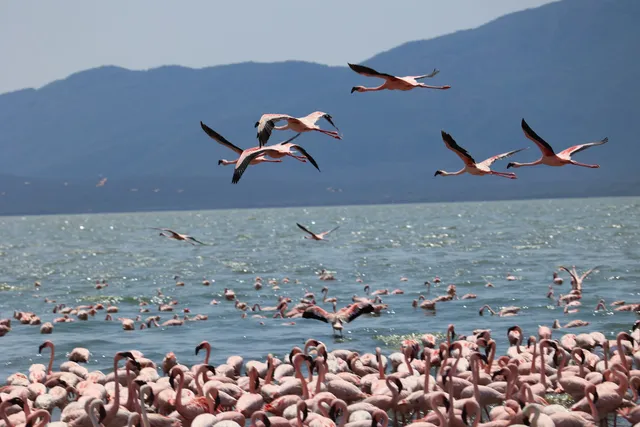
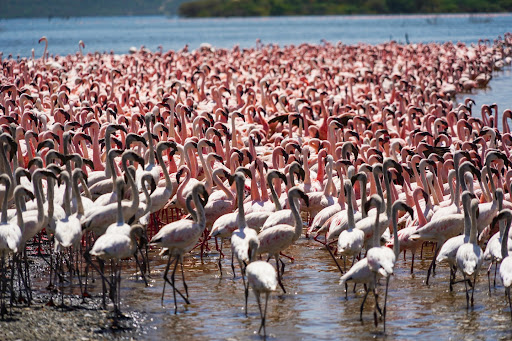
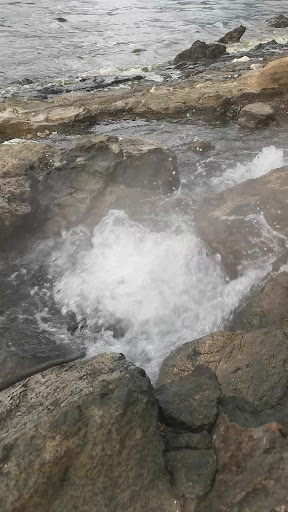
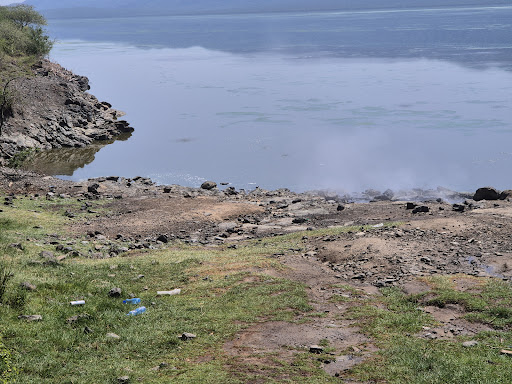
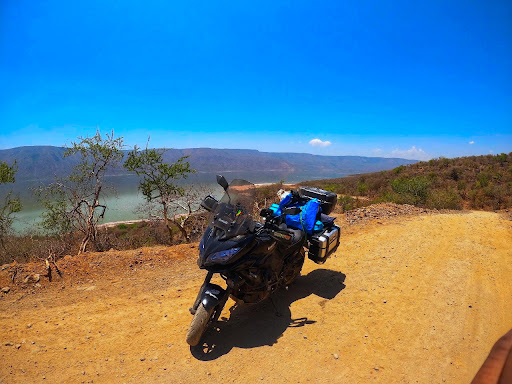
Visited the park in the beginning of November; the huuuge number of flamingos deserve five stars! This aside, please read till the end!!! We came from the South (from Ol Pejeta), where the road was extremely horrible, entering through the Southern gate. We were charged 110$ for 24 hours, staying 1 night. (Un)luckily we only had about 40$ cash with us. We could not pay by card, which is very strange, therefore it's a KWS... He called the main gate to tell we would pay the rest at the main gate in the North; up until today we have no idea who he'd called... We went on and the road was as horrible as the one we came from. It's clear the money does not go to the infrastructure. First we passed the "geysers and hot springs", but the past years the water level has risen a lot so we couldn't see them at all. We stayed one night at the Kudu Camp Site (outside the park, in the West) which was basic but OK. The next day we went on, until we drove out using the Northern side of the park. Best thing of all: we never passed a main gate! Our advice, use the Northern...
Read moreSpecialty of Lake Bogoria Soda Lake: pH ranges from 9 to 12, very alkaline. Flamingo Population: Supports up to 1 million lesser flamingos at peak times. Geothermal Activity: Over 10 geysers and numerous hot springs. Location: Situated in the Kenyan Rift Valley, about 250 km northwest of Nairobi. Depth: Average depth around 3 meters; maximum up to 5 meters. UNESCO Status: Listed as part of the Kenya Lake System UNESCO World Heritage Site since 2011. Bird Habitat: Hosts over 400 bird species, including large flamingo populations. Outflow: No permanent surface outflow; water loss mainly through evaporation. Algae (Spirulina): Produces significant spirulina biomass, supporting flamingos. Water Levels: Can vary extensively—water surface area ranges from 30 to 100 square km depending on season...
Read moreThe lake is a yardstick of governance devolution failure, The game reserve has seen a drastic decline in conservation of biodiversity from when it was handed over from The Kenya Wildlife Service to the Baringo County Government. Having visited the reserve periodically over 3 decades, i can confidently conclude that it's hanging by a thread - largely affected by poor conservation measures, human activities in the reserve, poor road infrastrusture designs that degraded the environment. It is much more harder to spot wildlife species that were commonly sighted a few years ago, needless to say its core attraction the Lesser Flamingoes are now down to a handful and most of the geysers are...
Read more