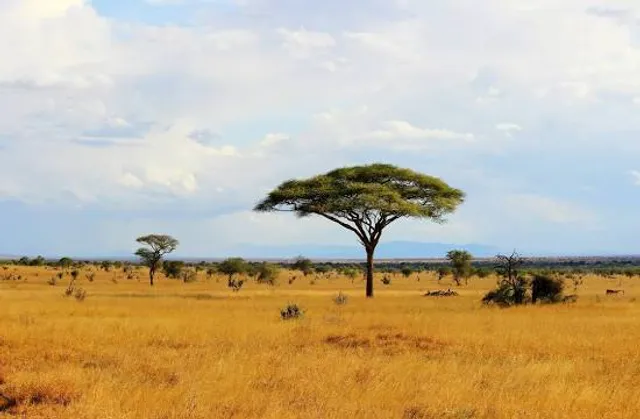
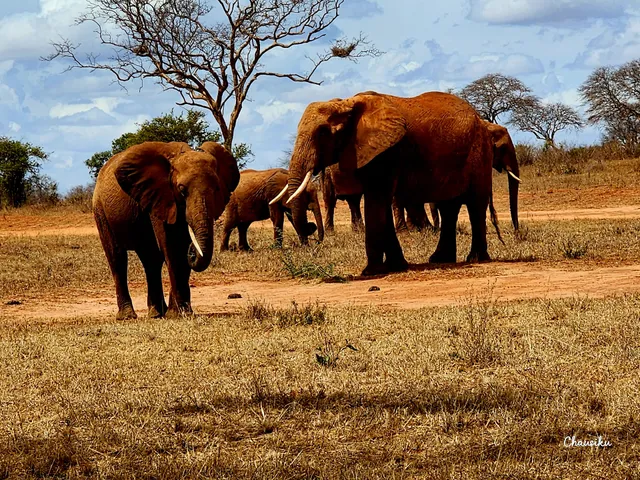
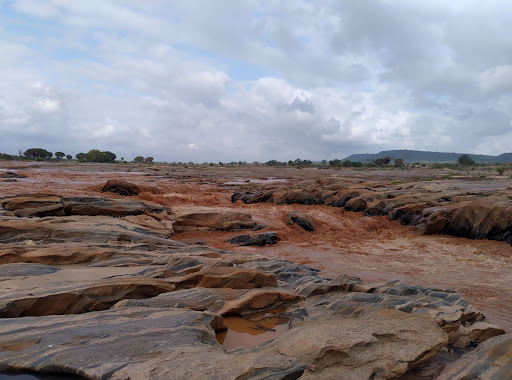
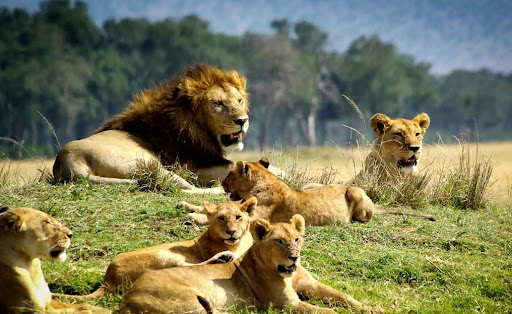
Tsavo East National Park is one of the oldest and largest national parks in Kenya, covering an expansive area of 13,747 square kilometers. It is located in southeastern Kenya, situated halfway between Nairobi and Mombasa. The park is a vast, semi-arid wilderness known for its incredible wildlife and dramatic, open landscapes. Key Features and Wildlife Red Elephants: Tsavo East is most famous for its large herds of "red elephants." The elephants are not naturally red; they get their distinctive color from rolling in the park's rich, red-hued soil. The "Big Five": The park is home to all of the "Big Five" safari animals: lion, leopard, elephant, rhino, and buffalo. It's also known for its population of maneless lions, a unique local adaptation. Diverse Wildlife: Beyond the Big Five, you can spot a wide variety of animals, including cheetahs, giraffes, zebras, hyenas, hippos, and various antelope species like the lesser kudu and fringed-eared oryx. Birdwatcher's Paradise: With over 500 recorded species, the park is a prime destination for birdwatching. You can find everything from ostriches to hornbills, kingfishers, and various birds of prey. Unique Geology: The park's landscape is characterized by flat, dry plains and sparse vegetation, which makes for easier wildlife spotting. It also features several geological landmarks, including: Yatta Plateau: The world's longest lava flow, stretching for 290 kilometers. Lugard Falls: A series of rapids along the Galana River, where the water flows over unusually shaped rocks. Mudanda Rock: A massive rock formation that serves as a natural dam, attracting a wide array of animals for a drink. What to Do The primary activity in Tsavo East is game drives, which are typically conducted in the early morning and late afternoon when the animals are most active. Other attractions and activities include: Visiting landmarks: Exploring Mudanda Rock, Lugard Falls, and the Aruba Dam, all of which are excellent spots for wildlife viewing. Walking safaris: Available in certain areas and provide a more intimate experience with nature. Birdwatching: The park's diverse birdlife makes it a top spot for enthusiasts. Reviews and Reputation Reviewers often praise Tsavo...
Read moreHuge national park with unique red elephants.
I visited for one night on the way driving myself from Malindi to Nairobi in December 2022.
The sala gate is under 2 hours drive from Malindi on a good road. I was advised at the gate that there was not much wildlife near the entrance and to head to the Aruba area which is another hour and a bit further in. There were no day guides for hire at the gate when I arrived early afternoon, so I knew spotting the rarer wildlife would be tough on my own. The signage at junctions is very good though, so navigation was not an issue.
At the time of my visit most of the roads had a deeply washboarded surface from rains which made driving uncomfortable. It's such a huge park that I doubt they can grade the roads as often as other parks. OK for specially adapted safari vehicles, but my poor car (4x4 with off-road tyres, but standard suspension) didn't enjoy the constant vibration!
A lot of the park was very green when I visited, but the wildlife density seemed low, I believe they had serious drought earlier in 2022 and the impact is still felt. I did see plenty of healthy looking elephants though, covered in red earth, my local National park in Nakuru does not have elephants, so that was what I really wanted to spend time watching.
I stayed in the Ndololo KWS public campsite, it's broadly similar to other unfenced KWS public campsites; a few pitching areas with stones for campfires, a toilet and shower block in moderate condition, basic kitchen hut and picnic tables, cheeky monkeys looking for food and signs of bigger animals visiting at night. Great value for Kenya residents at ~200 shillings. I was the only person there apart from the warden's family.
If I were to visit again I would definitely make sure I had a guide with a radio as it's just so big (bigger than the country of Jamaica!) that going with no local knowledge or connection to other guides means your chances of being in the right place at the right time for the predators are very small.
I exited at the Manyani gate which is on the main Mombasa Nairobi road a bit North of Voi, so it's not a big detour compared to the road route to/from Malindi if you're...
Read moreNamed after the river that runs through the park, Tsavo is divided into two national parks, east of Tsavo and west of Tsavo, by the Monbasanairobi Highway. Tsavo East is one of Kenya's oldest and largest national parks, covering just over 20,000 square kilometers or 4% of Kenya when combined with Tsavo West. Covering 13,747 square kilometers of pristine wilderness, one of Kenya's largest protected areas and a meeting place for wildlife in the north and south, it has more biodiversity than any other park in the world. I have. Tsavo, located in southeastern Kenya, is the country's largest national reserve, home to a variety of animals such as lions, elephants, rhinos, hippos and buffalo. Before COVID19, the national park welcomed thousands of domestic and international tourists each year, becoming a major tourist attraction and a source of national pride. In addition to the fires, the fires are believed to have been caused by dry weather conditions that persisted for weeks. A conservation group called the Sheldrick Wildlife Trust previously explained that "a combination of prolonged rains earlier in the year that caused grass to grow tall, strong winds and inaccessible areas have made this the high season." potentially explosive points in Tsavo".
Aside from that, as you make a visit to the park remember that Game drives are best when done in the early morning or evening before it gets too hot and will often include a stop at the Luggard Falls, a series of white rapids on the Galana River and the Yatta Plateau, for a...
Read more