Samburu National Reserve, tucked into the arid north of Kenya along the banks of the Ewaso Ng’iro River, is a compact but diverse wildlife haven. The map of Samburu immediately sets the stage for what makes this reserve special: a blend of rugged terrain, winding waterways, and rich biodiversity within a relatively small area. It is a landscape of contrast—river versus desert, flat plains against rocky hills—and the map brings all of this to life with clarity and function.
Dominating the southern edge of the map is the Ewaso Ng’iro River, the lifeline of Samburu. Flowing from the Aberdare ranges, it snakes across the reserve’s southern border, separating Samburu from its sister reserves—Buffalo Springs and Shaba National Reserves—which are often shown on more comprehensive maps for their interconnected ecosystems. The river is marked with bold curves and flanked by riverine forests, an essential habitat where elephants, leopards, and crocodiles are frequently spotted.
Key entry gates like Archer’s Gate, West Gate, and Uaso Nyiro Gate are clearly marked. These are essential for navigation, especially since much of the internal road network is unpaved and requires 4x4 access. Most roads branch out from these gates, hugging the river and forming loops toward key viewpoints and waterholes. Notable trails like the River Loop Road, Isiolo Track, and tracks toward Koitogor Hill or Lugard’s Falls are usually labeled.
Despite its modest size (about 165 square kilometers), the map reveals several geographic features:
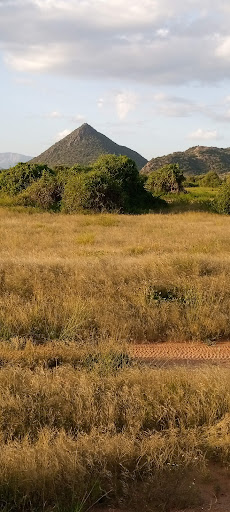
Koitogor and Ololokwe Hills in the background, shown as prominent landmarks
Palm groves and acacia woodlands near the river
Dry, open savannah and rocky ridges farther from the river
The map typically highlights permanent waterholes and seasonal streams, crucial for wildlife sightings in the dry season. These locations, along with river bends, are hotspots for spotting the "Samburu Special Five": Grevy’s zebra, reticulated giraffe, Somali ostrich, gerenuk, and Beisa oryx—species adapted to this semi-arid climate and often illustrated or noted in legend boxes on wildlife maps.
Lodges and campsites are conveniently positioned along the river and near scenic lookouts. Commonly marked ones include:
Samburu Intrepids
Elephant Bedroom Camp
Samburu Simba Lodge
Saruni Samburu (near Kalama Conservancy, just outside the reserve) Each is mapped for ease of access, often with side tracks leading directly from main roads.
Additionally, the map often includes wildlife migration paths (especially elephants, who cross the river regularly), birding hotspots (over 350 species recorded), and viewpoints that offer elevated perspectives of the scrubland and plains below.
One of the unique aspects of Samburu’s map is the blend of ecological and cultural context. The surrounding Samburu community lands and group ranches may be shaded differently or mentioned in side panels, emphasizing the co-existence of wildlife conservation and pastoralist heritage.
In summary, the map of Samburu National Reserve is not overly crowded or complex—it mirrors the reserve’s own elegant simplicity. It allows for orientation across the riverine-rich southern belt and into the arid, stark northern savannahs. It balances navigation with discovery, spotlighting the reserve’s key wildlife areas, scenic spots, and access points while maintaining an uncluttered view of this jewel of northern Kenya. For anyone planning a safari here, the map serves as both a guide and an invitation—to explore, observe, and connect with a uniquely adapted and vibrant...
Read more
 Learn more insights from Wanderboat AI.