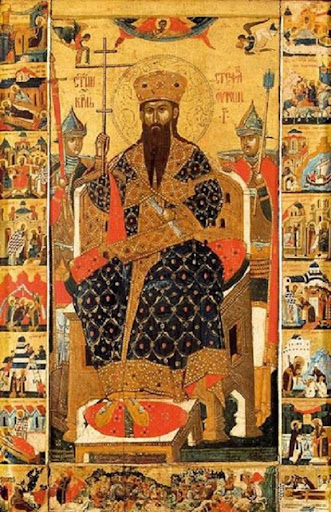
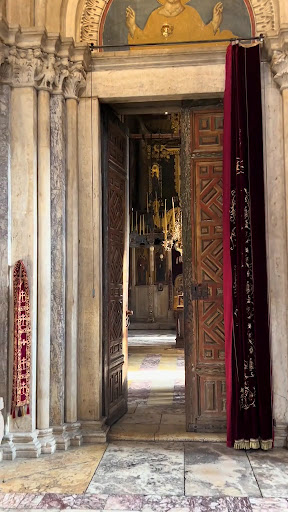
Visoki Decani Monastery - 1327, Decani, Serbia`s Kosovo Founder: Stefan Urosh III - Dechanski
UNESCO-Serbia
The Visoki Decani Monastery is a Serbian medieval monastery - the founding of King Stefan Dechanski (Stefan Urosh III) and the Serbian Emperor Dushan. The building was completed in 1335, and the frescoes were completed around 1350. The monastery is dedicated to Christ the Pantocrator and the Lord Jesus Christ - Spasovdan. The main Neimar was the master Vito Kotoranin.
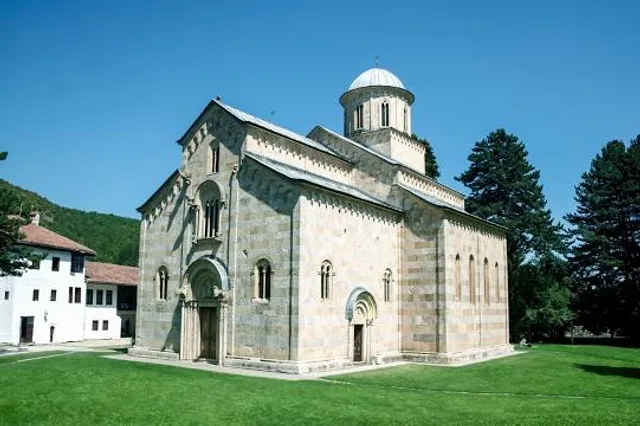
The monastery church is a five-storey building and belongs to the Raska style. The monastery is located in one valley near the Decanska Bistrica river southwest of Peja, under the mountain massif of Prokletije. The saints of St Stephen the Deacon and Saint Helena Deacan are resting in the Monastery. When the Turks wanted the Deans to turn to the mosque in 1692, there was a miracle that was prevented and attributed to it.
The monastery belonged to the Eparchy of the Raska-Prizren Serbian Orthodox Church and represents an immovable cultural asset as a cultural monument of exceptional significance.
Construction of the monastery The construction of the Church of the Christ of the Pantocrator (the Companion) began in 1327 by the kingship of the Serbian King Stefan Uros of the Third Decani. The main master was Br. Vita from Kotor, a Catholic monk, and the works were supervised by archbishop Danilo II, who worked on the "building and fortification" of the church, gathering "a great many artistic and skillful masters". Sam Stefan Decani built an angular stone on this church, and in 1330 he issued a charter of command, which he richly endowed his endowment. After the death of King Stefan, his work continued his son Stefan Uros the Fourth Dusan and ended the construction of Decan in 1335. At the time of Turkish slavery this imperial empire survived, but in very difficult circumstances. 1912 Monastery Visoki Dečani.JPG
It was painted much later in 1347-1348. years. The very proportions of this monastery (36 meters long and 30 meters high), during this time completely unusual, contributed to this monastery being called "High" (High Decani). Pleasantly simple, harmonious proportions this monastery is the largest Serbian medieval monument. According to the legend, Stefan Decanski himself has chosen the place on which the monastery is now lying. For this purpose, he traveled a lot of places, and then suddenly he encountered this place that fascinated him with his beauty. At the time of the renewal of the Patriarchate of Pec, in the second half of the 16th century, better times emerged. At that time, even throughout the 17th century, the monastery treasury, library and other monastic buildings were enriched with valuable valuables. Particularly significant work is the monastery scriptricy where the liturgical and theological books were rewritten. At the time of the Great Emigration of Serbs under the patriarch Arseny Carnojevic, the monastery was robbed by the Turks. Difficult times were again created for the monastery of Decani and its brotherhood which was hardly held for years. The Dečanska church of Christ the Pantocrators is among the largest buildings of medieval Serbia. The Church of the Monastery of Decan was built of marble squares in two colors. By its architectural complexity, the church represents a harmonious interweaving of the elements of the western - Romanesque and Gothic, and eastern - Byzantine style with already existing traditions of Serbian art. The painting of the decanic temple lasted from the end of the construction in 1335 until the year 1350 and there were several groups of the best painters of the Dushan Empire. According to the number of characters and scenes, as well as the total painted surface, the deacon frescoes are leading in the Serbian painting of the Middle Ages. In 1903, the monastery was caught fire and everything burned to the ground that Arnauts did not...
Read moreChristelijke schijnheiligheid in vol ornaat – welkom bij Visoki Dečani.
De poorten stonden open, maar de harten waren hermetisch gesloten.
Na 25 kilometer stappen in de brandende hitte, kom ik aan bij het beroemde klooster Visoki Dečani. Een plek waar pelgrims zogezegd welkom zijn. Een plek waar men zich hult in gewaden van geloof, maar de kern ervan lijkt te zijn verdwenen.
Aan de poort ontmoet ik een vriendelijke soldaat. Want ze moeten bewaakt worden tegen boze bevolking. Hij belt. Er is plaats. Ik mag blijven slapen. Ik haal mijn rugzak op, zwoeg terug naar boven in de zinderende zon, blij met de gastvrijheid die mij was beloofd. Ik krijg een pasje als gast, tot 15 augustus geldig. Alles leek in orde.
Tot ik meneer de pater ontmoette.
Wat ik daar aantrof was geen nederige dienaar van Christus. Het was een man gehuld in heilig schijnsel, maar doordrenkt van arrogantie. Hij keek me nauwelijks aan, vroeg waar ik vandaan kwam, en keurde me met één blik op mijn verwilderde uiterlijk – een reiziger, niet netjes opgepoetst, niet passend in zijn plaatje.
“Ik zoek een rustige plek om bij te komen,” zei ik. “Ik wil graag iets terugdoen, ik wil bijdragen.” Zijn antwoord: “Wij ontvangen geen gasten.”
Het gasthuis is er blijkbaar wel. Maar het hart is gesloten. En daarmee ook het geloof.
Ik hoefde hem niet te vertellen: • Dat ik geaccrediteerd pelgrim ben met honderden kilometers achter de rug. • Dat ik geen toerist ben, maar een reiziger. • Dat ik de christelijke waarden van gastvrijheid ken, belichaam en uitdraag.
Maar blijkbaar tel ik niet. Want ik zag er te moe uit. Te echt.
“Wat je voor de minste van mijn broeders doet, doe je voor Mij.” – zei Christus. Maar hier? Hier doet men liever niets voor de minste. Alleen voor wie past in het plaatje. De gelijkenis met de Farizeeën ligt pijnlijk voor het grijpen: luister naar hun woorden, maar volg hun daden niet.
En de Gulden Regel? Behandel anderen zoals je zelf behandeld wilt worden. Hier lijkt die vergeten.
Wat ironisch: beneden in het dorp waren het de moslims die me zonder vragen een bed aanboden, me hielpen, me omarmden als mens. Daar vond ik echte gastvrijheid. Niet in het huis van God. Maar op straat, bij de mensen.
Mijn advies: Bezoek het klooster voor de kunst. Niet voor de mensen. Hier vind je geen geloof. Hier vind je enkel de façade van geloof.
Christelijke waarden? Die heb ik beneden in het dorp gevonden. Hier vond ik enkel schijnheiligheid.
Update review 07/07/25
Geachte heer,
Hartelijk dank voor uw reactie en de tijd die u heeft genomen om mijn ervaring serieus te nemen. Ik neem akte van uw uitleg en begrijp dat het klooster bijzondere veiligheidsmaatregelen hanteert, gezien de context waarin uw gemeenschap leeft en functioneert.
Ik wil hierbij graag nog een belangrijke nuance toevoegen. Mijn toegang tot het klooster gebeurde niet als dagbezoeker, maar met een overnachtingspas, die mij na overleg en uitdrukkelijke toestemming werd verstrekt. Mijn identiteitsgegevens waren gekend en in bewaring gegeven, conform de gebruikelijke procedure voor bezoekers. Er werd op geen enkel moment gesproken over veiligheidsbeperkingen, noch bij het verstrekken van de pas, noch bij het latere persoonlijke contact. Er werd alleen kort gecommuniceerd, het is voor monniken.
Daarnaast wil ik opmerken dat bij bezoekers, noch dagtoeristen, noch pelgrims, enige controle van bagage of persoonlijke bezittingen plaatsvindt. Vanuit dat oogpunt lijkt het veiligheidsargument in deze situatie niet consistent of steekhoudend.
Uiteraard erken ik dat u uw veiligheidsregels en procedures heeft, maar op basis van de feitelijke situatie ter plaatse kan ik mij niet vinden in de uitleg zoals die mij nu wordt voorgelegd.
Ik beschouw dit als mijn laatste statement in deze kwestie. Ik waardeer uw reactie, maar blijf bij mijn oorspronkelijke ervaring en standpunt. Verdere discussie is voor mij niet noodzakelijk.
Zoals geschreven staat: “Vergeet de gastvrijheid niet; door haar hebben sommigen zonder het te weten engelen geherbergd.” (Hebreeën 13:2)
Met vriendelijke...
Read moreУз Бистрицу, под стрмим обронцима Проклетија, у месту дивном и шумовитом, натопљеном водама, основао је Свети краљ Стефан Дечански манастир Христа Спаса, највеличанственију задужбину богатог немањићког духовног и градитељског наслеђа. У његове мермерне зидове, велелепне фреске и скулптуре дубоко је уткан и занавек похрањен важан део историјског памћења и духовног идентитета српског народа. О животу Светог Краља, о манастирском властелинству и о грађењу и устројству дечанског манастира, сазнајемо из бројних литерарних средњовековних списа. Такође нам је из мноштва докумената и записа на српском, турском и другим језицима, позната каснија судбина манастира који је скоро непрестано нападан и пљачкан, па обнављан и дариван, и који је поред најтежих искушења остао живи сведок крваве историје Балкана. Обилазећи многа и различна места по целој својој области, нађе неко место у пределима хвостанским звано Дечане, ... украшено сваким дрвећем, јер је место многогранато и многоплодно, а уједно равно и травно, а одасвуд теку најслађе воде, а ту извиру велики извори и напаја га бистра река ... са западне стране затварају га највише горе и њихове стрмине, и отуда је тамо здрав ваздух. Са источне стране овоме се приуподобљава велико поље, наводњавано истом реком. Такво је дакле место часно и достохвално за подизање манастира. - Овако Григорије Цамблак описује избор места за оснивање краљеве задужбине у подножју Проклетија, између Пећи, седишта српске Архиепископије и Призрена, једне од славних престоница Немањића. Подручје манастирског поседа било је огромно: чинило је географску целину од реке Белог Дрима у метохијско-призренској котлини до Комова на данашњој црногорској граници и од Пећи до реке Валбоне у Албанији, са издвојеним поседима у Полимљу, Дреници, око Призрена и реке Бојане. Манастир је подигнут на десној обали Дечанске Бистрице, у затрнавској жупи, на месту које је још Свети Сава назначио за подизање манастира, на ивици плодне метохијске равнице обрасле шумарцима питомог кестена и високим боровима. Зараван са југозападне стране манастира прелази у клисуру која се уздиже до сурих врхова Проклетија – природне границе која раздваја Стару Србију од Албаније. Стефан Урош III је, после избора места за зидање манастира, дао да се тај простор огради бедемом ојачаним кулама, тзв. манастирским градом, уз који су биле прислоњене келије за монахе и друге манастирске грађевине. За ове радове је био задужен искусан зидар Ђорђе са браћом Доброславом и Николом, док је протомајстор фра Вита са которским каменоресцима градио и рељефима украшавао цркву Пантократора. Сведоци изградње Дечана усхићено пишу о вештини мајстора који су клесали многоразлични мермер, подижући зидове цркве тако, да је било чудно и преславно онима који гледају. То многохваљено дело фра Вита је оденуо у западњачко романоготичко рухо. Унутрашњи простор грађевине је, међутим, као и код ранијих цркава такозваног рашког стила, потпуно био прилагођен православном култу. Овде се препознаје утицај Светог архиепископа Данила II, главног краљевог саветника и сарадника у овом подухвату. Величанствености спољашњег изгледа храма одговарала је унутрашња красота храма: све од тесаног камена, злата и другог скупоценог материјала. Био је богато снабдевен црквеним богослужбеним предметима, златним и сребрним сасудима, скупоценим одеждама, украшеним бисерима и драгим камењем, свиленим тканинама. Сам ктитор ће у својој повељи рећи: Почех зидати дом Господу Богу своме Сведржитељу, и сазидавши украсих га свим лепотама унутрашњим и спољашњим. Натпис на старом српском језику, сачуван изнад јужног портала цркве Високих Дечана говори о изградњи овога манастира. Главни градитељ, фра Вита из Котора града краљевог, како стоји у натпису, зидао је храм осам година, до 1335. Оснивач манастира је Свети Стефан Урош Трећи Дечански, син Светог краља Милутина и отац цара Душана. Црква га слави као великомученика...
Read more