Site 2
Plaines des Jarres : Étude archéologique
La première étude archéologique des sites a été réalisée vers 1930 par Madeleine Colani de l'École française d'Extrême-Orient. Elle entreprit la fouille des alentours de plusieurs jarres, ainsi que celle d'une grotte située non loin et dotée d'une cheminée naturelle, dans laquelle furent découverts d'importantes traces de feu et des ossements humains calcinés. Elle émit alors l'hypothèse que cette grotte aurait été un incinérateur naturel lors des funérailles, et que les cendres auraient ensuite été conservées dans les jarres. Malheureusement, les éléments de datation des os retrouvés dans la grotte ou près des jarres sont très étalés dans le temps, et ne permettent pas de tirer de conclusions précises. Les travaux de Madeleine Colani restent cependant, à ce jour, la source de connaissances la plus complète dont nous disposions sur le sujet.
Situé à 25km au sud de la ville.
Il comprend 90 jarres éparpillées sur 2 collines adjacentes traversées par une mauvaise piste.
Il faut impérativement rester sur les sentiers tracés par les démineurs car de nombreux engins explosifs parsèment les environs.
Sur la colline de gauche, une jarre a été transpercée par un arbre qui a poussé au travers.
Au sommet de la colline de droite, la vue sur la vallée est fantastique et de nombreux sentiers déminés permettent de faire une petite balade dans une pinède.
Site 2
Plains of Jars: Archaeological Study
The first archaeological site survey was conducted in 1930 by Madeleine Colani of the French School of the Far East. She began the excavation of around several jars, as well as a cave not far and has a natural fireplace, in which were found significant traces of fire and charred human bones. She hypothesized that this cave was a natural incinerator at the funeral, and the ashes were subsequently preserved in jars. Unfortunately, elements dating of bones found in the cave or near the jars are spread over time, and do not allow to draw any specific conclusions. Madeleine Colani's work, however, remain, up to now, the most complete source of knowledge available to us on the subject.
Located 25km south of the city.
Includes 90 jars scattered on two adjacent hills crossed by a bad track.
It is imperative to stay on marked paths by deminers because many explosive devices scattered throughout the area.
On the left hill, a jar was pierced by a tree that has pushed through.
At the top of the right hill, the view of the valley is fantastic and many cleared trails allow for a walk in a...
Read more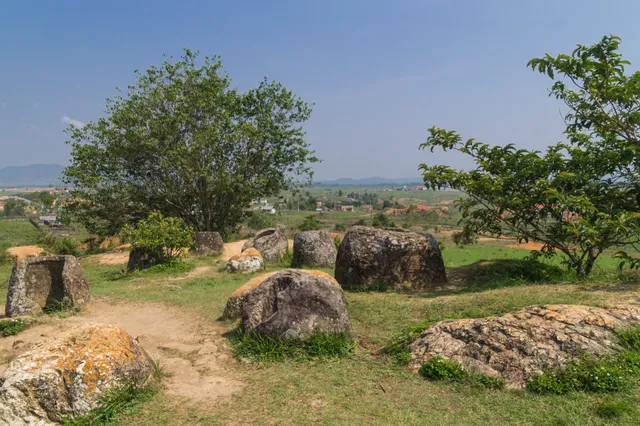
 Learn more insights from Wanderboat AI.








