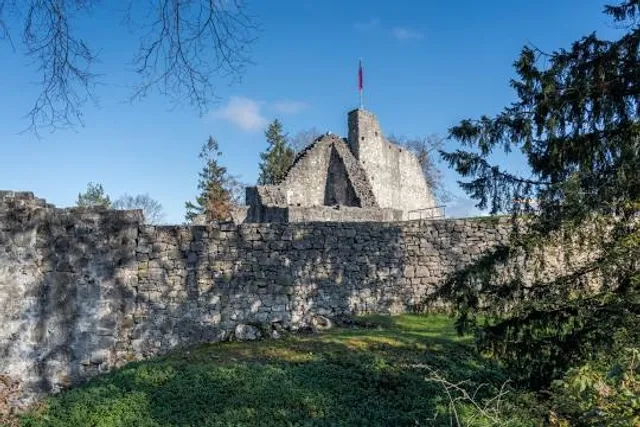
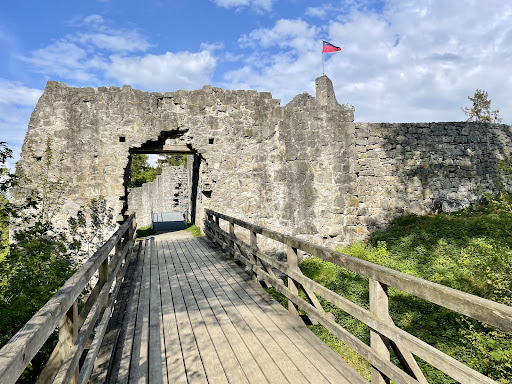
Visiting the Ruine Neu-Schellenberg (Obere Burg) was an extraordinary experience that I will cherish for a long time. Nestled in the scenic hills of Schellenberg, this historical site offers a fascinating glimpse into the past, along with breathtaking views of the surrounding landscape.
From the moment I arrived, I was struck by the serene beauty of the area. The ruins are easily accessible, with well-maintained paths leading up to the site. The hike itself was enjoyable, offering lovely views and a chance to immerse myself in the natural beauty of the region. The trail is suitable for all ages and fitness levels, making it a great destination for families, couples, and solo travelers alike.
As I approached the ruins, the impressive structure of Obere Burg came into view. The castle's history dates back to the 13th century, and wandering through its remnants gave me a profound sense of connection to the past. Information plaques are strategically placed around the site, providing insightful details about the castle's history, architecture, and significance. These educational tidbits enhanced my visit, allowing me to appreciate the historical context of the ruins fully.
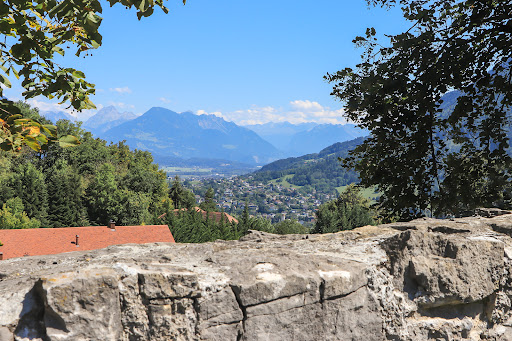
One of the highlights of my visit was the panoramic view from the top. The vantage point offers sweeping vistas of the Rhine Valley and the surrounding countryside. It was the perfect spot to pause and take in the majestic scenery, with the rolling hills and lush forests stretching out as far as the eye could see. I spent quite some time here, simply enjoying the tranquility and the stunning landscape.
The atmosphere at Ruine Neu-Schellenberg is incredibly peaceful, making it a perfect escape from the hustle and bustle of everyday life. There are several picnic areas around the site, so I brought along a packed lunch and enjoyed a relaxing meal with a view. It was a wonderful way to spend an afternoon, surrounded by nature and history.
The ruins are also a fantastic spot for photography enthusiasts. The combination of ancient stone walls, vibrant greenery, and expansive views offers countless opportunities for stunning shots. I was able to capture some incredible photos that will serve as lasting memories of this visit.
Overall, my trip to Ruine Neu-Schellenberg (Obere Burg) was a truly enriching experience. The combination of historical significance, natural beauty, and serene atmosphere makes it a must-visit destination. Whether you're a history buff, nature lover, or simply looking for a peaceful retreat, this site has something to offer. I highly recommend a visit to anyone traveling through the region – you won't be...
Read moreSchöne relativ grosse Ruine mit vielen Grillstellen.... schöne Aussicht und gut erreichbar vom Parkplatz aus.
Neu-Schellenberg ist, anders als der Name erwarten lässt, die ältere der beiden Schellenberger Burgen.[3] Wahrscheinlich um das Jahr 1200 wurde an dieser Stelle ein erster kleiner Burgbau durch die zu jener Zeit häufig in Urkunden und Chroniken der Region erwähnten Herren von Schellenberg errichtet, die ursprünglich im oberen Isartal ansässig waren und vermutlich durch die Stauferkaiser im Alpenrheintal angesiedelt wurden. Bereits 1317 veräusserten die Schellenberger ihren gesamten Besitz auf dem Eschnerberg an die Grafen von Werdenberg-Heiligenberg. Die Burg Neu-Schellenberg selbst wird urkundlich erstmals 1348 erwähnt.
Im Jahr 1394 räumte der damalige Besitzer, Graf Albrecht III. von Werdenberg-Bludenz, den Herzögen von Österreich das Öffnungsrecht an beiden Schellenberger Burgen ein.[4] Im Verlauf der Appenzellerkriege wurde die Burg Neu-Schellenberg 1405 niedergebrannt, danach aber wieder hergerichtet. In der Folgezeit wechselte sie mehrfach die Besitzer. So verkaufte Albrecht III. von Werdenberg-Bludenz im Jahr 1412 die Burg an seinen Schwiegersohn Wilhelm von Montfort-Tettnang. Ab spätestens 1437 war die Herrschaft Schellenberg mit den beiden Burgen im Besitz der Freiherren von Brandis, die sie im Jahr 1510 an Graf Rudolf V. von Sulz weiterverkauften. Zu dieser Zeit war die Burg vermutlich noch intakt, wurde aber wohl zu Beginn des 16. Jahrhunderts verlassen und verfiel anschliessend. 1613 erwarben die Grafen von Hohenems die Herrschaft Schellenberg, deren Burgen in der Emser Chronik von 1616 als Ruinen («zerbrochen») bezeichnet werden. Schliesslich kamen die Fürsten von Liechtenstein mit dem Kauf der Herrschaft Schellenberg im Jahr 1699 auch in den Besitz der dortigen Burgruinen.
Im 19. Jahrhundert wurden die Überreste der beiden Burgen von der örtlichen Bevölkerung als Steinbrüche vor allem für den Bau der Schellenberger Pfarrkirche und des Klosters genutzt. Fürst Franz Josef II. von Liechtenstein schenkte die stark überwachsenen Ruinen 1956 dem Historischen Verein für das Fürstentum Liechtenstein, der die Burg Neu-Schellenberg in den Jahren 1960 bis 1964 ausgraben und konservieren...
Read moreObere Burg is a historical castle located in Schaan, Liechtenstein. Often referred to as the Upper Castle, it is one of the oldest and most significant landmarks in the region. The castle dates back to the 12th century and offers a glimpse into the medieval history of Liechtenstein. While it is not as extensively preserved as some other castles, Obere Burg remains a symbol of the country’s heritage. Visitors can explore the ruins and enjoy panoramic views of the surrounding landscapes, making it a peaceful spot for history enthusiasts and nature...
Read more