HTML SitemapExplore
logo
Find Things to DoFind The Best Restaurants

Hill of Crosses — Attraction in Siauliai County

Name
Hill of Crosses
Description
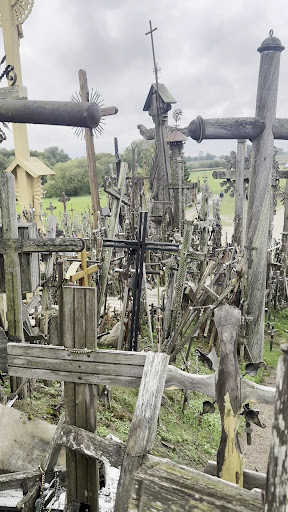
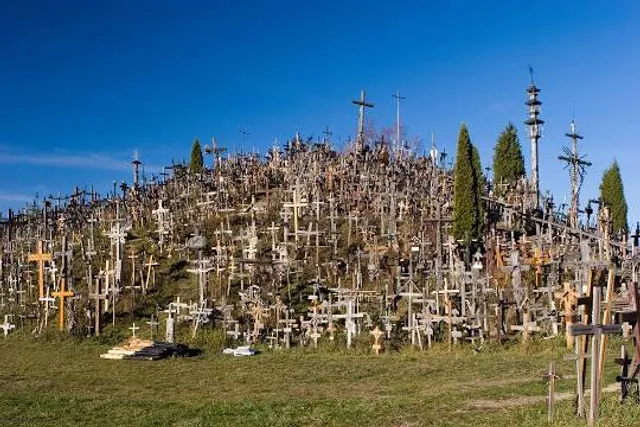
Hill of Crosses is a site of pilgrimage about 12 km north of the city of Šiauliai, in northern Lithuania. The precise origin of the practice of leaving crosses on the hill is uncertain, but it is believed that the first crosses were placed on the former Jurgaičiai or Domantai hill fort after the 1831 Uprising.
Nearby attractions
Nearby restaurants
Nearby hotels
Related posts
Keywords
Hill of Crosses tourism.Hill of Crosses hotels.Hill of Crosses bed and breakfast. flights to Hill of Crosses.Hill of Crosses attractions.Hill of Crosses restaurants.Hill of Crosses travel.Hill of Crosses travel guide.Hill of Crosses travel blog.Hill of Crosses pictures.Hill of Crosses photos.Hill of Crosses travel tips.Hill of Crosses maps.Hill of Crosses things to do.
Hill of Crosses things to do, attractions, restaurants, events info and trip planning
Hill of Crosses
LithuaniaSiauliai CountyHill of Crosses

Basic Info

Hill of Crosses

Jurgaičiai, 81439 Šiauliai District Municipality, Lithuania
4.6(4.7K)
Open 24 hours
Save
spot

Ratings & Description

Info

Hill of Crosses is a site of pilgrimage about 12 km north of the city of Šiauliai, in northern Lithuania. The precise origin of the practice of leaving crosses on the hill is uncertain, but it is believed that the first crosses were placed on the former Jurgaičiai or Domantai hill fort after the 1831 Uprising.

Cultural
Outdoor
Family friendly
attractions: , restaurants:
logoLearn more insights from Wanderboat AI.
Phone
+370 41 370860
Website
kryziukalnas.lt

Plan your stay

hotel
Pet-friendly Hotels in Siauliai County
Find a cozy hotel nearby and make it a full experience.
hotel
Affordable Hotels in Siauliai County
Find a cozy hotel nearby and make it a full experience.
hotel
The Coolest Hotels You Haven't Heard Of (Yet)
Find a cozy hotel nearby and make it a full experience.
hotel
Trending Stays Worth the Hype in Siauliai County
Find a cozy hotel nearby and make it a full experience.

Reviews

Get the Appoverlay
Get the AppOne tap to find yournext favorite spots!
Wanderboat LogoWanderboat

Your everyday Al companion for getaway ideas

CompanyAbout Us
InformationAI Trip PlannerSitemap
SocialXInstagramTiktokLinkedin
LegalTerms of ServicePrivacy Policy

Get the app

© 2025 Wanderboat. All rights reserved.
logo

Reviews of Hill of Crosses

4.6
(4,694)
avatar
5.0
25w

Defiance by pilgrimage! To the right of the A12, about 12 km north of Šiauliai, lies an approximately 8-meter high Jurgaičiai or Domantai Hill, better known to everyone as the Hill of Crosses. Archaeological research has shown that there was a castle and a settlement on the hill at least as early as the 14th century. However, the hill gained its name and fame during the uprisings of 1830/31 and 1863/64, when crosses were erected here for the first time for fallen rebels whose burials were unknown. At the beginning of the 20th century there were about 150 crosses and during the first years of the Soviet occupation the number of crosses quickly increased to about 400. The brutal oppression of Lithuania, between 1945 and 1953 about 100,000 Lithuanians were deported to Siberia, decreased the placing of crosses. After the death of Stalin the placing of crosses increased greatly to the great annoyance of the Soviet authorities and in 1961 the now 5000 crosses were literally bulldozed flat. Security by the KGB and severe punishments if you were caught did not help, the Lithuanians continued to sneak up the hill to place crosses. After three more bulldozer actions in 1973, 74 and 75, the Soviets finally gave up in 1985, the Hill of Crosses became a national symbol of resistance and by 1990 there were an estimated 40,000 crosses. The mass that Pope John Paul II gave in 1993 for some 100,000 believers made it a real place of pilgrimage and gave a further boost to the placing of crosses. Today (2025) an estimated 200,000! crosses and rosaries stand and hang here. Even non-believers cannot help but be deeply impressed by this mystical hill. Definitely...

   Read more
avatar
5.0
12w

The hill of crosses is a hill covered with over 250,000 crosses of every shape, size, and constitution. Today our group of 10 explored the collection of wood, metal, fabric and more crosses, rosaries and religious symbols. Several people brought more crosses, some purchased from the gift store near the information center, again in metal, wood and in various sizes. Several large crosses still stand but a few have fallen due to exposture to the elements. Crosses, rosaries, and special intention prayers from all over the world unite. Everyone seems to agree that house once stood here and was burnt by the Russians in 17th century. People began putting crosses here in mid 19th century either to praise God or to honor those killed in mid century uprisings against Tsarist Russia. In. 1961, Russians burned wood crosses and melted down metal ones. But the Hill of Crosses survives today with people bringing more crosses for praise, petition, remembrance. Some crosses bear words asking for world peace This is a peaceful, powerful stop for people of all faiths or with no Faith. The walk through the crosses can be steep and muddy and the view can be appreciated from any vantage point. At the parking entrance, a 5 minute walk, a open air gift shop offers amber jewelry, all types of small crosses, postcards and magnets. A smaller indoor gift store offers a selection of amber and jade items. The restroom...

   Read more
avatar
3.0
4y

Hill of Crosses in Lithuania Visited on 2/10/2019

It may be a site of pilgrimage, but I do have a mixed feeling about it.

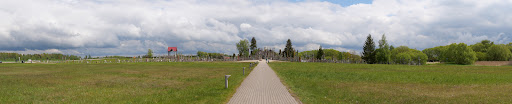
There is plenty of car park, and no entrance fee. After passing the entrance of a big thick wall is immense area of lustrous green fields on both sides of the brick pave path.

It is quite a fair walk to the hill where the crosses are. The hill has gentle slope, an it is not wheelchair friendly.

According to a source, "Poles and Lithuanians unsuccessfully rebelled against Russian authorities in 1831 and 1863. These two uprisings are connected with the beginnings of the hill: as families could not locate bodies of perished rebels, they started putting up symbolic crosses at the site of a former hill fort."

I do not think I like to visit this place alone or in the evening. It is rather eerie for my liking. Although it is called the Hill of Crosses, there are some big statues as well.

When Pope John Paul II visited the Hill of Crosses, he declared it a place for hope, peace, love and sacrifice.

On a very serious note, I consider this place is a fire hazard. Most of the crosses are small and wooden, simply and randomly pegged into the soil very close to each other. In fact, it is very messy and unsightly to say the least. The management should seriously consider taking necessary precaution to prevent malicious fire bugs or lightning strike to...

   Read more
Page 1 of 7
Previous
Next

Posts

Your browser does not support the video tag.
anastazjasadventuresanastazjasadventures
Add this destination to your European summer getaway this year👇🏼 🇱🇹 LITHUANIA 🇱🇹 Sitting right in the centre of Europe on the Baltic Sea, surrounded by Belarus, Latvia, Poland and Russia, Lithuania is truly a gem of Eastern Europe and the Baltics. Famous for its ancient history, interesting pagan roots and archaic language, there’s lots to love about it. Here are some locations you MUST visit: 📍The Hil of Crosses 📍 Trakai Medieval Castle 📍 Kaunas (European Capital of Culture 2022) 📍 Vilnius Old Town (listed as a UNESCO World Heritage Site) 📍 Curonian Spot National Park (UNESCO World Heritage Site) 📍 Aukštaitija National Park [SAVE THIS POST for reference when you plan your trip] #AnastazjaInLithuania #visitlithuania #lovelithuania #postcardplaces #explorelithuania #wheretonext #welivetoexplore #welivetotravel #baltics #summerineurope #europeansummer
KoenKoen
Defiance by pilgrimage! To the right of the A12, about 12 km north of Šiauliai, lies an approximately 8-meter high Jurgaičiai or Domantai Hill, better known to everyone as the Hill of Crosses. Archaeological research has shown that there was a castle and a settlement on the hill at least as early as the 14th century. However, the hill gained its name and fame during the uprisings of 1830/31 and 1863/64, when crosses were erected here for the first time for fallen rebels whose burials were unknown. At the beginning of the 20th century there were about 150 crosses and during the first years of the Soviet occupation the number of crosses quickly increased to about 400. The brutal oppression of Lithuania, between 1945 and 1953 about 100,000 Lithuanians were deported to Siberia, decreased the placing of crosses. After the death of Stalin the placing of crosses increased greatly to the great annoyance of the Soviet authorities and in 1961 the now 5000 crosses were literally bulldozed flat. Security by the KGB and severe punishments if you were caught did not help, the Lithuanians continued to sneak up the hill to place crosses. After three more bulldozer actions in 1973, 74 and 75, the Soviets finally gave up in 1985, the Hill of Crosses became a national symbol of resistance and by 1990 there were an estimated 40,000 crosses. The mass that Pope John Paul II gave in 1993 for some 100,000 believers made it a real place of pilgrimage and gave a further boost to the placing of crosses. Today (2025) an estimated 200,000! crosses and rosaries stand and hang here. Even non-believers cannot help but be deeply impressed by this mystical hill. Definitely worth a trip!
Toni ThompsonToni Thompson
The hill of crosses is a hill covered with over 250,000 crosses of every shape, size, and constitution. Today our group of 10 explored the collection of wood, metal, fabric and more crosses, rosaries and religious symbols. Several people brought more crosses, some purchased from the gift store near the information center, again in metal, wood and in various sizes. Several large crosses still stand but a few have fallen due to exposture to the elements. Crosses, rosaries, and special intention prayers from all over the world unite. Everyone seems to agree that house once stood here and was burnt by the Russians in 17th century. People began putting crosses here in mid 19th century either to praise God or to honor those killed in mid century uprisings against Tsarist Russia. In. 1961, Russians burned wood crosses and melted down metal ones. But the Hill of Crosses survives today with people bringing more crosses for praise, petition, remembrance. Some crosses bear words asking for world peace This is a peaceful, powerful stop for people of all faiths or with no Faith. The walk through the crosses can be steep and muddy and the view can be appreciated from any vantage point. At the parking entrance, a 5 minute walk, a open air gift shop offers amber jewelry, all types of small crosses, postcards and magnets. A smaller indoor gift store offers a selection of amber and jade items. The restroom costs Euro 1.
See more posts
See more posts
hotel
Find your stay

Pet-friendly Hotels in Siauliai County

Find a cozy hotel nearby and make it a full experience.

Add this destination to your European summer getaway this year👇🏼 🇱🇹 LITHUANIA 🇱🇹 Sitting right in the centre of Europe on the Baltic Sea, surrounded by Belarus, Latvia, Poland and Russia, Lithuania is truly a gem of Eastern Europe and the Baltics. Famous for its ancient history, interesting pagan roots and archaic language, there’s lots to love about it. Here are some locations you MUST visit: 📍The Hil of Crosses 📍 Trakai Medieval Castle 📍 Kaunas (European Capital of Culture 2022) 📍 Vilnius Old Town (listed as a UNESCO World Heritage Site) 📍 Curonian Spot National Park (UNESCO World Heritage Site) 📍 Aukštaitija National Park [SAVE THIS POST for reference when you plan your trip] #AnastazjaInLithuania #visitlithuania #lovelithuania #postcardplaces #explorelithuania #wheretonext #welivetoexplore #welivetotravel #baltics #summerineurope #europeansummer
anastazjasadventures

anastazjasadventures

hotel
Find your stay

Affordable Hotels in Siauliai County

Find a cozy hotel nearby and make it a full experience.

Get the Appoverlay
Get the AppOne tap to find yournext favorite spots!
Defiance by pilgrimage! To the right of the A12, about 12 km north of Šiauliai, lies an approximately 8-meter high Jurgaičiai or Domantai Hill, better known to everyone as the Hill of Crosses. Archaeological research has shown that there was a castle and a settlement on the hill at least as early as the 14th century. However, the hill gained its name and fame during the uprisings of 1830/31 and 1863/64, when crosses were erected here for the first time for fallen rebels whose burials were unknown. At the beginning of the 20th century there were about 150 crosses and during the first years of the Soviet occupation the number of crosses quickly increased to about 400. The brutal oppression of Lithuania, between 1945 and 1953 about 100,000 Lithuanians were deported to Siberia, decreased the placing of crosses. After the death of Stalin the placing of crosses increased greatly to the great annoyance of the Soviet authorities and in 1961 the now 5000 crosses were literally bulldozed flat. Security by the KGB and severe punishments if you were caught did not help, the Lithuanians continued to sneak up the hill to place crosses. After three more bulldozer actions in 1973, 74 and 75, the Soviets finally gave up in 1985, the Hill of Crosses became a national symbol of resistance and by 1990 there were an estimated 40,000 crosses. The mass that Pope John Paul II gave in 1993 for some 100,000 believers made it a real place of pilgrimage and gave a further boost to the placing of crosses. Today (2025) an estimated 200,000! crosses and rosaries stand and hang here. Even non-believers cannot help but be deeply impressed by this mystical hill. Definitely worth a trip!
Koen

Koen

hotel
Find your stay

The Coolest Hotels You Haven't Heard Of (Yet)

Find a cozy hotel nearby and make it a full experience.

hotel
Find your stay

Trending Stays Worth the Hype in Siauliai County

Find a cozy hotel nearby and make it a full experience.

The hill of crosses is a hill covered with over 250,000 crosses of every shape, size, and constitution. Today our group of 10 explored the collection of wood, metal, fabric and more crosses, rosaries and religious symbols. Several people brought more crosses, some purchased from the gift store near the information center, again in metal, wood and in various sizes. Several large crosses still stand but a few have fallen due to exposture to the elements. Crosses, rosaries, and special intention prayers from all over the world unite. Everyone seems to agree that house once stood here and was burnt by the Russians in 17th century. People began putting crosses here in mid 19th century either to praise God or to honor those killed in mid century uprisings against Tsarist Russia. In. 1961, Russians burned wood crosses and melted down metal ones. But the Hill of Crosses survives today with people bringing more crosses for praise, petition, remembrance. Some crosses bear words asking for world peace This is a peaceful, powerful stop for people of all faiths or with no Faith. The walk through the crosses can be steep and muddy and the view can be appreciated from any vantage point. At the parking entrance, a 5 minute walk, a open air gift shop offers amber jewelry, all types of small crosses, postcards and magnets. A smaller indoor gift store offers a selection of amber and jade items. The restroom costs Euro 1.
Toni Thompson

Toni Thompson

See more posts
See more posts