A Visit to Rumah Za’ba – Rediscovering a Forgotten Giant
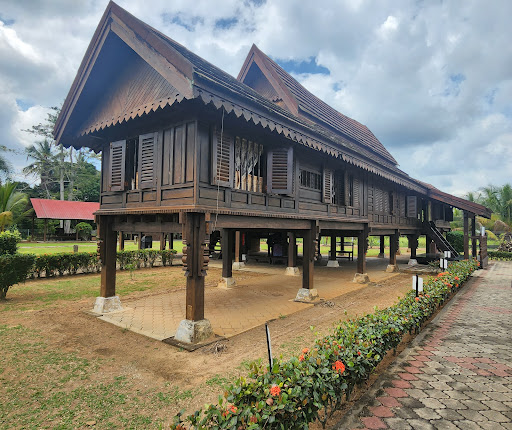
Our USM road trip 2.0 through Negeri Sembilan led us, three former college-mates, to a quiet yet historically significant site — Rumah Za’ba in Batu Kikir, Jempol. At first glance, the traditional wooden house stood humbly amidst its village setting, raised on stilts with carved details that spoke of Negeri Sembilan’s heritage. It was not a grand palace or monument, but within its walls lived the legacy of a man who shaped the intellectual foundation of the Malays — Tan Sri Zainal Abidin Ahmad, better known as Za’ba.
Like most Malaysians, we had learned about Za’ba during our school years. His name appeared in history books, his writings briefly quoted, his title of “linguist and reformer” mentioned. Back then, it felt like distant information, something memorized for exams rather than truly understood. But standing in his birthplace, walking on the very floors where he grew up, our perspective shifted.
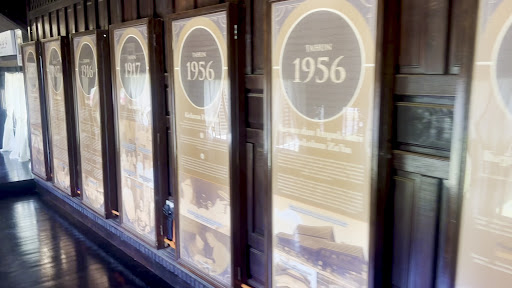
Inside the house-turned-gallery, we found displays of his writings, manuscripts, and quotes. One of them struck us deeply:
“Bahawasanya jika tiada pelajaran, nescaya tiadalah jalan bagi mereka itu hendak terlepas keluar daripada kepapaan perangai dan kepapaan alat-alat otak.”
(Without education, there is no way for people to escape the poverty of character and the poverty of the mind.)
It was here that Za’ba’s true importance dawned on us. He was not merely a figure in textbooks — he was a reformist who fought ignorance with education, a nationalist who uplifted the Malay spirit, and an intellectual whose grammar reforms laid the foundation for modern Malay language. His struggle was not on the battlefield but in the classroom, in the press, and in the minds of his people.
As we reflected, we realized that men like Za’ba and other nationalists prepared the soil for independence. They gave Malays the intellectual tools, the confidence, and the vision to rise as a nation. Visiting this house made us respect not only Za’ba, but also the countless others who fought — in their own ways — for the freedom we enjoy today.
Leaving Rumah Za’ba, the three of us agreed that this road trip had given us more than sightseeing memories. It gave us a renewed sense of respect for our forefathers, a reminder that education is liberation, and an appreciation for the quiet strength of those who built our nation not with weapons, but with...
Read more
 Learn more insights from Wanderboat AI.