HTML SitemapExplore
logo
Find Things to DoFind The Best Restaurants

Richat Structure — Attraction in Maghreb

Name
Richat Structure
Description
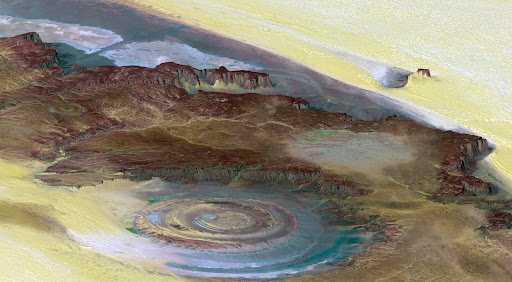
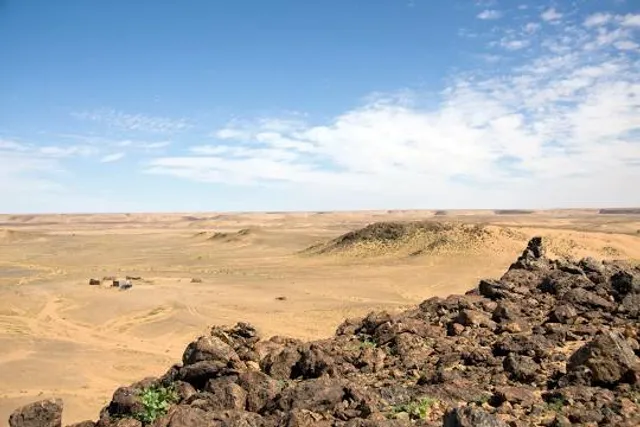
The Richat Structure, also called Guelb er Richât is a prominent circular geological feature in the Sahara's Adrar Plateau, near Ouadane, west–central Mauritania, Northwest Africa. In the local dialect, rīšāt means feathers and it also is known locally in Arabic as tagense.
Nearby attractions
Nearby restaurants
Nearby hotels
Related posts
Keywords
Richat Structure tourism.Richat Structure hotels.Richat Structure bed and breakfast. flights to Richat Structure.Richat Structure attractions.Richat Structure restaurants.Richat Structure travel.Richat Structure travel guide.Richat Structure travel blog.Richat Structure pictures.Richat Structure photos.Richat Structure travel tips.Richat Structure maps.Richat Structure things to do.
Richat Structure things to do, attractions, restaurants, events info and trip planning
Richat Structure
MauritaniaAdrarMaghrebRichat Structure

Basic Info

Richat Structure

وادان, Mauritania
4.7(879)
Open 24 hours
Save
spot

Ratings & Description

Info

The Richat Structure, also called Guelb er Richât is a prominent circular geological feature in the Sahara's Adrar Plateau, near Ouadane, west–central Mauritania, Northwest Africa. In the local dialect, rīšāt means feathers and it also is known locally in Arabic as tagense.

Outdoor
Scenic
Adventure
Off the beaten path
attractions: , restaurants:
logoLearn more insights from Wanderboat AI.
Website
earthobservatory.nasa.gov

Plan your stay

hotel
Pet-friendly Hotels in Maghreb
Find a cozy hotel nearby and make it a full experience.

hotel
Affordable Hotels in Maghreb
Find a cozy hotel nearby and make it a full experience.

hotel
The Coolest Hotels You Haven't Heard Of (Yet)
Find a cozy hotel nearby and make it a full experience.

hotel
Trending Stays Worth the Hype in Maghreb
Find a cozy hotel nearby and make it a full experience.

Reviews

Get the Appoverlay
Get the AppOne tap to find yournext favorite spots!
Wanderboat LogoWanderboat

Your everyday Al companion for getaway ideas

CompanyAbout Us
InformationAI Trip PlannerSitemap
SocialXInstagramTiktokLinkedin
LegalTerms of ServicePrivacy Policy

Get the app

© 2025 Wanderboat. All rights reserved.
logo

Posts

Atlantis ToursAtlantis Tours
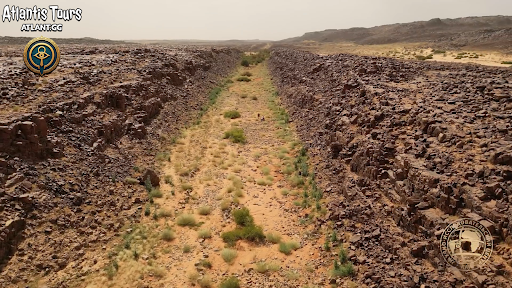
Just returned from the most mind-blowing expedition of my life. For 10 days, we explored the mysterious Eye of Sahara, and what we discovered left me speechless. The massive structure isn't visible from ground level - its true scale only reveals itself in satellite imagery. But the real shock came when we found the canals. Perfect angles, consistent width throughout - this isn't natural formation. Plato mentioned similar canals when he described Atlantis. Using our drones, we documented everything. The ancient waterways, mysterious structures, and what appears to be harbor-like expansions. The precision is incredible. Walking these ancient paths, touching these stones... it's like history coming alive. The wildest part? The entire region shows signs of being underwater in the past. Everything matches Plato's descriptions perfectly. Too perfectly to be coincidence. I've been on many expeditions, but nothing compares to this. It's one thing to read about Atlantis, but standing there, seeing it with your own eyes... it changes everything. The team is planning another expedition. Not a tourist trip - real archaeological exploration. Spots are limited. I want to go there again! Atlantis Tours, Atlant.gg
Richard SimardRichard Simard
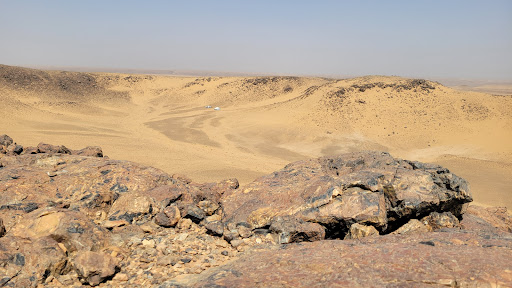
Fascinating place. There is still a lot of debate about how was formed. Another reviewer here said this is a phenomenon from separating continents. But the rocks do not appear to be magmic; they are composite rocks, very strange and alluring. It's the kind of place where you feel like a major discovery of some kind could be made at any moment. Be warned, I was here in early October and it was over 40°C which is typical for the desert here, but the radiating heat refracting from the rocks made me feel like I was partially cooked alive later that day (because I was). The heat is stronger here than normal desert sand. We had a soundtrack of a crying goat who was about to be slain at a campsite in the center of the structure belonging to some gold prospectors. It's a testament that, along with most parts of Mauritania, you never know what to expect. This is a public site and is not maintained or managed by anyone. You can stop by some vendors on the outer ring of the structure who sell unique relics they've found on the grounds if you're disinclined to search for anything yourself.
MILAN KUMARMILAN KUMAR
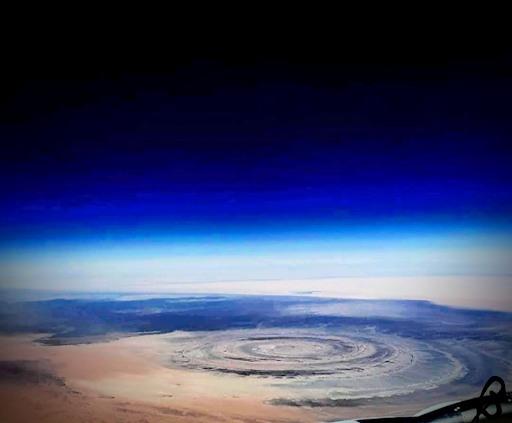
The Richat Structure, also known as the "Eye of the Sahara," is a massive, circular geological formation located in the Sahara Desert in Mauritania. It is approximately 40 kilometers (25 miles) in diameter and can be easily seen from space, resembling a giant eye. The structure is believed to have formed as a result of volcanic activity and subsequent erosion. The Richat Structure is a unique and fascinating geological feature that has puzzled scientists for many years. While its exact origin is still debated, it remains a valuable source of information about the Earth's history. Eye of the Sahara.
See more posts
See more posts
hotel
Find your stay

Pet-friendly Hotels in Maghreb

Find a cozy hotel nearby and make it a full experience.

Just returned from the most mind-blowing expedition of my life. For 10 days, we explored the mysterious Eye of Sahara, and what we discovered left me speechless. The massive structure isn't visible from ground level - its true scale only reveals itself in satellite imagery. But the real shock came when we found the canals. Perfect angles, consistent width throughout - this isn't natural formation. Plato mentioned similar canals when he described Atlantis. Using our drones, we documented everything. The ancient waterways, mysterious structures, and what appears to be harbor-like expansions. The precision is incredible. Walking these ancient paths, touching these stones... it's like history coming alive. The wildest part? The entire region shows signs of being underwater in the past. Everything matches Plato's descriptions perfectly. Too perfectly to be coincidence. I've been on many expeditions, but nothing compares to this. It's one thing to read about Atlantis, but standing there, seeing it with your own eyes... it changes everything. The team is planning another expedition. Not a tourist trip - real archaeological exploration. Spots are limited. I want to go there again! Atlantis Tours, Atlant.gg
Atlantis Tours

Atlantis Tours

hotel
Find your stay

Affordable Hotels in Maghreb

Find a cozy hotel nearby and make it a full experience.

Get the Appoverlay
Get the AppOne tap to find yournext favorite spots!
Fascinating place. There is still a lot of debate about how was formed. Another reviewer here said this is a phenomenon from separating continents. But the rocks do not appear to be magmic; they are composite rocks, very strange and alluring. It's the kind of place where you feel like a major discovery of some kind could be made at any moment. Be warned, I was here in early October and it was over 40°C which is typical for the desert here, but the radiating heat refracting from the rocks made me feel like I was partially cooked alive later that day (because I was). The heat is stronger here than normal desert sand. We had a soundtrack of a crying goat who was about to be slain at a campsite in the center of the structure belonging to some gold prospectors. It's a testament that, along with most parts of Mauritania, you never know what to expect. This is a public site and is not maintained or managed by anyone. You can stop by some vendors on the outer ring of the structure who sell unique relics they've found on the grounds if you're disinclined to search for anything yourself.
Richard Simard

Richard Simard

hotel
Find your stay

The Coolest Hotels You Haven't Heard Of (Yet)

Find a cozy hotel nearby and make it a full experience.

hotel
Find your stay

Trending Stays Worth the Hype in Maghreb

Find a cozy hotel nearby and make it a full experience.

The Richat Structure, also known as the "Eye of the Sahara," is a massive, circular geological formation located in the Sahara Desert in Mauritania. It is approximately 40 kilometers (25 miles) in diameter and can be easily seen from space, resembling a giant eye. The structure is believed to have formed as a result of volcanic activity and subsequent erosion. The Richat Structure is a unique and fascinating geological feature that has puzzled scientists for many years. While its exact origin is still debated, it remains a valuable source of information about the Earth's history. Eye of the Sahara.
MILAN KUMAR

MILAN KUMAR

See more posts
See more posts

Reviews of Richat Structure

4.7
(879)
avatar
5.0
6y

Surreal geological formation called "Eye of the Sahara" in Mauritania. " Richat Structure". Description: The Richat Structure is a deeply eroded, slightly elliptical dome with a diameter of 40 kilometres (25 mi). The sedimentary rock exposed in this dome ranges in age from Late Proterozoic within the center of the dome to Ordovician sandstone around its edges. The sedimentary rocks composing this structure dip outward at 10–20°. Differential erosion of resistant layers of quartzite has created high-relief circular cuestas. Its center consists of a siliceous breccia covering an area that is at least 30 kilometres (19 mi) in diameter.35]

Exposed within the interior of the Richat Structure are a variety of intrusive and extrusive igneous rocks. They include rhyolitic volcanic rocks, gabbros, carbonatites and kimberlites. The rhyolitic rocks consist of lava flows and hydrothermally altered tuffaceous rocks that are part of two distinct eruptive centers, which are interpreted to be the eroded remains of two maars. According to field mapping and aeromagnetic data, the gabbroic rocks form two concentric ring dikes. The inner ring dike is about 20 m in width and lies about 3 km from the center of the Richat Structure. The outer ring dike is about 50 m in width and lies about 7 to 8 km from the center of this structure. Thirty-two carbonatite dikes and sills have been mapped within the Richat Structure. The dikes are generally about 300 m long and typically 1 to 4 m wide. They consist of massive carbonatites that are mostly devoid of vesicles. The carbonatite rocks have been dated as having cooled between 94 and 104 million years ago. A kimberlitic plug and several sills have been found within the northern part of the Richat Structure. The kimberlite plug has been dated to around 99 million years old. These intrusive igneous rocks are interpreted as indicating the presence of a large alkaline igneous intrusion that currently underlies the Richat Structure and created it by uplifting the overlying rock.[36

Spectacular hydrothermal features are a part of the Richat Structure. They include the extensive hydrothermal alteration of rhyolites and gabbros and a central megabreccia created by hydrothermal dissolution and collapse. The siliceous megabreccia is at least 40 m thick in its center to only a few meters thick along its edges. The breccia consists of fragments of white to dark gray cherty material, quartz-rich sandstone, diagenetic cherty nodules, and stromatolitic limestone and is intensively silicified. The hydrothermal alteration, which created this breccia, has been dated to have occurred about 98.2 ± 2.6 million years ago using the...

   Read more
avatar
5.0
2y

Plato mentioned a canal connecting to the sea/ocean, not far away from here. Plato got his info from the Library of Alexandria, that then had the world´s most comprehensive and oldest writings. He mentioned that Atlantis was the center of trading routes, and had elephants walking around there. Timbuktu, not far away from here, was merely 700 years ago the world´s wealthiest trading post, though this Timbuktu is now just an outback settlement. Times are changing, cities turn to rubble, never-lands turn to metropoles. So this all makes sense.

Furthermore about 9000-10000 years ago a tsunami wiped out Atlantis, and possibly also wiped out Egypt, so the whole of Northern (present-day) Sahara, which was once a tropical area - that does not sustain well with salty ocean water. Might explain, if the pyramids are indeed much older than some theorists suggest (hey carbon dating on stones.. gimmy a break), so possibly from same epoque as Atlantis. The pyramids (without any ancient Egyptian decorations, etc) are so huge they managed to survive such tsunami.

Atlantis, being a city/empire of trade, wealth, well a tsunami of salt water might wipe out all. Just imagine what would remain if a tsunami of 100´s of meters high (by eg. an enormous natural cause tsunami by earth quake, or an induced 100MT Tsarina bombe ignited in the Atlantic ocean?) would ´attack´ the US east or west coast, what would...

   Read more
avatar
5.0
44w

The Richat Structure is one example of an alkaline ring formation.. but here's the kicker: these rings are loaded with minerals. If Atlantis was once the center of civilization, it only makes sense it would've been built on a land rich with natural resources. Every powerful civilization in history starts with geography that can support wealth and dominance.

So if Atlantis was the most advanced society of its time, why wouldn't others copy the formula all over the world?

Plato may have told us about one Atlantis, but maybe that was just the tip of the iceberg. Maybe Atlantis wasn't a city.. maybe it was a civilization model. A network of powerful cities around the world, built on rich land, advanced science, and high-level trade. These weren't isolated cultures. They were CONNECTED, thriving off a winning formula.

Now here's the part that hits different: What if history isn't just scattered. What if it was scattered on purpose? A world that once knew how to live in harmony, tapping into the Earth's full potential? That's a threat to today's systems of control. Modern corporations and power structures survive on division, dependency, and distraction. A unified world? That KILLS the monopoly. That destroys artificial scarcity.

Maybe Atlantis didn't sink. Maybe it was taken apart.

What's left now? Ruins. Myths. And a few breadcrumbs for the ones still paying...

   Read more
Page 1 of 7
Previous
Next