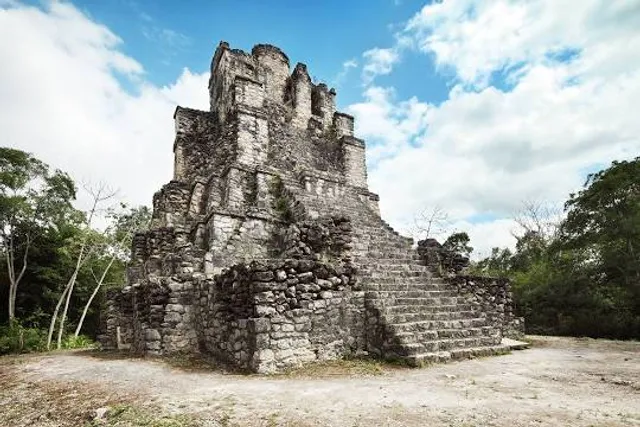
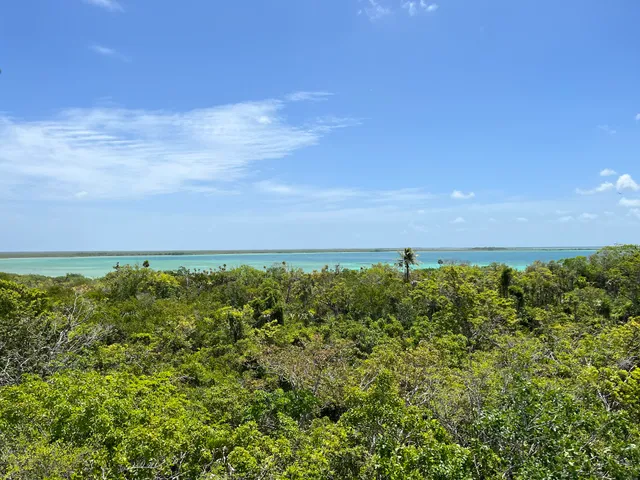
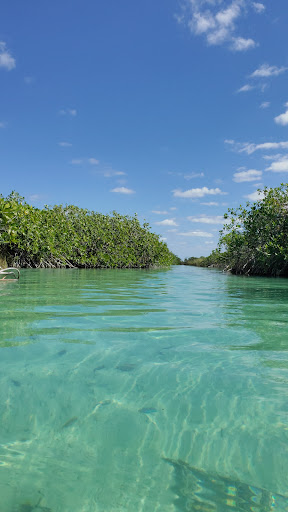
I know alot of people say how it's expensive but I felt the price was pretty decent, 70 pesos to see the ruins which is 3.72. They are not large but no crowds, shaded, and really neat. The boardwalk and tower will cost you 50 more pesos..2.66. It's about a mile walk very uneven boards with some even missing it's kinda swampy and we didn't see any wild life but a few birds. The tower is not easy to climb it's more like a ladder system but it's a nice view from the top. It was a little buggy but no mosquitoes at the time we went (Jan). The boat ride is 1000 (53) pesos at the main entrance to the ruins I don't know if you can drive back to the lagoon and pay there or not, we did the whole tour. You can choose to do a longer tour which will take you out to the ocean that was 2000 pesos (we didn't have enough pesos). The short boat tour consisted of two lagoons. The first one we drove around and the guide talked about the environment and nature and showed us some areas, from there you go through a small man made canal onto the next lagoon. The large lagoon was beautiful as well and we tooled around for a little bit till we came to the second canal that is natural. A few feet in is a platform where you get out and float. The water was chilly but crystal clear. You float down through the mangrove at a pretty goof pace. We didn't see much in the way of wild life just a few fish. The flat takes about 35 mins where you will meet back up with your guide who is waiting for you with your towels and shoes. From there it's another mile hike on the boardwalks through the marsh to the original drop in spot. You take the baot back through the lagoons and canal where you get dropped off. Once back it's the 1 mile hike back through the jungle and the short path through the ruins to your car. It's was beautiful and easy. I highly suggest it for 60 dollars you get a lazy river, ruins, boat ride, and nature path..I spend more then...
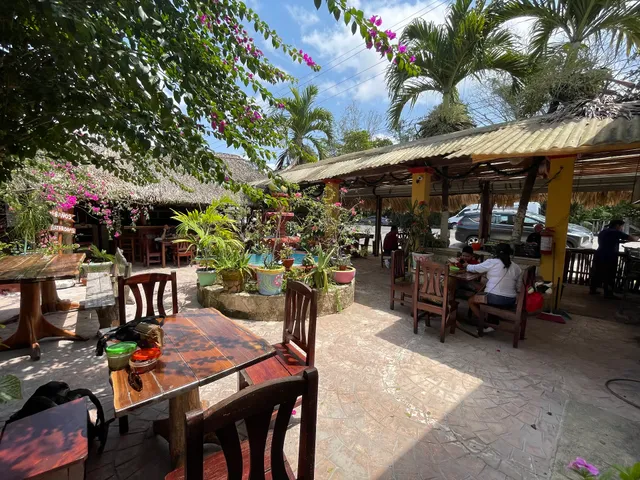
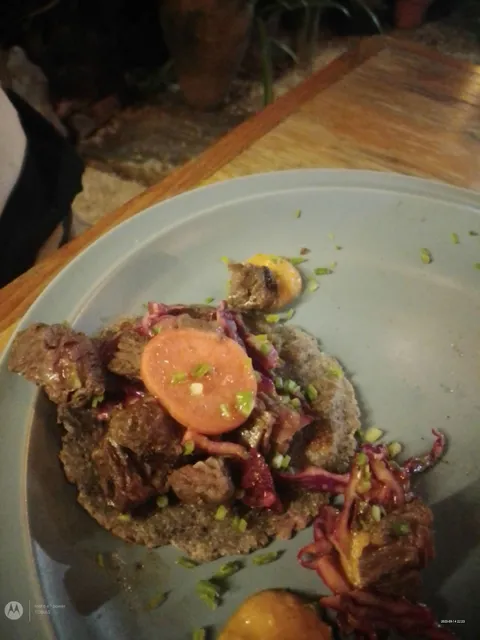
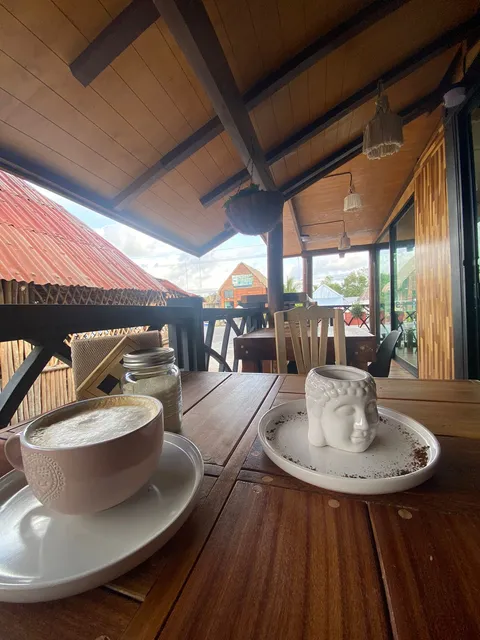
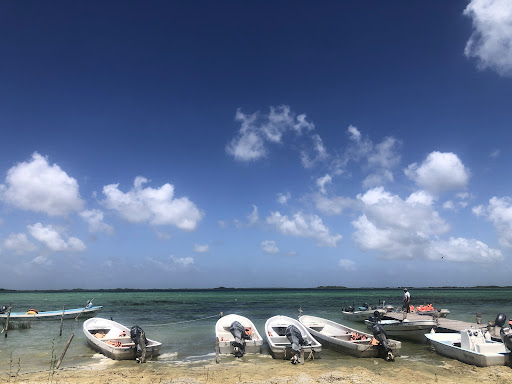
Read morePretty good time at the ruins overall. It’s a small park; the ruins are for sure the highlight for me, and you can explore them all within about an hour and a half. Reasonable price and there are quite a few good food/drink options for such a rural area. But in my G-d’s honest opinion… don’t waste your money on the rest of the park. The lagoon is nice or whatever but unless you’re going to spend $800+ per person (not per boat) to go farther across the lagoon, it’s not worth it… but the ruins were great, and I did enjoy the walk and the view! We just couldn’t justify paying $1600p for a two hour boat tour, and we weren’t allowed to just rent our own kayaks. And as you can see, they are speed boats, so it isn’t like the guy would have to be rowing extra weight to justify the cost (we are both very thin anyhow).
The hardest part for us was getting home. You can catch the ADO bus from the cement parada but Lord only knows when it’s coming, and if it will stop! We ended up hitching a ride back to Tulum with a random van driver. (NOTE: This is NOT recommended for people who don’t speak Spanish or women traveling alone!) If I were alone I wouldn’t do that, but I do speak Spanish and was with my boyfriend. We were fine, BH, but please be aware that if you didn’t drive, getting home can be a challenge (regardless of whether or not you bought round-trip ADO Bus tickets!)
Gorgeous...
Read moreMuyil is an ancient Maya site on the east coast of the Yucatan Peninsula of Mexico whose probable preconquest occupation spans the years from 350 B.C. to A.D. 1500. Little about the site is known, but it has several unusual features. Among these are its mixture of architectural styles (evidence for long occupation), and its location, 12 km from the Caribbean Sea, but with navigable access to the sea by lagoons, a canal, and a creek. The site consists of several groups of temple-pyramids, large elite residential platforms, an intrasite sacbe, numerous house mounds, and extensive areas of field walls.
Early sea-borne Maya may have chosen Muyil as their home for its sheltered sea access with fresh water, its diversity of ecological zones and subsistence opportunities, and its access to the caves (and therefore the spiritual underworld) and construction materials around the karstic collapse at the center of Muyil. The jungle around Muyil also provides poisons, saps, and discarded termite nests with a variety of medical and construction applications.
The arrival of the Spanish marked the end of a permanent Muyil population. Maya rebels during the Caste War operated in secret from the ruins, but the site was left to the jungle until excavation...
Read more