Located in the imperial city, northwest of the granaries. It is a hydraulic structure that measures 148.75 m by 319 m and has a maximum depth of 1.20 m. The basin was supplied with water, at the beginning, by the ten norias of the neighboring building, connected to it by pipes of earthenware, and under which were ten a few groundwater: from there come from elsewhere naming Sahrij es-Souani (the basin of Norias). Currently, it is connected to the water system of the city. The location of this room and the total lack of aesthetic concerns in its environment seem to us signs of the utilitarian functions of the basin, thus constituting a formidable reservoir of useful water as well as strategic reserve, that to water palaces, gardens and orchards. It became more of a refreshing place, very privileged where floated...
Read moreFor Moroccans lahdim is not only bab Mansour but also the square in front. The 2 constitute a single set called: michoir The kneader is a place of allegiance the king from the Amazigh tradition (Berber word coming from the Roman barbarian), Amazigh Means rather book man, the Amazigh kings: it is the chief of the chiefs of the tribes who is re-elected or renewed each year: hence the allegiance repeated every year the Arab tradition: the emir of the believers once enthroned he remains there until the end, there is also in Islam Maalik (God) and malik chief governor the king stands at the top of the door, the population bows through his representatives to say: we...
Read moreNom du Monument:
Sahrij Swani (Bassin des Norias)
Localisation:
Meknès, Maroc
Date du Monument:
XIe-XIIe siècle de l’Hégire (XVIIe-XVIIIe siècle J.-C)
Période / Dynastie:
Alaouite
Commanditaire(s):
Le sultan Moulay Ismaïl (1083-1140 H /1672-1727 J.-C.).
Description:
Selon l'historien de Meknès Ibn Zaidan, Moulay Ismaïl fit aménager à l'intérieur de la casbah une grande pièce d'eau sur laquelle on pouvait se promener en embarcations de plaisance.
En fait, le prince alaouite, contemporain de Louis XIV, avait fait construire ce bassin pour garantir, en cas de siège et en périodes de sécheresse, l'approvisionnement en eau des palais et des mosquées de la ville, mais aussi des bains publics, des maisons, des jardins et des vergers qui ceinturaient la ville et subvenaient à ses besoins quotidiens en légumes et en fruits.
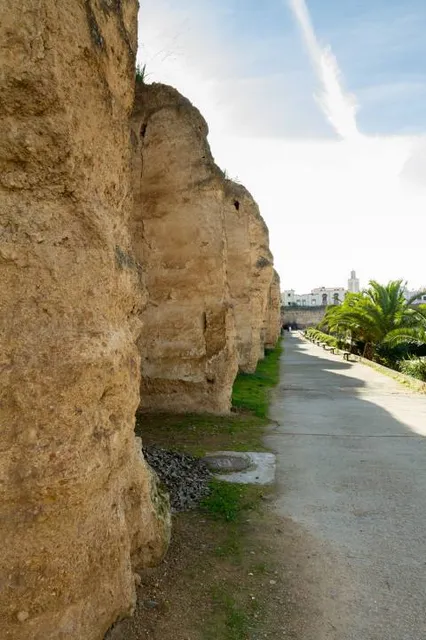
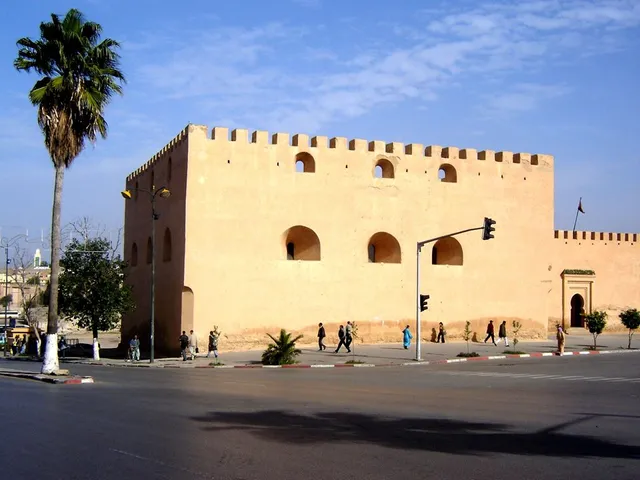
Pièce maîtresse du complexe connu sous le nom de Hri Swani, le Bassin des Norias, Sahrij Swani, est un bassin artificiel remarquable par sa taille (148,75 x 319 m pour une profondeur de 3,20 m.) Des trois hautes murailles crénelées qui auraient été construites autour du bassin ne restent aujourd'hui qu'un morceau de rempart isolé, situé au sud-ouest vers le quartier Beni Ahmed, ainsi que les vestiges de la base d'une enceinte épaisse de plus de 2 mètres.
Par son étendue, le bassin rappelle les lacs des montagnes du Moyen Atlas situées au sud de la ville.
L'eau du bassin provenait de deux origines :
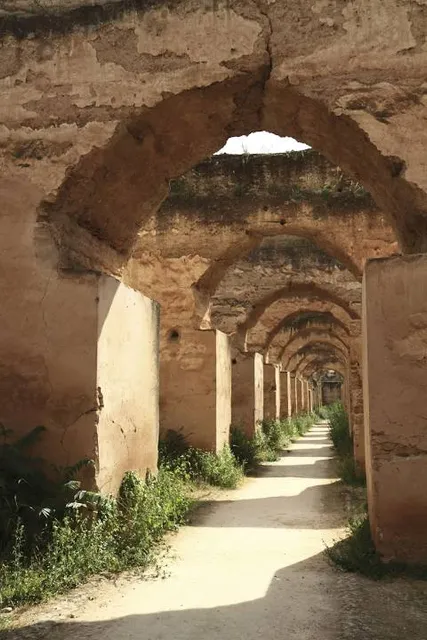
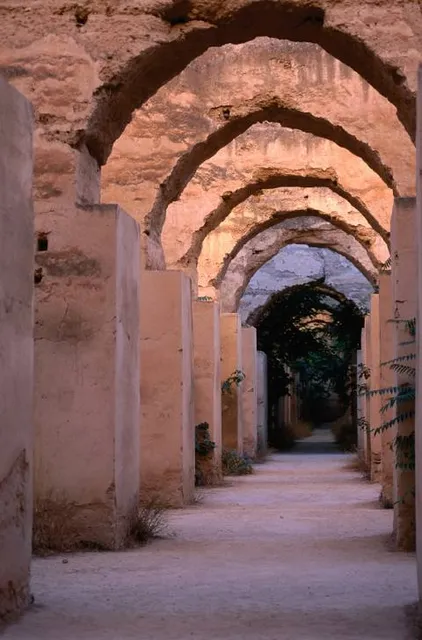
– L'eau des 10 puits creusés à proximité du Sahrij, en dessous du silo, amenée grâce à 10 norias à travers des canalisations en poterie. Le recours à l'eau des puits se faisait en périodes de troubles (guerres, etc.) et de sécheresse.
– L'eau de l'oued Boufekrane qui descend du Moyen Atlas, traverse la partie méridionale de Meknès et alimente le bassin et une partie de la ville de Meknès.
Aujourd'hui, le bassin constitue une attraction pour les touristes qui visitent la ville, mais aussi pour les habitants de Meknès qui viennent en fin de semaine y rechercher la fraîcheur qui fait tant...
Read more