Api Nampa Conservation Area
Background
Considering the critical importance for biodiversity conservation in the northern part of Darchula district, the Government of Nepal declared Api Nampa Conservation Area (ANCA) on 12 July, 2010.
The name of this conservation area is named after two famous Himalayas Api and Nampa. Api-Nampa Conservation Area office headquarter located Khalanga, Darchula. ANCA’s management is being performed under the Conservation Area Government Management Regulation 2057 BS.
Api Nampa Conservation Area occupies 1903 sq km of Darchula district varies in altitudes from 539 to 7132 meters.
Goal
The goal of the Api Nampa Conservation Area is to conserve the unique flora and fauna, biodiversity, perpetuation of ecosystem of the northern part of the district and to contribute reducing poverty of this region.
Protected Area
Api Nampa Conservation Area (ANCA) is a good initiative to harmonize conservation and development in an integrated way. It is located in between 29° 30’ to 30° 15’ North Latitude and 80° 22’ to 81° 09’ East Longitude.in the far-western Development Region of Nepal characterized an ecologically diverged region of Nepal. Api-Nampa Conservation Area occupies 1903 sq km of Darchula district.
Climate
The climate of the area is generally characterized by high rainfall and humidity. The climatic condition varies along the elevation gradient. Climate of the ANCA varies widely from sub tropical to alpine.
Within its elevation range of 1800m to 6500m there are limited subtropical valleys in the southern margin although most of the area is ecologically temperate or highland.
Wildlife
Due to diverse climatic condition and altitude variation many prime habitats of wildlife exists in ANCA.
Mammals
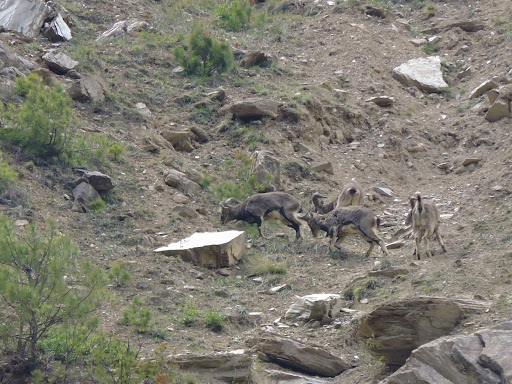
Large mammals commonly seen in the CA are the Himalayan Tahr, Blue sheep and Musk deer. Other large mammals include: common langur (Semnopithecus entellus), jackal (Canis aureus), small number of grey wolf (Canis lupus) (V), Himalayan black bear (Selenarctos thibetanus) (V), Red panda (Ailurus fulgens) (V), snow leopard (Uncia uncia) (E), Himalayan musk deer (Moschus chrysogaster), Serow (Capricornis sumatraensis) (I), Himalayan tahr (Hemitragus jemlahicus) (K) and goral (Nemorhaedus goral etc).
Herpetofauna and Butterflies
NTFP found in Api Nampa Conservation Area are: Panchaunle (Dactylorhiza hatagirea), Kutki (Neopicrorhiza scrophularifl ora), Yartsagumbu (Cordyceps sinensis), Jatamansi (Nardostachys grandifl ora), Sarpagandha (Rauvolfi a serpentine), Sugandhawal (Valeriana jatamansi) and etc.
Conservation Approach
The Api-nampa Conservation Area is based upon integrated conservation and development approach with people’s participation.
Boundary
The Mahakali River flows along the western boundary and Bajhang and Baitadi district joins in the east boundary. International boundary with China in the north and Lasku and naugad lies in the western boundary of ANCA.
How to Get There
You can take bus from Kathmandu to Dhangadi or take the daily fl ight. From Dhangadi, bus service is available to the Api-nampa Conservation Area HQ at Darchula. Bus services are available to Dharchula, India from Delhi capital city of India. You will be in the Conservation Area soon after crossing the Mahakali river which makes an international border between Nepal and India.
Facilities
Be advised to carry a comprehensive fi rst-aid kit. There are no more medical facilities in remote villages. Cell phone may be available over the ANCA. Moderate hotel accommodations are available but warm clothing would be benefi cial to keep you warm in higher altitudes.
Regulation
An entry fee of NRs. 1,000.00 should be paid at the National Parks’s ticket counter at Nepal Tourism Board, Bhrikutimandap, Kathmandu before starting the journey. The ticket could also be obtained from the CA Entrance Gates.
You can purchase entry permit at ticket Counter...
Read more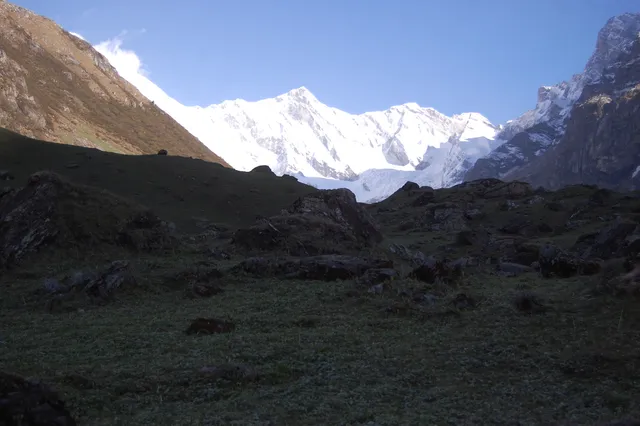
 Learn more insights from Wanderboat AI.