HTML SitemapExplore
logo
Find Things to DoFind The Best Restaurants

Makalu Barun National Park — Attraction in Makalu

Name
Makalu Barun National Park
Description
Nearby attractions
Nearby restaurants
Nearby hotels
Related posts
Keywords
Makalu Barun National Park tourism.Makalu Barun National Park hotels.Makalu Barun National Park bed and breakfast. flights to Makalu Barun National Park.Makalu Barun National Park attractions.Makalu Barun National Park restaurants.Makalu Barun National Park travel.Makalu Barun National Park travel guide.Makalu Barun National Park travel blog.Makalu Barun National Park pictures.Makalu Barun National Park photos.Makalu Barun National Park travel tips.Makalu Barun National Park maps.Makalu Barun National Park things to do.
Makalu Barun National Park things to do, attractions, restaurants, events info and trip planning
Makalu Barun National Park
NepalKoshi ProvinceMakaluMakalu Barun National Park

Basic Info

Makalu Barun National Park

56900, Nepal
4.3(227)
Open 24 hours
Save
spot

Ratings & Description

Info

Outdoor
Adventure
Scenic
Off the beaten path
attractions: , restaurants:
logoLearn more insights from Wanderboat AI.
Website
dnpwc.gov.np

Plan your stay

hotel
Pet-friendly Hotels in Makalu
Find a cozy hotel nearby and make it a full experience.
hotel
Affordable Hotels in Makalu
Find a cozy hotel nearby and make it a full experience.
hotel
The Coolest Hotels You Haven't Heard Of (Yet)
Find a cozy hotel nearby and make it a full experience.
hotel
Trending Stays Worth the Hype in Makalu
Find a cozy hotel nearby and make it a full experience.

Reviews

Get the Appoverlay
Get the AppOne tap to find yournext favorite spots!
Wanderboat LogoWanderboat

Your everyday Al companion for getaway ideas

CompanyAbout Us
InformationAI Trip PlannerSitemap
SocialXInstagramTiktokLinkedin
LegalTerms of ServicePrivacy Policy

Get the app

© 2025 Wanderboat. All rights reserved.
logo

Posts

Suraj ChaliseSuraj Chalise
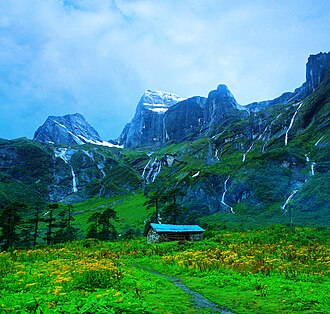
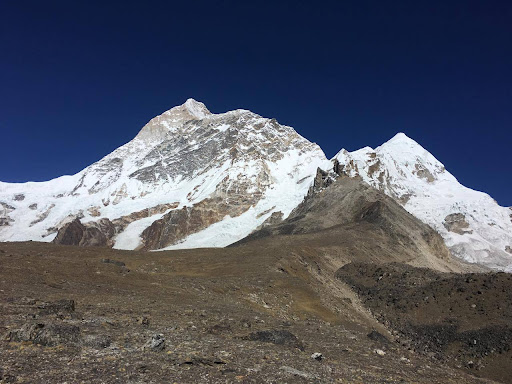
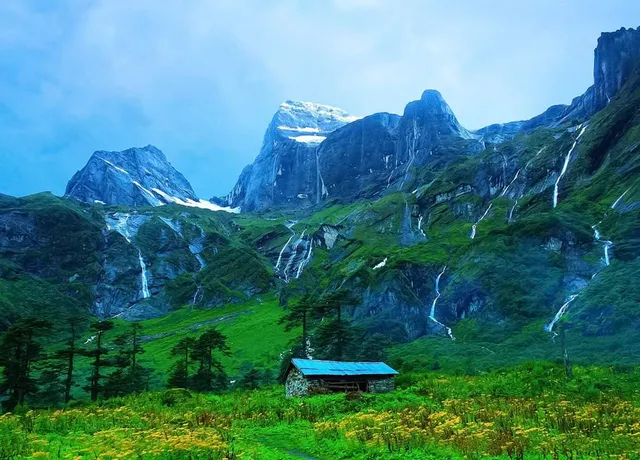
Makalu Barun National Park is a national park in the Himalayas of Nepal that was established in 1992 as the eastern extension of Sagarmatha National Park. It is the world's only protected area with an elevation gain of more than 8,000 m (26,000 ft) enclosing tropical forest as well as snow-capped peaks. It covers an area of 1,500 km2 (580 sq mi) in the Solukhumbu and Sankhuwasabha districts, and is surrounded by a bufferzone to the south and southeast with an area of 830 km2 (320 sq mi).[1] The rugged summits of Makalu, with 8,463 m (27,766 ft) the fifth highest mountain in the world, Chamalang (7,319 m (24,012 ft)), Baruntse (7,129 m (23,389 ft)) and Mera (6,654 m (21,831 ft)) are included in the national park. The protected area extends to about 66 km (41 mi) from west to east and to about 44 km (27 mi) from north to south. From the Arun river valley in the southeast, located at altitudes of 344–377 m (1,129–1,237 ft), elevation gains about 8,025 m (26,329 ft) to the peak of Makalu.[2] The national park shares the international border with the Qomolangma National Nature Preserve of the Tibet Autonomous Region in the north.[3] The protected area is part of the Sacred Himalayan Landscape.[4] History Barun Valley In the early and mid-1980s, personnel of The Mountain Institute (TMI), under its president Daniel C. Taylor conducted surveys in the Barun Valley to study whether an explanation could be found for the enigma of the Yeti.[5] Those surveys then uncovered this valley's extraordinary biological richness. The results of these surveys led to interest in creating a new protected area. A respective proposal was formulated in 1985.[6] In 1988, the Makalu-Barun Conservation Area Project (MBNPCA) was initiated as a joint endeavor of the Department of National Parks and Wildlife Conservation and TMI.[3] The MBNPCA was officially gazetted in 1991. At the time, about 32,000 people resided in the conservation area's 12 Village Development Committees, who are primarily subsistence farmers of the Limbu, Sherpa, Yakkha, Gurung, Tamang, Magar, Newar, Brahmin and Chhetri ethnic groups. An innovative community-based conservation approach emphasized the management of biodiversity with local communities. Community Forest User Groups were created with legal rights to use designated forested areas on a sustainable basis. Ecotourism was promoted as a way of expanding off-farm employment opportunities for local people while at the same time minimizing negative environmental impact. Hunting and trapping of rare and endangered wild animals is strictly prohibited in the MBNPCA, except in extreme cases of threat to human life. There was also a provision for compensating farmers for crop and livestock depredation caused by endangered species.[7] In 1999, the conservation area was converted into a buffer zone.[1] Under the Buffer Zone Management Guidelines the conservation of forests, wildlife and cultural resources received top priority, followed by the conservation of other natural resources and the development of alternative energy.[8] The inaccessible valleys of the Barun River, the glacier-fed tributary to the Arun River, treasure some of the last remaining pristine forests and alpine meadows. This area has been designated as a Strict Nature Reserve, the first in Nepal, in order to protect natural ecosystems and processes in an undisturbed state for scientific study, environmental monitoring, education and the maintenance of genetic resources.[2] Climate The park is located in the eastern climatic zone of the Himalayas, where monsoon starts in June and eases off in late September. During these months about 70% of the annual precipitation of 4,000 mm (160 in) falls. The first monsoon clouds reach the area in April. Temperatures vary greatly due to the extreme difference in altitude in the entire area. Lower elevations are temperate throughout winter and hot during April and May. The tropical and subtropical zones are frost free, with average monthly mean temperatures above 18 °C (64 °F).[9]
Palsang SherpaPalsang Sherpa
We will take a 45 minute flight to Tumlingtar and drive to Num for overnight stay. Next day we will cross the Arun river, climb steep up to Seduwa. The following day we will trek to Tashi Gaon through Rai and Sherpa Villages. On the fourth day we will climb up through many ponds and lake to cross Shipton La 4216m and get into beautiful Barun river valley. The trekking trail is accompanied by panoramic mountain views of Mount Everest, Kangchenjunga and Lhotse, lush green forest and landscapes. Makalu Barun national park is home to fifth highest mountain Mount Makalu 8481 m, rare species of rhododendron, orchid, bamboo bush, juniper and pine trees, lophophorus, blue ship, musk deer, black beer, snow leopard and red panda. On the base camp of Mount Makalu lies Dudh pokhari which is source of river Barun
Isha BistaIsha Bista
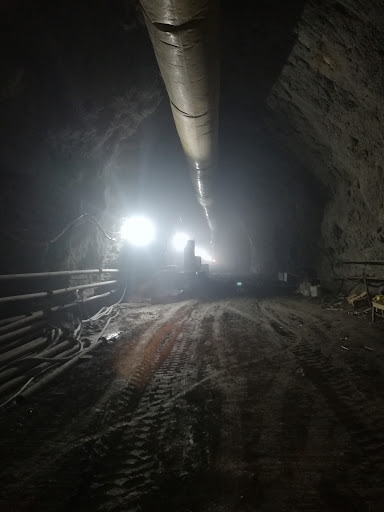
Didnot enter the park, only till the outskirts to see the Arun hydropower project. Good to spend 15/20 mins there and see the Arun river. No bathrooms or eateries around. To enter the tunnel, early morning trip advised as work begins at 8. If u reach before 8, can walk the tunnels
See more posts
See more posts
hotel
Find your stay

Pet-friendly Hotels in Makalu

Find a cozy hotel nearby and make it a full experience.

Makalu Barun National Park is a national park in the Himalayas of Nepal that was established in 1992 as the eastern extension of Sagarmatha National Park. It is the world's only protected area with an elevation gain of more than 8,000 m (26,000 ft) enclosing tropical forest as well as snow-capped peaks. It covers an area of 1,500 km2 (580 sq mi) in the Solukhumbu and Sankhuwasabha districts, and is surrounded by a bufferzone to the south and southeast with an area of 830 km2 (320 sq mi).[1] The rugged summits of Makalu, with 8,463 m (27,766 ft) the fifth highest mountain in the world, Chamalang (7,319 m (24,012 ft)), Baruntse (7,129 m (23,389 ft)) and Mera (6,654 m (21,831 ft)) are included in the national park. The protected area extends to about 66 km (41 mi) from west to east and to about 44 km (27 mi) from north to south. From the Arun river valley in the southeast, located at altitudes of 344–377 m (1,129–1,237 ft), elevation gains about 8,025 m (26,329 ft) to the peak of Makalu.[2] The national park shares the international border with the Qomolangma National Nature Preserve of the Tibet Autonomous Region in the north.[3] The protected area is part of the Sacred Himalayan Landscape.[4] History Barun Valley In the early and mid-1980s, personnel of The Mountain Institute (TMI), under its president Daniel C. Taylor conducted surveys in the Barun Valley to study whether an explanation could be found for the enigma of the Yeti.[5] Those surveys then uncovered this valley's extraordinary biological richness. The results of these surveys led to interest in creating a new protected area. A respective proposal was formulated in 1985.[6] In 1988, the Makalu-Barun Conservation Area Project (MBNPCA) was initiated as a joint endeavor of the Department of National Parks and Wildlife Conservation and TMI.[3] The MBNPCA was officially gazetted in 1991. At the time, about 32,000 people resided in the conservation area's 12 Village Development Committees, who are primarily subsistence farmers of the Limbu, Sherpa, Yakkha, Gurung, Tamang, Magar, Newar, Brahmin and Chhetri ethnic groups. An innovative community-based conservation approach emphasized the management of biodiversity with local communities. Community Forest User Groups were created with legal rights to use designated forested areas on a sustainable basis. Ecotourism was promoted as a way of expanding off-farm employment opportunities for local people while at the same time minimizing negative environmental impact. Hunting and trapping of rare and endangered wild animals is strictly prohibited in the MBNPCA, except in extreme cases of threat to human life. There was also a provision for compensating farmers for crop and livestock depredation caused by endangered species.[7] In 1999, the conservation area was converted into a buffer zone.[1] Under the Buffer Zone Management Guidelines the conservation of forests, wildlife and cultural resources received top priority, followed by the conservation of other natural resources and the development of alternative energy.[8] The inaccessible valleys of the Barun River, the glacier-fed tributary to the Arun River, treasure some of the last remaining pristine forests and alpine meadows. This area has been designated as a Strict Nature Reserve, the first in Nepal, in order to protect natural ecosystems and processes in an undisturbed state for scientific study, environmental monitoring, education and the maintenance of genetic resources.[2] Climate The park is located in the eastern climatic zone of the Himalayas, where monsoon starts in June and eases off in late September. During these months about 70% of the annual precipitation of 4,000 mm (160 in) falls. The first monsoon clouds reach the area in April. Temperatures vary greatly due to the extreme difference in altitude in the entire area. Lower elevations are temperate throughout winter and hot during April and May. The tropical and subtropical zones are frost free, with average monthly mean temperatures above 18 °C (64 °F).[9]
Suraj Chalise

Suraj Chalise

hotel
Find your stay

Affordable Hotels in Makalu

Find a cozy hotel nearby and make it a full experience.

Get the Appoverlay
Get the AppOne tap to find yournext favorite spots!
We will take a 45 minute flight to Tumlingtar and drive to Num for overnight stay. Next day we will cross the Arun river, climb steep up to Seduwa. The following day we will trek to Tashi Gaon through Rai and Sherpa Villages. On the fourth day we will climb up through many ponds and lake to cross Shipton La 4216m and get into beautiful Barun river valley. The trekking trail is accompanied by panoramic mountain views of Mount Everest, Kangchenjunga and Lhotse, lush green forest and landscapes. Makalu Barun national park is home to fifth highest mountain Mount Makalu 8481 m, rare species of rhododendron, orchid, bamboo bush, juniper and pine trees, lophophorus, blue ship, musk deer, black beer, snow leopard and red panda. On the base camp of Mount Makalu lies Dudh pokhari which is source of river Barun
Palsang Sherpa

Palsang Sherpa

hotel
Find your stay

The Coolest Hotels You Haven't Heard Of (Yet)

Find a cozy hotel nearby and make it a full experience.

hotel
Find your stay

Trending Stays Worth the Hype in Makalu

Find a cozy hotel nearby and make it a full experience.

Didnot enter the park, only till the outskirts to see the Arun hydropower project. Good to spend 15/20 mins there and see the Arun river. No bathrooms or eateries around. To enter the tunnel, early morning trip advised as work begins at 8. If u reach before 8, can walk the tunnels
Isha Bista

Isha Bista

See more posts
See more posts

Reviews of Makalu Barun National Park

4.3
(227)
avatar
5.0
27w

Makalu Barun National Park is a national park in the Himalayas of Nepal that was established in 1992 as the eastern extension of Sagarmatha National Park. It is the world's only protected area with an elevation gain of more than 8,000 m (26,000 ft) enclosing tropical forest as well as snow-capped peaks. It covers an area of 1,500 km2 (580 sq mi) in the Solukhumbu and Sankhuwasabha districts, and is surrounded by a bufferzone to the south and southeast with an area of 830 km2 (320 sq mi).[1]

The rugged summits of Makalu, with 8,463 m (27,766 ft) the fifth highest mountain in the world, Chamalang (7,319 m (24,012 ft)), Baruntse (7,129 m (23,389 ft)) and Mera (6,654 m (21,831 ft)) are included in the national park. The protected area extends to about 66 km (41 mi) from west to east and to about 44 km (27 mi) from north to south. From the Arun river valley in the southeast, located at altitudes of 344–377 m (1,129–1,237 ft), elevation gains about 8,025 m (26,329 ft) to the peak of Makalu.[2] The national park shares the international border with the Qomolangma National Nature Preserve of the Tibet Autonomous Region in the north.[3]

The protected area is part of the Sacred Himalayan Landscape.[4]

History

Barun Valley In the early and mid-1980s, personnel of The Mountain Institute (TMI), under its president Daniel C. Taylor conducted surveys in the Barun Valley to study whether an explanation could be found for the enigma of the Yeti.[5] Those surveys then uncovered this valley's extraordinary biological richness. The results of these surveys led to interest in creating a new protected area. A respective proposal was formulated in 1985.[6] In 1988, the Makalu-Barun Conservation Area Project (MBNPCA) was initiated as a joint endeavor of the Department of National Parks and Wildlife Conservation and TMI.[3]

The MBNPCA was officially gazetted in 1991. At the time, about 32,000 people resided in the conservation area's 12 Village Development Committees, who are primarily subsistence farmers of the Limbu, Sherpa, Yakkha, Gurung, Tamang, Magar, Newar, Brahmin and Chhetri ethnic groups. An innovative community-based conservation approach emphasized the management of biodiversity with local communities. Community Forest User Groups were created with legal rights to use designated forested areas on a sustainable basis. Ecotourism was promoted as a way of expanding off-farm employment opportunities for local people while at the same time minimizing negative environmental impact. Hunting and trapping of rare and endangered wild animals is strictly prohibited in the MBNPCA, except in extreme cases of threat to human life. There was also a provision for compensating farmers for crop and livestock depredation caused by endangered species.[7]

In 1999, the conservation area was converted into a buffer zone.[1] Under the Buffer Zone Management Guidelines the conservation of forests, wildlife and cultural resources received top priority, followed by the conservation of other natural resources and the development of alternative energy.[8]

The inaccessible valleys of the Barun River, the glacier-fed tributary to the Arun River, treasure some of the last remaining pristine forests and alpine meadows. This area has been designated as a Strict Nature Reserve, the first in Nepal, in order to protect natural ecosystems and processes in an undisturbed state for scientific study, environmental monitoring, education and the maintenance of genetic resources.[2]

Climate The park is located in the eastern climatic zone of the Himalayas, where monsoon starts in June and eases off in late September. During these months about 70% of the annual precipitation of 4,000 mm (160 in) falls. The first monsoon clouds reach the area in April. Temperatures vary greatly due to the extreme difference in altitude in the entire area. Lower elevations are temperate throughout winter and hot during April and May. The tropical and subtropical zones are frost free, with average monthly mean temperatures above 18...

   Read more
avatar
5.0
1y

Makalu Barun National Park is a protected area located in eastern Nepal, extending from the subtropical lowlands to the summit of Makalu, the fifth-highest mountain in the world. Established in 1992, the park covers an area of about 1,500 square kilometers.

The park is known for its diverse ecosystems, ranging from lush forests to high-altitude alpine meadows and glaciers. It is home to a wide variety of wildlife, including the endangered red panda, Himalayan tahr, snow leopard, and numerous bird species. The Barun Valley, within the park, is a particularly pristine and secluded area, offering breathtaking scenery.

Makalu Barun National Park is also culturally rich, with diverse ethnic communities residing in the region, including Sherpas, Rais, and Limbus. The park is part of the Sacred Himalayan Landscape and is an integral component of the larger Makalu-Barun Conservation Area. Trekkers and mountaineers visit the park to explore its natural beauty and experience a less-trodden part of...

   Read more
avatar
5.0
6y

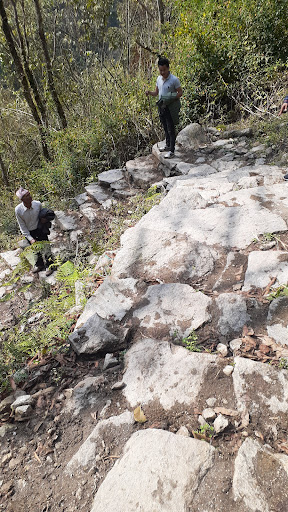
Visited Makalu Barun National Park area way back in 2009 when I was a student at University of Copenhagen..This was quite a remarkable and adventurous Journey..From Kathmandu to Tumlingtar flights are available at cheap rates but then need to rely on Jeep which will take you to Sankswabha district HQ.. Thereafter you need to walk to reach the unseen and less explored Rustic Himalayan territory..On the way we stayed in small Sherpa homes with limited facilities..There were no mobile connectivity at that time, in some villages we got access to satellite phones..Need to keep enough toilet papers, warm jackets and a good reliable sleeping bag..One Mr.Chindum Sherpa and Jem Jem Sherpa helped me during the trek and I'm indebted to them..Apart from them thanks to the family of Suman Shrestha..Lost all contact with them if anyone of them reads me please leave a message here and do contact me..Memorable...

   Read more
Page 1 of 7
Previous
Next