Unbelievably surreal and enchanting.
I reckon the hike uphill can take anywhere between 1-4hours.
I went with my family who all have various different fitness level. I accomplished the feat from Basecamp to the summit in 2.5 hours. My family took around 3.5 but the seasoned veterans could easily do it in less time than my family or I.
The base camp at the place known as Sano Phedi is a small shanty village that caters for hikers both local and from abroad. The amnesties are basic and limited, but enough.
Everyone advises that you should leave in the middle of the night, I didn't think much of it until my walk down hill. The amount of uphill climbing I had done during my night trek uphill was stupefying! I now understand why people say that being able to 'see your trail' will very likely detail you. Because it most certainly will;
So I too advice anyone reading this to start the hike super early. We started at 3:30am, around this time is very idea. Because you are likely to reach the summit as the sun rises.
That's what happened to me, I arrived with a thick blanket of cloud that slowly cleared and the higher the sun rose, the more beautiful the scenery was.
One thing I also want to say is, I would highly recommend going during the summer time, as you will be less likely to have bad weather and more sunshine to admire the various mountains and hills.
There are very able bodied locals who can assist you during your hike if that is what you need. They can carry your luggage and even carry you. No joke.
Despite the locals size and build, they are seasoned and experienced porters, I saw a guy half my size in built carry a woman who looked twice my size easily up and down the hill(more like a small mountain)
Make sure to negotiate just like anywhere else in Nepal. Especially if you are a foreigner, I've been told the price for carrying a person up and down the hill used to be 3k rupees in 2014, we were offered just 1 way service for 7k; so take this as an example of how crafty and duplicitous these business men can be when treating anyone who looks different. But that's just business, I would probably try my luck in the same manner if I was in their shoes, plenty of independent trades men here in UK also apply sly methods in their businesses, so don't take it personally, it's just a note in the dance of life.
With regards to the trek itself. It is moderately steep but has plenty of rest stations(chautari) dotted along the path to the summit.
The final station is based at the gates leading up to the temple situated at the peak of the hill/mountain.
This station is perfect for taking all your beloved selfies, and has a view overlooking several mountainous hills and the famed second tallest peak of the world.
It is simply breathtaking.
The temple at the summit gets a lot of visitors throughout the year. It is a holy site for practicing Hindu/pagans and in particular to Limbu people, a tribe native to Nepal of which I am a member the dirty to whom the temple is designed for is a goddess originating from my tribe, her name is 'Manghim' but she is commonly known as Pathibhara devi. It is an interesting experience to explore irrespective of anyone's personal beliefs.
I must say, despite being an atheist, observing the activities of devout believers made me really consider my stance on sptrituality. Not that it's changed, but for a good hour I really thought I should not think anything that would cause me the wrath of any god's hahaha.
Few extra tips and advices- -If you go after the monsoon time like I did, it is still likely to rain, so take a waterproof gear. Don't bother using the plastic bags they give/sell it's not very effective and is bad for the Environment.
-Take plenty of water to sip during your trek and some grubs for energy.
-Don't carry heavy, take minimal items and as crazy as this may sound, (given that it's Nepal, a country you would consider to be hot and tropical) take a warm jacket of some sort, because the hike in the morning can be super frosty and the summit can also...
Read morePathivara temple, a temple of goddess Pathivara is situated in top eastern part of Nepal. Temple lies in Taplejung district at the elevation of 3750 meters.
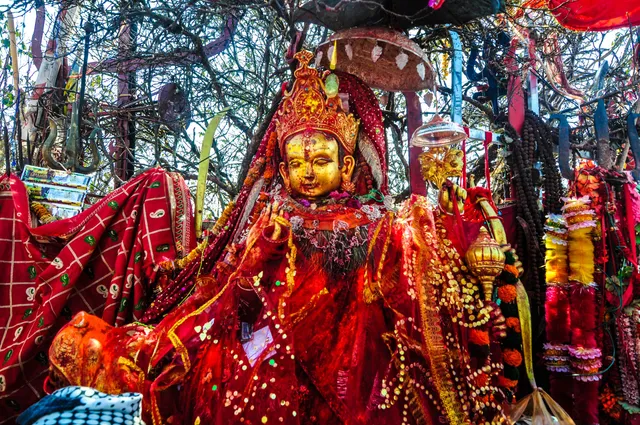
The Pathivari temple is recognizing one of the impotent place for Hindu and Buddhist pilgrimage tour. From the top of the mountain we could see the sunrise of Kanchenjunga mountain and other high Himalayan ranges and can feel the sweet taste of atmosphere.
Pathivara Devi shrine (3794m) is a popular pilgrimage destination that is believed to fulfill the long-cherished dreams of her devotees. The animist deity at Pathivara is worshipped with equal reverence by both Hindus and Buddhist. The Goddess at Pathibhara is believed to fulfill the long-cherished dreams of her devotees, like sons for those without sons, and wealth for the poor. Pathivara Devi is considered one of the 'Shakti peeths'. Worshippers from different parts of Nepal and India flock the temple during special occasions, as it is believed that a pilgrimage to the temple ensures fulfillment of all that the pilgrim desires. The devotees of Pathibhara also include members of the Royal family from Nepal. The pilgrims sacrifice animals and bring gold and silver as offerings to the Pathibhara Devi.
The best time to visit the temple is from March through out to June and September to November. Pilgrimages can also have an opportunity to visit Kanchanjungha range, the waterfall at Sawa pokhari and the pond of Timbuk, during autumn and spring every year. The thick forest eco-system along the trail offers diversity of wildlife, birds, flowers and butterflies. Most of the Kanchenjunga range can also be seen from this point.
The journey to Pathibhara starts from Suketar (2840m) which takes about 2-hours walk to reach from Phungling Bazaar. Pathibhara Devi is about 8-10 hours from Suketar. The airport at Suketar is the only airport of Taplejung district. Suketar is connected to Kathmandu and Biratnagar by scheduled flights. Beautiful views of Kanchenjunga and Kumbhakarna can be seen from Suketar. From Suketar the trail passes through Deurali, Chhatedunga, Bhalugauda, Phedi and finally to Pathibhara if you go there you can get unforgettable experience from there and you can also relies with mixed community overe there as they have a mixed culture.
The trail offers food and lodging facilities. Basic accommodation facilities are also available for pilgrims near the shrine.The local people here are the Limbus, with the higher regions inhabited by people of Tibeto-Mongoloid ancestry. Sherpas, Rais, Gurungs, Magars, Newars, Sunwars, and Tamangs also live in this area, while the area also offers cultural diversity of Chhetris...
Read morePathibhara is a famous pilgrimage site in Taplejung district. The Pathibhara Temple is an important religious place for Hindus and Buddhists. It is at a height of 12,000 feet in Taplejung district. This sacred site of Pathibhara, the goddess of faith and purity, is located at the headquarters of Taplejung district, 19.5 km from Fungling. Located northeast at a height of 3794m. It is one day walk from Fungling Market. This temple is frequented by devotees throughout the year. The goddess's name is called 'Paithivara Devi', with its beautiful, adorable shape as like full of rice. The local Limbu communities of Taplejung recognize the Pathibhara as "Mukumlung". In citrus, "fist" means strength or force, "malung" means plant. That is, limbo species appear to be the source or path of power or force. Genealogy and Genealogy of Genesis (उत्पतिसम्बन्धि किम्बदन्ती तथा जनश्रुति) There are many festivals and genres related to the origin of the Pathibhara Goddess. It is said: In ancient times the shepherds of Pathibhara had kept their flocks at Pathibhara. One day suddenly seeing the unexpected, the herds of herds disappeared. In such an unimaginable event, the Goddess gave a vision to the stunned and bewildered shepherds, instructing them to worship the sheep without sacrificing their origins and motifs. Attentive shepherds sacrificed the most noble lamb by offering devotional worship at the Goddess-shaped site. What was more sacrificed was the hundreds of lost sheep that had appeared in the same place as before, the blood of the sacrificial lambs falling to the slaughter as water lost in the sand. Seeing this, the shepherds shouted cheerfully to the goddess. It is worth remembering that hundreds of sheep, goats and herds are sacrificed daily to the Pathibhara Goddess. But at the sacristy, any visitor who has lost blood, limited, can have direct experience and observation. In view of the number of sacrifices offered to the goddess, a pool of blood would have to be collected here, but it would not. That is why it is believed that the blood-goddess Pathibhara accepts the sacrifices offered by devotees affectionately. Today, the glory of Goddess Pathibhara, belief and faith in the goddess has reached beyond the boundaries of the village, district and country. As a result, thousands of devout devotees from all over the country and abroad continue to visit the deity.
HOW TO GO PATHIVARA DEVI TEMPLE
Destination: Kathmandu to Taplejung Distance: km (One way) Driving Time: Approx. Hours Transportation: By Scarpio Jeep Rs 70,000 / By Jumbo Hiace Rs 1,05,000 Capacity: Max. 7 & 14 Pax Travel Route: Kathmandu - Khurkot - Sindhuli - Itahari -...
Read more







