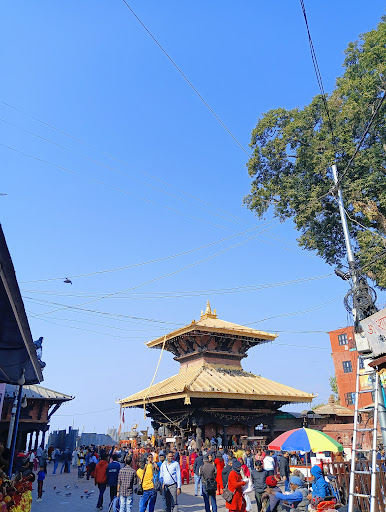
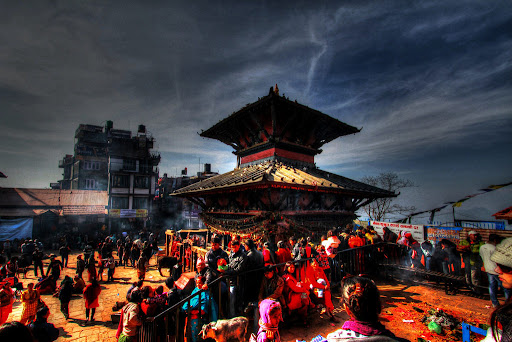
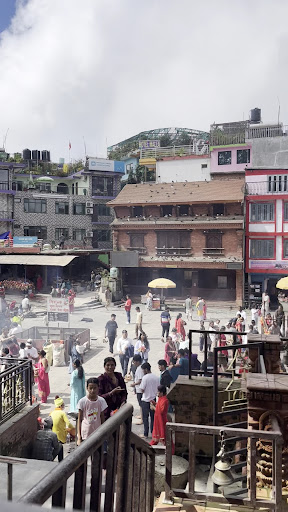
Manakamana Temple is situated in Gorkha District. It is the sacred place of Hindu Goddess Bhagwati,an incarnation of Parvati. The word Manakamana is originated from two words ‘mana’which means heart and ‘kamana’ means wish. People believed that if anyone makes a wish by their heart in Manakamana, would obviously be fulfilled. Therefore, the Goddess of this temple is known by wish fulfilling goddess. It is 104km away from Kathmandu valley by bus and from pokhara it is of 3 to 4 hours way by bus or car. From there we can see a clear view of Manasalu and Annapurna Himalayas. It is 12km south from Gorkha town and is 1302m above from the sea level. People from other districts come to worship the goddesses of this temple as well as to have a wish knowing that Bhagwati is wish fulfilling goddess. People from abroad also come to visit Manakamana Temple to spent their holidays or leisure time.
There are many reasons for visiting this temple. Many married couples come here to worship for their long life together, students for their success in their studies, businessman for the success in their business and so on. There are two alternatives to reach the Manakamana Temple i.e. cable car or by foot. After walking for 4 hours by foot through green hill, we reached to Manakmana Temple.
It has become the best spot for the trek lovers from Gorkha Bazar. The easiest means to reach the temple or the best solution to reach there is by cable car which is very useful and comfortable way to reach the temple on time. Cable car carries six people at a time and takes 8 minutes to reach to the other end. The view seen from the cable car is very entertaining. Ticket for the cable car is also taken from major cities of Nepal like Kathmandu, Chitwan, Pokhara, Biratnagar etc. and also from other countries like India, France, UK, USA etc. Many animals like goat are scarified during special occasion like Dashain and nag panchami. This place has become one of the tourism places for tourist to visit. People either from Nepal or from abroad come here for the sight of the goddess Bhagwati.
Most of the visitors of Manakamana Temple are local Nepalese and Indian pilgrimage. Indian pilgrimages make them one the way tour to Manakanmana in their Muktianth Yatra. Ticket fees of Manakamana are equal for Nepalese and Indian nationality but different fair for other than Indians and Nepalese. Surroundings the temples, local types of restaurants provide typical foods. There is a restaurant at the base of cable car, where a good restaurant lies to provide you good western foods as well. You also love to explore lots of typical gift shops around.
When you read about Manakamana, you go on a trip with words. Still, to really understand what it's all about, you have to walk on its ancient stone paths, feel the mountain breeze, and get lost in the air of devotion. It's a trip that offers not only beautiful scenery but also a chance to think about yourself and get spiritually refreshed.
The temple gives more than just benefits to those who look for them. It is a window into the heart of Nepal and its people, showing how respect, devotion, and unity are important to them. In a world that is always changing, Manakamana is a constant light that reminds us of the eternal connection between humans and the holy.
So, I hope that everyone who reads this will be moved to go on this holy trip, not just as a tourist but as a seeker who is ready to experience Manakamana Temple's deep mix of nature, culture, and spirituality. Your mental and physical journey is...
Read moreThe Manakamana Temple (Nepali: मनकामना मन्दिर) situated in the Gorkha district of Nepal is the sacred place of the Hindu Goddess Bhagwati, an incarnation of Parvati.The name Manakamana originates from two words, “mana” meaning heart and “kamana” meaning wish. Venerated since the 17th century, it is believed that Goddess Manakamana grants the wishes of all those who make the pilgrimage to her shrine to worship her.
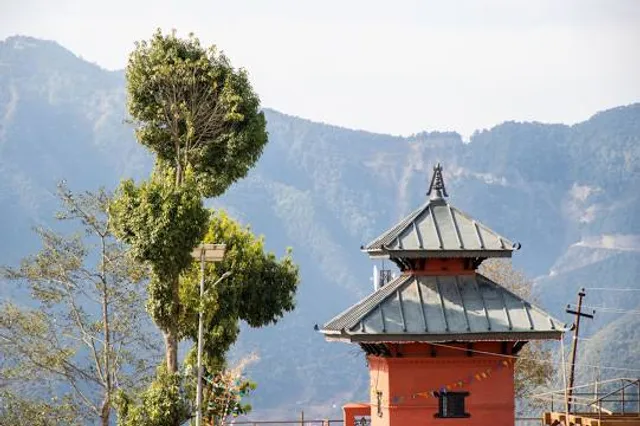
The Manakamana temple lies 12 km south of the town Gorkha.The temple is located on a distinguished ridge 1,302 metres (4,272 ft) above sea level and overlooks the river valleys of Trisuli in the south and Marsyangdi in the west. The Manaslu- Himachali and Annapurna ranges can be viewed to the north of the temple. The temple is approximately a 140 kilometres (87 mi) from Kathmandu and can also be reached via bus east from Pokhara in around three to four hours.
The legend of Manakamana Goddess dates back to the reign of the Gorkha king Ram Shah during the 17th century. It is said that his queen possessed divine powers, which only her devotee Lakhan Thapa knew about. One day, the king witnessed his queen in Goddess incarnation, and Lakhan Thapa in the form of a lion.Upon mentioning the revelation to his queen, a mysterious death befell the king. As per the custom of that time, the queen committed Sati (ritual immolation) on her husband's funeral pyre. Before her sati the queen had assured Lakhan Thapa that she would reappear in the near future. Six months later, a farmer while ploughing his fields cleaved a stone. From the stone he saw a stream of blood and milk flow. When Lakhan heard an account of this event, he immediately started performing Hindu tantric rituals at the site where the stone had been discovered thus ceasing the flow of blood and milk. The site became the foundation of the present shrine. According to tradition, the priest at the temple must be a descendent of Lakhan Thapa.
Darshan comes from the Sanskrit word meaning sight. The pilgrimage to Manakamana is made by a great many people every year. This religious expedition to see the Goddess Bhagwati at Manakamana is hence referred to as Manakamana Darshan. According to Hindu mythology the universe is said to consist of five cosmic elements- earth, fire, water, air and ether. The offerings to the Goddess are made on this basis. At least one of the following should be amongst the worship materials:
Abiir (vermillion)Kesar badam (pure saffron and almond )Flowers and leavesDhup (incense)Diyo (oil lamp)Bastra (Cloth, usually in red as it is considered auspicious)Fruit and foods such as coconuts and sweet dessertsBellBetel nut and jannai (sacred thread)Anna, grain (rice)saubhagya (red cloth, Chura, pota, etc.)
There is a tradition of sacrificing animals at the temple. Some pilgrims sacrifice goats or pigeons in a pavilion behind the temple.However, recently the District Livestock Service Office, Gorkha has banned the sacrifice of birds such as pigeons, roosters, and ducks to name a few. Senior livestock service officer Chhetra Bahadur K.C. said poultry sacrifice would not be permitted until further notice.
Manakamana darshan is most popular during Dashain (Sept –Oct) and Nag Panchami (July –August) during which time devotees stand for as long as five to ten hours to pray to...
Read moreEvery thing about Manakamana is best. The location, nature and the environment is very good.
Detailed review:
A golden spire crowning a conical wooded hill, Swayambhunath Stupa is the most ancient and enigmatic of all the holy shrines in Kathmandu valley. Its lofty white dome and glittering golden spire are visible for many miles and from all sides of the valley. Historical records found on a stone inscription give evidence that the stupa was already an important Buddhist pilgrimage destination by the 5th century AD. Its origins however, date to a much earlier time, long before the arrival of Buddhism into the valley. A collection of legends about the site, the 15th century Swayambhu Purana, tells of a miraculous lotus, planted by a past Buddha, which blossomed from the lake that once covered Kathmandu valley. The lotus mysteriously radiated a brilliant light, and the name of the place came to be Swayambhu, meaning 'Self-Created or Self-Existent'. Saints, sages and divinities traveled to the lake to venerate this miraculous light for its power in granting enlightenment. During this time, the Bodhisatva Manjushri was meditating at the sacred mountain of Wu Tai Shan and had a vision of the dazzling Swayambhu light. Manjushri flew across the mountains of China and Tibet upon his blue lion to worship the lotus. Deeply impressed by the power of the radiant light, Manjushri felt that if the water were drained out of the lake Swayambhu would become more easily accessible to human pilgrims. With a great sword Manjushri cut a gorge in the mountains surrounding the lake. The water, draining away, left the valley of present day Kathmandu. The lotus was then transformed into a hill and the light became the Swayabhunath Stupa.
Swayambhunath's worshippers include Hindus, Vajrayana Buddhists of northern Nepal and Tibet, and the Newari Buddhists of central and southern Nepal. Each morning before dawn, hundreds of pilgrims will ascend the 365 steps that lead up the hill, file past the gilded Vajra (Tibetan: Dorje) and two lions guarding the entrance, and begin a series of clockwise circumambulations of the stupa (Newari Buddhists circle in the opposite, counterclockwise direction). On each of the four sides of the main stupa there are a pair of big eyes. These eyes are symbolic of God's all-seeing perspective. There is no nose between the eyes but rather a representation of the number one in the Nepali alphabet, signifying that the single way to enlightenment is through the Buddhist path. Above each pair of eyes is another eye, the third eye, signifying the wisdom of looking within. No ears are shown because it is said the Buddha is not interested in hearing prayers in...
Read more