I think many people are twisting and bending many stories and facts to their advantage. Especially Nepal government is less conversant with the local history, myths, legends and stories of devi devatas of suderpaschim. Our ancestors who belong from suderpaschim know the history of gods because we live with gods and ghosts and our ancestors eye witnessed everything and shared that knowledge orally in the form of music, magal, faag, deuda etc so you can still verify everything from the old knowledgeable people and any clan who have maintained the history as it is without distortion. I won’t go into more details but the kumaon, garhwal and suderpaschim or simply put from Uttarakhand to doti bajhang including Kailash this region is regarded as dev bhumi and still shiva ganas reign over this region.
I’m a local from Bajhang I belong from a Upadhyaya(bajyal garga gotra) family. We are kul guru of dumryal Regmi. We are also dhamelo parivar i.e Shaman family. Our kul devata is Khapar Jagannath who is king of devatas. Many outsiders confuse khappar masto with khapar Jagannath, but let me tell you they are completely different devatas. Khapar is bhanja( nephew) of masto. I will tell you the glimpse of the history that we have been told by our ancestors about the history of khapar and spiritual significance of Khaptad.
Khaptad was originally called Khechradi parvat it’s mentioned in Skanda puran, it’s a place where great saints and sages, sidhas, rishis, munis, yogis, devatas still live there in astral body. Shiva and Parvati are also connected to this place. Somewhere around 1000 years ago Khapar was once a human and a king after he received dev yoni he came to Khaptad and settled in Khaptad as he loved the place near a lake which is now known as khapar daha, and also the mountain got the name KHAP-TAD as its khapar devata abode as he is king of few selected devatas not just khapar but many devi devats choose to live here and they still live here hence making this place very spiritually powerful. Devatas like kedar, khapar, 22 types bethal, bhatmala, saulyaal, namadev, masto, khagal, dhudir, dhalpuro, lakhudo, lato, kailash, jasu, danabagh, jogini, mouberi, etc., lived here and some choose to go somewhere else due to various reasons. khapar had 3 queens the youngest was musa Rani who is astonishingly beautiful and keder who is elder brother of khapar married musa rani, enraged with such act of his brother kedar the khapar started searching for him with his subordinates. They could not find Kedar as he took the disguise of a buffalo and he is grazing with the herd. Then khapar unable to identify which buffalo is kedar devised a plan to capture him. He told his subordinates to create a circle fence and hang a women’s undergarments at the entrance as planned all the buffalo went under the garment but one buffalo jumped above the garment. For people who don’t know gods consider women undergarments impure ( chau manchan) so they don’t take their pure head under it that’s why even now there is a practice men don’t go under the garment of women when it’s hanged anywhere. Then khapar noticed this and ran to capture him but kedar went underground khapar got hold of his tail. Then kedar said “ its not my tail it’s the roots of the tree you are holding then khapar let go and kedar escaped hence he was no longer part of Khaptad he was banished from Khaptad by other devatas, then after chasing him kedar reached at the place of maasani and asked for her help in exchange for bethal who was powerful subordinate of kedar then after miteri with maasani the maasani help to fend off khapar with chopped of leg of a buffalo and khapar being dudhyadhari he feels chau ( untouchable) to meat so with no other option kedar won and khapar withdrew. That’s why people who pray khapar and kedar respectively they maintain chau( untouchability with each other devata) hence keder side call khapar as a demon and khapar side call kedar a demon this is how people are. Anyways after that the mountain came to know as KHAP- TAD as its...
Read moreSolo travel experience to GOD AND GODESS Khaptad
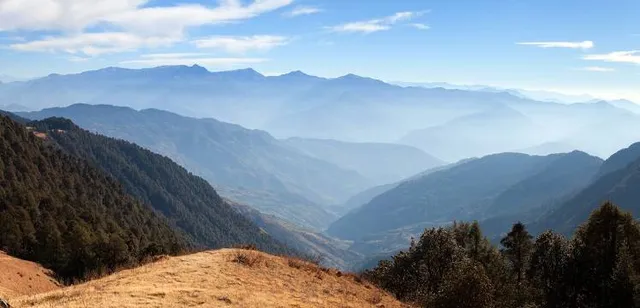
Khaptad lies on an elevated plateau that consists of grasslands or meadows between sub-alpine landscapes. Khaptad National Park is located in the far western region of Nepal and spread over four districts — Doti, Bajhang, Bajura and Acham. In fact, the boundaries of the four districts meet at a point in Khaptad. It covers 225 sq km with highest point at 3212 m.
please do not use the route Bajura to Khaptad ,Accham to Khaptad, Doti to Khaptad
Best and short route to Khaptad
Bajhang ,Dharugaun to Khaptad just 5 kilometre
Trekking time for normal person. 3 hours
Regular trekkers timing just 1.50 hours
My journey was to start around the last week of September 30th 2019
Trek start from Bajura to Khaptad was quite a long one. When I reached Lasing I changed my mind about spending the night there due to unavailability of hotel. whole night i was spend my whole night a cow shelter to spend the night in.
The next day, I continued my journey to Lasing ,Bajura , from where I entered Khaptad National Park. I was informed that the route to lasing would be a tough, high and steep trek between the jungle. no water and food, it took me almost six hours to reach Khaptad . Upon arriving I was welcomed by the freezing cold!
The path was meandering in between jungles and was covered in yellow autumn leaves. A little ahead into the jungle, Khaptad is known for its green meadows, grasslands and pastures. It is said that there are altogether 22 large pastures within the Khaptad National Park.
I stayed in Khaptad for 1 more days. I went to visit the religious sites — Triveni, Kedardunga, Khaptad Daha, a tower from where you can see Saipal Mountain range, maithan, and Khaptad Baba ashram which is where the Khaptad baba stayed for most of his life. It is now an open museum. You can see his room and books and instruments that he used in his lifetime. He moved in the area in 1940’s to meditate and worship.
Vegetation of the region includes chir pine-rhododendron forest, oak forest and Himalayan fir-hemlock-oak forest and alder forest in reverie areas. Mammal species symbolic of the park are leopard, Himalayan black bear, wild dog ,wolf musk deer jungle cat ,Himalayan mouse hare ,wild boar fox,Goral and common langur. Bird species symbolic of the park include the implying pheasant, Peregrine falcon, and vulture.
Please stop use plastic and stop to drink in Khaptad
Khaptad is a god and...
Read moreReview of Khaptad National Park
Introduction Serene mid-mountain national park in western Nepal, established 1984 Covers 225 sq km across Bajhang, Bajura, Doti, Achham districts Elevation: 1,400–3,300 meters Named after Khaptad Swami, Hindu saint who meditated here Known for rolling meadows, dense forests, spiritual significance
Geographical Features Unique plateau-like landscape with 22 open grasslands (patans) Mixed temperate forests, alpine vegetation, pristine lakes (e.g., Khaptad Daha) Part of Sivalik Hills, with Himalayan views (Api & Saipal peaks)
Biodiversity Flora : Rhododendron, oak, fir, Himalayan cedar; 135+ medicinal herbs Fauna: Leopard, Himalayan black bear, barking deer, langur monkeys; rare red panda, musk deer Birds: Impeyan pheasant (Danphe), eagles, migratory birds
Tourism and Trekking Khaptad Trek: Moderate 5-7 day trek from Silgadhi (Doti) or Bajura Pilgrimage Sites: Khaptad Baba Ashram (meditation spot), Triveni Dham (holy river confluence) Ideal for nature walks, birdwatching, spiritual retreats Festivals: Ganga Dashahara (May/June) attracts pilgrims
Socio-Cultural and Religious Significance Sacred to Hindus and Buddhists; strict rules (no alcohol, non-veg food) Home to indigenous Chhetri, Brahmin, Thakuri communities Khaptad Swami’s teachings influence local culture, conservation
Climate Change Impact Deforestation, overgrazing threaten grasslands Erratic rainfall affects water sources, biodiversity Community-based conservation programs in place
Best Time to Visit Spring (March-May): Blooming rhododendrons, pleasant weather Autumn (Sept-Nov): Clear skies, ideal for trekking Monsoon (June-Aug): Heavy rains, leeches; trekking difficult Winter (Dec-Feb): Snowfall at higher areas; chilly but serene
How to Get There By Air: Fly from Kathmandu to Dipayal (Doti) or Bajura, then trek By Road: Kathmandu to Dhangadhi (12-14 hrs), then Silgadhi/Doti (6-7 hrs); 4WD jeeps to Jhigrana, then 2-3 day trek Permits: Entry permit (NPR 3,000 foreigners, NPR 1,500 SAARC)
Final Thoughts Pros: Unexplored, peaceful, away from crowded trekking routes Spiritual, ecological harmony; blend of nature, meditation Unique rolling meadows, unlike typical Himalayan terrain Cons: Limited infrastructure (basic teahouses, no luxury stays) Remote access, requires long...
Read more