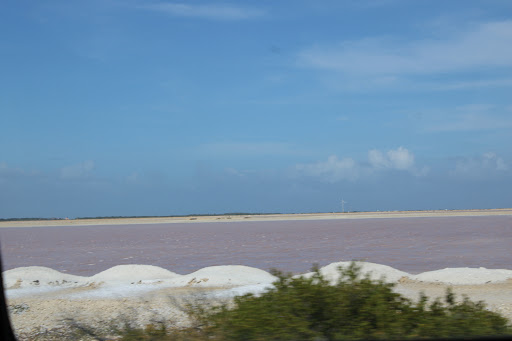
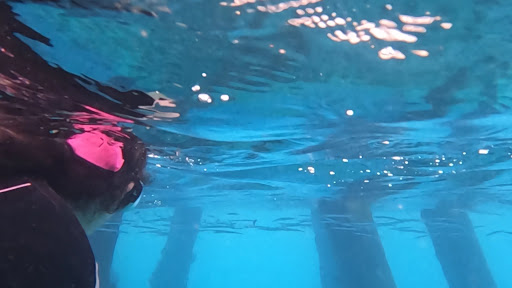
I got recommended to snorkel here by locals. Its OK. Very rough water to get in and out. The waves smashed the rocks, and me onto the rocks. I ended up losing my snorkel mouthpiece. Luckily I have a spare snorkel. The stuff to see was OK. Like the rest of Bonaire, I got savaged by jellyfish and its larvae. So many welts and stings. Just so itchy, that it really ruins everything. Water in Bonaire is clear. In fact, so clear, one can see the jellyfish larvae but cant avoid as its everywhere. To be fair, I saw a lot more stuff in Aruba, and Curaçao than here. Way more turtles, especially in Aruba. Saw flamingos in Curaçao, but not here. I believe the Dutch rave about the ABC islands, because they are affiliated to them. They basically own them. I don't think much of Bonaire as the diesel pollution is atrocious. The quad bikes and motorcycles and basically everything is run on stinking diesel. Clouds of black stinking stench everywhere. The pollution on the sparsely populated island, is so much worse than countries with millions of people. The noise from the engines and the deliberate revving of machines, the pumping noise from the so called music. This island is not what I expected for so few people. When it doubles its population shortly, it will be too bad. Also, the poor dogs on all three islands. Starved and tortured. Their internal organs failing from no water. There are no stray dogs in Holland. I hope the government helps the poor dogs. They get chained and beaten, rocks are thrown at them. Open more dog rescue centres. Make people neuter dogs. Locals should put containers of water out and food. The desert terrain means no fresh water as no rain. Anyways, snorkelling is way better in the Maldives, South pacific Islands, and South East Asia. The coral here is dead, colourless, and pretty low key. Enjoyed the salt hills. The sun rising behind...
Read moreThis place has a lot of aspects that would appeal to many visitors. The biggest export on the island of Bonaire is salt. This mineral is something we all see on tables, kitchens, and stores, and comes in several varieties, but to how does it actually come to be? I could go on a whole science lesson but I shall stay focused. This area of the island not only extracts salt from the sea but is also a beautiful place to go scuba diving, snorkeling or swimming. The coral beach is filled with different types of dried coral and the water is clear. There are areas of the shore that make it easy to enter. A lot of sea turtles swim in the area around the pier which makes spotting one while underwater easy. There is an old block house that is part of the rich history of the island. Across the street, the retention areas for the sea water can be seen, each area is in a different stage of evaporation. What makes it really cool is the pink that becomes more concentrated in each stage. The salt itself is clear to cloudy white, but what makes the water pink and not the salt? I will give you a clue, but not the answer you will need to visit the island or at least a local zoo to get the answer, but it is the same thing that makes flamingos pink. There are several wild flamingos on the island, I didn't see any in this area while I was there but was told by a local that they do show up now and then. Lastly, there is a box that if you look around you will find it. It was moved from the last time our friend had come to the area. Inside the box is are nuggets of salt crystals for visitors to take. So come to scuba/snorkel, then explore around the shore to find the treasure box of salt. Who knows you may see a flamingo or other wild life animals native...
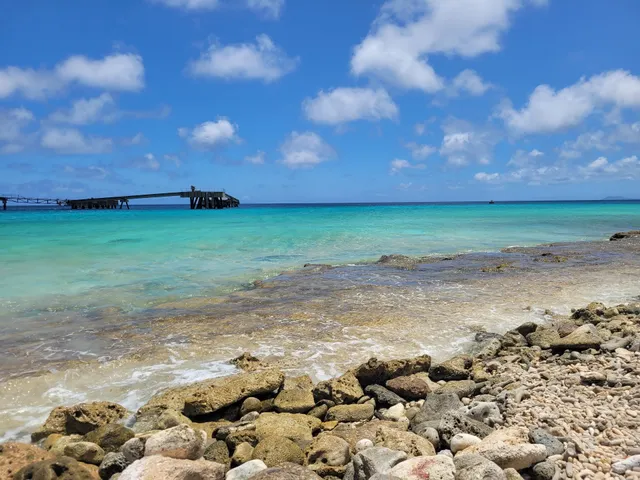
Read moreWe did a quick snorkel to check this site out after a dive in the late afternoon. There were a handful of other divers. I could see the entry/exit being a bit tricky with all your gear. The novelty of this site definitely explains why so many are drawn to it. I am excited to come back here and dive. There are tons of baby barracuda hanging out at the surface under the center fixture.
Update: we came back on two different days for a night dive and an afternoon dive. The night dive was amazing. We saw so many different critters and tons of lionfish. We saw a massive free swimming green moray eel in the afternoon dive. I should add that the tide definitely made the entry/exit easier on some. The entry/exit is marked on the far left side with yellow rocks. The afternoon day dive resulted in tons of jellyfish stings. That wasn't something I experienced at night at all, so wear...
Read more