A wonderful National park to explore. By foot using one of the many hiking trails, by car (part of the park can be explored by car), or from the back of a horse along the bridle paths. Of course, the disabled are also catered for: wheelchairs, wheelchair bikes, electric bicycles, tandems, comfortable easy-to-mount bikes and tricycles can be borrowed free of charge. And then there is what makes the Park so famous: the Park has 1,800 so-called White Bikes. The use of a White Bike is included in the entrance fee. As soon as a White Bike is parked, another visitor may use it. They cannot be reserved or locked. White Bikes are also available for children (without training wheels). All bicycles have a child's seat, in which you can also carry your backpack if you do not have children! The park has over 40 kilometres of cycle paths and two cycle routes. At various places in the park you can buy a map with all cycling and walking routes on it.
De Hoge Veluwe National Park is the unique legacy of one of the most remarkable couples in Dutch history: Anton and Helene Kröller-Müller. Anton was a great lover of nature and hunting who founded his own country estate: the Hooge Veluwe. He was able to expand this estate continuously with new pieces of land. Red deer, wild boar and mouflons were released there.
The most celebrated Dutch architect at the time, H.P. Berlage, was asked to design the St. Hubertus hunting lodge in Art Nouveau style. Berlage also designed the ponds, the gardens around the lodge, the Art Deco interior and even the cutlery!
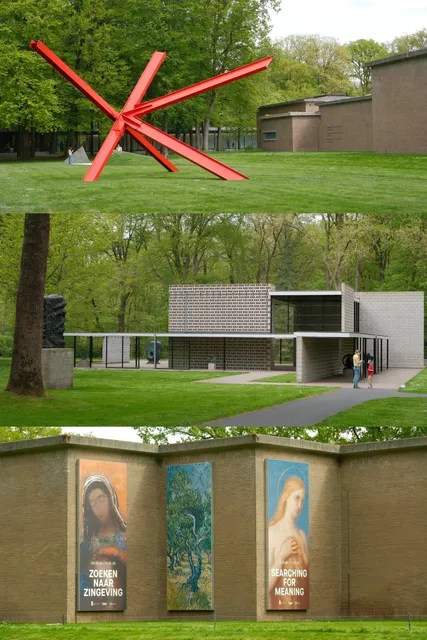
Helene Kröller-Müller also had a passion: collecting modern art. A major part of her enormous art collection can be viewed, for example in the Kröller-Müller museum, where you can admire the work of Vincent van Gogh, but also that of Claude Monet, Georges Seurat, Pablo Picasso and Piet Mondriaan. In the adjacent sculpture garden, the largest in Europe, there are more than 160 sculptures by iconic artists, from Auguste Rodin to Henry Moore, from Jean Dubuffet to Joep van Lieshout. From the sculpture garden, you can also climb up to the highest viewpoint in the park from where you can see the wide surroundings.
Impressive sculptures and statues can additionally be found here and there in the park., just out of the blue in the middle of nature.
There are the remains of the foundations of the Great Museum. Helene's dream was to establish a large museum so that everyone would have access to modern art. Unfortunately, the economic crisis of the 1920’s brought Anton's firm into very serious difficulties and in 1922 the construction had to be stopped definitively.
Eventually, the couple had to hand over all their possessions to the Dutch state, on condition that a museum would still be built and that the park would become a National Park. And so it happened: in the park you will find the hunting lodge, the Kröller-Müller museum, the sculpture garden, as well as a large visitor centre with restaurant, playground, shop and the Museonder, the first underground museum in the world. For a small entrance fee accessible for everybody.
The Museonder provides a surprising picture of everything that lives below the earth's surface and of what used to live there. The exhibition takes you deeper and deeper into the ground. Eventually you will even end up in the centre of the earth. Also great fun and educational for children!
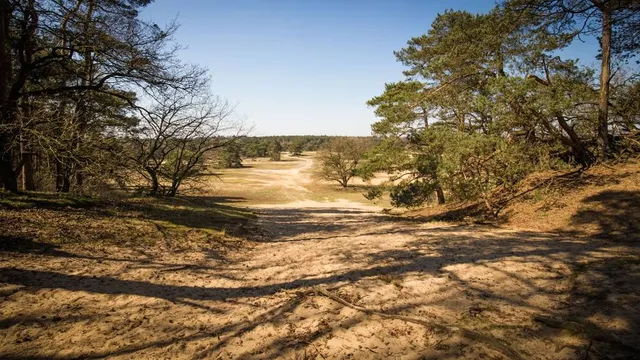
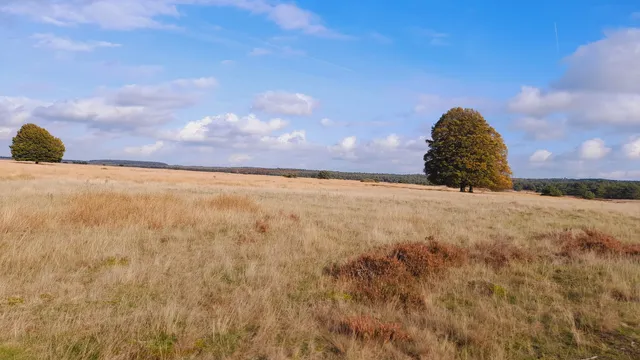
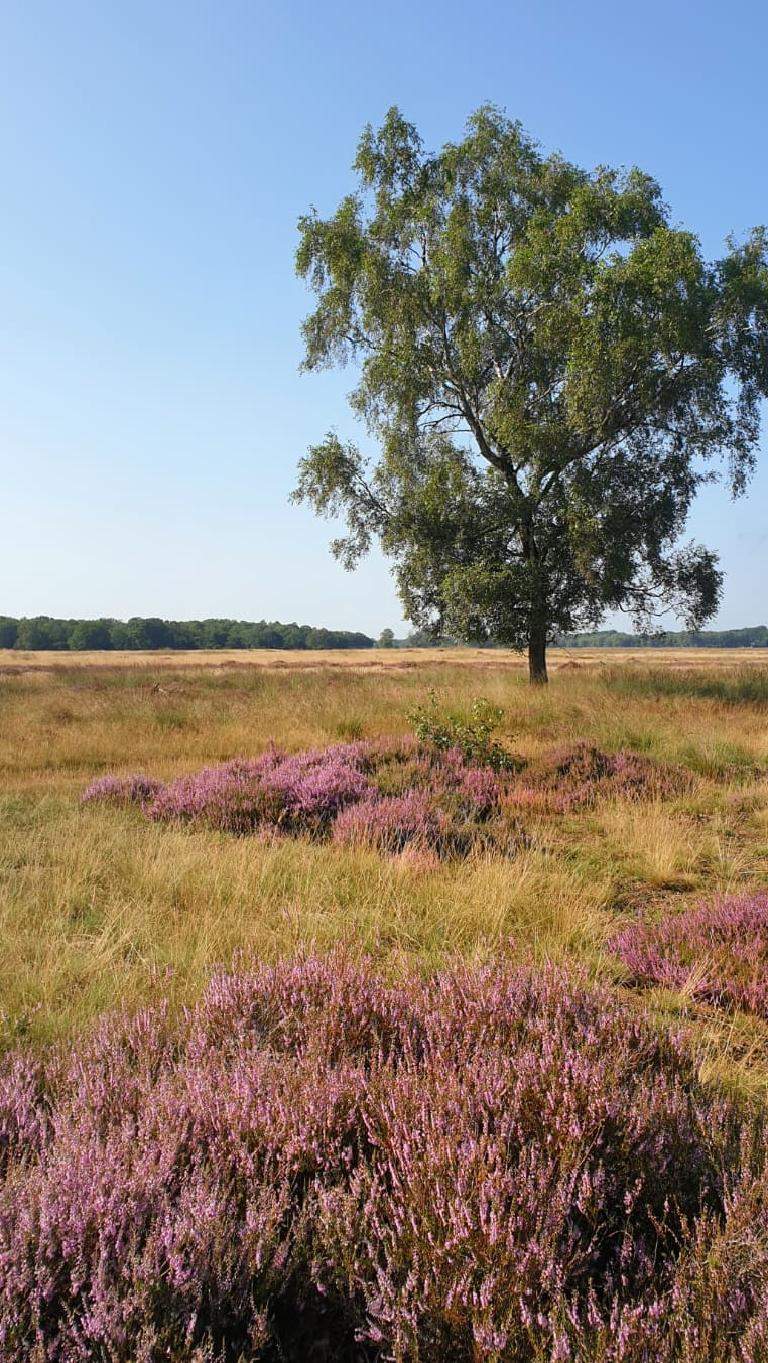
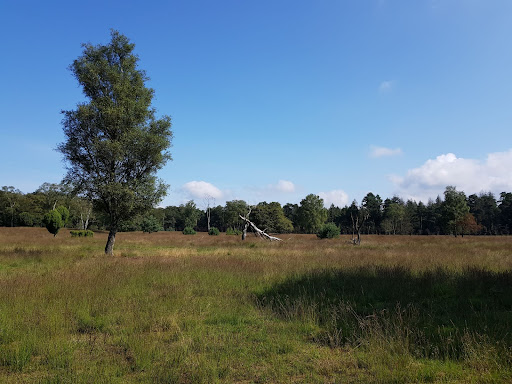
The National Park itself offers the very best in Veluwe landscapes: deciduous, coniferous and mixed forests, as well as heathland (wet and dry), grassy plains and shifting sands. These landscapes harbour an unprecedented diversity of plant and animal species, including many protected birds, insects and amphibians.
It is a wonderful National Park in all seasons, one never gets...
Read more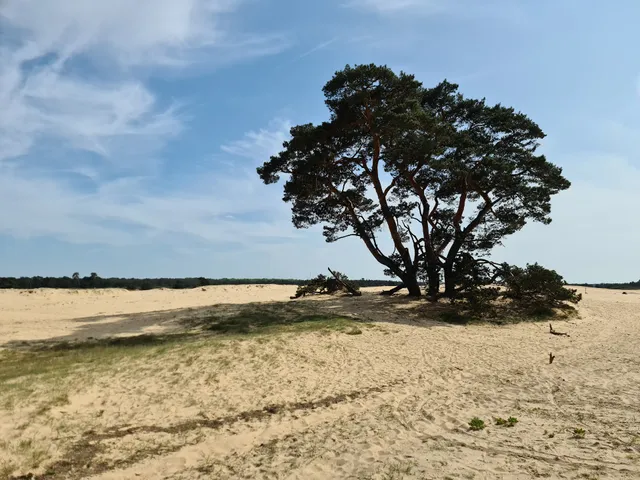


 Learn more insights from Wanderboat AI.