HTML SitemapExplore
logo
Find Things to DoFind The Best Restaurants

Lake Nicaragua — Attraction in Chontales

Name
Lake Nicaragua
Description
Nearby attractions
Nearby restaurants
Nearby hotels
Related posts
Keywords
Lake Nicaragua tourism.Lake Nicaragua hotels.Lake Nicaragua bed and breakfast. flights to Lake Nicaragua.Lake Nicaragua attractions.Lake Nicaragua restaurants.Lake Nicaragua travel.Lake Nicaragua travel guide.Lake Nicaragua travel blog.Lake Nicaragua pictures.Lake Nicaragua photos.Lake Nicaragua travel tips.Lake Nicaragua maps.Lake Nicaragua things to do.
Lake Nicaragua things to do, attractions, restaurants, events info and trip planning
Lake Nicaragua
NicaraguaChontalesLake Nicaragua

Basic Info

Lake Nicaragua

Nicaragua
4.6(380)
Open 24 hours
Save
spot

Ratings & Description

Info

Outdoor
Adventure
Scenic
Family friendly
attractions: , restaurants:
logoLearn more insights from Wanderboat AI.

Plan your stay

hotel
Pet-friendly Hotels in Chontales
Find a cozy hotel nearby and make it a full experience.
hotel
Affordable Hotels in Chontales
Find a cozy hotel nearby and make it a full experience.
hotel
The Coolest Hotels You Haven't Heard Of (Yet)
Find a cozy hotel nearby and make it a full experience.
hotel
Trending Stays Worth the Hype in Chontales
Find a cozy hotel nearby and make it a full experience.

Reviews

Get the Appoverlay
Get the AppOne tap to find yournext favorite spots!
Wanderboat LogoWanderboat

Your everyday Al companion for getaway ideas

CompanyAbout Us
InformationAI Trip PlannerSitemap
SocialXInstagramTiktokLinkedin
LegalTerms of ServicePrivacy Policy

Get the app

© 2025 Wanderboat. All rights reserved.
logo

Reviews of Lake Nicaragua

4.6
(380)
avatar
5.0
4y

Nicaragua’s largest lake has several names: the indigenous tribes called it Cocibolca and the Spanish conquerors named it La Mar Dulce (both terms meaning Sweet Sea), the people from Granada call it Lake Granada and it is nowadays generally known as Lake Nicaragua.

Lake Nicaragua is also the largest lake in Central America, the 10th largest lake in the Americas and the 19th largest lake in the world (by area).

Oval in shape, with an area of 8,264 square km (3,190.75 square miles), the lake is 177 km (110 miles) in length and has an average width of 58 km (36 miles). It is about 18 meters (59 feet) deep in the centre, and its waters reach a depth of 60 meters (197 feet) to the southeast of its largest island, Ometepe. The lake’s surface is about 30 meters (98.5 feet) above sea level.

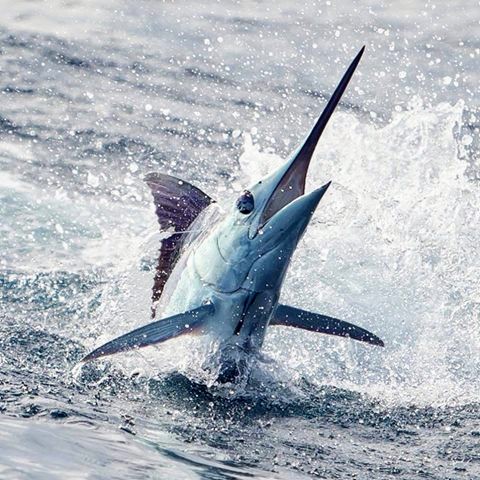
It is believed that Lake Nicaragua, together with Lake Managua to the northwest, originally formed part of an ocean bay that, as a result of volcanic eruption, became an inland basin containing the two lakes, which are linked by the Tipitapa River. The ocean fishes thus trapped adapted themselves as the salt water gradually turned fresh (or they were able to jump along the rapids of the San Juan River — which connects Lake Nicaragua with the Caribbean Sea — like some scientists have discovered in the late 1960s). Lake Nicaragua is the only freshwater lake containing oceanic animal life, including bull shark, swordfish, sawfish and tarpon...

More than 40 rivers drain into the lake, the largest being the Tipitapa River. The San Juan River drains out of the lake, following a 180 kilometers (112 miles) course that runs from the southeastern shore of the lake through a densely forested region to empty into the Caribbean Sea. For part of its course, the San Juan forms the boundary between Nicaragua and Costa Rica. To the southwest, the lake is separated from the Pacific Ocean by a narrow land corridor, the Rivas Isthmus, which is 19 kilometers (12 miles) wide.

Surface water temperature usually remains about 24°C (in the mid-70s F), and bottom temperature stays about 16°C (in the low 60s F). Due to the chemical composition of the volcanic rocks forming parts of the lake’s bed and shores, the lake waters contain high proportions of dissolved magnesium and potassium salts.

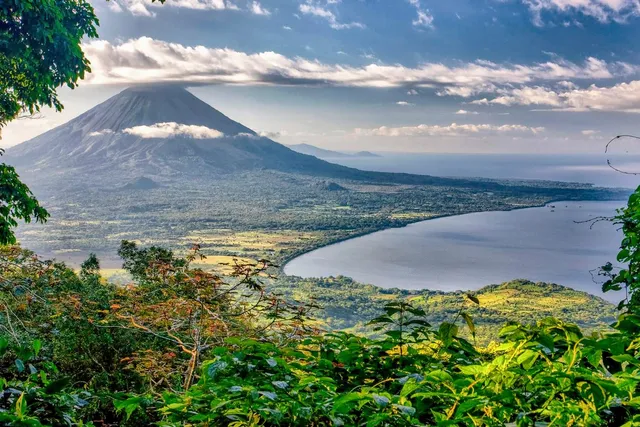
There are more than 400 islands in the lake, around 300 of which are within 8 kilometers (5 miles) of the city of Granada on the northwest shore. Most of the islands are covered with a rich growth of vegetation, which includes tropical fruit trees. Some of the islands are inhabited, including the bigger ones like Ometepe, Zapatera and Solentiname Islands. The biggest Ometepe is 26 kilometers (16 miles) long and 13 kilometers (8 miles) wide. It is formed of what originally were two separate volcanoes—Concepción, which is 1,610 metres (5,282 feet) high and last erupted in 1983, and Madera, which is 1,394 metres (4,573 feet) high. Lava from bygone eruptions forms a bridge between them, called the Tistian Isthmus. A third volcano associated with the lake is Mombacho, about 1,350 metres (4,429 feet) high, which stands on the western shore.

In recent years, a considerable concern has been expressed about the ecological condition of Lake Nicaragua, as its water was being seriously polluted by raw sewage released into the lake daily...

Photos courtesy of Internet and...

   Read more

avatar
4.0
3y

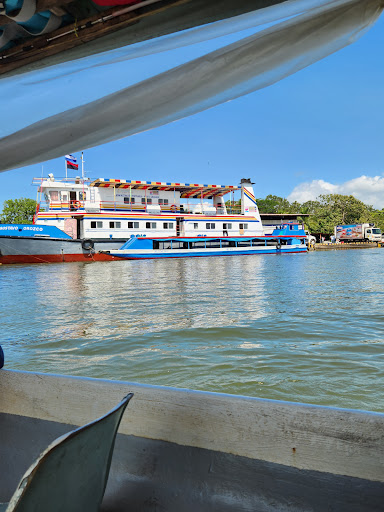
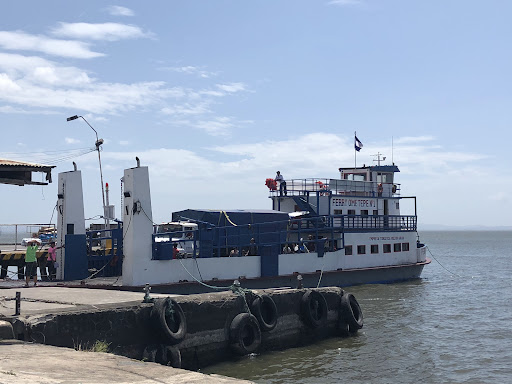
I transferred from river boats which brought me up the Rio San Juan from the Caribe to the wildwest town of San Carlos at the southern end of the lake. Boarded the passenger ferry for the overnite crossing of the lake to Granada. Wonderful nite cruise. Lake was mostly placid all nite. Empty ferry Very very few passengers. Some small cargo of food stuffs etc...One big JBL speaker boomed loudly til about 10pm on the back deck with good music. They don't want you drinking alcohol on board. Even though they sell beer, you must ask captain for permission to buy one. Only one. Security, as typically found in Nicaragua is everywhere. Don't provoke them. This is a heavyhanded socialist dictatorship. Behave. The journey north makes a stop about 8 hours into the night at Ometepe. We arrived there about 1AM. Small cargo and passengers were unloaded and new brought on. We departed soon and arrived at Granada pier 530AM. The vessel sails once a week at the same time 5PM. Southbound on Mondays and northbound on Tuesdays. Best way to Caribe on land. Roads around the lake are long and towards the end very bumpy. You will definitely get pulled over for some kind of violation driving a rental car. Besides roads only as far as...

   Read more
avatar
5.0
7y

Such a beautiful place.

The ferry ride across can get bumpy, but well worth the voyage to get to the island.

The trip over makes me think of Jurassic park - you slowly come up on an island with two giant volcanoes - all it is missing is a few dinosaurs!

Make sure to enjoy the view on...

   Read more
Page 1 of 7
Previous
Next

Posts

Dinh TuanDinh Tuan
Nicaragua’s largest lake has several names: the indigenous tribes called it Cocibolca and the Spanish conquerors named it La Mar Dulce (both terms meaning Sweet Sea), the people from Granada call it Lake Granada and it is nowadays generally known as Lake Nicaragua. Lake Nicaragua is also the largest lake in Central America, the 10th largest lake in the Americas and the 19th largest lake in the world (by area). Oval in shape, with an area of 8,264 square km (3,190.75 square miles), the lake is 177 km (110 miles) in length and has an average width of 58 km (36 miles). It is about 18 meters (59 feet) deep in the centre, and its waters reach a depth of 60 meters (197 feet) to the southeast of its largest island, Ometepe. The lake’s surface is about 30 meters (98.5 feet) above sea level. It is believed that Lake Nicaragua, together with Lake Managua to the northwest, originally formed part of an ocean bay that, as a result of volcanic eruption, became an inland basin containing the two lakes, which are linked by the Tipitapa River. The ocean fishes thus trapped adapted themselves as the salt water gradually turned fresh (or they were able to jump along the rapids of the San Juan River — which connects Lake Nicaragua with the Caribbean Sea — like some scientists have discovered in the late 1960s). Lake Nicaragua is the only freshwater lake containing oceanic animal life, including bull shark, swordfish, sawfish and tarpon... More than 40 rivers drain into the lake, the largest being the Tipitapa River. The San Juan River drains out of the lake, following a 180 kilometers (112 miles) course that runs from the southeastern shore of the lake through a densely forested region to empty into the Caribbean Sea. For part of its course, the San Juan forms the boundary between Nicaragua and Costa Rica. To the southwest, the lake is separated from the Pacific Ocean by a narrow land corridor, the Rivas Isthmus, which is 19 kilometers (12 miles) wide. Surface water temperature usually remains about 24°C (in the mid-70s F), and bottom temperature stays about 16°C (in the low 60s F). Due to the chemical composition of the volcanic rocks forming parts of the lake’s bed and shores, the lake waters contain high proportions of dissolved magnesium and potassium salts. There are more than 400 islands in the lake, around 300 of which are within 8 kilometers (5 miles) of the city of Granada on the northwest shore. Most of the islands are covered with a rich growth of vegetation, which includes tropical fruit trees. Some of the islands are inhabited, including the bigger ones like Ometepe, Zapatera and Solentiname Islands. The biggest Ometepe is 26 kilometers (16 miles) long and 13 kilometers (8 miles) wide. It is formed of what originally were two separate volcanoes—Concepción, which is 1,610 metres (5,282 feet) high and last erupted in 1983, and Madera, which is 1,394 metres (4,573 feet) high. Lava from bygone eruptions forms a bridge between them, called the Tistian Isthmus. A third volcano associated with the lake is Mombacho, about 1,350 metres (4,429 feet) high, which stands on the western shore. In recent years, a considerable concern has been expressed about the ecological condition of Lake Nicaragua, as its water was being seriously polluted by raw sewage released into the lake daily... * Photos courtesy of Internet and Facebook. Thanks!
Lloyd YoungLloyd Young
I transferred from river boats which brought me up the Rio San Juan from the Caribe to the wildwest town of San Carlos at the southern end of the lake. Boarded the passenger ferry for the overnite crossing of the lake to Granada. Wonderful nite cruise. Lake was mostly placid all nite. Empty ferry Very very few passengers. Some small cargo of food stuffs etc...One big JBL speaker boomed loudly til about 10pm on the back deck with good music. They don't want you drinking alcohol on board. Even though they sell beer, you must ask captain for permission to buy one. Only one. Security, as typically found in Nicaragua is everywhere. Don't provoke them. This is a heavyhanded socialist dictatorship. Behave. The journey north makes a stop about 8 hours into the night at Ometepe. We arrived there about 1AM. Small cargo and passengers were unloaded and new brought on. We departed soon and arrived at Granada pier 530AM. The vessel sails once a week at the same time 5PM. Southbound on Mondays and northbound on Tuesdays. Best way to Caribe on land. Roads around the lake are long and towards the end very bumpy. You will definitely get pulled over for some kind of violation driving a rental car. Besides roads only as far as Los Sabalos.
Alex DugalAlex Dugal
Such a beautiful place. The ferry ride across can get bumpy, but well worth the voyage to get to the island. The trip over makes me think of Jurassic park - you slowly come up on an island with two giant volcanoes - all it is missing is a few dinosaurs! Make sure to enjoy the view on the top deck!
See more posts
See more posts
hotel
Find your stay

Pet-friendly Hotels in Chontales

Find a cozy hotel nearby and make it a full experience.

Nicaragua’s largest lake has several names: the indigenous tribes called it Cocibolca and the Spanish conquerors named it La Mar Dulce (both terms meaning Sweet Sea), the people from Granada call it Lake Granada and it is nowadays generally known as Lake Nicaragua. Lake Nicaragua is also the largest lake in Central America, the 10th largest lake in the Americas and the 19th largest lake in the world (by area). Oval in shape, with an area of 8,264 square km (3,190.75 square miles), the lake is 177 km (110 miles) in length and has an average width of 58 km (36 miles). It is about 18 meters (59 feet) deep in the centre, and its waters reach a depth of 60 meters (197 feet) to the southeast of its largest island, Ometepe. The lake’s surface is about 30 meters (98.5 feet) above sea level. It is believed that Lake Nicaragua, together with Lake Managua to the northwest, originally formed part of an ocean bay that, as a result of volcanic eruption, became an inland basin containing the two lakes, which are linked by the Tipitapa River. The ocean fishes thus trapped adapted themselves as the salt water gradually turned fresh (or they were able to jump along the rapids of the San Juan River — which connects Lake Nicaragua with the Caribbean Sea — like some scientists have discovered in the late 1960s). Lake Nicaragua is the only freshwater lake containing oceanic animal life, including bull shark, swordfish, sawfish and tarpon... More than 40 rivers drain into the lake, the largest being the Tipitapa River. The San Juan River drains out of the lake, following a 180 kilometers (112 miles) course that runs from the southeastern shore of the lake through a densely forested region to empty into the Caribbean Sea. For part of its course, the San Juan forms the boundary between Nicaragua and Costa Rica. To the southwest, the lake is separated from the Pacific Ocean by a narrow land corridor, the Rivas Isthmus, which is 19 kilometers (12 miles) wide. Surface water temperature usually remains about 24°C (in the mid-70s F), and bottom temperature stays about 16°C (in the low 60s F). Due to the chemical composition of the volcanic rocks forming parts of the lake’s bed and shores, the lake waters contain high proportions of dissolved magnesium and potassium salts. There are more than 400 islands in the lake, around 300 of which are within 8 kilometers (5 miles) of the city of Granada on the northwest shore. Most of the islands are covered with a rich growth of vegetation, which includes tropical fruit trees. Some of the islands are inhabited, including the bigger ones like Ometepe, Zapatera and Solentiname Islands. The biggest Ometepe is 26 kilometers (16 miles) long and 13 kilometers (8 miles) wide. It is formed of what originally were two separate volcanoes—Concepción, which is 1,610 metres (5,282 feet) high and last erupted in 1983, and Madera, which is 1,394 metres (4,573 feet) high. Lava from bygone eruptions forms a bridge between them, called the Tistian Isthmus. A third volcano associated with the lake is Mombacho, about 1,350 metres (4,429 feet) high, which stands on the western shore. In recent years, a considerable concern has been expressed about the ecological condition of Lake Nicaragua, as its water was being seriously polluted by raw sewage released into the lake daily... * Photos courtesy of Internet and Facebook. Thanks!
Dinh Tuan

Dinh Tuan

hotel
Find your stay

Affordable Hotels in Chontales

Find a cozy hotel nearby and make it a full experience.

Get the Appoverlay
Get the AppOne tap to find yournext favorite spots!
I transferred from river boats which brought me up the Rio San Juan from the Caribe to the wildwest town of San Carlos at the southern end of the lake. Boarded the passenger ferry for the overnite crossing of the lake to Granada. Wonderful nite cruise. Lake was mostly placid all nite. Empty ferry Very very few passengers. Some small cargo of food stuffs etc...One big JBL speaker boomed loudly til about 10pm on the back deck with good music. They don't want you drinking alcohol on board. Even though they sell beer, you must ask captain for permission to buy one. Only one. Security, as typically found in Nicaragua is everywhere. Don't provoke them. This is a heavyhanded socialist dictatorship. Behave. The journey north makes a stop about 8 hours into the night at Ometepe. We arrived there about 1AM. Small cargo and passengers were unloaded and new brought on. We departed soon and arrived at Granada pier 530AM. The vessel sails once a week at the same time 5PM. Southbound on Mondays and northbound on Tuesdays. Best way to Caribe on land. Roads around the lake are long and towards the end very bumpy. You will definitely get pulled over for some kind of violation driving a rental car. Besides roads only as far as Los Sabalos.
Lloyd Young

Lloyd Young

hotel
Find your stay

The Coolest Hotels You Haven't Heard Of (Yet)

Find a cozy hotel nearby and make it a full experience.

hotel
Find your stay

Trending Stays Worth the Hype in Chontales

Find a cozy hotel nearby and make it a full experience.

Such a beautiful place. The ferry ride across can get bumpy, but well worth the voyage to get to the island. The trip over makes me think of Jurassic park - you slowly come up on an island with two giant volcanoes - all it is missing is a few dinosaurs! Make sure to enjoy the view on the top deck!
Alex Dugal

Alex Dugal

See more posts
See more posts