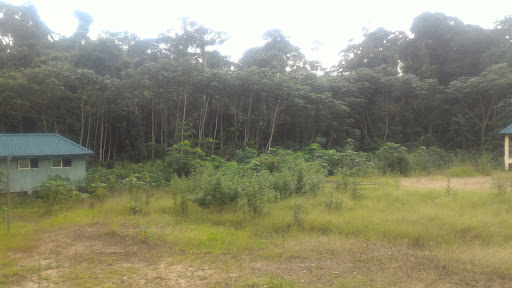
Cross River National Park is located between Latitude 5o 05’ and 6o 29’ N, and Longitudes 8o 15’ and 9o 30’ E, in the extreme south-eastern corner of Nigeria, in Cross River State. It covers a total area of about 4000sq km of mainly primary moist tropical rainforest ecosystem in the North and central parts, and montane mosaic vegetation on the Obudu Plateau. It is Nigeria’s last Great Rainforest Reserve, and the closest to the Mangrove Swamps on the coastal region.
Cross River National Park is an integral part of the Cross River State rainforest conservation area, located in Boki LGA and spans from Kanyan to the foot of the Obudu plateau with a total land area of 720sqkm of rugged mountain scenery and rolling hills. The park is divided into two sections.
The smaller area to the north-east, Okwangwo Division, is separated by about 50 km of disturbed forest from the larger Oban Division. Oban Division is contiguous with Korup National Park in Cameroon. The Cross river and its tributaries drain northern parts of Oban Division, while southern parts are drained by the Calabar, Kwa and Korup rivers.The terrain is rough and elevation rises from the river valleys to over 1,000 m in mountainous areas. Soils are ferralitic and sandy, and steadily become shallower with increasing elevation.
Cross River National Park is one of the richest areas of tropical rainforest in West Africa. Currently, the WWF, the Nigerian Conservation Foundation and the Federal Parks Service are carrying out an integrated conservation and development project in the northern part...
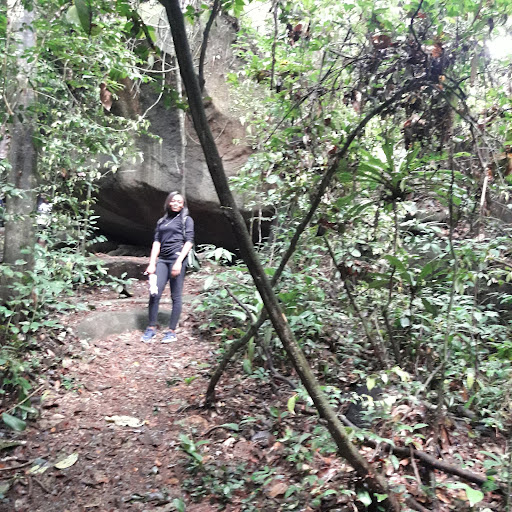
Read moreWell, the part of the cross river national park I went to wasn't so much fun as I'm seeing on some people's reviews. I'm a pharmacy student currently and 7 months ago, it was part of our curriculum to visit the national park (department of pharmacognosy and natural medicine). We went to the park at akamkpa where we were first introduced to a kind of lab were some skeletons and skins of animals were preserved, although the place was kind of small. We didn't really have a good shade outside so we all stayed under the sun while the tour guide briefed us about the place with history which I can't recall any part of. Then we set out into the forest, like inside the park. We walked, climbed, dodged some funny-looking plants, crossed streams and saw a cave. Maybe we toured the forest area because that's what our course entails but we were just passing through the forest while the tour guide gave us details about some plants in there. Mentioning their botanical names and their uses. Funnily enough, some of them were said to be potent enough to cure a lot of diseases people are finding it difficult to cure. We all wondered why research hasn't been carried out with those plants but then again, this is Nigeria where a lot of things are not taken into good consideration, research being one of those things, sadly. We didn't find a good place to pee at the end. I wish we...
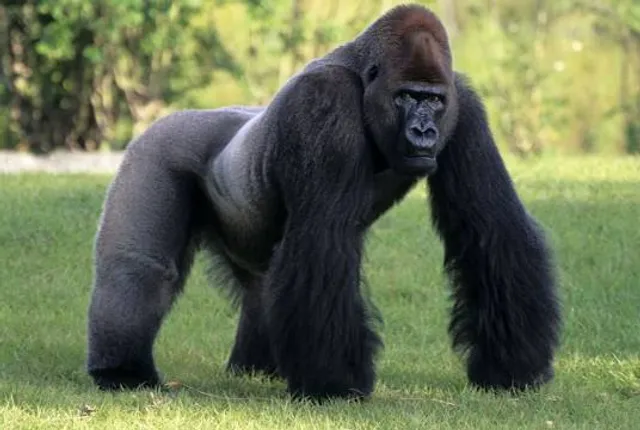
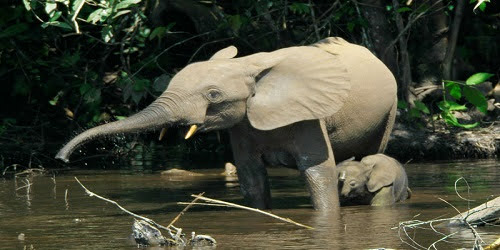
Read moreCross River National Park Created in 1991 the Oban Division of Cross River National Park covers an area of around 3,000km² of lowland rainforest– the largest area of closed-canopy rainforest in Nigeria and contiguous with Korup National Park in Cameroon. Oban is an important watershed with hills rising above 500 m and one peak reaching approximately 1,000 m. The Oban Hills once formed part of one of the lowland rainforest refugia during the last glacial period and is an internationally recognized biodiversity hotspot and center of species richness and endemism particularly for primates, amphibians, butterflies, fish and small mammals. Oban contains a number of rare species such as the Nigeria-Cameroon chimpanzee Pan troglodytes ellioti, the drill Mandrillus leucophaeus, leopard Panthera pardus, forest elephant Loxodonta cyclotis, the grey-necked rockfowl Picathartes oreas and the slender-snouted crocodile Mecistops cataphractus. Oban is the only site in Nigeria where the Preuss’s red colobus monkey Procolobus preussi and the crowned guenon Cercopithecus pogonias can be found. The contiguous Oban-Korup forest is reputed to be the richest site in the whole of Africa for butterflies. Oban is also one of the richest and most ornithologically diverse sites in...
Read more