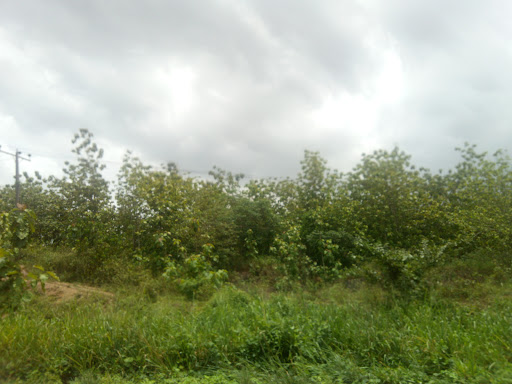
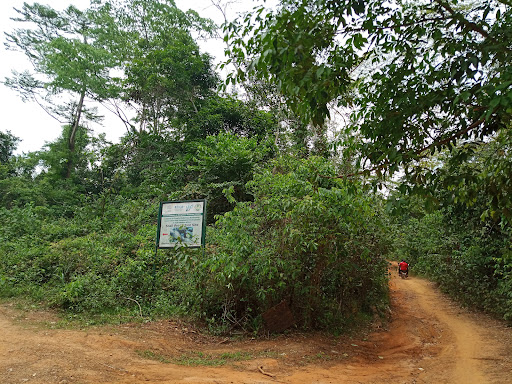
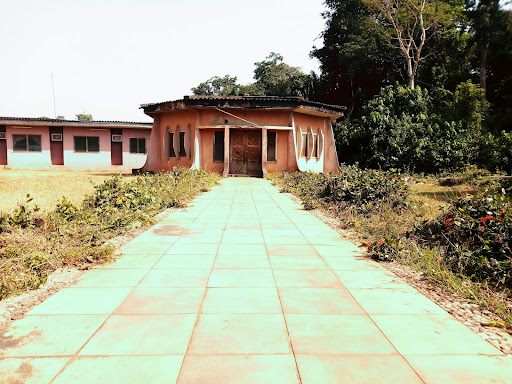
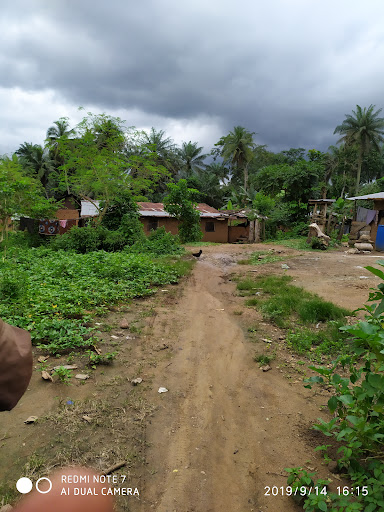
Located in Ogun State, about 135km north-east of Lagos and some 20km from the coast, Omo Forest Reserve lies within a tropical lowland rainforest and it has the most complex and productive vegetation type in the country; estimated that it supports about 8000 species of plants.
The reserve’s terrain is undulating and elevation reaches about 300m on some rocky hills. The eastern border is formed by the Omo river which, with its many tributaries, drain the reserve.
Omo is contiguous with five other, highly degraded, Forest Reserves, the largest of which is Oluwa Forest Reserve to the east. The vegetation is mixed moist semi-evergreen rainforest.
Due to selective exploitation in the past, the forest is largely mature secondary, with pockets of primary forest along river courses and in other areas where log extraction is difficult. Average annual rainfall is over 2,000mm.
The large forestland is named after the Omo tree, which is indigenous to the area. The Omo river lies somewhere within the 132,000 hectares of land, which make up the forest reserve.
Within this expanse of land is a 460-hectare forest block, to the south of the confluence of the Omo River, which has its tributary in the Owena River. This 460 hectare block is constituted of a so-called ‘virgin’ forest which has been declared a Strict Nature Reserve (SNA) and a Biosphere Reserve by the government.
Erin Camp:
Located within the forest reserve is the Erin (elephant) Camp where visitors can lodge before setting out along one of the camp’s nature trails.
After relaxing and chatting, guests can retire into one of three basic but clean and screened wooden cabins, each of which is equipped with two beds covered by good mosquito nets.
Alternatively, guests can choose to sleep in their own tent or the ones provided by the camp management.
Camp in brief
– 6 Beds with pillows
– Mosquito nets
– Closed off bucket Shower
– Kitchen with stove
– Clean stored rainwater
– Campfire / bbq
– Benches and seating for 10 people
– Covered seating ares of great conservation value with over 200 species of tree, 125 species of bird and many mammal species including forest elephant, chimpanzee and white-throated guenon monkeys, all of which are seriously endangered.
With logging, poaching and uncontrolled farming threatening the reserve’s biodiversity, Pro-Natura International (Nigeria) has teamed up with other non-governmental organisations to ensure the survival of the Omo Forest ecosystem by education in schools and raising conservation awareness amongst the local community.
Beetle Hill
Beetle hill is a two and a half hour walk or 45 minute drive to the base followed by a 25 minute climb up the hill’s steep slopes is worthwhile for the fantastic views over the forest that you get at the top. The trip usually concludes with a picnic lunch either on route...
Read more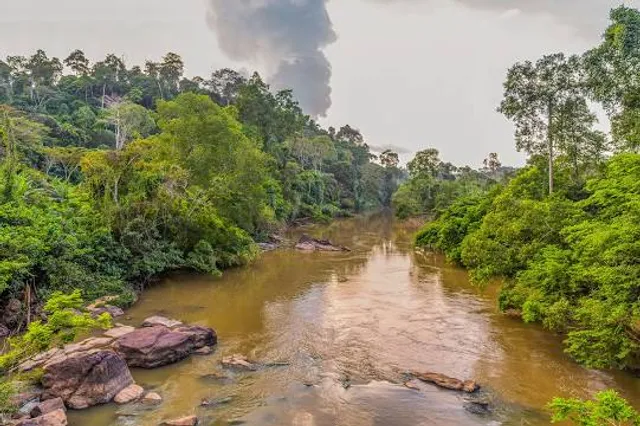
 Learn more insights from Wanderboat AI.