HTML SitemapExplore
logo
Find Things to DoFind The Best Restaurants

Archaeological park Stobi — Attraction in Municipality of Gradsko

Name
Archaeological park Stobi
Description
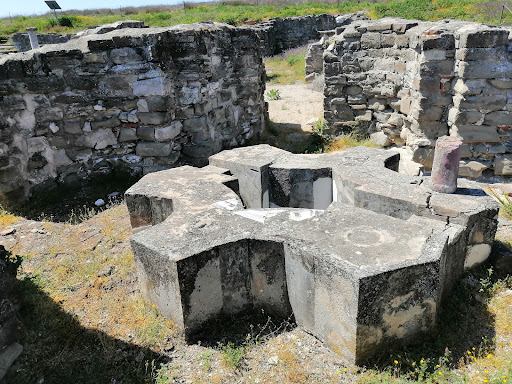
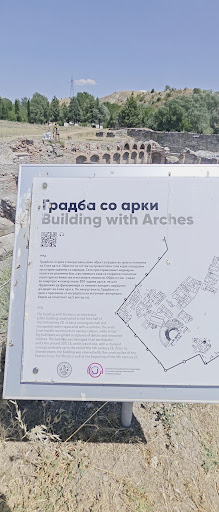
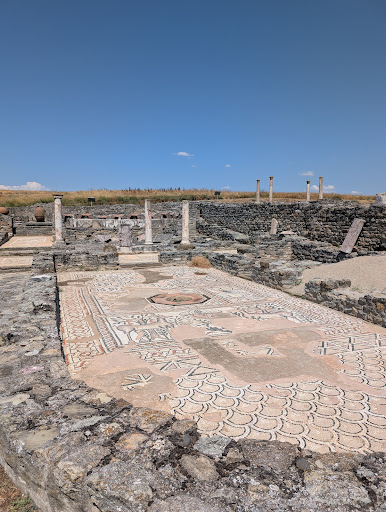
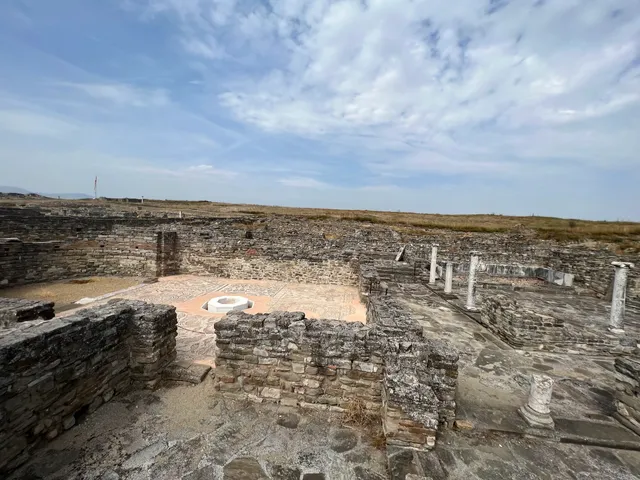
Stobi or Stoboi, was an ancient town of Paeonia, later conquered by Macedon, and finally turned into the capital of the Roman province of Macedonia Salutaris.
Nearby attractions
Nearby restaurants
Nearby hotels
Related posts
Keywords
Archaeological park Stobi tourism.Archaeological park Stobi hotels.Archaeological park Stobi bed and breakfast. flights to Archaeological park Stobi.Archaeological park Stobi attractions.Archaeological park Stobi restaurants.Archaeological park Stobi travel.Archaeological park Stobi travel guide.Archaeological park Stobi travel blog.Archaeological park Stobi pictures.Archaeological park Stobi photos.Archaeological park Stobi travel tips.Archaeological park Stobi maps.Archaeological park Stobi things to do.
Archaeological park Stobi things to do, attractions, restaurants, events info and trip planning
Archaeological park Stobi
North MacedoniaVardar RegionMunicipality of GradskoArchaeological park Stobi

Basic Info

Archaeological park Stobi

Archaeological site Stobi, E75, Gradsko 1040, North Macedonia
4.7(411)
Open until 6:00 PM
Save
spot

Ratings & Description

Info

Stobi or Stoboi, was an ancient town of Paeonia, later conquered by Macedon, and finally turned into the capital of the Roman province of Macedonia Salutaris.

Cultural
Outdoor
Scenic
attractions: , restaurants:
logoLearn more insights from Wanderboat AI.
Phone
+389 75 210 752
Website
stobi.mk
Open hoursSee all hours
Thu8 AM - 6 PMOpen

Plan your stay

hotel
Pet-friendly Hotels in Municipality of Gradsko
Find a cozy hotel nearby and make it a full experience.

hotel
Affordable Hotels in Municipality of Gradsko
Find a cozy hotel nearby and make it a full experience.

hotel
The Coolest Hotels You Haven't Heard Of (Yet)
Find a cozy hotel nearby and make it a full experience.

hotel
Trending Stays Worth the Hype in Municipality of Gradsko
Find a cozy hotel nearby and make it a full experience.


Reviews

Get the Appoverlay
Get the AppOne tap to find yournext favorite spots!
Wanderboat LogoWanderboat

Your everyday Al companion for getaway ideas

CompanyAbout Us
InformationAI Trip PlannerSitemap
SocialXInstagramTiktokLinkedin
LegalTerms of ServicePrivacy Policy

Get the app

© 2025 Wanderboat. All rights reserved.
logo

Reviews of Archaeological park Stobi

4.7
(411)
avatar
5.0
13y

The old city of Stobi “…Stobis, vetus urbs…” The earliest written evidence of Stobi is found in Livy’s Ab Urbe Condita. It refers to the triumph of the Macedonina King Phillip V against the Dardanians. Livy says that the battle happened near Stobi in 197 BC.

Being at the crossroad of the road along Axios River (Vardar) and the road that connected Via Egnatia and Via Militaris, Stobi became one of the most significant towns in Macedonia during Roman rule. During the reign of the first Roman emperor Augustus, Stobi became Civium Opiddum Romanorum in 69 CE and later it reached the status of Municipium. Although the dominant population was autochthonous, there were many citizens who had Ius Italicum.

The first Jews arrived in the area now known as Republic of Macedonia during Roman times, when Jews fled persecution in other Roman territories, with some settling in Macedonia. The presence of Jews in Macedonia is proved by Agrippa's letter to Caligula. At Stobi, in 165 AD, Tiberius Polycharmus, who is designated “father of the synagogue” converted his villa into a synagogue containing a prayer hall, a dining hall (triclinium) and a portico, reserving the upper story of the complex for his residence and that of his successors. The information comes from a very impressive and informative inscription, arguably the most important one found to date in a Diaspora synagogue. The remnants of a Jewish synagogue excavated in Stobi (Macedonia) date back to that period and the conclusion that a developed Jewish Community existed in that locality those days is based on these findings.

One of the most significant events in the history of Stobi is the appearance of Christianity. The name of the first bishop Budius is noted at the first ecumenical council in Nicaea in 325 AD. The Old Episcopal Basilica in Stobi was built in the 4th century and it is considered to be the oldest Christian church in R. Macedonia. In 388 AD the emperor Theodosius I visited Stobi from where he published two edicts which banned the heretic gatherings and the public discussions about religion. The sacred architecture discovered at Stobi, especially the Episcopal Basilica of the bishop Philip from the 5th century, recognize Stobi as an important Christian centre with established traditions.

In 447 AD Stobi was destroyed by the Huns as many other towns on the Balkans. The event, recorded by the sources, is also documented by the fired strata containing Hun weapon. This marked the beginning of a turbulent period and the gradual demise of Stobi. The beginning of the 6th century is marked by the huge earthquake in 518 AD which ruined many towns in Dardania and Macedonia Secunda. The movements of the Slavs, Avars, Kutrigurs and other tribes brought the destruction of the ancient towns at the Balkans towards the end of the century. This also meant an end of the urban...

   Read more
avatar
5.0
7y

The old city of Stobi “…Stobis, vetus urbs…” at the confluence of rivers Crna and Vardar, was an ancient settlement of Paeonia, which during the reign of the Macedonian king Philip V in the II century BC was turned into an ancient town, and later when Macedonia was under the Roman rule, Stobi became the capital of the Roman province of Macedonia Salutaris.

Located in the heart of Macedonia, on the crossroads between the Aegean World and the Central Balkan, during the whole period of its existence it was a place where cultural achievements of the ancient world gathered in a unique way.

Stobi, named it by the Roman historian Livy, was an important urban, military, administrative, trade and religious center of two large empires: Roman and Early Byzantine. During the reign of the first Roman emperor Augustus, Stobi was known as oppidum civium. In 69 CE the social status of this town was elevated to a higher rank  municipium and coins, with Municipium Stobensium printed on them, were distributed. The citizens of Stobi enjoyed Ius Italicum and were citizens of Rome.

In late ancient period, Stobi developed into an important Episcopal center, whose bishops participated in the Ecumenical councils, along with other senior religious figures.

End of VI century AD marks the end of ten centuries of history of Stobi. In the following centuries, Stobi was sinking into oblivion under thick layers of earth and sand, until 1861, when French historian and traveler Leon Ezej rediscovered the beauty of this ancient city.

Today, the remains of this famous archaeological site are equally easily approachable from the E-75 corridor of the international highway, thus making it very popular tourist destination in Macedonia. The nocturnal illumination of the city walls and preserved monuments, additionally emphasize its beauty and...

   Read more
avatar
5.0
4y

Stobi is an ancient Paeonian town, later conquered by Macedon, and finally turned into the capital of the Roman province of Macedonia Salutaris. It is located near Gradsko, North Macedonia, on the main road that leads from the Danube, Singidunum to the Aegean Sea, Thesaloniki and on the crossroad Via Egnatia, connecting Heraclea Lyncestis with Pautalia and Serdica. Stobi was built where the Erigon (Crna River) joins the Axios (Vardar), making it strategically important as a center for both trade and warfare. Stobi developed from a Paeonian settlement established in the Archaic period. Located on the northern side of a terrace, the early town covered an area of about 25,000 m2. Nearby Mount Klepa was a lucrative source of marble. The initial Paeonian population was later supplemented by other immigrant groups. It is believed that in 217 BCE, Philip V annexed Paionia during his campaign against the Dardani who had entered Bylazora, the largest Paeonian town. After Roman conquest, it became the largest city in the northern part of the Roman province Macedonia, later capital city of the Roman province Macedonia Secunda, an important urban, military, administrative, trade and religious center of two large empires: Roman and Early Byzantine. Located in the heart of Macedonia, on the crossroads between the Aegean World and the Central Balkan, during the whole period of its existence it was a place where cultural achievements of the ancient world gathered in...

   Read more
Page 1 of 7
Previous
Next

Posts

Nitro ComputersNitro Computers
Stobi is an ancient Paeonian town, later conquered by Macedon, and finally turned into the capital of the Roman province of Macedonia Salutaris. It is located near Gradsko, North Macedonia, on the main road that leads from the Danube, Singidunum to the Aegean Sea, Thesaloniki and on the crossroad Via Egnatia, connecting Heraclea Lyncestis with Pautalia and Serdica. Stobi was built where the Erigon (Crna River) joins the Axios (Vardar), making it strategically important as a center for both trade and warfare. Stobi developed from a Paeonian settlement established in the Archaic period. Located on the northern side of a terrace, the early town covered an area of about 25,000 m2. Nearby Mount Klepa was a lucrative source of marble. The initial Paeonian population was later supplemented by other immigrant groups. It is believed that in 217 BCE, Philip V annexed Paionia during his campaign against the Dardani who had entered Bylazora, the largest Paeonian town. After Roman conquest, it became the largest city in the northern part of the Roman province Macedonia, later capital city of the Roman province Macedonia Secunda, an important urban, military, administrative, trade and religious center of two large empires: Roman and Early Byzantine. Located in the heart of Macedonia, on the crossroads between the Aegean World and the Central Balkan, during the whole period of its existence it was a place where cultural achievements of the ancient world gathered in a unique way.
Xavier Gaubert-AmyXavier Gaubert-Amy
After visiting Sardinia, Sicily, Calabria,Puglia, Greece in 6 weeks, it's our second day in Macedonia (north). Stobi site is "refreshing": only 20% has been excavated, mostly the core of this ancient city(that was housing 25000 people), and what's interesting here, is that you can clearly evaluate the tedious process of careful digging, brushing, putting back together... it's a site where you feel the ongoing process. Beyond the wires that are fencing the site, you see fields, and you know that 80% of Stobi is still hiding beneath, and you wonder, if you were an archeologist, if you could have the patience, snd the mental focus to spend months of your life bent on the ground, figuring out what comes back to life under your tool.. Definitely not a job for me, but congratulations to the ones that have chosen this vocation.
Tobias SchulzeTobias Schulze
Stobi ist ein absolutes Highlight für Geschichts- und Archäologie-Liebhaber und ein Muss auf jeder Reise durch Nordmazedonien. Diese antike Stadt, die einst ein blühendes Zentrum der römischen und frühchristlichen Kultur war, bietet beeindruckende Ruinen, die die Besucher in die Vergangenheit entführen. Beim Betreten der Stätte wird man sofort von der majestätischen Atmosphäre überwältigt. Die gut erhaltenen Überreste des Theaters, das Platz für bis zu 3.000 Zuschauer bot, sind ein beeindruckendes Zeugnis der architektonischen Fähigkeiten der damaligen Zeit. Die Mosaiken in den ehemaligen Wohnhäusern und öffentlichen Gebäuden sind atemberaubend und zeigen die Kunstfertigkeit der damaligen Handwerker. Ein Spaziergang durch die Straßen von Stobi ist wie eine Zeitreise. Die Überreste der Basilika, die mit ihren kunstvollen Mosaiken geschmückt ist, und die Ruinen der Thermen geben einen faszinierenden Einblick in das Alltagsleben der Menschen in dieser antiken Stadt. Die Informationsschilder sind informativ und gut platziert, sodass man die Geschichte der Stätte leicht nachvollziehen kann. Die Lage von Stobi, umgeben von malerischen Weinbergen und sanften Hügeln, macht den Besuch noch angenehmer. Es gibt auch die Möglichkeit, lokale Weine zu probieren, was den Besuch perfekt abrundet. Insgesamt ist Stobi ein Ort, der Geschichte lebendig werden lässt. Die Kombination aus beeindruckenden Ruinen, atemberaubender Landschaft und der Möglichkeit, in die antike Kultur einzutauchen, macht diesen Ort zu einem unvergesslichen Erlebnis.
See more posts
See more posts
hotel
Find your stay

Pet-friendly Hotels in Municipality of Gradsko

Find a cozy hotel nearby and make it a full experience.

Stobi is an ancient Paeonian town, later conquered by Macedon, and finally turned into the capital of the Roman province of Macedonia Salutaris. It is located near Gradsko, North Macedonia, on the main road that leads from the Danube, Singidunum to the Aegean Sea, Thesaloniki and on the crossroad Via Egnatia, connecting Heraclea Lyncestis with Pautalia and Serdica. Stobi was built where the Erigon (Crna River) joins the Axios (Vardar), making it strategically important as a center for both trade and warfare. Stobi developed from a Paeonian settlement established in the Archaic period. Located on the northern side of a terrace, the early town covered an area of about 25,000 m2. Nearby Mount Klepa was a lucrative source of marble. The initial Paeonian population was later supplemented by other immigrant groups. It is believed that in 217 BCE, Philip V annexed Paionia during his campaign against the Dardani who had entered Bylazora, the largest Paeonian town. After Roman conquest, it became the largest city in the northern part of the Roman province Macedonia, later capital city of the Roman province Macedonia Secunda, an important urban, military, administrative, trade and religious center of two large empires: Roman and Early Byzantine. Located in the heart of Macedonia, on the crossroads between the Aegean World and the Central Balkan, during the whole period of its existence it was a place where cultural achievements of the ancient world gathered in a unique way.
Nitro Computers

Nitro Computers

hotel
Find your stay

Affordable Hotels in Municipality of Gradsko

Find a cozy hotel nearby and make it a full experience.

Get the Appoverlay
Get the AppOne tap to find yournext favorite spots!
After visiting Sardinia, Sicily, Calabria,Puglia, Greece in 6 weeks, it's our second day in Macedonia (north). Stobi site is "refreshing": only 20% has been excavated, mostly the core of this ancient city(that was housing 25000 people), and what's interesting here, is that you can clearly evaluate the tedious process of careful digging, brushing, putting back together... it's a site where you feel the ongoing process. Beyond the wires that are fencing the site, you see fields, and you know that 80% of Stobi is still hiding beneath, and you wonder, if you were an archeologist, if you could have the patience, snd the mental focus to spend months of your life bent on the ground, figuring out what comes back to life under your tool.. Definitely not a job for me, but congratulations to the ones that have chosen this vocation.
Xavier Gaubert-Amy

Xavier Gaubert-Amy

hotel
Find your stay

The Coolest Hotels You Haven't Heard Of (Yet)

Find a cozy hotel nearby and make it a full experience.

hotel
Find your stay

Trending Stays Worth the Hype in Municipality of Gradsko

Find a cozy hotel nearby and make it a full experience.

Stobi ist ein absolutes Highlight für Geschichts- und Archäologie-Liebhaber und ein Muss auf jeder Reise durch Nordmazedonien. Diese antike Stadt, die einst ein blühendes Zentrum der römischen und frühchristlichen Kultur war, bietet beeindruckende Ruinen, die die Besucher in die Vergangenheit entführen. Beim Betreten der Stätte wird man sofort von der majestätischen Atmosphäre überwältigt. Die gut erhaltenen Überreste des Theaters, das Platz für bis zu 3.000 Zuschauer bot, sind ein beeindruckendes Zeugnis der architektonischen Fähigkeiten der damaligen Zeit. Die Mosaiken in den ehemaligen Wohnhäusern und öffentlichen Gebäuden sind atemberaubend und zeigen die Kunstfertigkeit der damaligen Handwerker. Ein Spaziergang durch die Straßen von Stobi ist wie eine Zeitreise. Die Überreste der Basilika, die mit ihren kunstvollen Mosaiken geschmückt ist, und die Ruinen der Thermen geben einen faszinierenden Einblick in das Alltagsleben der Menschen in dieser antiken Stadt. Die Informationsschilder sind informativ und gut platziert, sodass man die Geschichte der Stätte leicht nachvollziehen kann. Die Lage von Stobi, umgeben von malerischen Weinbergen und sanften Hügeln, macht den Besuch noch angenehmer. Es gibt auch die Möglichkeit, lokale Weine zu probieren, was den Besuch perfekt abrundet. Insgesamt ist Stobi ein Ort, der Geschichte lebendig werden lässt. Die Kombination aus beeindruckenden Ruinen, atemberaubender Landschaft und der Möglichkeit, in die antike Kultur einzutauchen, macht diesen Ort zu einem unvergesslichen Erlebnis.
Tobias Schulze

Tobias Schulze

See more posts
See more posts