HTML SitemapExplore
logo
Find Things to DoFind The Best Restaurants

Museum „The Bay of Bones“ — Attraction in Municipality of Ohrid

Name
Museum „The Bay of Bones“
Description
Nearby attractions
Римска тврдина „Градиште“
XQWW+GXX, Ohrid, North Macedonia
Beach Gradishte 1
North Macedonia
Beach Gradishte 2
North Macedonia
Beach Gradishte 4
North Macedonia
Nearby restaurants
Nearby hotels
Campgrounds Gradishte
Р501, 6323, North Macedonia
Related posts
Ohrid, North Macedonia: A Pocket-Sized Paradise You Must Discover!
Keywords
Museum „The Bay of Bones“ tourism.Museum „The Bay of Bones“ hotels.Museum „The Bay of Bones“ bed and breakfast. flights to Museum „The Bay of Bones“.Museum „The Bay of Bones“ attractions.Museum „The Bay of Bones“ restaurants.Museum „The Bay of Bones“ travel.Museum „The Bay of Bones“ travel guide.Museum „The Bay of Bones“ travel blog.Museum „The Bay of Bones“ pictures.Museum „The Bay of Bones“ photos.Museum „The Bay of Bones“ travel tips.Museum „The Bay of Bones“ maps.Museum „The Bay of Bones“ things to do.
Museum „The Bay of Bones“ things to do, attractions, restaurants, events info and trip planning
Museum „The Bay of Bones“
North MacedoniaSouthwestern RegionMunicipality of OhridMuseum „The Bay of Bones“

Basic Info

Museum „The Bay of Bones“

Bay of Bones Museum,Р501, North Macedonia
4.6(2K)
Open 24 hours
Save
spot

Ratings & Description

Info

Cultural
Family friendly
attractions: Римска тврдина „Градиште“, Beach Gradishte 1, Beach Gradishte 2, Beach Gradishte 4, restaurants:
logoLearn more insights from Wanderboat AI.
Phone
+389 46 231 300
Website
muzejohrid.mk

Plan your stay

hotel
Pet-friendly Hotels in Municipality of Ohrid
Find a cozy hotel nearby and make it a full experience.
hotel
Affordable Hotels in Municipality of Ohrid
Find a cozy hotel nearby and make it a full experience.
hotel
The Coolest Hotels You Haven't Heard Of (Yet)
Find a cozy hotel nearby and make it a full experience.
hotel
Trending Stays Worth the Hype in Municipality of Ohrid
Find a cozy hotel nearby and make it a full experience.

Reviews

Nearby attractions of Museum „The Bay of Bones“

Римска тврдина „Градиште“

Beach Gradishte 1

Beach Gradishte 2

Beach Gradishte 4

Римска тврдина „Градиште“

Римска тврдина „Градиште“

4.5

(9)

Open 24 hours
Click for details
Beach Gradishte 1

Beach Gradishte 1

4.3

(65)

Open 24 hours
Click for details
Beach Gradishte 2

Beach Gradishte 2

3.6

(12)

Open 24 hours
Click for details
Beach Gradishte 4

Beach Gradishte 4

4.0

(9)

Open 24 hours
Click for details
Get the Appoverlay
Get the AppOne tap to find yournext favorite spots!
Wanderboat LogoWanderboat

Your everyday Al companion for getaway ideas

CompanyAbout Us
InformationAI Trip PlannerSitemap
SocialXInstagramTiktokLinkedin
LegalTerms of ServicePrivacy Policy

Get the app

© 2025 Wanderboat. All rights reserved.
logo

Reviews of Museum „The Bay of Bones“

4.6
(1,981)
avatar
5.0
9y

The pile-dwelling surface habitats as a means of human existence in specific micro environment, are characteristic especially for Prehistory, from the Neolithic-Early Stone Age, Eneolithic-Copper Age, Bronze Age and Iron Age.

In 1977 the first underwater archaeological research in Macedonia were carried out at the site Plocha Michov Grad, in the Bay of Bones, along the south coast of the Gradihste peninsula, near the village Peshtani.

At a depth of three to five meters numerous wooden piles stuck in the lake bottom were discovered, as well as numerous artifacts dated to the late Bronze and early Iron Age, i.e. from 1200 BC to 700 AD. It is assumed that this and other similar habitats on Ohrid Lake belong to the time when the first tribal populations began their profilation, respectively, at the time of the existence of the Bryges, the oldest tribal community of this region, which is actually an integral element of the ancient Macedonian ethnic substrate.

Researchers at the bottom of the lake recorded 6.000 wooden pile,s in research campaigns conducted periodically from 1997 to 2005.

Based on measurements of the surface area of the settlement it was concluded that it had spread over an area of approximately 8500 m2. The remains of the settlement were discovered on some ten meters from the shore of the Bay of Bones, on the southern coast of the Gradihte peninsula in length of 155 meters (east-west) and 55 meters (north-south).

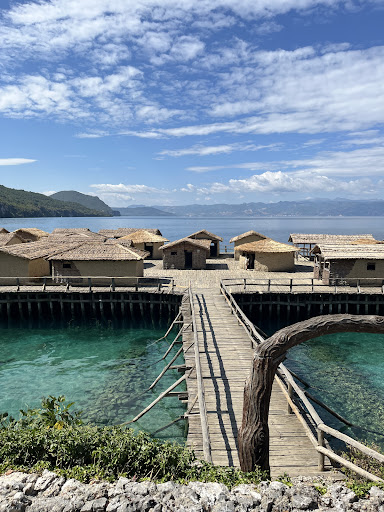
It was built on a platform supported by wooden piles stuck in the bottom of the lake, and a wooden bridge connected the settlement with the mainland. The studies have shown that on the bottom of the lake in the area of this settlement there is a remarkably concentration of whole and particularly fragmented ceramic vessels, stone artifacts and fragmented animal bones.

Among the movable archaeological material are the circular ceramic tiles with different diameter with two, three, or four circular openings. It is assumed that these items were used as fishing equipment by the inhabitants of the settlement. Among the ceramic objects there are also different forms of vertebra, conical and bi-conical, as well as objects used in rituals-altars. The stone tools are mainly fragments of hand grinders for wheat, as well as whole, smoothed elliptical stone objects which must have served as tools for washing clothes. Among the many fragments of bones of domestic animals, there are fragments of deer antlers, presumably used as tools.

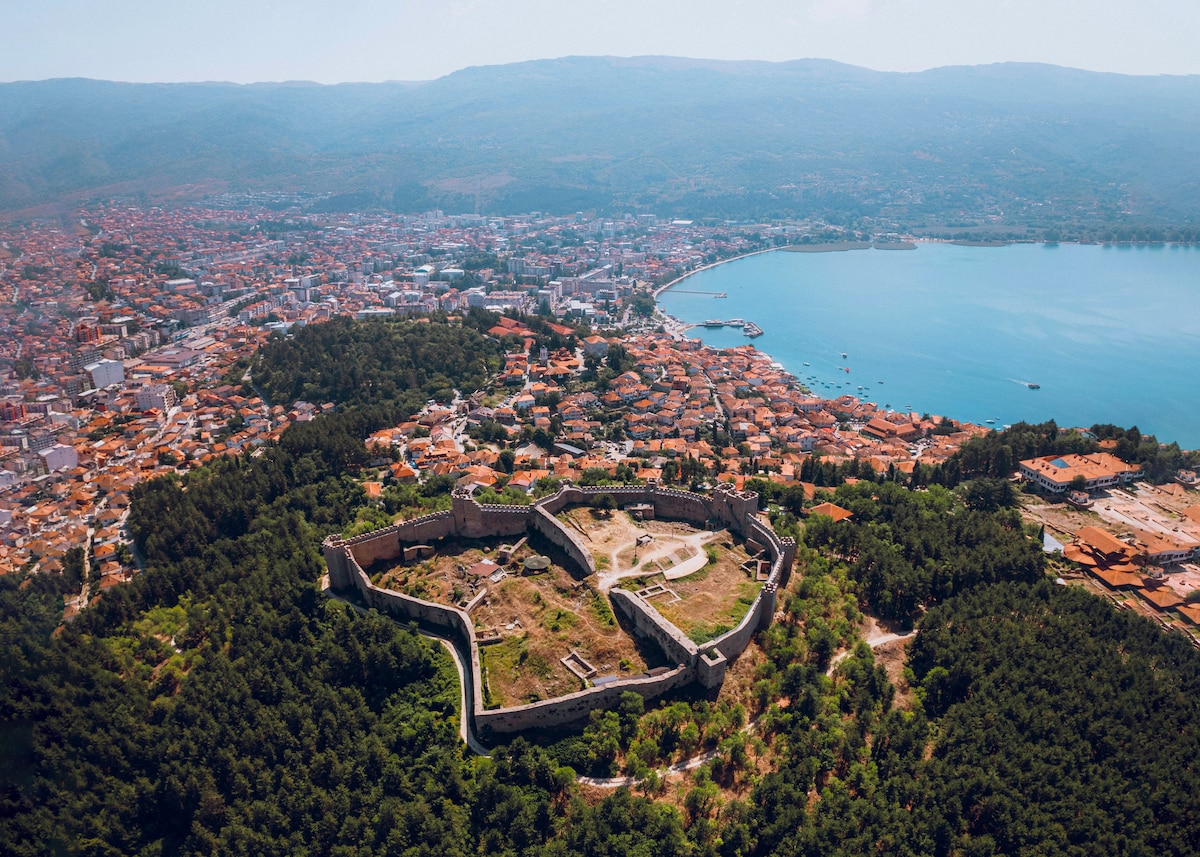
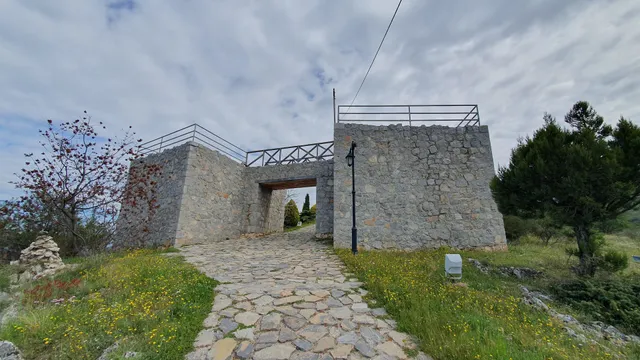
Within the museum complex, on the flattened plateau there is a fortress-Roman castle from the 3rd century AD enabling you to consider another timeof the Macedonian history and archaeology.

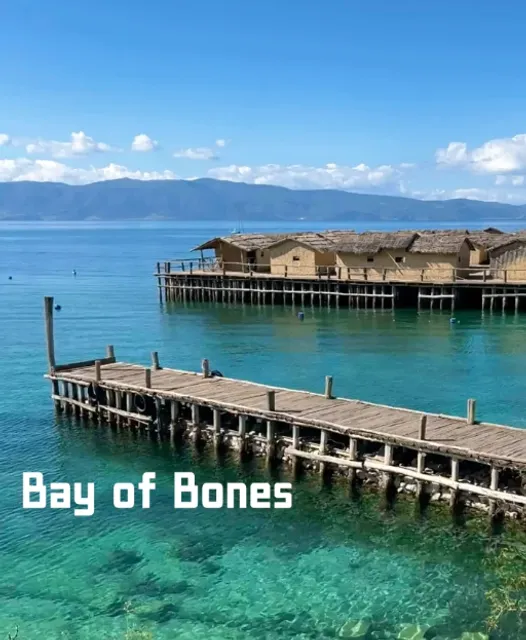
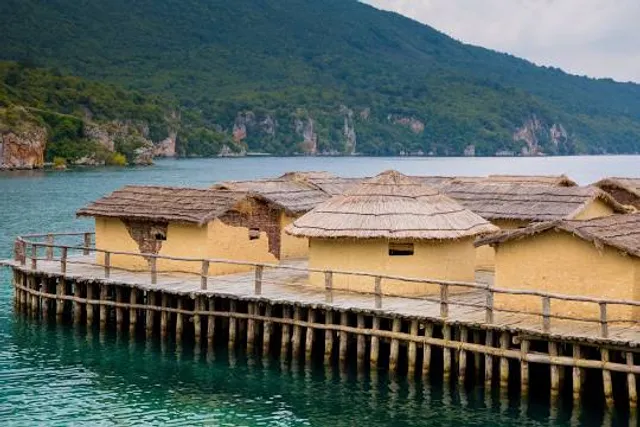
The complex contains a facility with a permanent exhibition of artifacts and a coffee bar, a base for underwater archeology and development of underwater tourism, pile-dwelling settlement with 24 reconstructed prehistoric huts on a wooden platform over the lake, several reconstructed half-open constructions within the castle (in the form of viеw points for rest of the visitors) and other contents that enrich the overall environment of the waters and shores...

   Read more

avatar
4.0
3y

The pile-dwelling surface habitats as a means of human existence in specific microenvironment, are characteristic especially for Prehistory, from the Neolithic-Early Stone Age, Eneolithic-Copper Age, Bronze Age and Iron Age.

In 1977 the first underwater archaeological research in Macedonia were carried out at the site Plocha Michov Grad, in the Bay of Bones, along the south coast of the Gradihste peninsula, near the village Peshtani.

At a depth of three to five meters numerous wooden piles stuck in the lake bottom were discovered, as well as numerous artifacts dated to the late Bronze and early Iron Age, i.e. from 1200 BC to 700 AD. It is assumed that this and other similar habitats on Ohrid Lake belong to the time when the first tribal populations began their profilation, respectively, at the time of the existence of theBryges, the oldest tribal community of this region, which is actually an integral element of the ancient Macedonian ethnic substrate.

Researchers at the bottom of the lake recorded 6.000 wooden pile,s in research campaigns conducted periodically from 1997 to 2005.

Based on measurements of the surface area of the settlement it was concluded that it had spread over an area of approximately 8500 m2. The remains of the settlement were discovered on some ten meters from the shore of the Bay of Bones, on the southern coast of the Gradihte peninsula in length of 155 meters (east-west) and 55 meters (north-south).

It was built on a platform supported by wooden piles stuck in the bottom of the lake, and a wooden bridge connected the settlement with the mainland. The studies have shown that on the bottom of the lake in the area of this settlement there is a remarkably concentration of whole and particularly fragmented ceramic vessels, stone artifacts and fragmented animal bones.

Among the movable archaeological material are the circular ceramic tiles with different diameter with two, three, or four circular openings. It is assumed that these items were used as fishing equipment by the inhabitants of the settlement. Among the ceramic objects there are also different forms of vertebra, conical and bi-conical, as well as objects used in rituals-altars. The stone tools are mainly fragments of hand grinders for wheat, as well as whole, smoothed elliptical stone objects which must have served as tools for washing clothes. Among the many fragments of bones of domestic animals, there are fragments of deer antlers, presumably used as tools.

Within the museum complex, on the flattened plateau there is a fortress-Roman castle from the 3rd century AD enabling you to consider another timeof the Macedonian history and archaeology.

The complex contains a facility with a permanent exhibition of artifacts and a coffee bar, a base for underwater archeology and development of underwater tourism, pile-dwelling settlement with 24 reconstructed prehistoric huts on a wooden platform over the lake, several reconstructed half-open constructions within the castle (in the form of viеwpoints for rest of the visitors) and other contents that enrich the overall environment of the waters and shores...

   Read more
avatar
5.0
3y

The traces of human existence on the territory of this region date back to the earliest times, which can be traced back through the rich archaeological heritage. Favorable geography and climate have enabled human settlement and presence since prehistoric times. The contact with the lakeshore and the freshwater lake rich in fish, as one of the basic living conditions, enabled formation of palafitic stilt-house settlements, as well as settlements located along the coast. This is evidenced by the numerous stilt-house settlements, as well as the 15 recorded archeological sites from the prehistoric period on the territory of this region. In the last years of the 20th century, along the eastern rocky coastline, which was thought to be "inhospitable" for locating this type of prehistoric habitats, remnants of three prehistoric stilt-house settlements were discovered in the waters of the Ohrid Lake. In 1997, the first underwater archaeological excavations in Macedonia were carried out at the site Plocha Mikjov Grad in the Bay of Bones, along the southern coast of the Gradishte peninsula, near the village of Peshtani. Based on the results of these underwater excavations and on the analysis of the movable archaeological material, it can be safely stated that this stilt-house settlement dates from the Late Bronze Age and the beginnings of the Iron Age, that is, from 1500 to 700 BC. Today, the site Plocha Mikjov Grad in the Bay of Bones is an attractive museum complex with many contents: reconstructed palafitic settlement above the lake waters, conserved, restored Roman castrum presented on the highest plateau of the Gradishte hill, accessible facility with museum cabinets and facility for underwater tourism. In November 1998, remains of another stilt-house settlement were discovered, this time near the village of Trpejca, at the site of Na Dol in the Bay of Prch. Wooden piles and movable archaeological material (pottery, stone tools) were recorded at a depth of 5-7 meters below the water surface. At that time, experimental underwater surveys were carried out mainly to identify and photograph the remains of this settlement. According to the nature and the peculiarities of the findings, it was found that this settlement also dates from the end of the Bronze Age. In July 1999, a third settlement was discovered along the eastern shore of the Ohrid Lake. This time it was an area that occupied the northern coast of the village of Peshtani, in the part of the so-called Bay of the Bombs. Here, a wooden pile on the shore was discovered by chance, as well as numerous fragmented ceramics that by its typological features is almost identical to the ceramic production of the previous two stilt-house...

   Read more
Page 1 of 7
Previous
Next

Posts

Ohrid, North Macedonia: A Pocket-Sized Paradise You Must Discover!
Poppy LanePoppy Lane
Ohrid, North Macedonia: A Pocket-Sized Paradise You Must Discover!
Your browser does not support the video tag.
julialobashevajulialobasheva
Things to do ⬇️ in Ohrid: - Walk in the Ohrid Old Town - See the iconic Church of Saint John at Kaneo - Admire the stunning view from the Samuel’s Fortress - Be impressed with the ancient amphitheater - Visit Plaošnik - Walk along the Lake Ohrid. There is a boardwalk going towards the Church of Saint John at Kaneo - Go for a boat tour on Lake Ohrid (visit Saint Naum Monastery and Bay of Bones) - Relax at the beach and swim in the lake - Buy Ohrid pearls - Enjoy local food (my recommendation is Restaurant Kajče) . . . #ohrid #ohridlake #ohridcity #lakeohrid #macedonia #macedonia🇲🇰 #northmacedonia #macedonian #visitmacedonia #македония #охрид #traveltheglobe #travelinspiration #viralreels #travelblogger #bucketlistadventures #travelgram #uniqueplaces #exploreeurope #hiddenplaces #balkantrip #visitbalkan #europedestinations #europediscovery #europetravels #travellingthroughtheworld #travellingourplanet #reelsideas #templates
Harry HoltHarry Holt
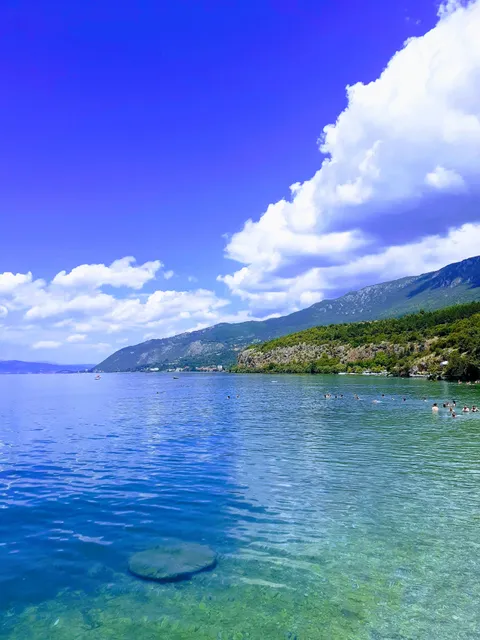
Visiting the Bay of Bones Museum was nothing short of magical. Nestled just off the eastern shore of Lake Ohrid, this open-air archaeological site transports you back thousands of years, set against one of the most tranquil and beautiful landscapes in Macedonia. The museum’s most striking feature is its recreation of prehistoric village life - traditional huts built on a wooden platform above the water, echoing the ancient Bronze and Iron Age settlement that once stood here from around 1200 to 700 BC. Walking across the stilts and wooden bridges, you can almost imagine lake-dwellers of old going about their daily lives. Inside the small museum, original artifacts, including pottery, tools, and wooden piles, are displayed with just enough context to illuminate how these early communities lived. The reconstructions are remarkable - everything from living quarters to workshops is crafted with great attention to detail on how our ancestors worked, hunted, and fished. The views are spectacular. The lake’s turquoise waters mirror the mountains and sky, transforming every moment into a photo-worthy memory. I’d recommend visiting early in the day for fewer crowds. Access is easy by car or taxi from Ohrid town. Signs along the R501 are helpful, and there is ample parking right near the entrance. The walk to the exhibit is short but on rustic paths - comfortable footwear is advised. The museum is open most days (closed Mondays) with fair entry fees. Staff are friendly and, in some cases, quite passionate and informative - adding a personal touch to the visit. All in all, the Bay of Bones Museum is a small but impactful stop - an absolute must-see for anyone exploring Macedonia. It blends stunning scenery, historical intrigue, and immersive reconstructions into a single unforgettable experience.
See more posts
See more posts
hotel
Find your stay

Pet-friendly Hotels in Municipality of Ohrid

Find a cozy hotel nearby and make it a full experience.

Ohrid, North Macedonia: A Pocket-Sized Paradise You Must Discover!
Poppy Lane

Poppy Lane

hotel
Find your stay

Affordable Hotels in Municipality of Ohrid

Find a cozy hotel nearby and make it a full experience.

Get the Appoverlay
Get the AppOne tap to find yournext favorite spots!
Things to do ⬇️ in Ohrid: - Walk in the Ohrid Old Town - See the iconic Church of Saint John at Kaneo - Admire the stunning view from the Samuel’s Fortress - Be impressed with the ancient amphitheater - Visit Plaošnik - Walk along the Lake Ohrid. There is a boardwalk going towards the Church of Saint John at Kaneo - Go for a boat tour on Lake Ohrid (visit Saint Naum Monastery and Bay of Bones) - Relax at the beach and swim in the lake - Buy Ohrid pearls - Enjoy local food (my recommendation is Restaurant Kajče) . . . #ohrid #ohridlake #ohridcity #lakeohrid #macedonia #macedonia🇲🇰 #northmacedonia #macedonian #visitmacedonia #македония #охрид #traveltheglobe #travelinspiration #viralreels #travelblogger #bucketlistadventures #travelgram #uniqueplaces #exploreeurope #hiddenplaces #balkantrip #visitbalkan #europedestinations #europediscovery #europetravels #travellingthroughtheworld #travellingourplanet #reelsideas #templates
julialobasheva

julialobasheva

hotel
Find your stay

The Coolest Hotels You Haven't Heard Of (Yet)

Find a cozy hotel nearby and make it a full experience.

hotel
Find your stay

Trending Stays Worth the Hype in Municipality of Ohrid

Find a cozy hotel nearby and make it a full experience.

Visiting the Bay of Bones Museum was nothing short of magical. Nestled just off the eastern shore of Lake Ohrid, this open-air archaeological site transports you back thousands of years, set against one of the most tranquil and beautiful landscapes in Macedonia. The museum’s most striking feature is its recreation of prehistoric village life - traditional huts built on a wooden platform above the water, echoing the ancient Bronze and Iron Age settlement that once stood here from around 1200 to 700 BC. Walking across the stilts and wooden bridges, you can almost imagine lake-dwellers of old going about their daily lives. Inside the small museum, original artifacts, including pottery, tools, and wooden piles, are displayed with just enough context to illuminate how these early communities lived. The reconstructions are remarkable - everything from living quarters to workshops is crafted with great attention to detail on how our ancestors worked, hunted, and fished. The views are spectacular. The lake’s turquoise waters mirror the mountains and sky, transforming every moment into a photo-worthy memory. I’d recommend visiting early in the day for fewer crowds. Access is easy by car or taxi from Ohrid town. Signs along the R501 are helpful, and there is ample parking right near the entrance. The walk to the exhibit is short but on rustic paths - comfortable footwear is advised. The museum is open most days (closed Mondays) with fair entry fees. Staff are friendly and, in some cases, quite passionate and informative - adding a personal touch to the visit. All in all, the Bay of Bones Museum is a small but impactful stop - an absolute must-see for anyone exploring Macedonia. It blends stunning scenery, historical intrigue, and immersive reconstructions into a single unforgettable experience.
Harry Holt

Harry Holt

See more posts
See more posts