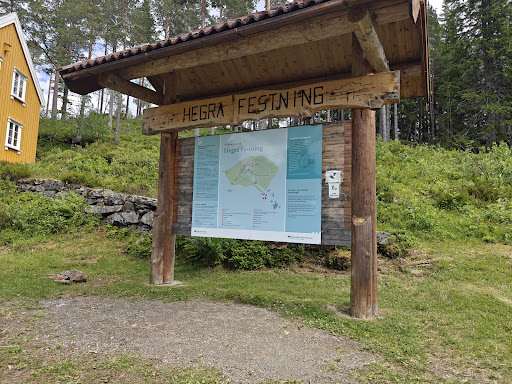
We were on our way to Sweden annd passed the signs for the fortress. We thought "why not. Stretch our legs little." After a dirt road and a verry cool but steap uphill climb with our old campervan we reached the parking with a big sign "NO CAMPING". No problem. Let's have a look.
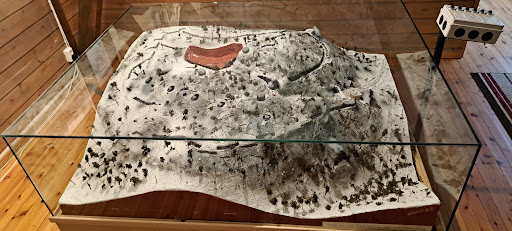
1st we went to a house which shows a short but clear history of when, why and how it was built, + who was there. Not only the Norwegian but also German and Sweedish armies. The exposition shows equipment, arms and uniforms of all sides. All information is Norwegian but there are booklets on stands with the main stories and information in English.
After the museum there was another building which housed some nicely restored artillery, I believe for temporary storage, but we were free to have a look anyway.
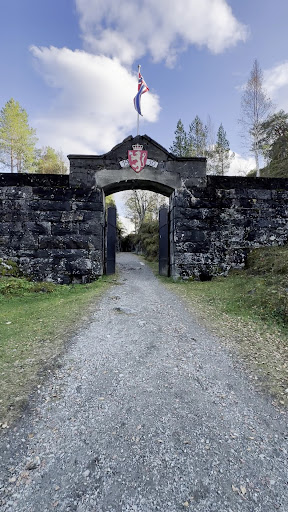
Than we went uphill to the actual fortress. It is really impressive. The size of it and the atmosphere you sence when you wondering through each room, stairway and corridor. You can climb up into the command towers via old rusty ladders. Climb granite stairs and walk around the turrets. You can also wander around outside along the walls and on top of the fortress. It's unbelievable thinking how it must have been, being there whilst the place was being besieged, shelled and bombed.
You're allowed to go almost anywhere and all of this is amazingly free. It is all ran by volunteers and everything looks well kept after. What an absolute gem. Takk to all involved for making and keeping this site accessible for the public to see. I've never seen...
Read moreAlways a cool place to visit. History: Hegra Fortress (Norwegian: Hegra festning) is a small mountain fortress in the village of Hegra in the municipality of Stjørdal in Nord-Trøndelag county, Norway. Originally known as Ingstadkleiven Fort (also Ingstadkleiva Fort), it was built between 1908–1910 as a border fort as a defence against the perceived threat of a Swedish invasion.
The intent behind Ingstadkleiva Fort was to block Swedish advances into Central Norway, as had happened repeatedly during the Swedish-Norwegian conflicts in the preceding centuries, for example the Hannibal War, Northern Wars, and Great Northern War.[5] After the 1905 dissolution of the union between Norway and Sweden, the Norwegian military harboured continued fears of a Swedish invasion to retake Norway.
As a successful attack into the centre of the country could split it in half, the Norwegian general staff in February 1906 suggested the construction of a blocking fort in the Stjørdalen valley. Ingstadkleiva was early on pointed out as a good location to block an advance from the east. Already in March that year the Minister of Defence, commanding general, and chief of the Fortress Artillery surveyed the site and agreed to the plan. In a closed meeting on 26 April 1906, the Norwegian Parliament authorized the construction of Ingstadkleiva Fort, but no funds were allocated until 12 July 1907. In May 1908, the work began on the road up to the construction site and by January 1910 the fort was...
Read moreA very curious place. When we arrived, the kiosk was closed. A small house was used as a museum that was still half unfinished. There we found a sort of alternative kiosk built inside. The fortress itself is still very much as if it's just abandoned a few days ago. Be very careful with small kids!!! There are a lot of sharp edges and steep en slippery stairs. Also mind your head for the low ceiling. Some spaces have lights, some do not and are very dark. It would also be nice if there was more information, and...
Read more