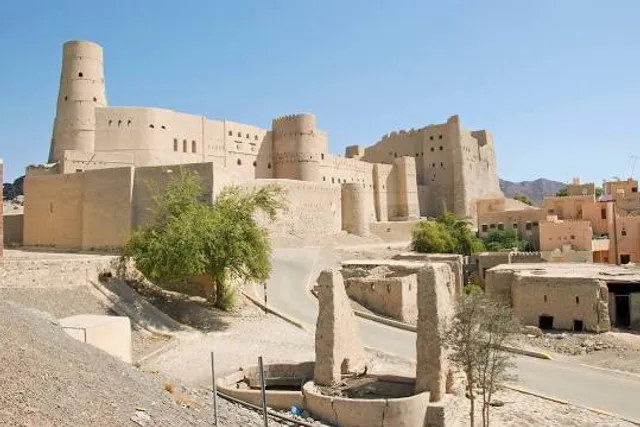
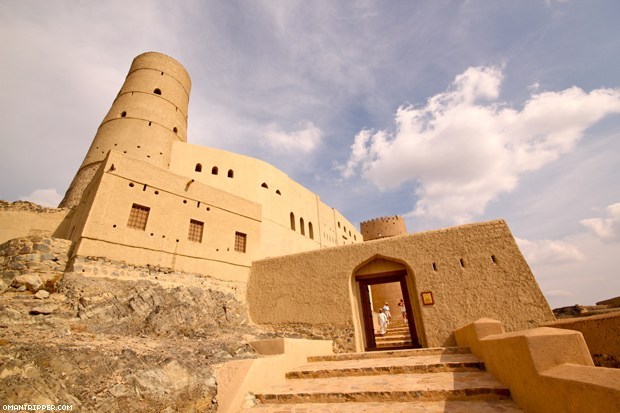
The oasis of Bahla owes its prosperity to the Banu Nebhan, the dominant tribe in the area from the 12th to the end of the 15th century. The ruins of the immense fort, with its walls and towers of unbaked brick and its stone foundations, is a remarkable example of this type of fortification and attests to the power of the Banu Nebhan.
The immense, ruined Bahla Fort, with its walls and towers of mud brick on stone foundations and the adjacent Friday Mosque with its decoratively sculpted prayer niche (mihrab) dominate the surrounding mud brick settlement and palm grove. The fort and settlement, a mud-walled oasis in the Omani desert, owed its prosperity to the Banu Nebhan tribe (Nabahina), who dominated the central Omani region and made Bahla their capital from the 12th to the end of the 15th century. From there they established relationships with other tribal groups of the interior. Bahla was the centre of Ibadism (a branch of Islam), on which the ancient Omani Imamates were based and whose influence can be traced across Arabia, Africa and beyond.
The extensive wall (sur) with sentry walk and watchtowers enclosing the labyrinth of mud brick dwellings and cultivatable land has several gateways. The oasis is watered by the falaj system of wells and underground channels bringing groundwater from distant springs, and by management of the seasonal flow of water.
Bahla is an outstanding example of a fortified oasis settlement of the medieval Islamic period, exhibiting the water engineering skill of the early inhabitants for agricultural and domestic purposes. The pre-gunpowder style fort with rounded towers and castellated parapets, together with the perimeter sur of stone and mud brick technology demonstrates the status and influence of the ruling elite.
The remaining mud brick family compounds of traditional vernacular houses (harats) including al-Aqr, al-Ghuzeili, al-Hawulya and the associated mosques, audience halls (sablas), bath houses, together with the dwellings of the fort guards (askari) demonstrate a distinctive settlement pattern related to the location of the falaj. The importance of the settlement is enhanced by the Friday mosque with its highly ornate mihrab and the remains of the old, semi-covered market (souq), comprising a complex of single-storey shops fronting onto narrow lanes, the whole enclosed by an outer wall. The location of the souq placed it within easy surveillance from the fort on its rocky outcrop nearby. Remains of carved and decoratively incised timber doors, shelves and window screens testify to a rich, thriving...
Read moreBehla Fort: A Timeless Citadel of Omani History
Nestled amidst the rolling hills of Oman's Dhofar region, Behla Fort stands as a majestic sentinel, guarding the secrets of the past and offering visitors a glimpse into the country's rich cultural heritage. Dating back over a thousand years, this ancient fortress is a testament to the resilience and ingenuity of its builders, who constructed it using traditional Omani building techniques and locally sourced materials.
Approaching Behla Fort, visitors are immediately struck by its imposing presence and intricate architecture. Built atop a rocky outcrop overlooking the surrounding landscape, the fort's massive walls and towering battlements evoke a sense of awe and wonder. As you step through its gates, you're transported back in time to an era of kings and conquerors, where the fate of nations hung in the balance.
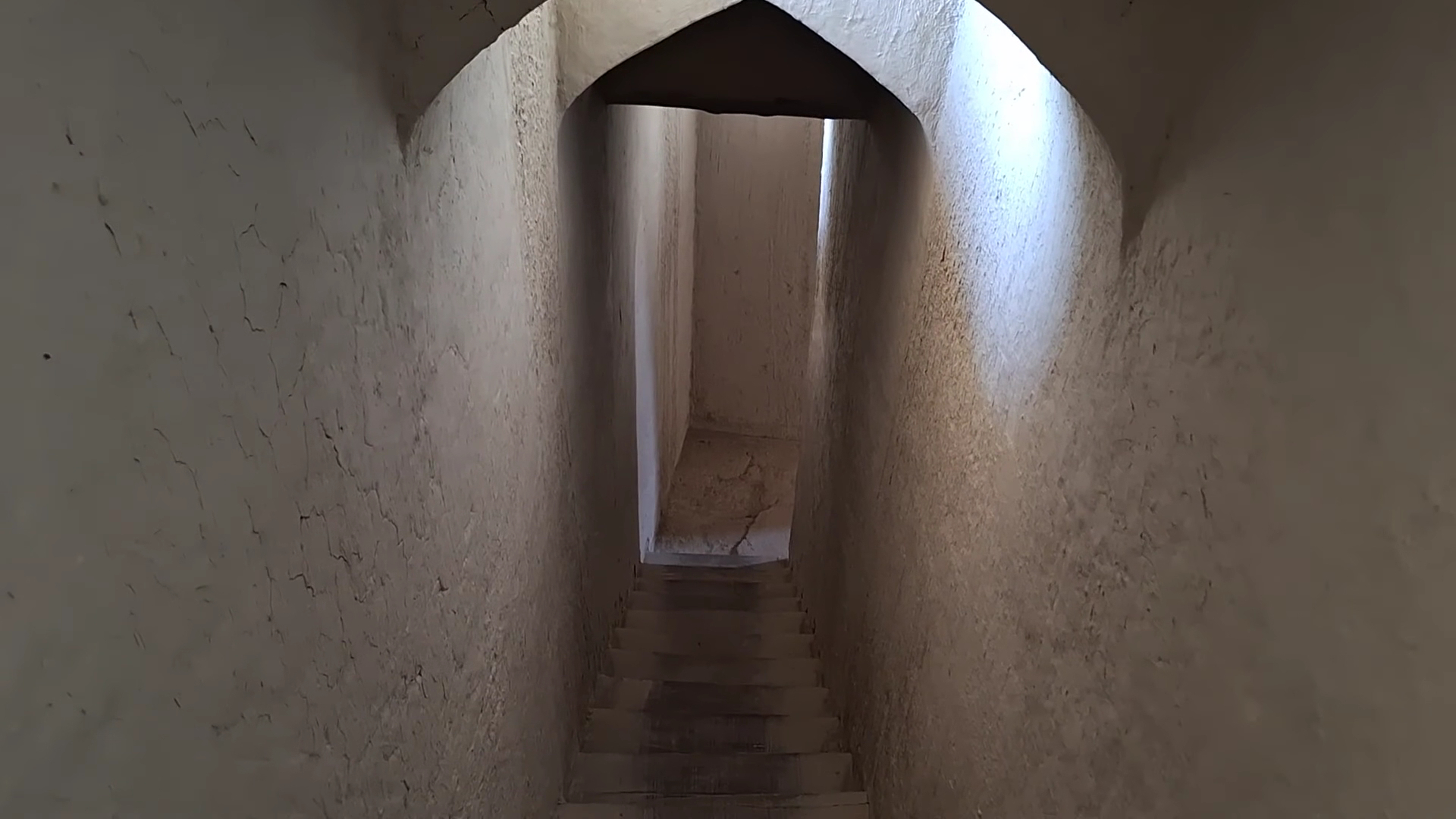
Exploring the interior of Behla Fort is like stepping into a living museum, with each chamber and courtyard offering a window into Oman's storied past. From the grandeur of the main courtyard to the labyrinthine corridors and hidden chambers, every corner of the fortress tells a story of the people who once inhabited this ancient stronghold.
One of the highlights of a visit to Behla Fort is the opportunity to climb to the top of its towering ramparts. From this vantage point, visitors are treated to panoramic views of the surrounding countryside, including lush palm groves, verdant valleys, and distant mountains. It's a breathtaking sight that offers a glimpse into the strategic importance of the fort as a defensive stronghold.
Moreover, Behla Fort serves as a hub for cultural activities and events, hosting exhibitions, performances, and workshops that celebrate Oman's rich heritage. Visitors can immerse themselves in traditional Omani crafts, music, and cuisine, gaining a deeper appreciation for the country's vibrant cultural tapestry.
In conclusion, Behla Fort is a treasure trove of Omani history and a must-visit destination for anyone seeking to delve into the country's rich cultural heritage. With its stunning architecture, fascinating exhibits, and vibrant cultural activities, a visit to Behla Fort is sure to leave a lasting impression on all who wander within its...
Read moreA historic site that's been restored and is part of the UNESCO heritage sites globally. Definitely worth visiting particularly during the cooler months or late afternoons. Otherwise prepare to be struck with heat and little retreat from it.
There are sweeping views of the Oasis below and city on the other side. Lots of interesting areas to view and take pictures. There is little signage to guide you around but that's fine as it's all in one compound. I do think more information should be provided beyond the visitor pamphlet especially on the walls to some of the buildings etc.
The signs do state what the area or what you're viewing but not much more than that (e.g. bullet holes is on a sign but no further mention of perhaps when it happened or why it happened).
I think a Cafe inside would be a great idea. There is water and cold brew coffee available to purchase at the entrance in a small fridge if you need it.
Beware! Some of the areas you walk into that are dark and covered (inside certain buildings) have bats 🦇 if that scares you or not something you want to see, you've been warned (by me, not the establishment). If uncertain, just look at the ground in these areas for small bat poo and you'll know if one (or two or three or even eight of them!) are in the area. Then you can look up to spot them if you're keen :) harmless, but can be a shock for some to see.
Beautifully restored and I hope it remains as I'd like to visit it again and spend more time in the cooler months of the year.
Pricing is alright considering you'd spend about an hour or more.
Expats = 2.5 Riyal for Adults / 1 Riyal for Kids and Kids under 6 are free
Visitors/Tourists = 4 Riyal for Adults (didn't take note of Kids pricing as we did not need to pay for that)
Citizens (Omani Nationals) pay less than both options.
Bats, no cafe and pricing knocks a star off the rating for me, but I will...
Read more