Along with Pir Chinasi mountain, Neelum valley, Jhelum valley, Zan Zol lake, Pattika this Red Fort is one of the more accessible tourist attraction in and areound Muzaffarabad.
The Fort was built at a convenient place, at this meander in olden times it was not difficult to ford these cold waters of the Neelum River. During winter October to February, the river flow drops significantly to roughly 150 cubic meters per second. As soon as the snow melt starts in the Himalayan mountains the river flow will rise above 1,000 cumecs, in the last 10 years the flow peaked at 8,000cumecs. When these floods occur it was not possible to cross the river. In recent years several modern bridges were constructed therefore crossing the Neelum is no longer a problem.
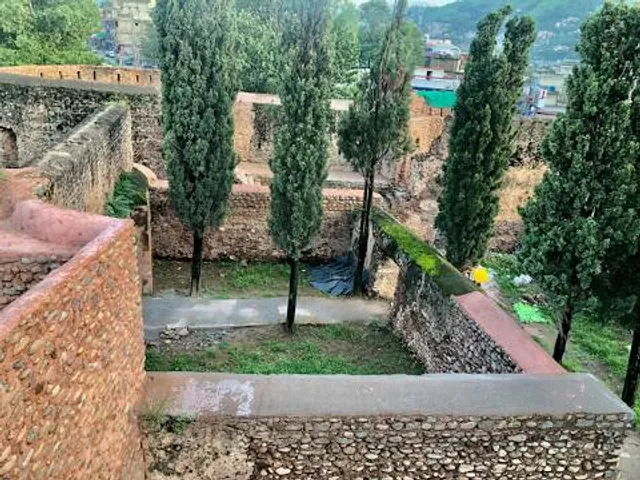
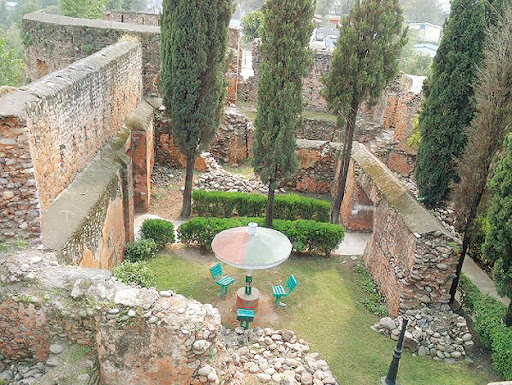
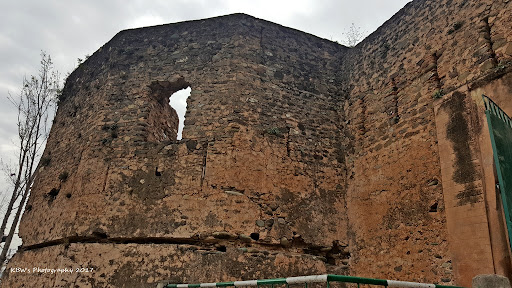
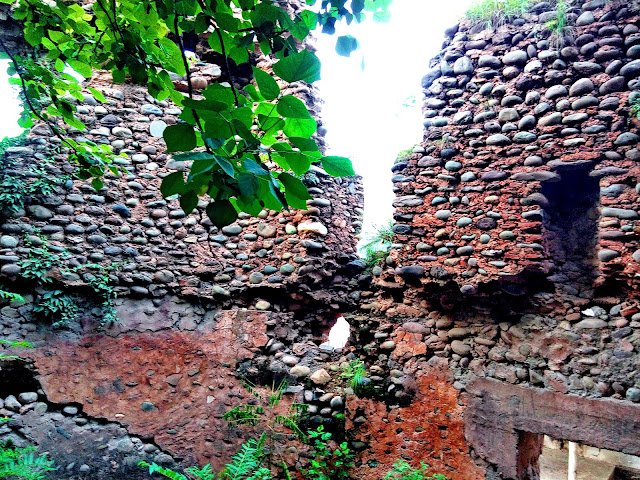
The fortress walls were rebuilt after major earthquakes and extended, large river boulders are cemented in place with dried red-mudstone. The high walls have ramparts therefore soldiers could defend the fort by throwing boulders and spears at attackers, bowmen could easily pick off attackers. Below the ramparts are vertical slits in the exterior walls whereby a bow man could shoot an attacker.
The Fort is well worth a visit, AJK Archaeological team require a small payment. I found it worth while accepting a guide, their narrative is always interesting. A good camera is a must, its normally a peaceful place, I often found University students studiously reading text books.
There is an interesting artefact storage room, the AJK Archaeological team are available to provide detailed explanations.
Budget at least an hour for a...
Read moreRed Fort in Muzaffarabad stands as a historical gem, echoing the region's rich past. The imposing structure, built during the Chak dynasty, offers a captivating journey through time. The vibrant red sandstone walls exude a sense of grandeur against the picturesque backdrop of the Neelum River. The well-preserved architecture showcases a blend of Mughal and Kashmiri styles, capturing the essence of the region's cultural heritage.
Upon entering, visitors are greeted by expansive courtyards and intricate details like arched gateways and decorative motifs. The fort houses a museum that delves into the history of Azad Jammu and Kashmir, providing valuable insights into the struggles and triumphs of the region. The panoramic views from the fort's ramparts are breathtaking, offering a mesmerizing panorama of Muzaffarabad and the surrounding hills.
While the historical significance and architectural brilliance make Red Fort a must-visit, maintenance could be improved to enhance the overall experience. Some areas show signs of wear, and more informational signage would enrich the visit. Nevertheless, the fort remains a cultural cornerstone, inviting locals and tourists alike to immerse themselves in the history and beauty of Muzaffarabad. A visit to Red Fort is not just a sightseeing endeavor; it's a journey into the heart of Azad Jammu and Kashmir's...
Read moreThe architecture of the fort shows that great experts in design and structure participated in its construction. It is surrounded on three sides by the Neelum River formerly known as the Kishenganga River. The northern part of the fort had terraces with steps leading to the bank of the river. The eastern side was very well protected from the hazards of flood waters, but some parts on the north side have suffered damage. There used to be an inn at the entrance to the fort, but only traces of that structure remain now.
Chak rulers of Kashmir anticipated a threat to the city from the Mughals. Construction was initiated in 1559 at a strategic location. The Mughal Empire annexed Kashmir in 1587, and the fort lost its importance. Finally, the construction of the fort was completed in 1646 in the reign of Sultan Muzaffar Khan of the Bomba Dynasty — the founder of Muzaffarabad.
In 1846, Maharaja Gulab Singh of the Dogra dynasty began reconstruction and extension of the fort for political and military operations and his successor Maharaja Ranbeer Singh completed the work. The Dogra military then used the fort till 1926, after which a new cantonment was built, leaving the red fort abandoned once again.[3] Towards the middle of 1947, the Dogra forces left, leaving the fort abandoned. The fort is now located in Muzaffarabad,...
Read more