HTML SitemapExplore
logo
Find Things to DoFind The Best Restaurants

Bahawalpur Museum — Attraction in Bahawalpur City Tehsil

Name
Bahawalpur Museum
Description
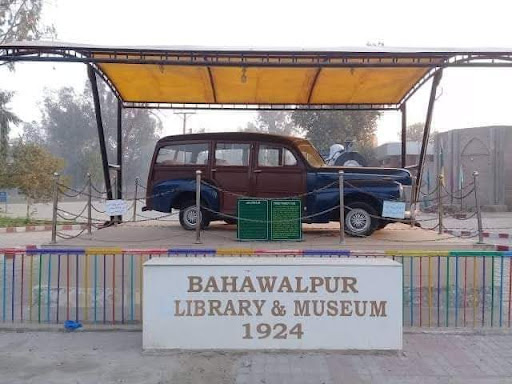
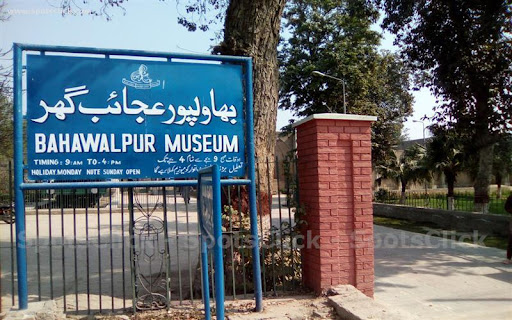
The Bahawalpur Museum, established in 1976, is a museum of archaeology, art, heritage, modern history and religion located in Bahawalpur, Punjab, Pakistan. It comes under the control of Bahawalpur district government. As of July 2022, the director of the museum is Muhammad Zubair Rabbani.
Nearby attractions
Nearby restaurants
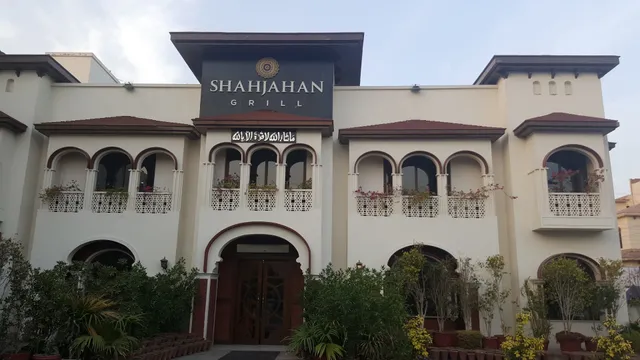
Shahjahan Grill Restaurant bahawalpur شاہجہان گرِل ریسٹورنٹ بہاولپور
9MRH+887, Circular Rd, opposite Quaid-e-Azam Medical College, Old City Bahawalpur, Bahawalpur, 63100, Pakistan
Nearby hotels
Related posts
Keywords
Bahawalpur Museum tourism.Bahawalpur Museum hotels.Bahawalpur Museum bed and breakfast. flights to Bahawalpur Museum.Bahawalpur Museum attractions.Bahawalpur Museum restaurants.Bahawalpur Museum travel.Bahawalpur Museum travel guide.Bahawalpur Museum travel blog.Bahawalpur Museum pictures.Bahawalpur Museum photos.Bahawalpur Museum travel tips.Bahawalpur Museum maps.Bahawalpur Museum things to do.
Bahawalpur Museum things to do, attractions, restaurants, events info and trip planning
Bahawalpur Museum
PakistanPunjabBahawalpur City TehsilBahawalpur Museum

Basic Info

Bahawalpur Museum

9MQP+W4X, Bahawalpur Cantt, Bahawalpur, 63100, Pakistan
4.4(396)
Open 24 hours
Save
spot

Ratings & Description

Info

The Bahawalpur Museum, established in 1976, is a museum of archaeology, art, heritage, modern history and religion located in Bahawalpur, Punjab, Pakistan. It comes under the control of Bahawalpur district government. As of July 2022, the director of the museum is Muhammad Zubair Rabbani.

Cultural
Family friendly
Accessibility
attractions: , restaurants: Shahjahan Grill Restaurant bahawalpur شاہجہان گرِل ریسٹورنٹ بہاولپور
logoLearn more insights from Wanderboat AI.
Phone
+92 62 9250011

Plan your stay

hotel
Pet-friendly Hotels in Bahawalpur City Tehsil
Find a cozy hotel nearby and make it a full experience.
hotel
Affordable Hotels in Bahawalpur City Tehsil
Find a cozy hotel nearby and make it a full experience.
hotel
The Coolest Hotels You Haven't Heard Of (Yet)
Find a cozy hotel nearby and make it a full experience.
hotel
Trending Stays Worth the Hype in Bahawalpur City Tehsil
Find a cozy hotel nearby and make it a full experience.

Reviews

Nearby restaurants of Bahawalpur Museum

Shahjahan Grill Restaurant bahawalpur شاہجہان گرِل ریسٹورنٹ بہاولپور

Shahjahan Grill Restaurant bahawalpur شاہجہان گرِل ریسٹورنٹ بہاولپور

Shahjahan Grill Restaurant bahawalpur شاہجہان گرِل ریسٹورنٹ بہاولپور

4.1

(346)

Click for details
Get the Appoverlay
Get the AppOne tap to find yournext favorite spots!
Wanderboat LogoWanderboat

Your everyday Al companion for getaway ideas

CompanyAbout Us
InformationAI Trip PlannerSitemap
SocialXInstagramTiktokLinkedin
LegalTerms of ServicePrivacy Policy

Get the app

© 2025 Wanderboat. All rights reserved.
logo

Reviews of Bahawalpur Museum

4.4
(396)
avatar
5.0
3y

Bahawalpur, city, southeastern Punjab province, Pakistan. The nawabs of Bahawalpur originally came from Sindh; they formed a princely state and assumed independence in 1802.

The city, which lies just south of the Sutlej River, was founded in 1748 by Muḥammad Bahāwal Khān and was incorporated as a municipality in 1874. It is the site of the Adamwahan (Empress) Bridge, the only railway bridge over the Sutlej River in Pakistan, and has rail links with Peshawar and Karachi. Two palaces of the nawabs (the Nur Mahal and Gulzar Mahal) are located in Bahawalpur, as are a library, hospitals, a zoological garden, and a museum. Dring Stadium, a major Asian athletic facility, is supplemented by a nearby swimming pool. The city is the seat of Islamia University (1925) and the Quaid-e-Azam Medical College and is an important agricultural training and educational centre. Soapmaking and cotton ginning are important enterprises; cotton, silk, embroidery, carpets, and extraordinarily delicate pottery are produced. Factories producing cottonseed oil and cottonseed cake are also located in the city.

The region surrounding Bahawalpur to the west, called the Sindh, is a fertile alluvial tract in the Sutlej River valley that is irrigated by floodwaters, planted with groves of date palms, and thickly populated. The chief crops are wheat, gram, cotton, sugarcane, and dates. Sheep and cattle are raised for export of wool and hides. East of Bahawalpur is the Pat, or Bar, a tract of land considerably higher than the adjoining valley. It is chiefly desert irrigated by the Sutlej inundation canals and yields crops of wheat, cotton, and sugarcane. Farther east the Rohi, or Cholistan, is a barren desert tract, bounded on the north and west by the Hakra depression with mound ruins of old settlements along its high banks; it is still inhabited by nomads. The principal inhabitants of the region surrounding Bahawalpur are Jat and Baloch peoples. There are many historical sites in the area, including Uch, an ancient town southwest of Bahawalpur, dating from Indo-Scythian (Yuehzhi) settlement (c. 128 BCE to 450 CE). Pop. (1998) 408,395; (2017) 762,774.Punjab, province of eastern Pakistan. It is bordered by the Indian state of Jammu and Kashmir to the northeast, the Indian states of Punjab and Rajasthan to the east, Sindh province to the south, Balochistān and Khyber Pakhtunkhwa provinces to the west, and Islamabad federal capital area and Azad Kashmir to the north. The provincial capital, Lahore, is located in the east-central region, near the border with India. The name Punjab means “five waters,” or “five rivers,” and signifies the land drained by the Jhelum, Chenab, Ravi, Beas, and Sutlej rivers, which are tributaries of the Indus River. Punjab is Pakistan’s second largest province, after Balochistān, and the most densely populated. Area 79,284 square miles (205,345 square km). Pop. (2011...

   Read more

avatar
5.0
1y

Bahawalpur Museum was built in 1976. Here the things related to different fields are saved. such as archaeology, arts, cultural heritage, modern history and religion. This museum is run by the district government of Bahawalpur.

The museum has a total of eight galleries:

Tehreek Pakistan Gallery: Photos of Tehreek Pakistan and leaders are kept here. Archeology Gallery: It displays the ancient history and remains of the area. Islamic Gallery: It contains items from the Islamic era, such as weapons, clothing, paintings and metal artifacts. Regional Cultural Gallery: Here are the daily life objects of the surrounding areas of Cholistan and Bahawalpur. Coin Gallery: This gallery has more than three hundred old coins. Quran Gallery: It houses rare copies of Quran and ancient documents. Bahawalpur Gallery: Contains photographs and artifacts from the state of Bahawalpur, one of the major states during the British era. Cholistan Gallery: It displays the art and culture of the Cholistan region. This museum is the main center for preserving and displaying the history and culture...

   Read more
avatar
4.0
4y

An amazing place to visit, where our heritage n culture has been preserved with care n aesthetic sense. It was established in 1976. It is divided into various portion and galleries:- (1) Pak movement covering period from arrival of East India Company. It contains many pictures of Quaid i Azam as well. (2) Islamic gallery having number of rare copies of Quran Sharifs including one with Siraiki translation. (3) Military weapons n equipment icluding canons, swords, sheilds, matchlocks. (4) Bahwalour state rulers; their pictures, way of life, visits of various dignitaries to bahawalpur state, transport under use. (5) Archeology gallery showing artefacts of Harapa, Mohen Jo Daro and Taxilla etc. (6) Cholistan art n culture covering village life, ladies dresses animals and forts in desert. (7) coins starting from mughal era to bahawalpur state, postal stamps and medals. Overall a very good place for education n knowledge purpose. All those who are interested in history and particularly for students, this is worth a...

   Read more
Page 1 of 7
Previous
Next

Posts

Muhammad HassanMuhammad Hassan
Bahawalpur, city, southeastern Punjab province, Pakistan. The nawabs of Bahawalpur originally came from Sindh; they formed a princely state and assumed independence in 1802. The city, which lies just south of the Sutlej River, was founded in 1748 by Muḥammad Bahāwal Khān and was incorporated as a municipality in 1874. It is the site of the Adamwahan (Empress) Bridge, the only railway bridge over the Sutlej River in Pakistan, and has rail links with Peshawar and Karachi. Two palaces of the nawabs (the Nur Mahal and Gulzar Mahal) are located in Bahawalpur, as are a library, hospitals, a zoological garden, and a museum. Dring Stadium, a major Asian athletic facility, is supplemented by a nearby swimming pool. The city is the seat of Islamia University (1925) and the Quaid-e-Azam Medical College and is an important agricultural training and educational centre. Soapmaking and cotton ginning are important enterprises; cotton, silk, embroidery, carpets, and extraordinarily delicate pottery are produced. Factories producing cottonseed oil and cottonseed cake are also located in the city. The region surrounding Bahawalpur to the west, called the Sindh, is a fertile alluvial tract in the Sutlej River valley that is irrigated by floodwaters, planted with groves of date palms, and thickly populated. The chief crops are wheat, gram, cotton, sugarcane, and dates. Sheep and cattle are raised for export of wool and hides. East of Bahawalpur is the Pat, or Bar, a tract of land considerably higher than the adjoining valley. It is chiefly desert irrigated by the Sutlej inundation canals and yields crops of wheat, cotton, and sugarcane. Farther east the Rohi, or Cholistan, is a barren desert tract, bounded on the north and west by the Hakra depression with mound ruins of old settlements along its high banks; it is still inhabited by nomads. The principal inhabitants of the region surrounding Bahawalpur are Jat and Baloch peoples. There are many historical sites in the area, including Uch, an ancient town southwest of Bahawalpur, dating from Indo-Scythian (Yuehzhi) settlement (c. 128 BCE to 450 CE). Pop. (1998) 408,395; (2017) 762,774.Punjab, province of eastern Pakistan. It is bordered by the Indian state of Jammu and Kashmir to the northeast, the Indian states of Punjab and Rajasthan to the east, Sindh province to the south, Balochistān and Khyber Pakhtunkhwa provinces to the west, and Islamabad federal capital area and Azad Kashmir to the north. The provincial capital, Lahore, is located in the east-central region, near the border with India. The name Punjab means “five waters,” or “five rivers,” and signifies the land drained by the Jhelum, Chenab, Ravi, Beas, and Sutlej rivers, which are tributaries of the Indus River. Punjab is Pakistan’s second largest province, after Balochistān, and the most densely populated. Area 79,284 square miles (205,345 square km). Pop. (2011 est.) 91,379,615.
Wahid BuxWahid Bux
Bahawalpur Museum was built in 1976. Here the things related to different fields are saved. such as archaeology, arts, cultural heritage, modern history and religion. This museum is run by the district government of Bahawalpur. The museum has a total of eight galleries: Tehreek Pakistan Gallery: Photos of Tehreek Pakistan and leaders are kept here. Archeology Gallery: It displays the ancient history and remains of the area. Islamic Gallery: It contains items from the Islamic era, such as weapons, clothing, paintings and metal artifacts. Regional Cultural Gallery: Here are the daily life objects of the surrounding areas of Cholistan and Bahawalpur. Coin Gallery: This gallery has more than three hundred old coins. Quran Gallery: It houses rare copies of Quran and ancient documents. Bahawalpur Gallery: Contains photographs and artifacts from the state of Bahawalpur, one of the major states during the British era. Cholistan Gallery: It displays the art and culture of the Cholistan region. This museum is the main center for preserving and displaying the history and culture of Bahawalpur.
AliAli
An amazing place to visit, where our heritage n culture has been preserved with care n aesthetic sense. It was established in 1976. It is divided into various portion and galleries:- (1) Pak movement covering period from arrival of East India Company. It contains many pictures of Quaid i Azam as well. (2) Islamic gallery having number of rare copies of Quran Sharifs including one with Siraiki translation. (3) Military weapons n equipment icluding canons, swords, sheilds, matchlocks. (4) Bahwalour state rulers; their pictures, way of life, visits of various dignitaries to bahawalpur state, transport under use. (5) Archeology gallery showing artefacts of Harapa, Mohen Jo Daro and Taxilla etc. (6) Cholistan art n culture covering village life, ladies dresses animals and forts in desert. (7) coins starting from mughal era to bahawalpur state, postal stamps and medals. Overall a very good place for education n knowledge purpose. All those who are interested in history and particularly for students, this is worth a place to visit...
See more posts
See more posts
hotel
Find your stay

Pet-friendly Hotels in Bahawalpur City Tehsil

Find a cozy hotel nearby and make it a full experience.

Bahawalpur, city, southeastern Punjab province, Pakistan. The nawabs of Bahawalpur originally came from Sindh; they formed a princely state and assumed independence in 1802. The city, which lies just south of the Sutlej River, was founded in 1748 by Muḥammad Bahāwal Khān and was incorporated as a municipality in 1874. It is the site of the Adamwahan (Empress) Bridge, the only railway bridge over the Sutlej River in Pakistan, and has rail links with Peshawar and Karachi. Two palaces of the nawabs (the Nur Mahal and Gulzar Mahal) are located in Bahawalpur, as are a library, hospitals, a zoological garden, and a museum. Dring Stadium, a major Asian athletic facility, is supplemented by a nearby swimming pool. The city is the seat of Islamia University (1925) and the Quaid-e-Azam Medical College and is an important agricultural training and educational centre. Soapmaking and cotton ginning are important enterprises; cotton, silk, embroidery, carpets, and extraordinarily delicate pottery are produced. Factories producing cottonseed oil and cottonseed cake are also located in the city. The region surrounding Bahawalpur to the west, called the Sindh, is a fertile alluvial tract in the Sutlej River valley that is irrigated by floodwaters, planted with groves of date palms, and thickly populated. The chief crops are wheat, gram, cotton, sugarcane, and dates. Sheep and cattle are raised for export of wool and hides. East of Bahawalpur is the Pat, or Bar, a tract of land considerably higher than the adjoining valley. It is chiefly desert irrigated by the Sutlej inundation canals and yields crops of wheat, cotton, and sugarcane. Farther east the Rohi, or Cholistan, is a barren desert tract, bounded on the north and west by the Hakra depression with mound ruins of old settlements along its high banks; it is still inhabited by nomads. The principal inhabitants of the region surrounding Bahawalpur are Jat and Baloch peoples. There are many historical sites in the area, including Uch, an ancient town southwest of Bahawalpur, dating from Indo-Scythian (Yuehzhi) settlement (c. 128 BCE to 450 CE). Pop. (1998) 408,395; (2017) 762,774.Punjab, province of eastern Pakistan. It is bordered by the Indian state of Jammu and Kashmir to the northeast, the Indian states of Punjab and Rajasthan to the east, Sindh province to the south, Balochistān and Khyber Pakhtunkhwa provinces to the west, and Islamabad federal capital area and Azad Kashmir to the north. The provincial capital, Lahore, is located in the east-central region, near the border with India. The name Punjab means “five waters,” or “five rivers,” and signifies the land drained by the Jhelum, Chenab, Ravi, Beas, and Sutlej rivers, which are tributaries of the Indus River. Punjab is Pakistan’s second largest province, after Balochistān, and the most densely populated. Area 79,284 square miles (205,345 square km). Pop. (2011 est.) 91,379,615.
Muhammad Hassan

Muhammad Hassan

hotel
Find your stay

Affordable Hotels in Bahawalpur City Tehsil

Find a cozy hotel nearby and make it a full experience.

Get the Appoverlay
Get the AppOne tap to find yournext favorite spots!
Bahawalpur Museum was built in 1976. Here the things related to different fields are saved. such as archaeology, arts, cultural heritage, modern history and religion. This museum is run by the district government of Bahawalpur. The museum has a total of eight galleries: Tehreek Pakistan Gallery: Photos of Tehreek Pakistan and leaders are kept here. Archeology Gallery: It displays the ancient history and remains of the area. Islamic Gallery: It contains items from the Islamic era, such as weapons, clothing, paintings and metal artifacts. Regional Cultural Gallery: Here are the daily life objects of the surrounding areas of Cholistan and Bahawalpur. Coin Gallery: This gallery has more than three hundred old coins. Quran Gallery: It houses rare copies of Quran and ancient documents. Bahawalpur Gallery: Contains photographs and artifacts from the state of Bahawalpur, one of the major states during the British era. Cholistan Gallery: It displays the art and culture of the Cholistan region. This museum is the main center for preserving and displaying the history and culture of Bahawalpur.
Wahid Bux

Wahid Bux

hotel
Find your stay

The Coolest Hotels You Haven't Heard Of (Yet)

Find a cozy hotel nearby and make it a full experience.

hotel
Find your stay

Trending Stays Worth the Hype in Bahawalpur City Tehsil

Find a cozy hotel nearby and make it a full experience.

An amazing place to visit, where our heritage n culture has been preserved with care n aesthetic sense. It was established in 1976. It is divided into various portion and galleries:- (1) Pak movement covering period from arrival of East India Company. It contains many pictures of Quaid i Azam as well. (2) Islamic gallery having number of rare copies of Quran Sharifs including one with Siraiki translation. (3) Military weapons n equipment icluding canons, swords, sheilds, matchlocks. (4) Bahwalour state rulers; their pictures, way of life, visits of various dignitaries to bahawalpur state, transport under use. (5) Archeology gallery showing artefacts of Harapa, Mohen Jo Daro and Taxilla etc. (6) Cholistan art n culture covering village life, ladies dresses animals and forts in desert. (7) coins starting from mughal era to bahawalpur state, postal stamps and medals. Overall a very good place for education n knowledge purpose. All those who are interested in history and particularly for students, this is worth a place to visit...
Ali

Ali

See more posts
See more posts