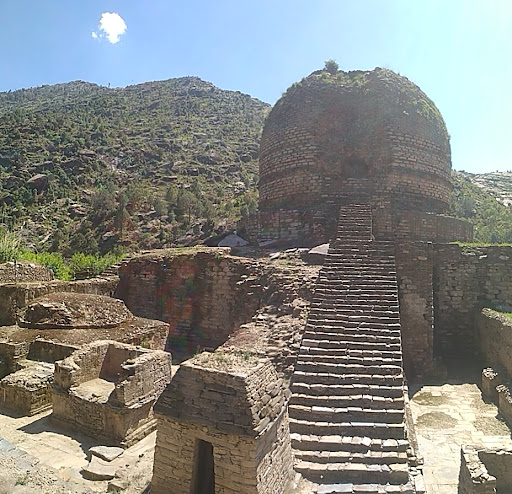
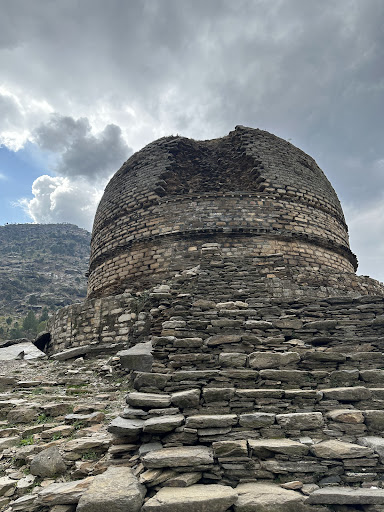
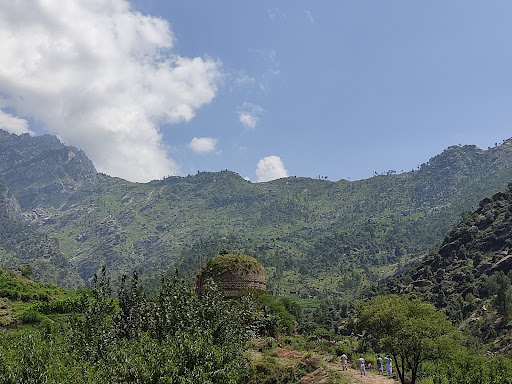
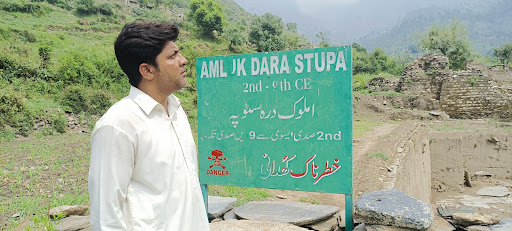
The high stupa stands prominently visible from the surrounding area, naturally sheltered by the great Mount Elum. The stupa is raised on a magnificent square plinth with base moulding in torus and Scotia pattern, measures 34 meters in diameter. The height of the square shape base plinth is about 4 meters.
On the high square plinth rests a three tiered drum in cylindrical form measuring 9 meters leaving an approx. 5 meters wide ambulatory. The stupa is further surmounted by a hemispherical dome measuring 7m in height. The drum on which the hemispherical dome rests has a diameter of 21m, probably being the largest in the Ilam valley. The drum is divided by a bold cornice supported by brackets at intervals of 0.30cm. A second cornice projecting farther runs below the bottom course of the dome. The height of the stupa from the floor level on the ground up to the existing top of the dome measures 20 meters. The stupa has a flight of ascending step on the north, which is 04.26m wide connecting the pradakshina patha on the ground level with the ambulatory passage on the top of the plinth. The pradakshina patha on the top of the plinth is approached by another step 03.65m wide which leads to the third pradakishna patha. It is only here that a hole measuring 04.57m deep was dug in the drum to reach the relic chamber. The entire stupa building from base to the top shows a remarkable fine, semi-ashler masonry, preserving good stretches of the architectural decoration, typical of the Gandahara valley during the period Kushanas.
The semi-ashler facing was originally covered by a coating of stucco plaster, traces of which are still observed at some places. The podium and lower drum are decorated by Corinthian columns of small dark stones. On the eastern side of the stupa podium lie in heap four stone “Umbrellas”, once raised above the dome and now fallen over the year. The largest of them measures 04m, the smallest 1.82m in dia and 30 cm in thickness.
On the eastern and northern side of the main stupa, the ruins of the monastery, stupas and miscellaneous remains can still be seen. They are mostly disturbed by the illegal diggers. Stein recorded a number of coins from the Kushanas to the Turki Shahis dating from the 2nd to 7th century A.D.
The site was investigated by Barger and Wright in 1938. They recovered some Gandahara sculptures but did not investigate further to ascertain the exact period of the site.
Stein says, “the Amluk-dara lies on the route followed by the Hindus of lower Swat on their annual visit to the sacred height of Mount Elum, which forms so striking a background to the ruined stupa. The top of the mountain was an object of pious pilgrimage already in Buddhist times, and may well have been connected in some way with the pious legends which once clustered around it and in a modified form have lingered to the present day” (1930).
The stupa with its separate components of socle, podium, drum, and dome is the best example in Swat.
The stupa of Amlokdara is exposed to The treasure hunters have badly damaged the Stupa.The concern department should notice it, if they neglect the damages the stupa has received so for, the coming generation will not see this magnificent monument of glorious past. The time is appropriate to excavate the site at Amluk-dara stupa in order to protect the monuments and the hidden antiquities from the clandestine activities of...
Read more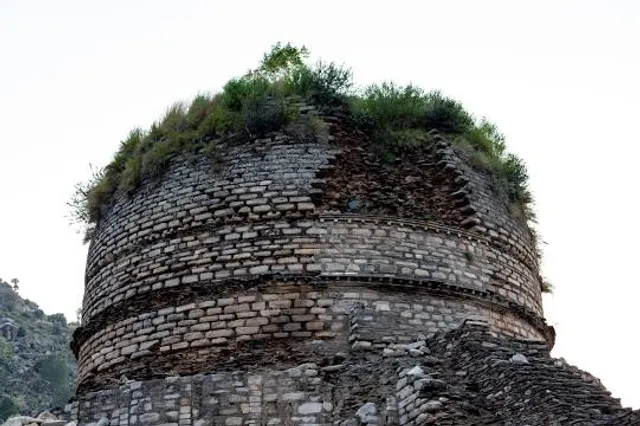
 Learn more insights from Wanderboat AI.