HTML SitemapExplore

Umar Hayat Mahal — Attraction in Chiniot Tehsil

Name
Umar Hayat Mahal
Description
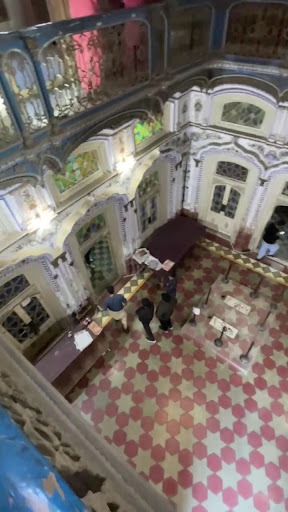
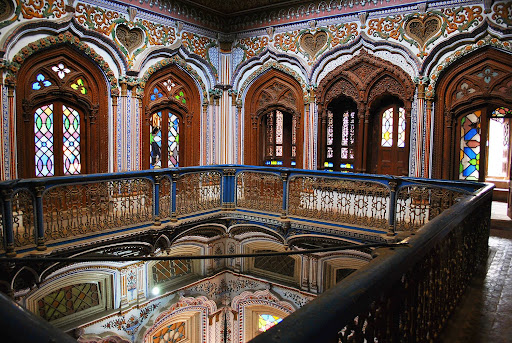
Omar Hayat Mahal, also spelt Umer Hayat Mahal, and alternatively known as Gulzar Manzil, is an early 20th-century wooden haveli mansion in Chiniot, Pakistan. The mansion was started in 1923, and was completed by 1935.
Nearby attractions
Nearby restaurants
Nearby hotels
Related posts
Keywords
Umar Hayat Mahal tourism.Umar Hayat Mahal hotels.Umar Hayat Mahal bed and breakfast. flights to Umar Hayat Mahal.Umar Hayat Mahal attractions.Umar Hayat Mahal restaurants.Umar Hayat Mahal travel.Umar Hayat Mahal travel guide.Umar Hayat Mahal travel blog.Umar Hayat Mahal pictures.Umar Hayat Mahal photos.Umar Hayat Mahal travel tips.Umar Hayat Mahal maps.Umar Hayat Mahal things to do.
Umar Hayat Mahal things to do, attractions, restaurants, events info and trip planning
Umar Hayat Mahal
PakistanPunjabChiniot TehsilUmar Hayat Mahal

Basic Info

Umar Hayat Mahal

PX9J+Q29 Muslim Bazar, Jafar Qasmi Street, near Umar Hayat Mehal, Muhalla Raikhti Chiniot, 35400, Pakistan
4.4(1.1K)
Open 24 hours
Save
spot

Ratings & Description

Info

Omar Hayat Mahal, also spelt Umer Hayat Mahal, and alternatively known as Gulzar Manzil, is an early 20th-century wooden haveli mansion in Chiniot, Pakistan. The mansion was started in 1923, and was completed by 1935.

Cultural
Accessibility
attractions: , restaurants:
logoLearn more insights from Wanderboat AI.
Website
facebook.com

Plan your stay

hotel
Pet-friendly Hotels in Chiniot Tehsil
Find a cozy hotel nearby and make it a full experience.
hotel
Affordable Hotels in Chiniot Tehsil
Find a cozy hotel nearby and make it a full experience.
hotel
The Coolest Hotels You Haven't Heard Of (Yet)
Find a cozy hotel nearby and make it a full experience.
hotel
Trending Stays Worth the Hype in Chiniot Tehsil
Find a cozy hotel nearby and make it a full experience.

Reviews

Get the Appoverlay
Get the AppOne tap to find yournext favorite spots!
Wanderboat LogoWanderboat

Your everyday Al companion for getaway ideas

CompanyAbout Us
InformationAI Trip PlannerSitemap
SocialXInstagramTiktokLinkedin
LegalTerms of ServicePrivacy Policy

Get the app

© 2025 Wanderboat. All rights reserved.

Posts

Faisal BajwaFaisal Bajwa
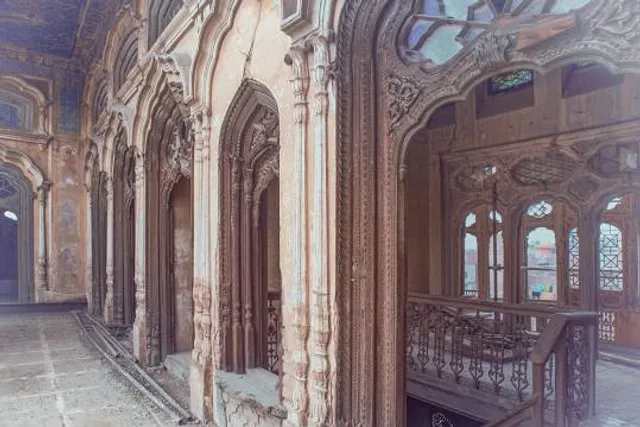
The Umer Hayat Mahal in Chiniot, Pakistan! The Umer Hayat Mahal is a magnificent example of Mughal and Sikh architectural styles, built in the 19th century. It's a beautiful palace that showcases the rich cultural heritage of Chiniot. The palace was built by Sheikh Umer Hayat, a wealthy merchant of Chiniot, and features intricate wooden carvings, ornate tile work, and stunning architecture. The Umer Hayat Mahal is considered one of the most impressive and well-preserved examples of a traditional Punjabi mansion. It has been beautifully restored and now serves as a museum, showcasing the art, culture, and history of the region. Sheikh Omar Hayat Vohra migrated from Chiniot to Calcutta in the late 19th century after being ostracised for marrying against his family's will. Large numbers of Chiniot's Sheikh tribe had settled in Calcutta during the British era. Sheikh Omar's first son, Gulzar Vohra, was born in 1920, prompting Sheikh Omar's decision to return to his hometown,where he decided to construct a magnificent palace that would feature the best of Chiniot's craftsmanship. Syed Hassan Shah was assigned the task of the mansion's construction. He gathered the best artisans from Chiniot, as well as from other places, who continued working for 10 ten years to complete the structure. Rahim Bakhsh Pirjha and Elahi Bakhsh Pirjha, masters in the manabat kari style of wood carving, carried out much of the mansion's woodwork.Ahmad Din completed the brickwork, while the celebrated artist Niaz Ahmad Jalandari did the stucco-work.Another celebrated artist, Jan Muhammad, painted the mansion's frescoes. The mansion was habitable by 1930, and described as a 'local wonder' by the British authors of the District Gazeteer of Jhang. It was completed in 1935 - at a cost of 200,000 rupees. Sheikh Omar died shortly after its completion in 1935. Sheikh Omar Hayat's only son, Gulzar Vohra, was married in the mansion in an extravagant ceremony in 1937.Gulzar was found dead in the palace the very next day of his marriage, possibly due to carbon monoxide poisoning as a result of large volumes of coal that had been burned for the celebration. He was buried in the courtyard of the ground floor of the palace, alongside the grave of his mother Fatima who later passed. Hayat Vohra's relatives abandoned the mansion, associating it with bad luck.Servants continued living there for a couple of years, though no family members laid claim to the building. In 1940, the Anjuman-e-Islamia organisation opened a school in the building. An orphanage was established in 1948 by Sheikh Muhammad Amin, though it was shifted in 1950, leaving the building abandoned once again.Local scavengers dismantled some of the mansion's decorative elements, and sold them to collectors in other cities. Two levels of the mansion was removed in the 1970s due to its state of dangerous disrepair, while another level had to be abandoned following severe rains in 1993. The building was brought under government control in 1989, with large portions repaired by the mid-1990s with funds raised by the local community. The mansion is now used as a cultural centre and library.
Muhammad Hassan TahirMuhammad Hassan Tahir
Omar Hayat Mahal alternatively known as Gulzar Manzil, is an early 20th-century wooden haveli mansion in Chiniot, Pakistan.The mansion was started in 1923, and was completed by 1935. The mansion, originally 5-storeys tall,was built by Sheikh Omar Hayat - a Chinioti businessman who had made his fortune in Calcutta.The edifice displays outstanding examples of Chiniot's local woodworking style, and has been described as an "ornament" of a building on account of its lavishly decorated interior. Sheikh Omar migrated from Chiniot to Calcutta in the late 19th century after being ostracised for marrying against his family's will.Large numbers of Chiniot's Sheikh tribe had settled in Calcutta during the British era. Sheikh Omar's first son, Gulzar, was born in 1920, prompting Sheikh Omar's decision to return to his hometown,where he decided to construct a magnificent palace that would feature the best of Chiniot's craftsmanship. Syed Hassan Shah was assigned the task of palace's construction. He gathered Chiniot's best artisans,as well as from different places, who continued working day and night for 10 ten years. Rahim Bakhsh Pirjha and Elahi Bakhsh Pirjha, masters in the manabat kari style of wood carving, carried out much of the mansion's woodworking.Ahmad Din, completed the brickwork, while the celebrated artist Niaz Ahmad Jalandari did the stucco-work. Another celebrated artist, Jan Muhammad, painted the mansion's frescoes. The mansion was habitable by 1930, and described as a 'local wonder' by the British authors of the District Gazeteer of Jhang.It was completed in 1935- at a cost of 200,000 rupees.Sheikh Omar died shortly after its completion in 1935. Sheikh Omar Hayat's only son, Gulzar, was married in the mansion in an extravagant ceremony in 1937.Gulzar was found dead in the palace the very next day of his marriage, possibly as a result of inhalation poisoning as a result of large volumes of coal that had been burnt for the celebration.He was buried in the courtyard of the ground floor of the palace, alongside with the grave of his mother who later passed. Mr Hayat's relatives abandoned the mansion, associating it with bad luck.Servants continued living for a couple of years, though no family members laid claim to the building.In 1940, the Anjuman-e-Islamia organisation opened a school in the building. An orphanage was established in 1948 Sheikh Muhammad Amin, though it was shifted in 1950, leaving the building abandoned once again.Local scavengers dismantled some of the mansion's decorative elements, and sold them to collectors in other cities. Two levels of the mansion was removed in the 1970s due to its state of dangerous disrepair, while another level had to be abandoned following severe rains in 1993.The building was brought under government control in 1989, with large portions repaired by the mid-1990s with funds raised by the local community.The mansion is now used a cultural centre and library.
Rana Muhammad AsimRana Muhammad Asim
The Omar Hayat Mahal is a five-story wooden haveli (mansion) built by Sheikh Omar Hayat in 1923. Local lore holds that it was intended as the residence for his newborn son, who was born in the same year. However, the son died shortly after his marriage 15 years later and was buried in the ground floor chamber alongside his mother, who died the same year. These graves are still present today. By the late 1930s the mansion had begun to fall into disrepair as the descendants of Omar Hayat's servants took up residence there. Later, the organization Anjuman-e-Islamia Chiniot attempted to convert the mansion into a girls' school, but it was converted into an orphanage instead. By the 1970s the upper story was in such unsound condition that the local municipal authorities demolished it. The level beneath it was itself destroyed in the 1990s when heavy rains caused it to collapse.
See more posts
See more posts
hotel
Find your stay

Pet-friendly Hotels in Chiniot Tehsil

Find a cozy hotel nearby and make it a full experience.

The Umer Hayat Mahal in Chiniot, Pakistan! The Umer Hayat Mahal is a magnificent example of Mughal and Sikh architectural styles, built in the 19th century. It's a beautiful palace that showcases the rich cultural heritage of Chiniot. The palace was built by Sheikh Umer Hayat, a wealthy merchant of Chiniot, and features intricate wooden carvings, ornate tile work, and stunning architecture. The Umer Hayat Mahal is considered one of the most impressive and well-preserved examples of a traditional Punjabi mansion. It has been beautifully restored and now serves as a museum, showcasing the art, culture, and history of the region. Sheikh Omar Hayat Vohra migrated from Chiniot to Calcutta in the late 19th century after being ostracised for marrying against his family's will. Large numbers of Chiniot's Sheikh tribe had settled in Calcutta during the British era. Sheikh Omar's first son, Gulzar Vohra, was born in 1920, prompting Sheikh Omar's decision to return to his hometown,where he decided to construct a magnificent palace that would feature the best of Chiniot's craftsmanship. Syed Hassan Shah was assigned the task of the mansion's construction. He gathered the best artisans from Chiniot, as well as from other places, who continued working for 10 ten years to complete the structure. Rahim Bakhsh Pirjha and Elahi Bakhsh Pirjha, masters in the manabat kari style of wood carving, carried out much of the mansion's woodwork.Ahmad Din completed the brickwork, while the celebrated artist Niaz Ahmad Jalandari did the stucco-work.Another celebrated artist, Jan Muhammad, painted the mansion's frescoes. The mansion was habitable by 1930, and described as a 'local wonder' by the British authors of the District Gazeteer of Jhang. It was completed in 1935 - at a cost of 200,000 rupees. Sheikh Omar died shortly after its completion in 1935. Sheikh Omar Hayat's only son, Gulzar Vohra, was married in the mansion in an extravagant ceremony in 1937.Gulzar was found dead in the palace the very next day of his marriage, possibly due to carbon monoxide poisoning as a result of large volumes of coal that had been burned for the celebration. He was buried in the courtyard of the ground floor of the palace, alongside the grave of his mother Fatima who later passed. Hayat Vohra's relatives abandoned the mansion, associating it with bad luck.Servants continued living there for a couple of years, though no family members laid claim to the building. In 1940, the Anjuman-e-Islamia organisation opened a school in the building. An orphanage was established in 1948 by Sheikh Muhammad Amin, though it was shifted in 1950, leaving the building abandoned once again.Local scavengers dismantled some of the mansion's decorative elements, and sold them to collectors in other cities. Two levels of the mansion was removed in the 1970s due to its state of dangerous disrepair, while another level had to be abandoned following severe rains in 1993. The building was brought under government control in 1989, with large portions repaired by the mid-1990s with funds raised by the local community. The mansion is now used as a cultural centre and library.
Faisal Bajwa

Faisal Bajwa

hotel
Find your stay

Affordable Hotels in Chiniot Tehsil

Find a cozy hotel nearby and make it a full experience.

Get the Appoverlay
Get the AppOne tap to find yournext favorite spots!
Omar Hayat Mahal alternatively known as Gulzar Manzil, is an early 20th-century wooden haveli mansion in Chiniot, Pakistan.The mansion was started in 1923, and was completed by 1935. The mansion, originally 5-storeys tall,was built by Sheikh Omar Hayat - a Chinioti businessman who had made his fortune in Calcutta.The edifice displays outstanding examples of Chiniot's local woodworking style, and has been described as an "ornament" of a building on account of its lavishly decorated interior. Sheikh Omar migrated from Chiniot to Calcutta in the late 19th century after being ostracised for marrying against his family's will.Large numbers of Chiniot's Sheikh tribe had settled in Calcutta during the British era. Sheikh Omar's first son, Gulzar, was born in 1920, prompting Sheikh Omar's decision to return to his hometown,where he decided to construct a magnificent palace that would feature the best of Chiniot's craftsmanship. Syed Hassan Shah was assigned the task of palace's construction. He gathered Chiniot's best artisans,as well as from different places, who continued working day and night for 10 ten years. Rahim Bakhsh Pirjha and Elahi Bakhsh Pirjha, masters in the manabat kari style of wood carving, carried out much of the mansion's woodworking.Ahmad Din, completed the brickwork, while the celebrated artist Niaz Ahmad Jalandari did the stucco-work. Another celebrated artist, Jan Muhammad, painted the mansion's frescoes. The mansion was habitable by 1930, and described as a 'local wonder' by the British authors of the District Gazeteer of Jhang.It was completed in 1935- at a cost of 200,000 rupees.Sheikh Omar died shortly after its completion in 1935. Sheikh Omar Hayat's only son, Gulzar, was married in the mansion in an extravagant ceremony in 1937.Gulzar was found dead in the palace the very next day of his marriage, possibly as a result of inhalation poisoning as a result of large volumes of coal that had been burnt for the celebration.He was buried in the courtyard of the ground floor of the palace, alongside with the grave of his mother who later passed. Mr Hayat's relatives abandoned the mansion, associating it with bad luck.Servants continued living for a couple of years, though no family members laid claim to the building.In 1940, the Anjuman-e-Islamia organisation opened a school in the building. An orphanage was established in 1948 Sheikh Muhammad Amin, though it was shifted in 1950, leaving the building abandoned once again.Local scavengers dismantled some of the mansion's decorative elements, and sold them to collectors in other cities. Two levels of the mansion was removed in the 1970s due to its state of dangerous disrepair, while another level had to be abandoned following severe rains in 1993.The building was brought under government control in 1989, with large portions repaired by the mid-1990s with funds raised by the local community.The mansion is now used a cultural centre and library.
Muhammad Hassan Tahir

Muhammad Hassan Tahir

hotel
Find your stay

The Coolest Hotels You Haven't Heard Of (Yet)

Find a cozy hotel nearby and make it a full experience.

hotel
Find your stay

Trending Stays Worth the Hype in Chiniot Tehsil

Find a cozy hotel nearby and make it a full experience.

The Omar Hayat Mahal is a five-story wooden haveli (mansion) built by Sheikh Omar Hayat in 1923. Local lore holds that it was intended as the residence for his newborn son, who was born in the same year. However, the son died shortly after his marriage 15 years later and was buried in the ground floor chamber alongside his mother, who died the same year. These graves are still present today. By the late 1930s the mansion had begun to fall into disrepair as the descendants of Omar Hayat's servants took up residence there. Later, the organization Anjuman-e-Islamia Chiniot attempted to convert the mansion into a girls' school, but it was converted into an orphanage instead. By the 1970s the upper story was in such unsound condition that the local municipal authorities demolished it. The level beneath it was itself destroyed in the 1990s when heavy rains caused it to collapse.
Rana Muhammad Asim

Rana Muhammad Asim

See more posts
See more posts

Reviews of Umar Hayat Mahal

4.4
(1,071)
avatar
5.0
48w

The Umer Hayat Mahal in Chiniot, Pakistan!

The Umer Hayat Mahal is a magnificent example of Mughal and Sikh architectural styles, built in the 19th century. It's a beautiful palace that showcases the rich cultural heritage of Chiniot.

The palace was built by Sheikh Umer Hayat, a wealthy merchant of Chiniot, and features intricate wooden carvings, ornate tile work, and stunning architecture.

The Umer Hayat Mahal is considered one of the most impressive and well-preserved examples of a traditional Punjabi mansion. It has been beautifully restored and now serves as a museum, showcasing the art, culture, and history of the region.

Sheikh Omar Hayat Vohra migrated from Chiniot to Calcutta in the late 19th century after being ostracised for marrying against his family's will. Large numbers of Chiniot's Sheikh tribe had settled in Calcutta during the British era.

Sheikh Omar's first son, Gulzar Vohra, was born in 1920, prompting Sheikh Omar's decision to return to his hometown,where he decided to construct a magnificent palace that would feature the best of Chiniot's craftsmanship.

Syed Hassan Shah was assigned the task of the mansion's construction. He gathered the best artisans from Chiniot, as well as from other places, who continued working for 10 ten years to complete the structure. Rahim Bakhsh Pirjha and Elahi Bakhsh Pirjha, masters in the manabat kari style of wood carving, carried out much of the mansion's woodwork.Ahmad Din completed the brickwork, while the celebrated artist Niaz Ahmad Jalandari did the stucco-work.Another celebrated artist, Jan Muhammad, painted the mansion's frescoes.

The mansion was habitable by 1930, and described as a 'local wonder' by the British authors of the District Gazeteer of Jhang. It was completed in 1935 - at a cost of 200,000 rupees. Sheikh Omar died shortly after its completion in 1935.

Sheikh Omar Hayat's only son, Gulzar Vohra, was married in the mansion in an extravagant ceremony in 1937.Gulzar was found dead in the palace the very next day of his marriage, possibly due to carbon monoxide poisoning as a result of large volumes of coal that had been burned for the celebration. He was buried in the courtyard of the ground floor of the palace, alongside the grave of his mother Fatima who later passed.

Hayat Vohra's relatives abandoned the mansion, associating it with bad luck.Servants continued living there for a couple of years, though no family members laid claim to the building. In 1940, the Anjuman-e-Islamia organisation opened a school in the building. An orphanage was established in 1948 by Sheikh Muhammad Amin, though it was shifted in 1950, leaving the building abandoned once again.Local scavengers dismantled some of the mansion's decorative elements, and sold them to collectors in other cities.

Two levels of the mansion was removed in the 1970s due to its state of dangerous disrepair, while another level had to be abandoned following severe rains in 1993. The building was brought under government control in 1989, with large portions repaired by the mid-1990s with funds raised by the local community. The mansion is now used as a cultural centre...

   Read more

avatar
4.0
7y

Omar Hayat Mahal alternatively known as Gulzar Manzil, is an early 20th-century wooden haveli mansion in Chiniot, Pakistan.The mansion was started in 1923, and was completed by 1935. The mansion, originally 5-storeys tall,was built by Sheikh Omar Hayat - a Chinioti businessman who had made his fortune in Calcutta.The edifice displays outstanding examples of Chiniot's local woodworking style, and has been described as an "ornament" of a building on account of its lavishly decorated interior. Sheikh Omar migrated from Chiniot to Calcutta in the late 19th century after being ostracised for marrying against his family's will.Large numbers of Chiniot's Sheikh tribe had settled in Calcutta during the British era.

Sheikh Omar's first son, Gulzar, was born in 1920, prompting Sheikh Omar's decision to return to his hometown,where he decided to construct a magnificent palace that would feature the best of Chiniot's craftsmanship.

Syed Hassan Shah was assigned the task of palace's construction. He gathered Chiniot's best artisans,as well as from different places, who continued working day and night for 10 ten years. Rahim Bakhsh Pirjha and Elahi Bakhsh Pirjha, masters in the manabat kari style of wood carving, carried out much of the mansion's woodworking.Ahmad Din, completed the brickwork, while the celebrated artist Niaz Ahmad Jalandari did the stucco-work. Another celebrated artist, Jan Muhammad, painted the mansion's frescoes.

The mansion was habitable by 1930, and described as a 'local wonder' by the British authors of the District Gazeteer of Jhang.It was completed in 1935- at a cost of 200,000 rupees.Sheikh Omar died shortly after its completion in 1935.

Sheikh Omar Hayat's only son, Gulzar, was married in the mansion in an extravagant ceremony in 1937.Gulzar was found dead in the palace the very next day of his marriage, possibly as a result of inhalation poisoning as a result of large volumes of coal that had been burnt for the celebration.He was buried in the courtyard of the ground floor of the palace, alongside with the grave of his mother who later passed.

Mr Hayat's relatives abandoned the mansion, associating it with bad luck.Servants continued living for a couple of years, though no family members laid claim to the building.In 1940, the Anjuman-e-Islamia organisation opened a school in the building. An orphanage was established in 1948 Sheikh Muhammad Amin, though it was shifted in 1950, leaving the building abandoned once again.Local scavengers dismantled some of the mansion's decorative elements, and sold them to collectors in other cities.

Two levels of the mansion was removed in the 1970s due to its state of dangerous disrepair, while another level had to be abandoned following severe rains in 1993.The building was brought under government control in 1989, with large portions repaired by the mid-1990s with funds raised by the local community.The mansion is now used a cultural centre...

   Read more
avatar
5.0
2y

UMMAR HAYYAT PALACE CHINIOT (PUNJAB PAKISTAN) Who was Ummar Hayyat? some says he was Sheikh by cast and some says he was Khoja of Calcutta . He was born in Calcutta, worked there and migrated to Chiniot after earning handsome money from Calcutta in business. No body knows about his sources of success regarding being rich. Majority believed that he was Chinioti Sheikh and came back to his own city like other Chinioti Sheikhs who were well settled all over the sub continent for business.

After the inspiration of Elahi Buksh Perja, who was an out class artisan and also worked in Buckingham Palace London, Ummar Hayyat Started the construction of a marvelous house in 1923. Rahim Buksh Perja, real bother of Elahi Buksh Perja joined hands with his brother on wood carving work. While other construction work was looked after by Syed Hassan Shah.

It took five years to complete the five story palace with huge amount of 400,000 British Indian rupees. After its completion in 1928, he named this Palace on the name of his only son Gulzar Hayat , “The Gulzar Mahal”. Ummar Hayat died before the marriage of his son.

In 1938 Gulzar married with a girl who was not from Sheikh Family and majority of the family members were not happy with this marriage.

Gulzar invited the elite class of the Chiniot and Calcutta for the celebration of his marriage. His Mother spent huge amount on his marriage and also share the happiness and joy with poor of Chiniot.

The ill fate started just after the marriage. On wedding night Gulzar went to Bath room and very next morning he was found dead there. No body knows what happened with Gulzar, Some says that he died due the Carbon Mono Oxide Gas of coal which was lit in the bath Room to heat up. But still this issue is resolve able. After the completion of four month of Edith (Compulsory for Muslim widow) she married in Lyallpur now Faisalabad. She never came again to claim the property of her husband. Soon after Gulzar Muhammad’s death, his mother couldn’t bear the sheer grief and died. Both mother and son buried in the main hall of the palace. Other relatives left the palace considering it ill fate and bad luck.

At one time, it was an orphanage run by the religious charity mission. Then the surrounding was occupied by encroachers. Meanwhile the fifth story of the building collapsed and palace became a ghost house.

Dr Amjad Saqib, Dy. Commissioner Chiniot took personal interest for the restoration of Ummar Hayat Palace and after spending considerable amount for the restoration, he handed over the palace to Town Municipality, where they established a reading Room and a library but the lack of funds and less interest by the locals, Library and reading room is empty except furniture and reading Table. Mirza Mushtaq is a care taker who narrates the history and tragedy of Palace. Interested tourists can visit the palace from 9.A.M to 5.P.M except Sunday...

   Read more
Page 1 of 7
Previous
Next