HTML SitemapExplore
logo
Find Things to DoFind The Best Restaurants

Katas Raj Temple Complex — Attraction in Choa Saidan Shah Tehsil

Name
Katas Raj Temple Complex
Description
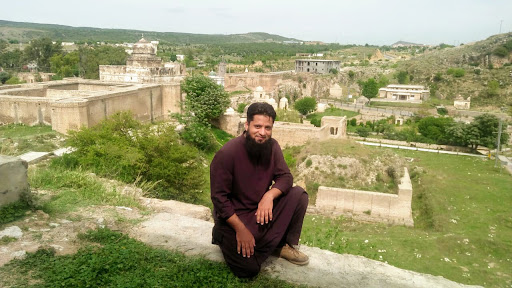
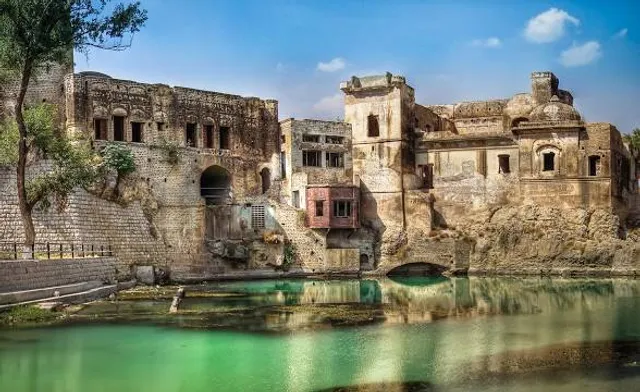
The Shri Katas Raj Temples, also known as Qila Katas, is a complex of several Hindu temples connected to one another by walkways. The temple complex surrounds a pond named Katas which is regarded as sacred by Hindus. The complex is located in the Potohar Plateau region of Pakistan's Punjab province.
Nearby attractions
Nearby restaurants
Nearby hotels
Related posts
Keywords
Katas Raj Temple Complex tourism.Katas Raj Temple Complex hotels.Katas Raj Temple Complex bed and breakfast. flights to Katas Raj Temple Complex.Katas Raj Temple Complex attractions.Katas Raj Temple Complex restaurants.Katas Raj Temple Complex travel.Katas Raj Temple Complex travel guide.Katas Raj Temple Complex travel blog.Katas Raj Temple Complex pictures.Katas Raj Temple Complex photos.Katas Raj Temple Complex travel tips.Katas Raj Temple Complex maps.Katas Raj Temple Complex things to do.
Katas Raj Temple Complex things to do, attractions, restaurants, events info and trip planning
Katas Raj Temple Complex
PakistanPunjabChoa Saidan Shah TehsilKatas Raj Temple Complex

Basic Info

Katas Raj Temple Complex

PXF2+HMR, Kalar Kahar Rd, Katas, Pakistan
4.4(2.2K)
Open 24 hours
Save
spot

Ratings & Description

Info

The Shri Katas Raj Temples, also known as Qila Katas, is a complex of several Hindu temples connected to one another by walkways. The temple complex surrounds a pond named Katas which is regarded as sacred by Hindus. The complex is located in the Potohar Plateau region of Pakistan's Punjab province.

Cultural
Scenic
Family friendly
Accessibility
attractions: , restaurants:
logoLearn more insights from Wanderboat AI.

Plan your stay

hotel
Pet-friendly Hotels in Choa Saidan Shah Tehsil
Find a cozy hotel nearby and make it a full experience.
hotel
Affordable Hotels in Choa Saidan Shah Tehsil
Find a cozy hotel nearby and make it a full experience.
hotel
The Coolest Hotels You Haven't Heard Of (Yet)
Find a cozy hotel nearby and make it a full experience.
hotel
Trending Stays Worth the Hype in Choa Saidan Shah Tehsil
Find a cozy hotel nearby and make it a full experience.

Reviews

Get the Appoverlay
Get the AppOne tap to find yournext favorite spots!
Wanderboat LogoWanderboat

Your everyday Al companion for getaway ideas

CompanyAbout Us
InformationAI Trip PlannerSitemap
SocialXInstagramTiktokLinkedin
LegalTerms of ServicePrivacy Policy

Get the app

© 2025 Wanderboat. All rights reserved.
logo

Reviews of Katas Raj Temple Complex

4.4
(2,242)
avatar
5.0
2y

The Katas Raj temples attributed to Hindu Shahiya (615-950 A.D) are dedicated to Lord Shiva and is an important Hindu pilgrimage site in Pakistan. It is believed by the followers that this particular complex was constructed at a place that was visited by Pandava brothers of the great Indian Epic "Mahabharata" This particular site is also the most significant Hindu temple site salt Range. The first Director General of Archaeological Survey of India. Alexander Cunningham had visited this site in 1872-73 A.D. and confirmed the findings of Huen Tsang, a famous Chinese Pilgrim of 7th century A.D. Who had reported the stone Stupa of Ashoka that was about 200 feet high and surrounded by 10 springs. Cunningham also traced the walls of a gateway tower of the old fortification which lead down to the lower enclosure at the east end where stands the Sat Ghara. He accounted these temples as being the only ancient remains of any interest that existed in Katas, constructed an style similar to Kashmir temples of Karkota and Varma dynasties that ruled from 625-939 A.D. The main characteristics of this particular style are dentiles, trefoil arches, cluted pillars and pointed roofs, all of which are present in temples of Katas and other places in the Salt Range. These temples were built with soft friable sand stone erected with plane masonry walls and cantoned plaster. After the decline of Buddhism in Gandhara and the adjoining regions, Hinduism revived once again under the Hindu Shahi dynasty. During the reign of the Hindu Shahis, numerous temples were erected in now KPK Province and the Salt Range in Punjab, thus Katas Raj preserves an almost continuous record of temples. Alexander Cunningham mentions in his account that a stream, called Ghata Nala, most probably from the Ghat, through which it flowed from the Holy Pool of Katas. This pool is said to have been called by various names, at first it was Vis-Kund, or "Poison spring" because its water were unwholesome. It was next called Amar-Kund, then Chamar-Kund, and lastly Kataksh-Kund. There are many legends associated with Katas Raj and a lot of sanctity given to the built and natural heritage components. There is a Brahmanical story, which relates that Shiva was so inconsolable for the death of his wife Sati, the daughter of Daksha, that the tears literally "rained from his eyes" and formed the two sacred pools of Pushkara or Pokhar, near Ajmer, and Kataksha or Katas. Another mythical story associates the site with magical pool of the Mahabharata epic. The site believed to be in Dvaitavana where Pandavas lived during the period of exile and the questioning session between the pandavas and Yakshah had taken place at this site. The Sat- Ghara or "Seven Temples" are also believed to be a place where Pandavas lived during a portion of their 12 years wanderings. The pool as irregular in shape, measuring 150 feet in length, with an extreme breadth of 90 feet at the upper end, and about 50 feet at...

   Read more
avatar
5.0
7y

The Katas Raj temples/Qila Katas Raj attributed to Hindu Shahiya (615-950 A.D) are dedicated to Lord Shiva and is an important Hindu pilgrimage site in Pakistan. It is believed by the followers that this particular complex was onstructed at a place that was visited by Pandava brothers of the great Indian Epic Mahabharata This particular site is also the most significant Hindu temple site salt Range. The first Director General of Archaeological Survey of India. Alexander Cunningham had visited this site in 1872-73 A.D and confirmed the findings of Huen Tsang, a famous Chinese Pilgrim 7th century A.D. Who had reported the stone Stupa of Ashoka that was about 200 feet high and surrounded by 10 springs. Cunningham also traced the walls of a gateway tower of the old fortification which lead down to the lower enclosure at the cast end where stands the Sat Ghara. He accounted these temples as being the only ancient remains of any interest that existed in Katas, constructed an style similar to Kashmir temples of Karkota and Varma dynasties that ruled from 625-939 A.D The main characteristics of this particular style are dentiles, trefoil arches cluted pillars and pointed roofs, all of which are present in temples of Katas and other places in the Salt Range. These temples were built with soft friable and stone erected with plane masonry walls and cantoned plaster After the decline of Buddhism in Gandhara and the adjoining regions, Hinduism revived once again under the Hindu Shahi dynasty. During the reign of the Hindu Shahis, numerous temples were erected in now KPK Province and the Salt Range in Punjab, thus Katas Raj preserves an almost continuous record of temples Alexander Cunningham mentions in his account that a stream, called Ghata Nala, most probably from the Ghat, through which it flowed from the Holy Pool of Katas. This pool is said to have been called by various names, at first it was Vis-Kund, or "Poison spring" because its water were unwholesome. It was next called Amar-Kund, then Chamar Kund, and lastly Kataksh-Kund. There are many legends associated with Katas Raj and a lot of sanctity given to the built and natural heritage components. There is a Brahmanical story which relates that Shiva was so inconsolable for the death of his wife Sati, the and daughter of Daksha, that the tears literally "rained from his e formed the two sacred pools of Pushkara or Pokhar, near Ajmer, and Kataksha or Katas. Another mythical story associates the site with mag'cal ioning session pool of the Mahabharata epic. The site believed to be in Dvaita Pandavas lived during the perio d of exile and the quest tween the pandavas and Yakshah had taken place at this site. The Sat Ghara or "Seven Temples" are also believed to be a place w here Pandavas lived during a portion of their 12 years wanderings. The pool as irregular in shape, measuring 150feet in length, with an extreme breadth of 90feet at the upper end, and about 50feet...

   Read more
avatar
5.0
2y

KATAS RAJ TEMPLES - PUNJAB, PAKISTAN:

This Place is the Holder of Original and Oldest Shiv Ling in the county.

Katas Raj Temples attributed to Hindu Shahiya.( 615-950A.D) and dedicated to Lord Shiva and the 2nd Most Sacred & important Hindu pilgrimage site in the world. It is belived by the followers that this particular complex was constructed at a place that was visited by the Pandawa Brothers of great Indian Epic Maha Baharat.

This Historical site is located in the Salt range of Pakistan near the famous Salt Mine of Kheowra, Pakistan. The famous Chinese Tourist Huem Tsang also visited this site in7th century A.D. and reported that there was a stupa which was 200 hundred feet high and was built by Ashoka the Great. ( Now the remain of stupa are just 20 feet high covered with newly constructed Walls).

After the decline of Buddahism in Gandhara, Hinduism revived again under the Hindu Shahi Dynasty and many temples were made in the Punjab and KPK province thus Katas Raj preserves almost continues record of Temples.

Alexander Cunningham, Director General of Archeological site of India also visited this place in 1872-73 and after the visit he wrote that a stream called Ghat Nala, through which it fallowed from the Holy Pool of Katas.This pool said to have been called various name . In early days it was Vis Kund or Poison Spring because its water was full of salts. Then it called Amar Kund then Chamar Kund and lastly Kataksh Kund.

There is Brahamnical story which relates to the Lord Shiva that Lord shiva was extremely grieved on the death of his wife Sati who was the daughter of Daksha. The tears rained from the Eyes of Lord Shiva and formed two sacred pools. One name is Pushkara which is near to Ajmer in India and second is Kataksha which is now in Katas, Pakistan, around which, the series of sacred temples in built around this lake.

Another story associated with the site with magical pool of Mahabartia epic. This site is believed to be in devaitavana where Pandavas lived during the period of exile and questioning session between the Pandavas and Yakshah had taken place at this site.

The Sat-Gahra or seven temples are also belived to be a place where Pandavas lived during 12 years of his exile period, ( Now a days only 3 temples are survived ). This irregular pool is 150 feet in length 90 feet wide from upper side and 50 feet wide from the lower side.

Apart from temples there are many caves which were used by the hindu sadhoo’s for meditation. Pakistani Hindus use to visit this place in March while Indian Hindus Visits in April and only one temple of lord shiva being used for worship where hindu worship the shiv ling. Govt of the Punjab (Pakistan) provided the huge & generous amount for the preservation and restoration of this historical site of...

   Read more

Page 1 of 7
Previous
Next

Posts

Muhammad Nadeem KanwalMuhammad Nadeem Kanwal
The Katas Raj temples attributed to Hindu Shahiya (615-950 A.D) are dedicated to Lord Shiva and is an important Hindu pilgrimage site in Pakistan. It is believed by the followers that this particular complex was constructed at a place that was visited by Pandava brothers of the great Indian Epic "Mahabharata" This particular site is also the most significant Hindu temple site salt Range. The first Director General of Archaeological Survey of India. Alexander Cunningham had visited this site in 1872-73 A.D. and confirmed the findings of Huen Tsang, a famous Chinese Pilgrim of 7th century A.D. Who had reported the stone Stupa of Ashoka that was about 200 feet high and surrounded by 10 springs. Cunningham also traced the walls of a gateway tower of the old fortification which lead down to the lower enclosure at the east end where stands the Sat Ghara. He accounted these temples as being the only ancient remains of any interest that existed in Katas, constructed an style similar to Kashmir temples of Karkota and Varma dynasties that ruled from 625-939 A.D. The main characteristics of this particular style are dentiles, trefoil arches, cluted pillars and pointed roofs, all of which are present in temples of Katas and other places in the Salt Range. These temples were built with soft friable sand stone erected with plane masonry walls and cantoned plaster. After the decline of Buddhism in Gandhara and the adjoining regions, Hinduism revived once again under the Hindu Shahi dynasty. During the reign of the Hindu Shahis, numerous temples were erected in now KPK Province and the Salt Range in Punjab, thus Katas Raj preserves an almost continuous record of temples. Alexander Cunningham mentions in his account that a stream, called Ghata Nala, most probably from the Ghat, through which it flowed from the Holy Pool of Katas. This pool is said to have been called by various names, at first it was Vis-Kund, or "Poison spring" because its water were unwholesome. It was next called Amar-Kund, then Chamar-Kund, and lastly Kataksh-Kund. There are many legends associated with Katas Raj and a lot of sanctity given to the built and natural heritage components. There is a Brahmanical story, which relates that Shiva was so inconsolable for the death of his wife Sati, the daughter of Daksha, that the tears literally "rained from his eyes" and formed the two sacred pools of Pushkara or Pokhar, near Ajmer, and Kataksha or Katas. Another mythical story associates the site with magical pool of the Mahabharata epic. The site believed to be in Dvaitavana where Pandavas lived during the period of exile and the questioning session between the pandavas and Yakshah had taken place at this site. The Sat- Ghara or "Seven Temples" are also believed to be a place where Pandavas lived during a portion of their 12 years wanderings. The pool as irregular in shape, measuring 150 feet in length, with an extreme breadth of 90 feet at the upper end, and about 50 feet at the lower end.
Hakeem LahoriHakeem Lahori
The Katas Raj temples/Qila Katas Raj attributed to Hindu Shahiya (615-950 A.D) are dedicated to Lord Shiva and is an important Hindu pilgrimage site in Pakistan. It is believed by the followers that this particular complex was onstructed at a place that was visited by Pandava brothers of the great Indian Epic Mahabharata This particular site is also the most significant Hindu temple site salt Range. The first Director General of Archaeological Survey of India. Alexander Cunningham had visited this site in 1872-73 A.D and confirmed the findings of Huen Tsang, a famous Chinese Pilgrim 7th century A.D. Who had reported the stone Stupa of Ashoka that was about 200 feet high and surrounded by 10 springs. Cunningham also traced the walls of a gateway tower of the old fortification which lead down to the lower enclosure at the cast end where stands the Sat Ghara. He accounted these temples as being the only ancient remains of any interest that existed in Katas, constructed an style similar to Kashmir temples of Karkota and Varma dynasties that ruled from 625-939 A.D The main characteristics of this particular style are dentiles, trefoil arches cluted pillars and pointed roofs, all of which are present in temples of Katas and other places in the Salt Range. These temples were built with soft friable and stone erected with plane masonry walls and cantoned plaster After the decline of Buddhism in Gandhara and the adjoining regions, Hinduism revived once again under the Hindu Shahi dynasty. During the reign of the Hindu Shahis, numerous temples were erected in now KPK Province and the Salt Range in Punjab, thus Katas Raj preserves an almost continuous record of temples Alexander Cunningham mentions in his account that a stream, called Ghata Nala, most probably from the Ghat, through which it flowed from the Holy Pool of Katas. This pool is said to have been called by various names, at first it was Vis-Kund, or "Poison spring" because its water were unwholesome. It was next called Amar-Kund, then Chamar Kund, and lastly Kataksh-Kund. There are many legends associated with Katas Raj and a lot of sanctity given to the built and natural heritage components. There is a Brahmanical story which relates that Shiva was so inconsolable for the death of his wife Sati, the and daughter of Daksha, that the tears literally "rained from his e formed the two sacred pools of Pushkara or Pokhar, near Ajmer, and Kataksha or Katas. Another mythical story associates the site with mag'cal ioning session pool of the Mahabharata epic. The site believed to be in Dvaita Pandavas lived during the perio d of exile and the quest tween the pandavas and Yakshah had taken place at this site. The Sat Ghara or "Seven Temples" are also believed to be a place w here Pandavas lived during a portion of their 12 years wanderings. The pool as irregular in shape, measuring 150feet in length, with an extreme breadth of 90feet at the upper end, and about 50feet at lower end
Shahzad SaeedShahzad Saeed
Nice One Day Tour from Lahore. The Katas Raj Temples is also known as Qila Katas, is a complex of several temples connected to one another by walkways. The temple complex surrounds a pond named Katas which is regarded as sacred by Hindus. The complex is located in the Potohar Plateau region of Punjab province of Pakistan. The temples are located in municipal committee Choa Saidanshah, and are near the M2 Motorway. As per historical Books, the temples' pond is said in the Puranas to have been created from the teardrops of Shiva, after he wandered the Earth inconsolable after the death of his wife Sati. The pond occupies an area of two kanals and 15 marlas, with a maximum depth of 20 feet. Serial Kanpur Se Katas Tak was also shot here starring Saba Qamar in 2010 aired on Indus Vision. The temples play a role in the Hindu epic poem, where the temples are traditionally believed to have been the site where the Pandava brothers spent a significant portion of their exile. It is also traditionally believed by Hindus to be the site where the brothers engaged in a riddle contest with the Yakshas, as described in the Yaksha Prashna. Another tradition states that the Hindu deity Krishna laid the foundation of the temple, and established a hand-made shivling in it. The temples were visited by India's former deputy prime minister Lal Krishna Advani in 2005. In 2006, the Pakistani government began restoration works at the temples, with further improvements announced in 2017. The Katas Raj Temple complex is part of municipal committee Choa Saidanshah. The Katas Raj Temple complex is located near Kallar Kahar, and is located at an altitude of 2,000 feet. It is approximately 100 kilometres away by road from another important Hindu pilgrimage destination the Tilla Jogian complex. Katas Raj is located near the interchange for the town of Kallar Kahar off the M2 Motorway which links Islamabad to Lahore. The complex is located alongside the road that connects Kallar Kahar to Choa Saidan Shah near the village of Dulmial. The name of the temple complex is believed to derive from the Sanskrit word kataksha, meaning tearful eyes. The name of the temple complex is believed to derive from the Sanskrit word kataksha, meaning tearful eyes. The pond was originally referred to as Viskund, or "poison spring", but was later referred to as Amarkund, Chamaskund, and finally Katakshkund, meaning Spring of tearful eyes. The pond in Urdu and Persian is referred to as Chashm-e-Alam, meaning "Sorrowful / Tearful Eyes.The pond was originally referred to as Viskund, or "poison spring", but was later referred to as Amarkund, Chamaskund, and finally Katakshkund, meaning "Spring of tearful eyes. The pond in Urdu and Persian is referred to as Chashm-e-Alam meaning "Sorrowful / Tearful Eyes.
See more posts
See more posts
hotel
Find your stay

Pet-friendly Hotels in Choa Saidan Shah Tehsil

Find a cozy hotel nearby and make it a full experience.

The Katas Raj temples attributed to Hindu Shahiya (615-950 A.D) are dedicated to Lord Shiva and is an important Hindu pilgrimage site in Pakistan. It is believed by the followers that this particular complex was constructed at a place that was visited by Pandava brothers of the great Indian Epic "Mahabharata" This particular site is also the most significant Hindu temple site salt Range. The first Director General of Archaeological Survey of India. Alexander Cunningham had visited this site in 1872-73 A.D. and confirmed the findings of Huen Tsang, a famous Chinese Pilgrim of 7th century A.D. Who had reported the stone Stupa of Ashoka that was about 200 feet high and surrounded by 10 springs. Cunningham also traced the walls of a gateway tower of the old fortification which lead down to the lower enclosure at the east end where stands the Sat Ghara. He accounted these temples as being the only ancient remains of any interest that existed in Katas, constructed an style similar to Kashmir temples of Karkota and Varma dynasties that ruled from 625-939 A.D. The main characteristics of this particular style are dentiles, trefoil arches, cluted pillars and pointed roofs, all of which are present in temples of Katas and other places in the Salt Range. These temples were built with soft friable sand stone erected with plane masonry walls and cantoned plaster. After the decline of Buddhism in Gandhara and the adjoining regions, Hinduism revived once again under the Hindu Shahi dynasty. During the reign of the Hindu Shahis, numerous temples were erected in now KPK Province and the Salt Range in Punjab, thus Katas Raj preserves an almost continuous record of temples. Alexander Cunningham mentions in his account that a stream, called Ghata Nala, most probably from the Ghat, through which it flowed from the Holy Pool of Katas. This pool is said to have been called by various names, at first it was Vis-Kund, or "Poison spring" because its water were unwholesome. It was next called Amar-Kund, then Chamar-Kund, and lastly Kataksh-Kund. There are many legends associated with Katas Raj and a lot of sanctity given to the built and natural heritage components. There is a Brahmanical story, which relates that Shiva was so inconsolable for the death of his wife Sati, the daughter of Daksha, that the tears literally "rained from his eyes" and formed the two sacred pools of Pushkara or Pokhar, near Ajmer, and Kataksha or Katas. Another mythical story associates the site with magical pool of the Mahabharata epic. The site believed to be in Dvaitavana where Pandavas lived during the period of exile and the questioning session between the pandavas and Yakshah had taken place at this site. The Sat- Ghara or "Seven Temples" are also believed to be a place where Pandavas lived during a portion of their 12 years wanderings. The pool as irregular in shape, measuring 150 feet in length, with an extreme breadth of 90 feet at the upper end, and about 50 feet at the lower end.
Muhammad Nadeem Kanwal

Muhammad Nadeem Kanwal

hotel
Find your stay

Affordable Hotels in Choa Saidan Shah Tehsil

Find a cozy hotel nearby and make it a full experience.

Get the Appoverlay
Get the AppOne tap to find yournext favorite spots!
The Katas Raj temples/Qila Katas Raj attributed to Hindu Shahiya (615-950 A.D) are dedicated to Lord Shiva and is an important Hindu pilgrimage site in Pakistan. It is believed by the followers that this particular complex was onstructed at a place that was visited by Pandava brothers of the great Indian Epic Mahabharata This particular site is also the most significant Hindu temple site salt Range. The first Director General of Archaeological Survey of India. Alexander Cunningham had visited this site in 1872-73 A.D and confirmed the findings of Huen Tsang, a famous Chinese Pilgrim 7th century A.D. Who had reported the stone Stupa of Ashoka that was about 200 feet high and surrounded by 10 springs. Cunningham also traced the walls of a gateway tower of the old fortification which lead down to the lower enclosure at the cast end where stands the Sat Ghara. He accounted these temples as being the only ancient remains of any interest that existed in Katas, constructed an style similar to Kashmir temples of Karkota and Varma dynasties that ruled from 625-939 A.D The main characteristics of this particular style are dentiles, trefoil arches cluted pillars and pointed roofs, all of which are present in temples of Katas and other places in the Salt Range. These temples were built with soft friable and stone erected with plane masonry walls and cantoned plaster After the decline of Buddhism in Gandhara and the adjoining regions, Hinduism revived once again under the Hindu Shahi dynasty. During the reign of the Hindu Shahis, numerous temples were erected in now KPK Province and the Salt Range in Punjab, thus Katas Raj preserves an almost continuous record of temples Alexander Cunningham mentions in his account that a stream, called Ghata Nala, most probably from the Ghat, through which it flowed from the Holy Pool of Katas. This pool is said to have been called by various names, at first it was Vis-Kund, or "Poison spring" because its water were unwholesome. It was next called Amar-Kund, then Chamar Kund, and lastly Kataksh-Kund. There are many legends associated with Katas Raj and a lot of sanctity given to the built and natural heritage components. There is a Brahmanical story which relates that Shiva was so inconsolable for the death of his wife Sati, the and daughter of Daksha, that the tears literally "rained from his e formed the two sacred pools of Pushkara or Pokhar, near Ajmer, and Kataksha or Katas. Another mythical story associates the site with mag'cal ioning session pool of the Mahabharata epic. The site believed to be in Dvaita Pandavas lived during the perio d of exile and the quest tween the pandavas and Yakshah had taken place at this site. The Sat Ghara or "Seven Temples" are also believed to be a place w here Pandavas lived during a portion of their 12 years wanderings. The pool as irregular in shape, measuring 150feet in length, with an extreme breadth of 90feet at the upper end, and about 50feet at lower end
Hakeem Lahori

Hakeem Lahori

hotel
Find your stay

The Coolest Hotels You Haven't Heard Of (Yet)

Find a cozy hotel nearby and make it a full experience.

hotel
Find your stay

Trending Stays Worth the Hype in Choa Saidan Shah Tehsil

Find a cozy hotel nearby and make it a full experience.

Nice One Day Tour from Lahore. The Katas Raj Temples is also known as Qila Katas, is a complex of several temples connected to one another by walkways. The temple complex surrounds a pond named Katas which is regarded as sacred by Hindus. The complex is located in the Potohar Plateau region of Punjab province of Pakistan. The temples are located in municipal committee Choa Saidanshah, and are near the M2 Motorway. As per historical Books, the temples' pond is said in the Puranas to have been created from the teardrops of Shiva, after he wandered the Earth inconsolable after the death of his wife Sati. The pond occupies an area of two kanals and 15 marlas, with a maximum depth of 20 feet. Serial Kanpur Se Katas Tak was also shot here starring Saba Qamar in 2010 aired on Indus Vision. The temples play a role in the Hindu epic poem, where the temples are traditionally believed to have been the site where the Pandava brothers spent a significant portion of their exile. It is also traditionally believed by Hindus to be the site where the brothers engaged in a riddle contest with the Yakshas, as described in the Yaksha Prashna. Another tradition states that the Hindu deity Krishna laid the foundation of the temple, and established a hand-made shivling in it. The temples were visited by India's former deputy prime minister Lal Krishna Advani in 2005. In 2006, the Pakistani government began restoration works at the temples, with further improvements announced in 2017. The Katas Raj Temple complex is part of municipal committee Choa Saidanshah. The Katas Raj Temple complex is located near Kallar Kahar, and is located at an altitude of 2,000 feet. It is approximately 100 kilometres away by road from another important Hindu pilgrimage destination the Tilla Jogian complex. Katas Raj is located near the interchange for the town of Kallar Kahar off the M2 Motorway which links Islamabad to Lahore. The complex is located alongside the road that connects Kallar Kahar to Choa Saidan Shah near the village of Dulmial. The name of the temple complex is believed to derive from the Sanskrit word kataksha, meaning tearful eyes. The name of the temple complex is believed to derive from the Sanskrit word kataksha, meaning tearful eyes. The pond was originally referred to as Viskund, or "poison spring", but was later referred to as Amarkund, Chamaskund, and finally Katakshkund, meaning Spring of tearful eyes. The pond in Urdu and Persian is referred to as Chashm-e-Alam, meaning "Sorrowful / Tearful Eyes.The pond was originally referred to as Viskund, or "poison spring", but was later referred to as Amarkund, Chamaskund, and finally Katakshkund, meaning "Spring of tearful eyes. The pond in Urdu and Persian is referred to as Chashm-e-Alam meaning "Sorrowful / Tearful Eyes.
Shahzad Saeed

Shahzad Saeed

See more posts
See more posts