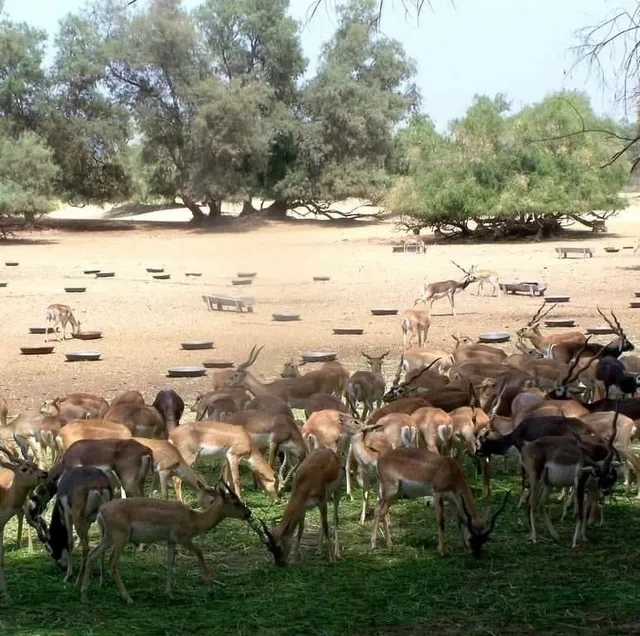
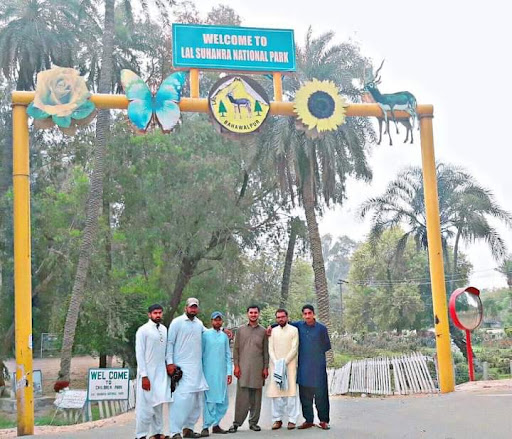
Lal Suhanra is a national park of Pakistan situated in Bahawalpur district of Punjab province, which is one of the largest nationals parks in South Asia. Lal Sohanra is spread over 162568 acres and is notable for the diversity of its landscape, which includes areas of desert, forest and wetland. The park itself is situated some 35 kilometres east of Bahawalpur and presents a synthesis of forest and desert life. It occupies land on both sides of Desert Branch canal, and is spread over an area of 127,480 acres (51,368 hectares) - out of which 20,974 acres (8,491 hectares) are green land (irrigated plantations), 101,726 acres (40,942 hectares) are dry land (desert), and 4,780 acres are wet land (ponds and lakes). The park's terrain is generally flat, interspersed with sand dunes measuring between 1 and 6 meters in height and occupying as many as thousands of acres apiece.The national park was established on 77480 acres in 1972 for conservation and propagation of endangered fauna and flora in cholistan.An area of 50000 acres was further added in 1984 & 35088 acres was added in year 2000 making the total area of lal suhanra national park 162568 acres. Survey regarding transfer of an additional area of 28800 acres has been completed. The management objectives of the national park include; conservation of native fauna & flora species of Cholistan, particularly endangered one e.g. Chinkara, Blackbuck, Blue bull and others to ensure a sustained wildlife management of threatened wildlife species in the country. Encourage scientific studies on native flora and fauna species of Cholistan and to restore and improve native gene pool specially in Black buck, Chinkara...
Read morePark Name: Lal Suhanra National Park
Rating: 4.5/5 stars
Review:
"Lal Suhanra National Park is a hidden gem! Located in the heart of Punjab, Pakistan, this park is a must-visit for nature lovers and adventure seekers. The park's diverse landscape, which includes forests, grasslands, and wetlands, is home to a wide variety of wildlife, including rhinos, lions, and numerous bird species.
The park's main attractions include:
The beautiful Lal Suhanra Lake, which is perfect for boating and birdwatching The Rhino Sanctuary, where you can see these majestic creatures up close The stunning views from the top of the park's many hills
The park's infrastructure is well-maintained, with clean facilities and friendly staff. However, be prepared for crowds and long queues during peak season.
Overall, Lal Suhanra National Park is a great place to connect with nature and experience the beauty of Pakistan's wildlife. Don't miss it!"
Pros:
Diverse landscape and wildlife Well-maintained infrastructure Friendly staff Beautiful lake and hills Rhino Sanctuary
Cons:
Crowds and long queues during peak season Limited dining options
Tips:
Plan ahead and book accommodations and tours early Bring sunscreen, hats, and comfortable shoes Respect wildlife and maintain a safe distance Don't miss the stunning sunsets! Best Neutral park.bwst for picnic.best living habitat for...
Read moreLal Suhanra is a national park in Pakistan that is situated in the Bahawalpur district of Punjab province. It is one of South Asia’s largest nationals parks, and is a UNESCO declared Biosphere Reserve. Lal Sohanra is notable for the diversity of its landscape, which includes desert, forest and wetland ecosystems.
Quick facts: Location, Nearest city …
Geography and wildlife
The park itself is situated some 35 kilometres east of Bahawalpur and presents a synthesis of forest and desert life. It occupies land on both sides of Desert Branch canal, and is spread over an area of 127,480 acres (51,368 hectares) - out of which 20,974 acres (8,491 hectares) are green land (irrigated plantations), 101,726 acres (40,942 hectares) are dry land (desert), and 4,780 acres are wet land (ponds and lakes). The park's terrain is generally flat, interspersed with sand dunes measuring between 1 and 6 meters in height and occupying as many as thousands of acres apiece.
The biosphere reserve is crossed by the dried-up bed of the Ghaggar-Hakra River and comprises Patisar Lake and irrigated land. Officials said that indigenous trees like Indian rosewood and Acacia karroo will be planted over 1,212 acres of barren land in the...
Read more