Jamrud Fort: A Historical Marvel
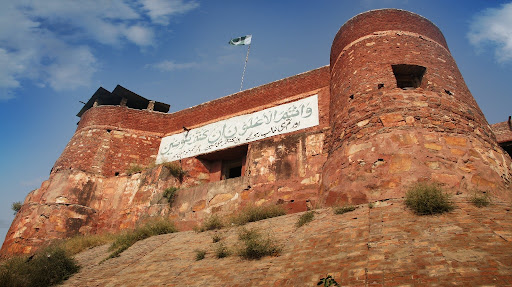
Located at the entrance of the Khyber Pass, Jamrud Fort is a historical fortress that has stood the test of time. Built in 1836 by Hari Singh Nalwa, the fort has played a significant role in the region's history, serving as a strategic military outpost and a symbol of power.
Key Features:
Historical Significance: Jamrud Fort has witnessed numerous battles and sieges, including the famous Battle of Jamrud in 1837. Architectural Appeal: The fort's design reflects the traditional Sikh architecture of the time, with thick walls and imposing bastions. Panoramic Views: The fort offers breathtaking views of the surrounding landscape, including the Khyber Pass and the nearby mountains.
Visitor Experience:
Exploring the Fort: Visitors can explore the fort's imposing walls, bastions, and gates, getting a glimpse into the region's rich history. Learning Opportunities: The fort provides a unique opportunity to learn about the region's history, culture, and architecture. Photography: The fort's picturesque surroundings and imposing architecture make it a photographer's paradise.
Challenges:
Preservation: The fort's preservation is a concern, with parts of the structure showing signs of wear and tear. Accessibility: The fort's location and terrain can make it challenging for visitors with mobility issues.
Rating: 4.5/5 stars
Recommendation: Jamrud Fort is a must-visit destination for history enthusiasts, architecture buffs, and anyone interested in exploring the region's rich cultural heritage. Visitors should be prepared for a moderate hike to reach the fort and take necessary precautions to ensure their safety.
Overall, Jamrud Fort is an iconic historical landmark that offers a glimpse into the region's rich history and cultural heritage. With proper preservation and maintenance, the fort can continue to attract visitors from around the world, promoting tourism and...
Read moreThe Jamrud Fort is located beside Bab-e-Khyber at the entrance to the Khyber Pass from the Peshawar side in the district of Khyber in Khyber Pakhtunkhwa, Pakistan. In October 1836, Jamrud was occupied by the Sikh Empire. Sardar Hari Singh Nalwa (1791–1837), the well-known Sikh general, proposed to build a big fort at Jamrud. The proposal was opposed; nevertheless the foundation of the fort that has survived was laid by General Hari Singh Nalwa on 6 Poh 1893 Sambat (18 December 1836) and the construction was completed in 54 days. "Jamrud...noted for its fort built with 10 feet (3 m) thick walls c.1836 by the Sikh Hari Singh Nalwa, one of Ranjit Singh's generals, was originally named Fatehgarh to commemorate the Sikh victory over the disunited tribes." Early in 1837, the Sandhawalia Jat ruler Maharaja Ranjit Singh's (1790–1839) grandson, Prince Nau Nihal Singh, was to be married. Hari Singh Nalwa sent his forces to Lahore for this historic celebration. At this time, Mr Fast, an Englishman, previously in the service of the British India Government, passed through Jamrud on his way to Kabul. En route he encountered Mohammad Akbar Khan, son of Dost Mohammad Khan. When Akbar Khan learnt that the fort at Jamrud was unprotected, he decided to attack. The battle between the Afghans and the Sikhs was fought on 30 April 1837. The loss suffered in this battle by the Sikhs was indeed heavy. Hari Singh Nalwa had sent out an appeal for help to the Maharaja to dispatch reinforcements from Lahore post haste, however his letter was not forwarded to the Maharaja by the Dogra chiefs. Reinforcements could not reach in time and Nalwa laid down his life in the battlefield. When the reinforcements arrived, the Sikhs managed to hold the fort and force the Afghan forces to retreat...
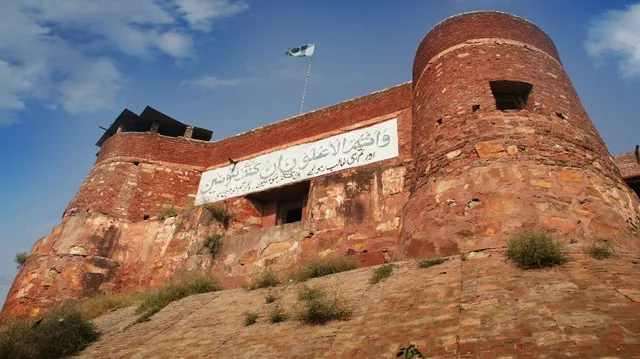
Read moreJamrud Fort, a historical gem shrouded in tales of the past, is said to have roots dating back over 500 years, attributed to the Sikh rule during their dominance in the Northwestern region of the Indian subcontinent. While the specifics of its origins remain entrenched in local folklore, the fort now serves as a stronghold for Law Enforcement Agencies (LEAs).
Regrettably, Jamrud Fort stands inaccessible to the general public, veiled from sightseers and history enthusiasts. Its gates remain closed to casual visitors, emphasizing the need for prior arrangements or permissions from the relevant authorities for those eager to explore its historical significance.
Although lacking open access, the fort echoes a remarkable historical narrative, symbolizing an era of power shifts and strategic fortification in the region. The scarcity of detailed information available to the public underscores the necessity of engaging historians or experts to unravel its intricate past and significance.
The legacy of Jamrud Fort persists through oral traditions and tales passed down through generations, encapsulating the essence of a bygone era marked by military might and strategic dominance. Its current utilization by LEAs renders it an enigmatic and restricted landmark, reinforcing the importance of seeking official permissions before attempting to explore its...
Read more