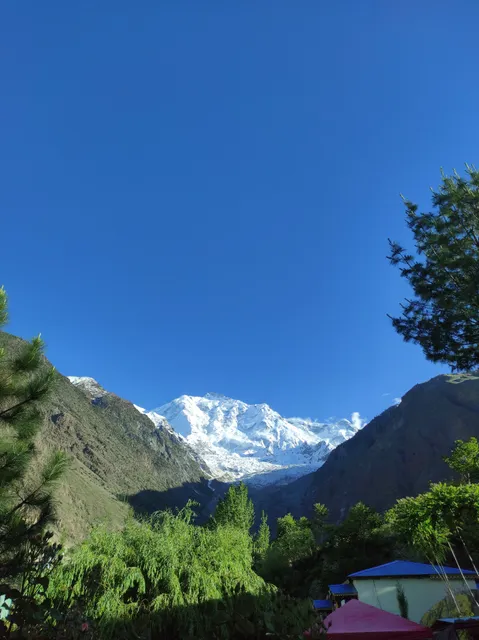
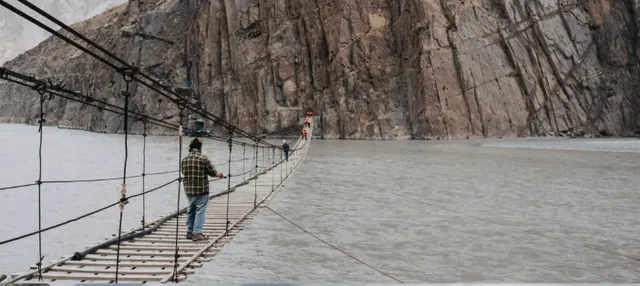
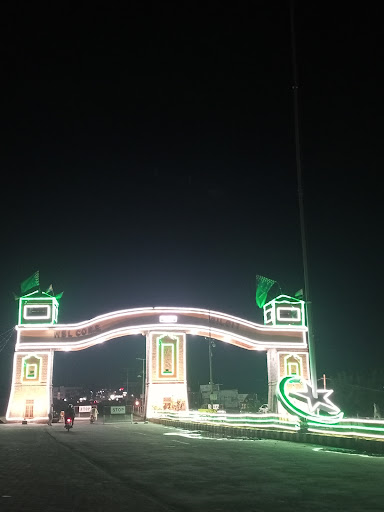
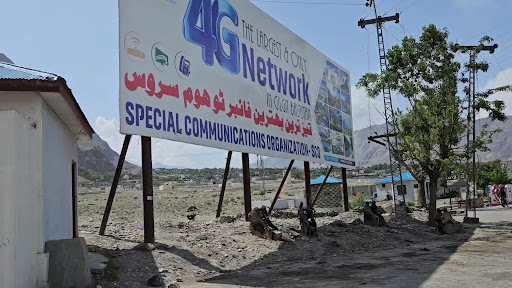
The term "Bab-e-Gilgit" (meaning "Gateway of Gilgit") is not a historically significant term in the same way as other periods or events in the history of Gilgit-Baltistan. While "Gilgit" itself is a major geographical and political area, "Bab-e-Gilgit" is a more recent or colloquial way of referring to the entrance or gateway to the Gilgit region.
Here's a breakdown of Gilgit-Baltistan's history and how it relates to the concept of a "gateway":
Early History and Indigenous Influences:
Early Colonization:
Archaeological evidence suggests that Gilgit-Baltistan was inhabited as early as 2000 BCE.
Proto-Iranian Dards:
A theory suggests that a proto-Iranian people, known as Dards, migrated to the region and established their rule.
Kushan Influence:
Between the 3rd and 6th centuries CE, the Kushan Empire exerted influence, appointing Dard rajas as local administrators.
Buddhism's Arrival:
Buddhism reached the region around the 3rd century CE.
Chinese and Tibetan Influence:
The region was under the suzerainty of the Tang dynasty of China and later became a part of the Tibetan Empire.
Islamic Influence and Later Rule:
Islam's Entry:
Islam entered Gilgit-Baltistan through Kashmir in the 15th century, mainly through Sufi preachers.
Maqpon Kings:
Maqpon Kings played a significant role in the region's Islamic history, leading to the separation of the Balti people from their Buddhist Ladakhi neighbors.
Dogra Rule:
After the Anglo-Sikh wars, the region came under the rule of the Dogra Maharaja of Jammu under British paramountcy.
Gilgit Rebellion:
During the First Kashmir War, Gilgit joined Pakistan through a rebellion.
Gilgit's Significance as a Gateway:
Strategic Location:
Gilgit is situated at the crossroads of several mountain ranges and acted as a gateway to other parts of the world.
Trade and Cultural Exchange:
The region has historically served as a trade and cultural exchange hub between various empires and regions.
Modern Concept:
The term "Bab-e-Gilgit" is likely used in a more modern context, especially when referring to the main entrance or entrance point to the Gilgit region, perhaps highlighting its role as a gateway to the surrounding beauty.
In summary, while "Bab-e-Gilgit" doesn't have a specific historical significance in the way other historical periods or events do, the region of Gilgit has always been known for its strategic location and its role as a gateway between different cultures...
Read more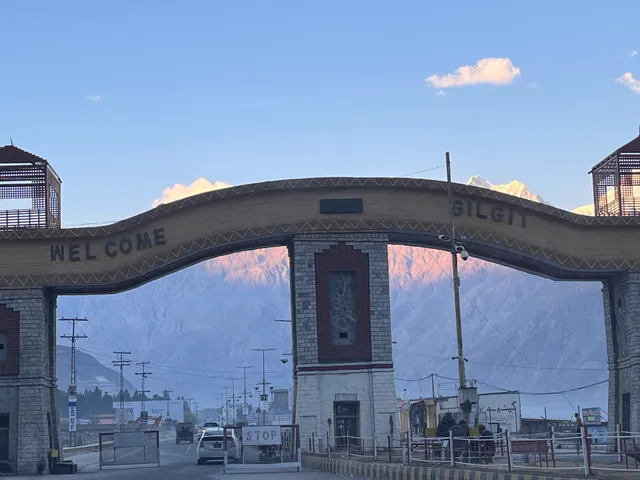
 Learn more insights from Wanderboat AI.