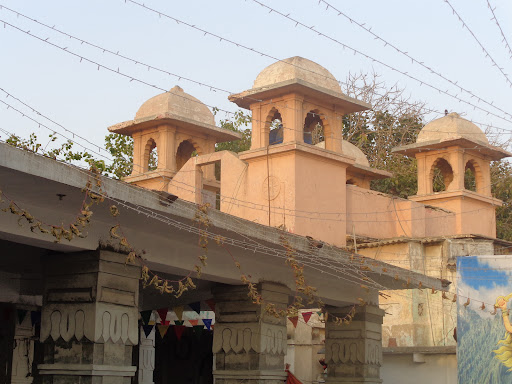
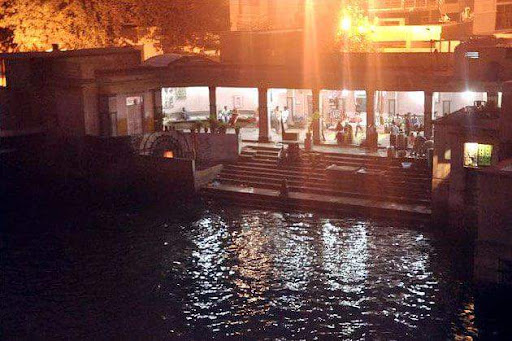
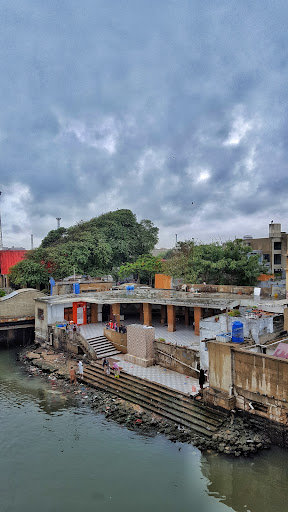
Shri Laxmi Narayan Mandir is a Hindu temple located in Karachi, Pakistan. According to the Pakistan Hindu Council, the temple was constructed around 200 years ago and is an important worshiping site for the Hindus of the local community. The Mandir is one of the oldest operating temples and the only one situated at the banks of a creek in Karachi.
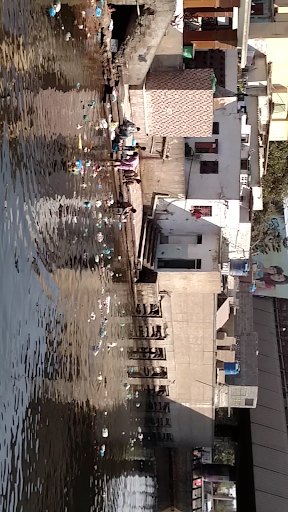
Narayan Mandir is located under the Native Jetty Bridge, a landmark in Karachi, in the Sindh province of Pakistan. The temple overlooks the Arabian Sea which is an important place for many Hindu rituals.
The temple is primarily devoted to the Hindu goddess Lakshmi; however, it is also home to statues of Hanuman and Sai Baba of Shirdi. Main festivals celebrated in the temple are Ganesh Chaturthi, the birthday of Ganesha, and Raksha Bandhan. Hindus come to the temple to make offerings to the gods and to perform death rituals of Karni. The temple is a sacred place for offering Śrāddha and placing murtis of Goddess Durga (after performing garba for nine days) and idols of Ganesha in the sea at the end of festivals of Nao Ratree and Ganesh Chaturthi respectively. Hindus dip and take baths in the waters of the Arabian sea for ritual purification. During monsoon season, Hindu women come to the temple for fasting and to pray for the well-being of their husbands.
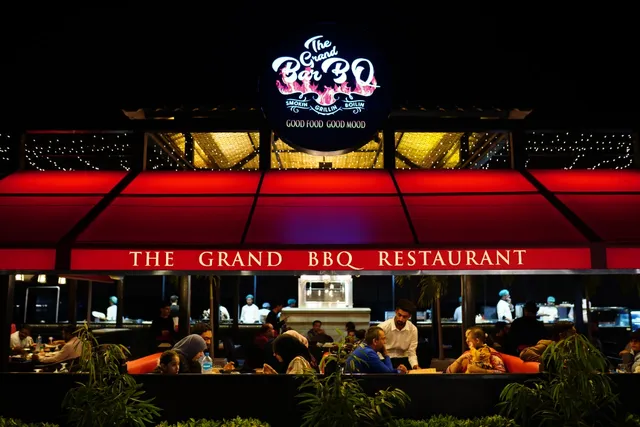
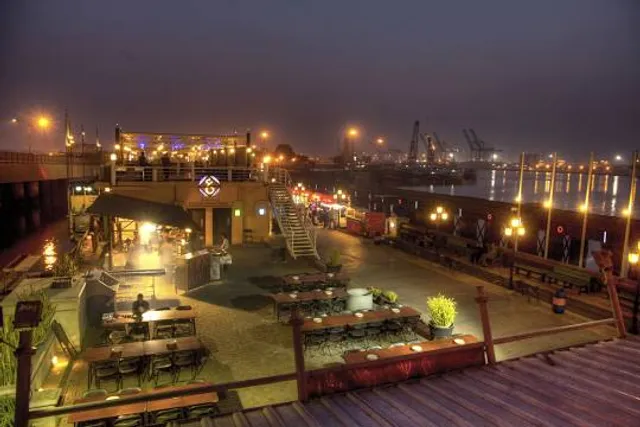
Due to port development activities and construction work near the site, the temple's access to seawater and its integrity are threatened. In September 2012, after a petition was filed by the local Hindu community, the Sindh High Court issued an order restraining the Karachi Port Trust from demolishing the temple. The petitioner believed that Mukesh Chawala, a member of the Hindu panchayat and provincial minister of excise and taxation, was responsible for the construction near the temple site. Hindu families in the region belonging to the scheduled caste believed they were being forcefully re-settled due to "corporate greed and a discriminatory caste system" by influential Hindu leaders and city authorities. The new developmental plan includes construction of an entertainment complex which will encroach upon the temple courtyard. In 1993, the temple was desecrated as revenge after the demolition of Babri...
Read moreShri Laxmi Narayan Mandir لکشمی نارائن مندر) is a Hindu temple located in Karachi, Pakistan. According to the Pakistan Hindu Council, the temple was constructed around 200 years ago.......and is an important worshiping site for the Hindus of the local community. The Mandir is one of the oldest operating temples and the only one situated at the banks of a creek in Karachi.
Due to port development activities and construction work near the site, the temple's access to seawater and its integrity are threatened. In September 2012, after a petition was filed by the local Hindu community, the Sindh High Court issued an order restraining the Karachi Port Trust from demolishing the temple. The petitioner believed that Mukesh Chawala, a member of the Hindu panchayat and provincial minister of excise and taxation, was responsible for the construction near the temple site.......
Hindu families in the region belonging to the scheduled caste believed they were being forcefully re-settled due to "corporate greed and a discriminatory caste system" by influential Hindu leaders and city authorities. The new developmental plan includes construction of an entertainment complex which will encroach upon the temple courtyard.... In 1993, the temple was desecrated as revenge after the demolition of Babri...
Read moreThe temple is over 200 years old, according to Kailash, who is the caretaker of the mandir and resides on premises. The original structure was made of wood, but later it got destroyed and colonial influences seeped in to form a structure of cement and stone. The temple was damaged in arson following the Baburi masjid riots in 1990s and repaired. The temple complex had another building which stood parallel to the current remaining structure until late 2000s, according to Kailash, when the neighbouring Port Grand encroached upon the temple, destroyed it and incorporated the area into its premises. The current mandir structure that now remains was originally a "Gaht" or a bath house. It had five gates, four of them reserved for women, while one reserved for men. This place also served as a centre for cremation ceremonies. With changing times, the ghat evolved into a mandir since the main structure was razed.
Mandir was renovated and new compound was recently constructed after Port Grand took over the other structure and the Hindu community filed a law suit against them, as a means of compensation by...
Read more