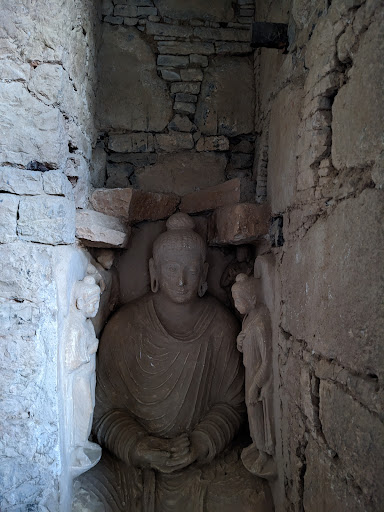
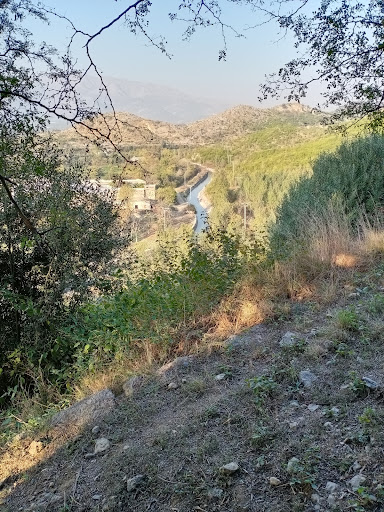
Nestled in the picturesque landscape of Pakistan, the Jaulian Buddhist Stupa & Monastery is a hidden gem that beckons to all seekers of serenity and history. Visiting this charming place was a journey into the heart of Buddhism's rich heritage, and it left an indelible mark on my soul.
Upon arriving at Jaulian, I was immediately struck by the overwhelming sense of peace that enveloped the area. The tranquil ambiance and the timeless beauty of the surroundings made it clear that I was about to embark on a unique and spiritual journey. The site, dating back to the Gandhara period, stands as a testament to the deep-rooted historical significance of Buddhism in the region.
The Jaulian Stupa, a magnificent structure, took my breath away. Its simple yet elegant design, surrounded by lush greenery, exudes an aura of tranquility. The stupa's existence is a silent homage to the ancient wisdom and devotion that once thrived here. As I walked around the stupa, I couldn't help but be awestruck by the intricate carvings and the aura of mysticism that lingers in the air.
The Monastery at Jaulian is equally captivating. The well-preserved remains of this ancient learning center offer a fascinating glimpse into the daily lives of Buddhist monks who resided here centuries ago. Exploring the dimly lit meditation cells, living quarters, and common areas, I felt like a time traveler, transported to a place where spiritual growth and intellectual pursuits were paramount. The centuries-old frescoes and inscriptions that adorn the monastery's walls are a testament to the artistry and dedication of the monks.
One of the most remarkable aspects of the Jaulian Buddhist Stupa & Monastery is its panoramic view of the Taxila Valley. The site is perched on a hill, offering visitors a breathtaking vista of the surrounding landscape. I found myself lost in the beauty of the valley, as the wind gently rustled the leaves of the trees and the distant mountains painted a mesmerizing picture against the sky. It was a moment of pure connection with nature and history, a feeling that is difficult to put into words.
As I roamed the grounds, I couldn't help but notice the serenity that seemed to permeate the air. The site's remote location has preserved its tranquility and allowed visitors to connect with their inner selves. It's a place where you can escape the hustle and bustle of daily life and find solace in the simplicity and grandeur of the past.
The Jaulian Buddhist Stupa & Monastery serves not only as a historical treasure but also as a sanctuary for inner reflection. It's a place where one can sit quietly, meditate, and experience a sense of unity with the universe. Whether you are a history enthusiast, a spiritual seeker, or simply a nature lover, Jaulian offers a profound experience that is not to be missed.
In conclusion, my visit to the Jaulian Buddhist Stupa & Monastery was a journey of self-discovery, a pilgrimage through time, and a deep appreciation for the profound spiritual and historical significance of this site. I wholeheartedly recommend it to anyone seeking a peaceful retreat, a glimpse into the past, or a connection with the roots of Buddhism. Jaulian is a place that touches the heart and soul, leaving you with memories that will...
Read moreJaulian Monastery, located near Taxila in Pakistan, is a significant archaeological site and a UNESCO World Heritage Site since 1980. Here's an overview of Jaulian Monastery based on the information provided:
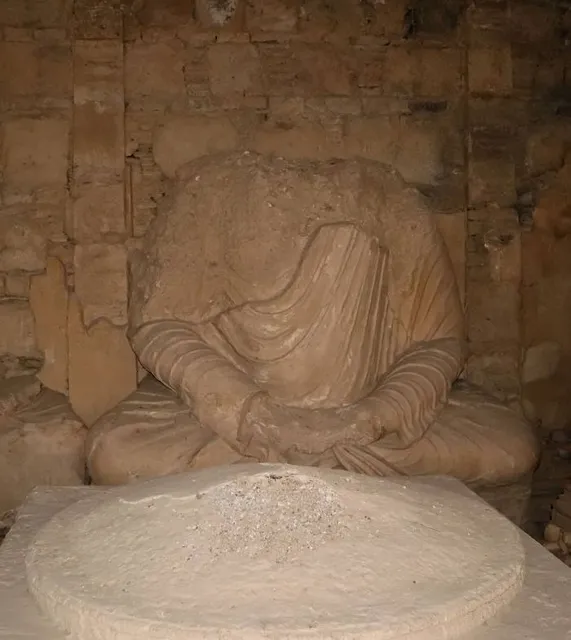
Overview: Jaulian Monastery is situated on a hilltop about 7 km from Taxila Museum, at an elevation of 92 meters. It dates back to the Kushan period, established in the 2nd century CE. Initially, it served as a prominent center of Buddhist learning and monastic life, akin to an ancient university attracting students from across the subcontinent, Central Asia, Southeast Asia, and China.
Architecture and Layout: The monastery complex features a central stupa surrounded by twenty-seven smaller votive stupas. It includes two courtyards with monk cells and numerous chapels, showcasing elaborate stucco sculptures and architectural details. The monastery layout indicates it was a structured educational institution with facilities for living quarters, assembly halls, and manuscript production areas.
Artifacts and Sculptures: Jaulian is renowned for its well-preserved stucco sculptures and artifacts, many of which are housed in Taxila Museum. Notable discoveries include fragments of Buddhist manuscripts in Sanskrit, Brahmi inscriptions dating back to the 5th century, and coins from the late Kushan and Indo-Sassanian periods. A unique sculpture of Buddha with a hole at the navel, known as the "Healing Buddha," attests to the site's religious significance for pilgrims seeking spiritual and physical healing.
History and Decline: Founded during the Kushan Empire, Jaulian flourished as a center of Buddhist culture until its decline in the 5th century CE, likely due to invasions and subsequent persecutions. The site, like many others in the Taxila Valley, fell into disuse and abandonment over time.
Excavations and Preservation: Excavations at Jaulian were conducted in 1916-1917 by Mr. Natesa Aiyar under the direction of Sir John Marshall, revealing insights into ancient Buddhist monastic life and architecture. The site's excavation and subsequent conservation efforts have contributed significantly to understanding the Gandharan period's cultural and religious practices.
Jaulian Monastery remains a testament to the rich Buddhist heritage of the region, attracting visitors and scholars interested in exploring its historical significance and architectural marvels.
If you need more specific information or have further questions about Jaulian Monastery or Taxila's archaeological sites, feel...
Read moreJaulian (Urdu: جھولیاں) are the ruins of an ancient Buddhist monastery in Haripur District, Khyber Pakhtunkhwa province, Pakistan. The ruins are also quite close to Taxila in Punjab.
The ruins at Jaulian date from the fifth century CE and consist of two main parts. These are 1) the main stupa and 2) the monastery and university of Jaulian. The ruins are situated on a mountain top. The form and building of the university at Jaulian is similar to that of Mohra Muradu, about 1 kilometre away.
The main stupa at Jaulian is badly damaged. It is surrounded by 21 votive stupas. Some experts think that a few of the votive stupas are actually tombs of revered monks. The statues at the stupas are mostly preserved. A number of these have been removed for exhibitions at museums. The original structure of the building of the Stupa along with the plaster is preserved at some places.
A statue of buddha with a hole in the navel is an odd artifact. It is called the "healing buddha". Pilgrims would put their fings in the navel hole and pray for the ailment of the patients. The inscription preserved under the statue shows that it was given by a friar "Budhamitra Dharmanandin".[1] This inscription and a couple of others at this site show that the script was still used at Taxila in the fifth century CE.
The monastery contained a number of rooms for the students in addition to a large pool for washings. There are 28 such rooms. The monastery consisted of a second floor with another 28 rooms. Stairs of stone to the upper floor are still preserved. Statues of Buddha are present in front of some of the rooms.
Each room had a window for supply of fresh air and as a source of some light and a niche to hold the lamp of the student. The windows are small at the outer end of the wall and become enlarged at the inner end to keep wild animals out. The rooms were plastered and decorated with painting. The outer wall of the monastery is well preserved, which is very smooth and straight.
The monastery included a kitchen. A stone for grinding spices for the food is well preserved as well as two stone mills that were used to grind different types of grains. A hole in one of the brickstones of the kitchen wall was used for placing large spoons.
The monastery was burnt in 455 CE by the White Huns and...
Read more