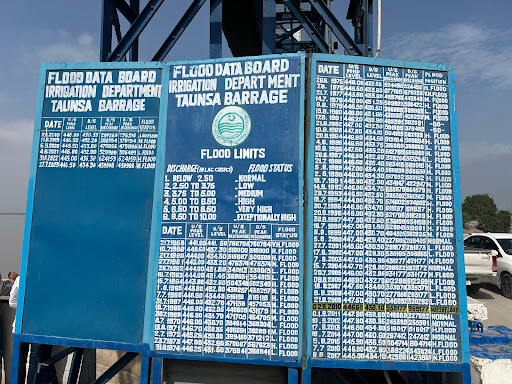
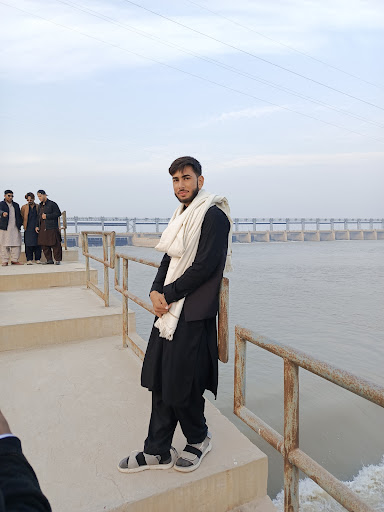
Taunsa Barrage, situated on the majestic River Indus, is a vital infrastructure located approximately 39 km south of Taunsa Sharif town and 17 km northwest of Kot Addu town. Constructed between 1953 and 1958, this barrage was meticulously designed to regulate irrigation for flood-prone regions on both banks of the river, as well as to develop new agricultural lands in the Thal desert area. Its strategic significance extends beyond irrigation, serving as a crucial link between regions through its infrastructure for road, rail, gas, oil, telephone lines, and high voltage transmission.
Originally constructed with 65 bays spanning 4,346 feet between the abutments, Taunsa Barrage facilitates a discharge capacity of 1,000,000 cusecs, ensuring efficient water management. It plays a pivotal role in the region's agriculture, commanding a total area of 2.351 million acres (951,400 hectares) through its network of canals.
The canal system includes the Muzaffargarh Canal, completed in 1960, and the DG Khan Canal, which continued construction until later years after its partial opening in 1958. The Taunsa-Panjnad Link Canal, added in 1970 under the Indus Basin Project, connects the Indus River waters to the Chenab River, bolstering irrigation capabilities in the Panjnad Barrage command area during water scarcity periods.
Taunsa Barrage holds historical significance, inaugurated on March 3, 1959, by then President General Ayub Khan. It remains a linchpin of agricultural prosperity in Punjab and Balochistan provinces, exemplifying Pakistan's commitment to harnessing water resources for socio-economic development. The recent addition of the Kachhi Canal head regulator further enhances its capacity, enabling an additional 6,000 cusecs for irrigation in the Kachhi plain of Balochistan.
In essence, Taunsa Barrage stands as a testament to engineering prowess and strategic foresight, ensuring sustainable water supply for agriculture and fostering regional connectivity and development...
Read moreDuring my industrial visit from NFC IET Multan, I had an incredible experience witnessing the engineering marvel of Taunsa Barrage, located on the Indus River in Punjab, Pakistan. It was a significant moment in my life as I got the opportunity to observe the massive flow of water and understand the intricate working of this crucial structure. The sheer scale of the barrage and its efficient functionality left me truly impressed.
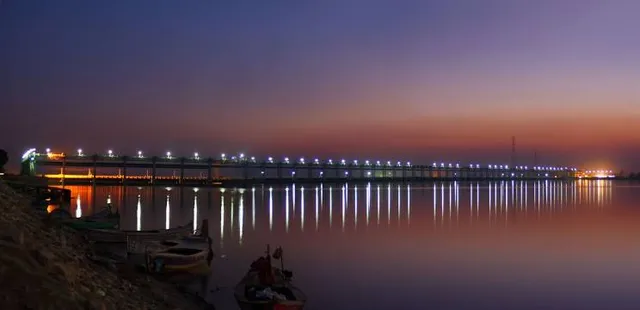
Taunsa Barrage, constructed in 1958, plays a vital role in regulating water for irrigation, flood control, and hydroelectric power generation. It is a key component of Pakistan’s water management system, supplying water to multiple canals, including the Taunsa-Panjnad Link Canal and the Dera Ghazi Khan Canal. The barrage is designed to manage heavy water flows and ensure a steady supply for agricultural and domestic use.
One of the most fascinating aspects was the way the barrage regulates water flow, ensuring proper distribution and management. The well-maintained infrastructure and smooth operational mechanisms demonstrated the expertise involved in controlling water resources. Seeing the gates open and close with precision to manage water levels was an eye-opening experience, highlighting the importance of such structures in flood control, irrigation, and sustainable water distribution.
Apart from its technical aspects, the sight of the vast water body was breathtaking. The calm yet powerful flow of the Indus River was mesmerizing, making me appreciate the balance between nature and engineering. It was also a learning experience, as I gained deeper insights into how Taunsa Barrage contributes to agriculture and local communities by ensuring a steady water supply.
Overall, this industrial visit was not just educational but also a moment of realization about the significance of water management systems. The Taunsa Barrage’s outstanding functionality, coupled with the scenic beauty of the surroundings, made this visit...
Read moreTaunsa Barrage is an incredible engineering marvel and a testament to human ingenuity. Located on the mighty Indus River in Pakistan, it serves as a critical irrigation and water management structure. Its primary purpose is to divert water to the extensive canal system, supporting agriculture in the region and benefiting millions of people.
Visiting the barrage is an awe-inspiring experience. The sheer scale of the structure and the precision in its design are remarkable. The serene surroundings, with the flowing river and the lush greenery of the canals, make it a scenic spot as well. The barrage also plays a vital role in flood control and sustaining aquatic biodiversity.
One of the most impressive aspects is its historical significance, as it was constructed in the 1950s. Despite the passage of time, it continues to be a backbone for the agricultural economy in Punjab and Sindh.
However, there are challenges, such as siltation and maintenance needs. A visit to Taunsa Barrage is not only a reminder of its importance but also an encouragement to support conservation and modernization efforts to ensure its sustainability for future generations.
Rating: 4.5/5 Verdict: A must-visit landmark for those interested in infrastructure, nature,...
Read more