HTML SitemapExplore
logo
Find Things to DoFind The Best Restaurants

Kot Diji Fort — Attraction in Kot Diji Taluka

Name
Kot Diji Fort
Description
The ancient site at Kot Diji was the forerunner of the Indus Civilization. The occupation of this site is attested already at 3300 BCE. The remains consist of two parts; the citadel area on high ground, and outer area. The Pakistan Department of Archaeology excavated at Kot Diji in 1955 and 1957.
Nearby attractions
Nearby restaurants
Nearby hotels
Related posts
Keywords
Kot Diji Fort tourism.Kot Diji Fort hotels.Kot Diji Fort bed and breakfast. flights to Kot Diji Fort.Kot Diji Fort attractions.Kot Diji Fort restaurants.Kot Diji Fort travel.Kot Diji Fort travel guide.Kot Diji Fort travel blog.Kot Diji Fort pictures.Kot Diji Fort photos.Kot Diji Fort travel tips.Kot Diji Fort maps.Kot Diji Fort things to do.
Kot Diji Fort things to do, attractions, restaurants, events info and trip planning
Kot Diji Fort
PakistanSindhKot Diji TalukaKot Diji Fort

Basic Info

Kot Diji Fort

Taluka, Kot Diji, 66020, Pakistan
4.5(826)
Open until 6:00 PM
Save
spot

Ratings & Description

Info

The ancient site at Kot Diji was the forerunner of the Indus Civilization. The occupation of this site is attested already at 3300 BCE. The remains consist of two parts; the citadel area on high ground, and outer area. The Pakistan Department of Archaeology excavated at Kot Diji in 1955 and 1957.

Cultural
Scenic
Adventure
attractions: , restaurants:
logoLearn more insights from Wanderboat AI.
Phone
+92 21 99212126
Website
sindhculture.gov.pk
Open hoursSee all hours
Tue8 AM - 6 PMOpen

Plan your stay

hotel
Pet-friendly Hotels in Kot Diji Taluka
Find a cozy hotel nearby and make it a full experience.
hotel
Affordable Hotels in Kot Diji Taluka
Find a cozy hotel nearby and make it a full experience.
hotel
The Coolest Hotels You Haven't Heard Of (Yet)
Find a cozy hotel nearby and make it a full experience.
hotel
Trending Stays Worth the Hype in Kot Diji Taluka
Find a cozy hotel nearby and make it a full experience.

Reviews

Get the Appoverlay
Get the AppOne tap to find yournext favorite spots!
Wanderboat LogoWanderboat

Your everyday Al companion for getaway ideas

CompanyAbout Us
InformationAI Trip PlannerSitemap
SocialXInstagramTiktokLinkedin
LegalTerms of ServicePrivacy Policy

Get the app

© 2025 Wanderboat. All rights reserved.
logo

Reviews of Kot Diji Fort

4.5
(826)
avatar
4.0
6y

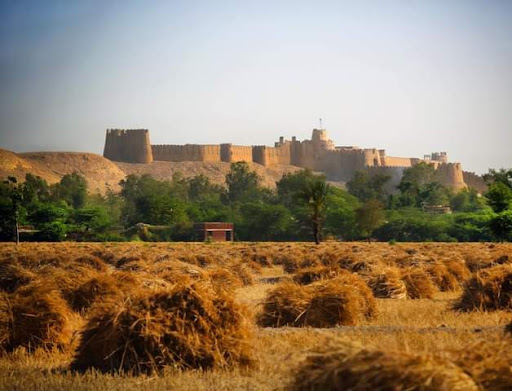
Kot Diji Fort, meaning "Fort of the Daughter" and formally known as Fort Ahmadabad, dominates the town of Kot Diji in Khairpur District, Pakistan about 25 miles east of the Indus River at the edge of the Nara-Rajisthan Desert and 22 km south of Khairpur. The fort was built between 1785 to 1795 by Mir Sohrab Khan Talpur, founder of the Kingdom of Upper Sindh in 1783. In addition to the fort, a 5 kilometer, 12 feet wide mud wall was built around the city. This defensive wall had bastions throughout its length and a huge iron gate served as the city's only entrance. As many as ninety canon guns of topkhana were deployed on the fort during Talpurs' times.

Kot Diji was located at the edge of the desert which provided an advantage over enemies marching from the east, as an exhausted army could be met before it could take supplies and water from the irrigated lands. In fact, the Mirwah canal was built in 1790 specifically to irrigate the lands west of the fort and bring water to the military base. It was the strongest of the 20 or so Talpur forts and was named after the Persian architect Ahmed, who designed it. According to folklore it took 30 years to build.

The fort was considered invincible and served as the residence of the Mirs of Khairpur in times of peace. It is, therefore, the ancestral home of royal house. During war time the zenana (female members of the royal family), would be shifted to Shahgarh Fort (formerly within the realm but since 1843, after the conquest of the rest of Sindh, it is in the Thar and Jaisalmer desert in India). When the zenana moved into the comfort of palaces, it stood mainly as a decorated reminder of more violent times. Throughout its whole history, however, Fort Kot Diji was never attacked.

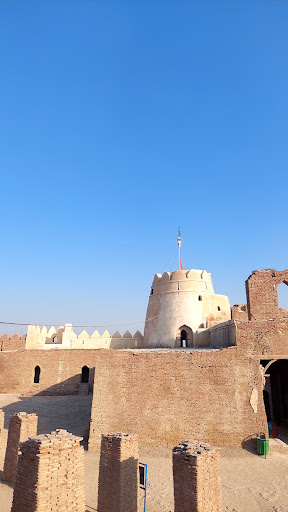
Construction Kot Diji is a very practical fort constructed on a limestone hill with kiln-baked bricks. Bricks were used because the locally available limestone rock was very brittle and would have shattered easily on impact with a cannonball. The hill is about 110 feet high, above which the walls of the fort rise another 30 feet. It has three strategically placed towers about 50 feet tall.

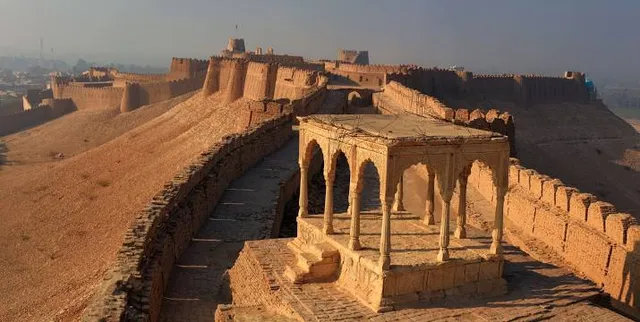
The fort is over half a kilometer long. Its walls are segmented by about 50 bastions, and its 1.8 km outer perimeter wall identically follows the double crescent-shaped contours of the hill it stands on. This allows the fort to surround the attacking enemy on three sides on the west front. On the east, where the entrance lies, the fort is divided by three elephant-proof gates into three overlapping levels, so that the first two levels can be attacked by the next level above them in the event of the lower level being overrun by the enemy. The first gate is not a prominent portal but rather an indirect entry so that the gate cannot be rammed on a charge. The walls and bastions have arrow slits in them, allowing defenders to attack their enemy from two levels: from the battlement on top and from within the wall.

The fort was built at a time when cannons had become common and its design and position reveals that. It includes a multitude of stations for cannons and, because it is positioned high on a narrow ridge, enemy cannons would have had to fire at a great distance, permitting little accuracy. Cannonballs could either hit the hill or perimeter or would simply fly over the fort and fall on the enemies' own forces on the other side.

Role under the British Empire The Fort was allocated the role of central military base for the Kingdom, especially to resist...

   Read more

avatar
5.0
1y

KOT DIJI FORT

Hundreds of years ago, at the edge of a desert in Sindh, the Talpurs constructed a pompous fort atop a hill. This emblematic fort, dominating the town of Kot Diji in Khairpur district and known as Kot Diji Fort, was built between 1785 to 1795. Driving towards Khairpur district from the National Highway, it is hard to miss this fort’s opulence, breaking the monotony of the skyline The space is further guarded by two heavy bastions keeping space to trap any proceeding army aiming to destroy the fort by attacking from the musketry holes and battlements on the top. The access through the bastions is from the east, while the wooden gate with heavy iron spikes totalling 234, stands towards the western corner of the northern wall. These spikes ensured that no heavy contingent, or elephants, could be employed to break open the wooden gates. And through its history the fort has never been attacked. Kot Diji is constructed on a limestone hill with kiln-baked bricks. Apparently the bricks were used since they were locally accessible and limestone rocks were believed to be very brittle and would have shattered easily upon impact with a canon ball. The hill is about 110 feet high, above which the walls of the fort rise another 30 feet. It has three strategically placed towers about 50 feet tall. ome of these bastions have also been named in order to form an identity. There is one bastion known as Fateh thul that is located beside the third gate while climbing from below from the Shahi Gate. This thul or tower is so strategically located that most of the fort, above and below this point is in visual contact for better security. The other bastions are named Saffan Safa and Mailk Maidan Burj. These are located on the western side. The two cannons, Saffan Safa and Malik Maidan used to be mounted here. The Shaeed Badshah Burj is located towards the north-western side of art of the fort. At the foot this bastion is the tomb of one Shaheed Badshah (the martyred king). Another bastion, which stands towards the eastern corner of the fort facing towards the direction of Jaisalmer in the desert, is called Jaisalmer thul. Another bastion is the Maryam Thul, which used to have the cannon named Maryam that is now put on display at the crossings on the National Highway in Khairpur city. At the foot of one of the bastions is the tomb of one Shaheed Badshah (martyred king). On the top level plain the area of the fort is provided with sort of galleries cells inside the fortification wall. These ghulam gardish and might have been meant for those who attended the royalty. There is also a pond, which had been used for storing sweet water. This pool is about 3.75 metres deep and measures around 11 metres in length and a little less than seven metres in width. Almost facing the third gate are some roofless rooms beside the ghulam gardish. These were used as ammunition depot or what is locally known as barood khano. Mir Sohrab Khan made this fort his abode a few years before his death, but soon handed over the power to his sons. In January 1843, British troops also stayed here at a time when Charles Napier was on his military adventure to invade and conquer Imam Garh. If any of you ever plan to visit Khairpur, do make it a point to make this your first stop. And if you live in Sindh, you must explore this fort...

   Read more
avatar
5.0
9y

kot diji is the pre harrapan siteed but the fort is not so old it was construct around 16th century. Kot Diji ڪوٽ ڏيجي کوٹ ڈیجی‬ Kot Diji is located in SindhKot Diji Shown within Sindh Show map of Sindh Show map of Pakistan Show all Location Khairpur District, Sindh, Pakistan Coordinates 27°20′44″N 68°42′24″ECoordinates: 27°20′44″N 68°42′24″E Type Settlement History Periods Harappan 1 to Harappan 2 Cultures Indus Valley Civilization Site notes Excavation dates 1955, 1957 The ancient site at Kot Diji (Urdu: کوٹ ڈیجی‎) was the forerunner of the Indus Civilization. The occupation of this site is attested already at 3300 BCE. The remains consist of two parts; the citadel area on high ground (about 12 m), and outer area. The Pakistan Department of Archaeology excavated at Kot Diji in 1955 and 1957.[1]

Located about 24 kilometers south of Khairpur in the province of Sindh, Pakistan, it is on the east bank of the Indus opposite Mohenjo-daro.

The site is situated at the foot of the Rohri Hills where a fort (Kot Diji Fort) was built around 1790 by the Talpur dynasty ruler of Upper Sindh, Mir Suhrab, who reigned from 1783 to 1830 AD. This fort built on the ridge of a steep narrow hill is well-preserved.The site covers 2.6 ha. The earliest occupation of this site is termed 'Kot Dijian', which is pre-Harappan, or early formative Harappan.[6]

At the earliest layer, Kot Diji I (2605 BC), copper and bronze were not used.[7] The houses and fortifications were made from unbaked mud-bricks. Lithic material, such as leaf-shaped chert arrowheads, shows parallels with Mundigak layers II-IV. The pottery seems to anticipate Harappan Ware.[8] Later, bronze was used, but only for personal ornaments. Also, use of the potters wheel was already in evidence.

The Early Harappan phase construction consists of two clearly defined areas. There is a citadel on high ground for the elites separated by a defensive wall with bastions at regular intervals. This area measures about 500 ft x 350 ft. The Outer area, or the city proper, consisted of houses of mud bricks on stone foundations.

Pottery found from this site has designs with horizontal and wavy lines, or loops and simple triangular patterns. Other objects found are pots, pans, storage jars, toy carts, balls, bangles, beads, terracotta figurines of mother goddess and animals, bronze arrowheads, and well-fashioned stone implements. A particularly interesting find at Kot Diji is a toy cart, which shows that the potter’s wheel permitted the use of wheels for...

   Read more
Page 1 of 7
Previous
Next

Posts

Latif Hyder WadhoLatif Hyder Wadho
Kot Diji Fort, meaning "Fort of the Daughter" and formally known as Fort Ahmadabad, dominates the town of Kot Diji in Khairpur District, Pakistan about 25 miles east of the Indus River at the edge of the Nara-Rajisthan Desert and 22 km south of Khairpur. The fort was built between 1785 to 1795 by Mir Sohrab Khan Talpur, founder of the Kingdom of Upper Sindh in 1783. In addition to the fort, a 5 kilometer, 12 feet wide mud wall was built around the city. This defensive wall had bastions throughout its length and a huge iron gate served as the city's only entrance. As many as ninety canon guns of topkhana were deployed on the fort during Talpurs' times. Kot Diji was located at the edge of the desert which provided an advantage over enemies marching from the east, as an exhausted army could be met before it could take supplies and water from the irrigated lands. In fact, the Mirwah canal was built in 1790 specifically to irrigate the lands west of the fort and bring water to the military base. It was the strongest of the 20 or so Talpur forts and was named after the Persian architect Ahmed, who designed it. According to folklore it took 30 years to build. The fort was considered invincible and served as the residence of the Mirs of Khairpur in times of peace. It is, therefore, the ancestral home of royal house. During war time the zenana (female members of the royal family), would be shifted to Shahgarh Fort (formerly within the realm but since 1843, after the conquest of the rest of Sindh, it is in the Thar and Jaisalmer desert in India). When the zenana moved into the comfort of palaces, it stood mainly as a decorated reminder of more violent times. Throughout its whole history, however, Fort Kot Diji was never attacked. Construction Kot Diji is a very practical fort constructed on a limestone hill with kiln-baked bricks. Bricks were used because the locally available limestone rock was very brittle and would have shattered easily on impact with a cannonball. The hill is about 110 feet high, above which the walls of the fort rise another 30 feet. It has three strategically placed towers about 50 feet tall. The fort is over half a kilometer long. Its walls are segmented by about 50 bastions, and its 1.8 km outer perimeter wall identically follows the double crescent-shaped contours of the hill it stands on. This allows the fort to surround the attacking enemy on three sides on the west front. On the east, where the entrance lies, the fort is divided by three elephant-proof gates into three overlapping levels, so that the first two levels can be attacked by the next level above them in the event of the lower level being overrun by the enemy. The first gate is not a prominent portal but rather an indirect entry so that the gate cannot be rammed on a charge. The walls and bastions have arrow slits in them, allowing defenders to attack their enemy from two levels: from the battlement on top and from within the wall. The fort was built at a time when cannons had become common and its design and position reveals that. It includes a multitude of stations for cannons and, because it is positioned high on a narrow ridge, enemy cannons would have had to fire at a great distance, permitting little accuracy. Cannonballs could either hit the hill or perimeter or would simply fly over the fort and fall on the enemies' own forces on the other side. Role under the British Empire The Fort was allocated the role of central military base for the Kingdom, especially to resist Afghan invasion.
Muhammad AliMuhammad Ali
KOT DIJI FORT Hundreds of years ago, at the edge of a desert in Sindh, the Talpurs constructed a pompous fort atop a hill. This emblematic fort, dominating the town of Kot Diji in Khairpur district and known as Kot Diji Fort, was built between 1785 to 1795. Driving towards Khairpur district from the National Highway, it is hard to miss this fort’s opulence, breaking the monotony of the skyline The space is further guarded by two heavy bastions keeping space to trap any proceeding army aiming to destroy the fort by attacking from the musketry holes and battlements on the top. The access through the bastions is from the east, while the wooden gate with heavy iron spikes totalling 234, stands towards the western corner of the northern wall. These spikes ensured that no heavy contingent, or elephants, could be employed to break open the wooden gates. And through its history the fort has never been attacked. Kot Diji is constructed on a limestone hill with kiln-baked bricks. Apparently the bricks were used since they were locally accessible and limestone rocks were believed to be very brittle and would have shattered easily upon impact with a canon ball. The hill is about 110 feet high, above which the walls of the fort rise another 30 feet. It has three strategically placed towers about 50 feet tall. ome of these bastions have also been named in order to form an identity. There is one bastion known as Fateh thul that is located beside the third gate while climbing from below from the Shahi Gate. This thul or tower is so strategically located that most of the fort, above and below this point is in visual contact for better security. The other bastions are named Saffan Safa and Mailk Maidan Burj. These are located on the western side. The two cannons, Saffan Safa and Malik Maidan used to be mounted here. The Shaeed Badshah Burj is located towards the north-western side of art of the fort. At the foot this bastion is the tomb of one Shaheed Badshah (the martyred king). Another bastion, which stands towards the eastern corner of the fort facing towards the direction of Jaisalmer in the desert, is called Jaisalmer thul. Another bastion is the Maryam Thul, which used to have the cannon named Maryam that is now put on display at the crossings on the National Highway in Khairpur city. At the foot of one of the bastions is the tomb of one Shaheed Badshah (martyred king). On the top level plain the area of the fort is provided with sort of galleries cells inside the fortification wall. These ghulam gardish and might have been meant for those who attended the royalty. There is also a pond, which had been used for storing sweet water. This pool is about 3.75 metres deep and measures around 11 metres in length and a little less than seven metres in width. Almost facing the third gate are some roofless rooms beside the ghulam gardish. These were used as ammunition depot or what is locally known as barood khano. Mir Sohrab Khan made this fort his abode a few years before his death, but soon handed over the power to his sons. In January 1843, British troops also stayed here at a time when Charles Napier was on his military adventure to invade and conquer Imam Garh. If any of you ever plan to visit Khairpur, do make it a point to make this your first stop. And if you live in Sindh, you must explore this fort at least once.
Muhammad Younis (‫یونس رضا بھٹو‬‎)Muhammad Younis (‫یونس رضا بھٹو‬‎)
I visited Kot Diji Fort on 17th Sept 2025, which is located in Khairpur district of Sindh, Pakistan, is a magnificent reminder of Talpur military architecture. Built in 1785 by Mir Sohrab Khan Talpur, the fort stands on a limestone hill about 110 feet high, giving it a commanding view of the surrounding plains. Its strategic location made it an important defensive site, safeguarding the Talpur dynasty’s rule in Upper Sindh. The fort is enclosed by massive stone walls with bastions, battlements, and a grand gateway known as Shahi Darwaza. Inside, it contains inclined pathways, chambers, water reservoirs, and living quarters, all reflecting the functional and defensive needs of its builders. The architecture, though simple, is robust and blends naturally with the rocky landscape. From its top, the panoramic view of the region highlights its past strategic importance. Today, Kot Diji Fort is a protected heritage site, though time and neglect have caused some damage. Despite this, it remains an extraordinary symbol of Sindh’s cultural and historical legacy. Close to the ancient Indus Valley archaeological site, the fort creates a unique link between prehistoric settlements and medieval Sindhi dynasties. For visitors, it offers both historical insight and a breathtaking experience of Sindh’s glorious past.....
See more posts
See more posts
hotel
Find your stay

Pet-friendly Hotels in Kot Diji Taluka

Find a cozy hotel nearby and make it a full experience.

Kot Diji Fort, meaning "Fort of the Daughter" and formally known as Fort Ahmadabad, dominates the town of Kot Diji in Khairpur District, Pakistan about 25 miles east of the Indus River at the edge of the Nara-Rajisthan Desert and 22 km south of Khairpur. The fort was built between 1785 to 1795 by Mir Sohrab Khan Talpur, founder of the Kingdom of Upper Sindh in 1783. In addition to the fort, a 5 kilometer, 12 feet wide mud wall was built around the city. This defensive wall had bastions throughout its length and a huge iron gate served as the city's only entrance. As many as ninety canon guns of topkhana were deployed on the fort during Talpurs' times. Kot Diji was located at the edge of the desert which provided an advantage over enemies marching from the east, as an exhausted army could be met before it could take supplies and water from the irrigated lands. In fact, the Mirwah canal was built in 1790 specifically to irrigate the lands west of the fort and bring water to the military base. It was the strongest of the 20 or so Talpur forts and was named after the Persian architect Ahmed, who designed it. According to folklore it took 30 years to build. The fort was considered invincible and served as the residence of the Mirs of Khairpur in times of peace. It is, therefore, the ancestral home of royal house. During war time the zenana (female members of the royal family), would be shifted to Shahgarh Fort (formerly within the realm but since 1843, after the conquest of the rest of Sindh, it is in the Thar and Jaisalmer desert in India). When the zenana moved into the comfort of palaces, it stood mainly as a decorated reminder of more violent times. Throughout its whole history, however, Fort Kot Diji was never attacked. Construction Kot Diji is a very practical fort constructed on a limestone hill with kiln-baked bricks. Bricks were used because the locally available limestone rock was very brittle and would have shattered easily on impact with a cannonball. The hill is about 110 feet high, above which the walls of the fort rise another 30 feet. It has three strategically placed towers about 50 feet tall. The fort is over half a kilometer long. Its walls are segmented by about 50 bastions, and its 1.8 km outer perimeter wall identically follows the double crescent-shaped contours of the hill it stands on. This allows the fort to surround the attacking enemy on three sides on the west front. On the east, where the entrance lies, the fort is divided by three elephant-proof gates into three overlapping levels, so that the first two levels can be attacked by the next level above them in the event of the lower level being overrun by the enemy. The first gate is not a prominent portal but rather an indirect entry so that the gate cannot be rammed on a charge. The walls and bastions have arrow slits in them, allowing defenders to attack their enemy from two levels: from the battlement on top and from within the wall. The fort was built at a time when cannons had become common and its design and position reveals that. It includes a multitude of stations for cannons and, because it is positioned high on a narrow ridge, enemy cannons would have had to fire at a great distance, permitting little accuracy. Cannonballs could either hit the hill or perimeter or would simply fly over the fort and fall on the enemies' own forces on the other side. Role under the British Empire The Fort was allocated the role of central military base for the Kingdom, especially to resist Afghan invasion.
Latif Hyder Wadho

Latif Hyder Wadho

hotel
Find your stay

Affordable Hotels in Kot Diji Taluka

Find a cozy hotel nearby and make it a full experience.

Get the Appoverlay
Get the AppOne tap to find yournext favorite spots!
KOT DIJI FORT Hundreds of years ago, at the edge of a desert in Sindh, the Talpurs constructed a pompous fort atop a hill. This emblematic fort, dominating the town of Kot Diji in Khairpur district and known as Kot Diji Fort, was built between 1785 to 1795. Driving towards Khairpur district from the National Highway, it is hard to miss this fort’s opulence, breaking the monotony of the skyline The space is further guarded by two heavy bastions keeping space to trap any proceeding army aiming to destroy the fort by attacking from the musketry holes and battlements on the top. The access through the bastions is from the east, while the wooden gate with heavy iron spikes totalling 234, stands towards the western corner of the northern wall. These spikes ensured that no heavy contingent, or elephants, could be employed to break open the wooden gates. And through its history the fort has never been attacked. Kot Diji is constructed on a limestone hill with kiln-baked bricks. Apparently the bricks were used since they were locally accessible and limestone rocks were believed to be very brittle and would have shattered easily upon impact with a canon ball. The hill is about 110 feet high, above which the walls of the fort rise another 30 feet. It has three strategically placed towers about 50 feet tall. ome of these bastions have also been named in order to form an identity. There is one bastion known as Fateh thul that is located beside the third gate while climbing from below from the Shahi Gate. This thul or tower is so strategically located that most of the fort, above and below this point is in visual contact for better security. The other bastions are named Saffan Safa and Mailk Maidan Burj. These are located on the western side. The two cannons, Saffan Safa and Malik Maidan used to be mounted here. The Shaeed Badshah Burj is located towards the north-western side of art of the fort. At the foot this bastion is the tomb of one Shaheed Badshah (the martyred king). Another bastion, which stands towards the eastern corner of the fort facing towards the direction of Jaisalmer in the desert, is called Jaisalmer thul. Another bastion is the Maryam Thul, which used to have the cannon named Maryam that is now put on display at the crossings on the National Highway in Khairpur city. At the foot of one of the bastions is the tomb of one Shaheed Badshah (martyred king). On the top level plain the area of the fort is provided with sort of galleries cells inside the fortification wall. These ghulam gardish and might have been meant for those who attended the royalty. There is also a pond, which had been used for storing sweet water. This pool is about 3.75 metres deep and measures around 11 metres in length and a little less than seven metres in width. Almost facing the third gate are some roofless rooms beside the ghulam gardish. These were used as ammunition depot or what is locally known as barood khano. Mir Sohrab Khan made this fort his abode a few years before his death, but soon handed over the power to his sons. In January 1843, British troops also stayed here at a time when Charles Napier was on his military adventure to invade and conquer Imam Garh. If any of you ever plan to visit Khairpur, do make it a point to make this your first stop. And if you live in Sindh, you must explore this fort at least once.
Muhammad Ali

Muhammad Ali

hotel
Find your stay

The Coolest Hotels You Haven't Heard Of (Yet)

Find a cozy hotel nearby and make it a full experience.

hotel
Find your stay

Trending Stays Worth the Hype in Kot Diji Taluka

Find a cozy hotel nearby and make it a full experience.

I visited Kot Diji Fort on 17th Sept 2025, which is located in Khairpur district of Sindh, Pakistan, is a magnificent reminder of Talpur military architecture. Built in 1785 by Mir Sohrab Khan Talpur, the fort stands on a limestone hill about 110 feet high, giving it a commanding view of the surrounding plains. Its strategic location made it an important defensive site, safeguarding the Talpur dynasty’s rule in Upper Sindh. The fort is enclosed by massive stone walls with bastions, battlements, and a grand gateway known as Shahi Darwaza. Inside, it contains inclined pathways, chambers, water reservoirs, and living quarters, all reflecting the functional and defensive needs of its builders. The architecture, though simple, is robust and blends naturally with the rocky landscape. From its top, the panoramic view of the region highlights its past strategic importance. Today, Kot Diji Fort is a protected heritage site, though time and neglect have caused some damage. Despite this, it remains an extraordinary symbol of Sindh’s cultural and historical legacy. Close to the ancient Indus Valley archaeological site, the fort creates a unique link between prehistoric settlements and medieval Sindhi dynasties. For visitors, it offers both historical insight and a breathtaking experience of Sindh’s glorious past.....
Muhammad Younis (‫یونس رضا بھٹو‬‎)

Muhammad Younis (‫یونس رضا بھٹو‬‎)

See more posts
See more posts