Hinglaj Mata also known as Hinglaj Devi, Hingula Devi and Nani Mandir, is a Hindu temple in Hinglaj, a town on the Makran coast in the Lasbela district of Balochistan, and is the middle of the Hingol National Park. It is one of the 51 Shakti Peethas in Shaktism denomination of Hinduism. It is one of the three Shakti Peethas in Pakistan, other two being Shivaharkaray and Sharada Peeth. It is a form of Durga or Devi in a mountain cavern on the banks of the Hingol River. Over the last three decades the place has gained increasing popularity and became a unifying point of reference for Pakistan's many Hindu communities. Hinglaj Yatra is the largest Hindu pilgrimage in Pakistan. More than 250,000 people take part in the Hinglaj Yathra during the spring.
ETYMOLOGY-
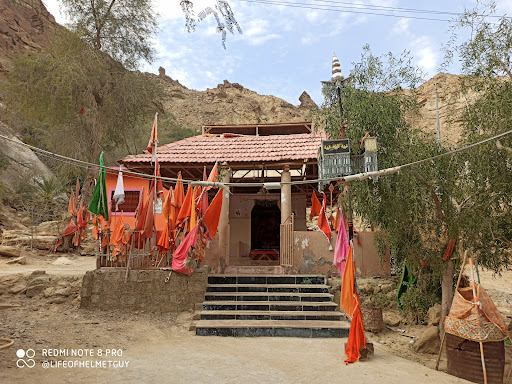
The shrine is in a small natural cave. There is a low mud altar. There is no man-made image of the goddess. A small divine form of Hinglaj Mata is worshipped. The stone is smeared with sindoor (vermilion), which possibly gives the location its Sanskrit name Hingula, which is the root of the present-day name Hinglaj.
LOCATION-
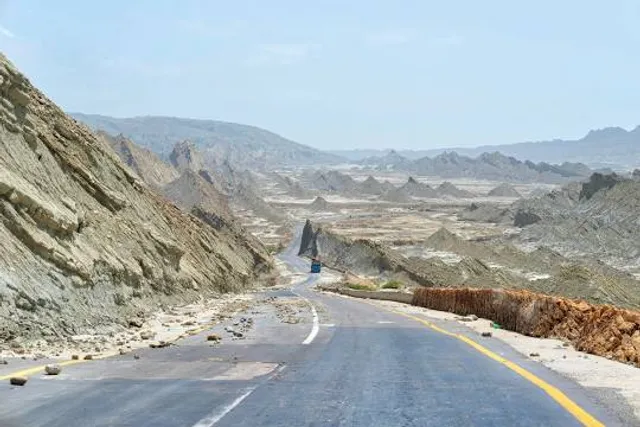
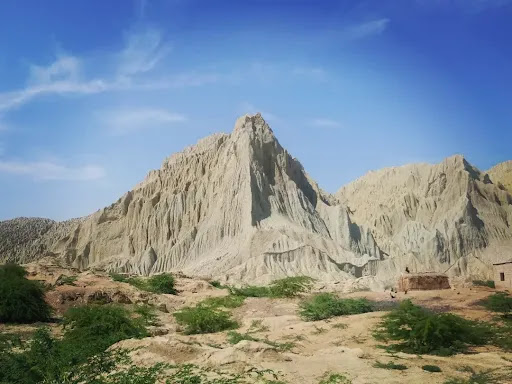
The cave temple of Hinglaj Mata is in a narrow gorge in the remote, hilly area of Lyari Tehsil in Balochistan. It is 250 kilometres (160 mi) to the northwest, 12 miles (19 km) inland from the Arabian Sea and 80 miles (130 km) to the west of the mouth of the Indus. It is at the end of a range of Kirthar Mountains, in the Makran desert stretch, on the west bank of Hingol River. The area is under the Hingol National Park.
Other places of worship in and around Hinglaj are Ganesh Deva, Mata Kali, Gurugorakh Nath Dooni, Braham Kudh, Tir Kundh, Gurunanak Kharao, Ramjarokha Bethak, Aneel Kundh On Chorasi Mountain, Chandra Goop, Khaririver and Aghore Pooja.
SIGNIFICANT-
Hinglaj Mata is said to be very powerful deity who bestows good to all her devotees. While Hinglaj is her main temple, temples dedicated to her exist in neighbouring Indian states Gujarat and Rajasthan. The shrine is known as Hingula, Hingalaja, Hinglaja, and Hingulata in Hindu scriptures, particularly in Sanskrit. The goddess is known as Hinglaj Mata (the Mother Hinglaj), Hinglaj Devi (the Goddess Hinglaj), Hingula Devi (the red goddess or the Goddess of Hingula) and Kottari or Kotavi.
The chief legend of Hinglaj Mata relates to the creation of the Shakti Peethas. Sati, daughter of Prajapati Daksha, was married to the god Shiva against his wishes. Daksha organized a great yajna but did not invite Sati and Shiva. Uninvited, Sati reached the yajna-site, where Daksha ignored Sati and vilified Shiva. Unable to withstand this insult, Sati immolated herself activating her chakras, (energy generated through her anger).
Sati died, but her corpse did not burn. Shiva (as Virabhadra) slew Daksha for being responsible for Sati's death and forgave him, resurrecting him. The wild, grief-stricken Shiva wandered the universe with Sati's corpse. Finally, the god Vishnu dismembered the body of Sati into 108 parts, from which 52 fell on earth and others on other planets in the universe which became Shakti Peethas, temple to a form of the Goddess.
Shiva is also worshiped at each Shakti Pitha in the form of Bhairava, the male counterpart or guardian of the presiding goddess of the Pitha. The head of Sati is believed to have...
Read more
 Learn more insights from Wanderboat AI.