HTML SitemapExplore
logo
Find Things to DoFind The Best Restaurants

Bhambhore Museum — Attraction in Mirpur Sakro Taluka

Name
Bhambhore Museum
Description
Archaeological Museum Banbhore or Banbhore Museum is an archaeological museum located in Banbhore, Sindh, Pakistan. The museum was established by the Department of Archaeology and Museums, Government of Pakistan, on 21 August 1960. The museum was inaugurated on 14 May 1967.
Nearby attractions
Nearby restaurants
Nearby hotels
Related posts
Keywords
Bhambhore Museum tourism.Bhambhore Museum hotels.Bhambhore Museum bed and breakfast. flights to Bhambhore Museum.Bhambhore Museum attractions.Bhambhore Museum restaurants.Bhambhore Museum travel.Bhambhore Museum travel guide.Bhambhore Museum travel blog.Bhambhore Museum pictures.Bhambhore Museum photos.Bhambhore Museum travel tips.Bhambhore Museum maps.Bhambhore Museum things to do.
Bhambhore Museum things to do, attractions, restaurants, events info and trip planning
Bhambhore Museum
PakistanSindhMirpur Sakro TalukaBhambhore Museum

Basic Info

Bhambhore Museum

QG4F+29P, Banbhore, Dhabeji Town, Mirpur Bathoro, 73200, Pakistan
4.4(272)
Open 24 hours
Save
spot

Ratings & Description

Info

Archaeological Museum Banbhore or Banbhore Museum is an archaeological museum located in Banbhore, Sindh, Pakistan. The museum was established by the Department of Archaeology and Museums, Government of Pakistan, on 21 August 1960. The museum was inaugurated on 14 May 1967.

Cultural
Family friendly
attractions: , restaurants:
logoLearn more insights from Wanderboat AI.
Phone
+92 21 99206081

Plan your stay

hotel
Pet-friendly Hotels in Mirpur Sakro Taluka
Find a cozy hotel nearby and make it a full experience.
hotel
Affordable Hotels in Mirpur Sakro Taluka
Find a cozy hotel nearby and make it a full experience.
hotel
The Coolest Hotels You Haven't Heard Of (Yet)
Find a cozy hotel nearby and make it a full experience.
hotel
Trending Stays Worth the Hype in Mirpur Sakro Taluka
Find a cozy hotel nearby and make it a full experience.

Reviews

Get the Appoverlay
Get the AppOne tap to find yournext favorite spots!
Wanderboat LogoWanderboat

Your everyday Al companion for getaway ideas

CompanyAbout Us
InformationAI Trip PlannerSitemap
SocialXInstagramTiktokLinkedin
LegalTerms of ServicePrivacy Policy

Get the app

© 2025 Wanderboat. All rights reserved.
logo

Reviews of Bhambhore Museum

4.4
(272)
avatar
5.0
6y

Bhambhore is a city dating to the 1st century BCE. It dates back to the Scytho-Parthian era and was later controlled by Muslims from the 8th to the 13th century, after which it was abandoned. Remains of one of the earliest known mosques in the region dating back to 727 AD are still preserved in the city. In 2004, Department of Archaeology and Museums Pakistan submitted the site for UNESCO World Heritage Sites.

The city of Bhambhore dates from the 1st century BC to the 13th century AD. Archaeological records reveal remnants of three distinct periods on the site: Scytho-Parthian (1st century BC to 2nd century AD), Hindu-Buddhist (2nd century AD to 8th century AD), and early Islamic (8th century AD to 13th century AD). The city was gradually deserted after the 13th century due to change in the course of the Indus.

Some archaeologist and historians suggest that Bhambhore is the historical city of Debal, which the Arab general Muhammad bin Qasim conquered in 711–712 after defeating Raja Dahir, the last Hindu ruler of Sindh. However, this identification has not yet been confirmed, though numerous research and excavation works have been carried out to link the two cities. Preliminary excavations in the area were first done by Ramesh Chandra Majumdar in 1928 and later by Leslie Alcock in 1951. Pakistani archaeologist Dr. F.A. Khan conducted extensive studies and excavations in the site from 1958 to 1965. In March 2012, the Culture Department of Government of Sindh organised the first International Conference on Bhanbhore, where different experts and archaeologists presented their research on the site.

Bhanbhore may also have been known as Barbari or Barbaricon (Βαρβαρικόν) to the Greeks and through the centuries, but it has not yet been proven that these historical cities are the same.

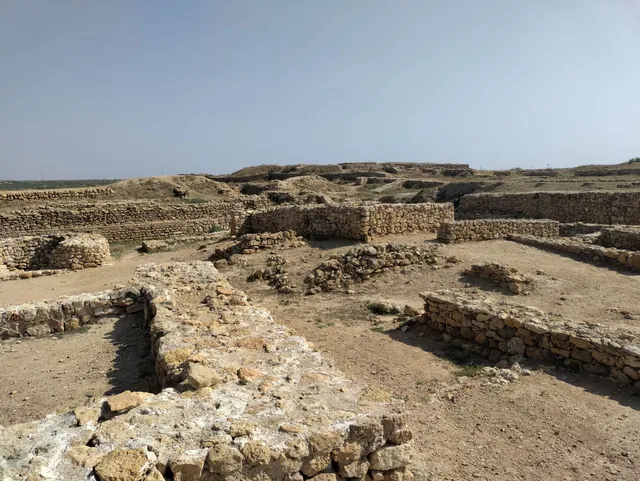
Archaeological findings show that the city consisted of an enclosed area surrounded by a stone and mud wall. The citadel was divided into eastern and western sections by a fortified stone wall in the center. The eastern part contains ruins of a mosque with an inscription dating to 727 AD, sixteen years after the conquest of Sindh, indicating the best-preserved example of the earliest mosques in the region. The remains of the mosque were discovered in 1960. Remains of houses, streets, and other buildings have been found both within and outside the citadel. Contemporary stone buildings from the three periods are also uncovered in the area including a palatial stone building with semi-circular shape, a Shiva temple from the Hindu period, and a mosque. Three gateways to the citadel were also uncovered during excavations.

Bhambhore was a medieval port city deriving its wealth from imported ceramic and metal goods, an industrial sector, and trade. The city was strategically located at the mouth of the Indus, linking it with rest of the Indo-Scythians and Indo-Parthians and international traders in the Indian Ocean. Archaeological findings show a half-submerged anchorage structure with solid stone foundation, which may have been used for berthing cargo boats. However, the port was abandoned when the Indus river shifted its position and the creek was silted.

The Port of Bhanbhore was submitted for induction in World Heritage Sites by the Department of Archaeology and Museums of Pakistan in...

   Read more
avatar
4.0
2y

The Bhambore Museum and Fort, located in Banbhore, Sindh, Pakistan, offer a captivating journey through history. Established on August 21, 1960, by the Department of Archaeology and Museums, Government of Pakistan, the museum has been a window into the past since its inauguration on May 14, 1967. Managed by the Culture Department of the Government of Sindh since May 2010, this site offers a rich cultural and historical experience.

Navigating to the museum is a breeze, with Google Maps providing a convenient and safe route. After your enriching visit, a return journey of around 10 kilometers awaits you from Cafe Imran. The entry fee, a nominal Rs. 100 per person, grants access to a world of archaeological wonders.

Banbhore's potential for improvement is acknowledged, and current efforts are evident through ongoing work at the site. Despite this, the site already boasts a remarkable collection of artifacts that tell the story of a bygone era. From significant tools to exquisite coins and intricate pottery, the museum houses treasures unearthed from the ancient city.

Delving into history, the city of Bhanbhore spans from the 1st century BC to the 13th century AD, offering a fascinating glimpse into three distinct periods: Scytho-Parthian (1st century BC to 2nd century AD), Buddhist (2nd century AD to 8th century AD), and early Islamic (8th century AD to 13th century AD).

One of the most notable features is the Jamia Masjid of Banbhor, believed to be South Asia's first mosque. Constructed in the 8th century AD after the conquest of Sindh by Arab warrior Muhammad Bin Qasim, this mosque stands as a testament to the rich historical tapestry of the region. Nestled within the ruins of the ancient city, the Jamia Masjid offers a serene and reflective space.

Tracing back further in time, Bhambore's history extends to the Scytho-Parthian era, well before the arrival of Muslims. Some historians identify it as Debal, the site where Arab General Muhammad Bin Qasim vanquished local ruler Raja Dahir in the seventh century, marking a significant turning point in the region's history.

The Archaeological Site of Bhanbhore, located around 60 kilometers southeast of Karachi on the Gharo Creek's northern bank, stands as a testament to the region's vibrant history. Situated around 40 miles east of Karachi along the highway to Hyderabad, the site offers a captivating journey through time.

In conclusion, the Bhambore Museum and Fort provide an immersive experience into the rich historical tapestry of Banbhore, spanning centuries and civilizations. With its ongoing efforts for improvement and a treasure trove of artifacts, this site is a must-visit for anyone seeking to connect with the roots of Sindh's...

   Read more

avatar
5.0
1y

Bhambore, also known as Bhambor, holds great historical significance as an ancient archaeological site in Sindh, Pakistan. It is located approximately 64 kilometers east of Karachi and is accessible by road, making it a notable cultural destination. The Bhambore Museum complements this rich historical backdrop, showcasing artifacts and insights into the area's diverse past.

The Bhambore Museum serves as a pivotal resource for understanding the region's history, particularly its role in the development of early civilizations. Established near the ruins of the ancient city of Bhambore, the museum houses a compelling collection of artifacts dating back to different periods, providing visitors with a tangible connection to the area's historical depth.

The museum's exhibits feature relics from various epochs, including pottery, coins, sculptures, and tools. These artifacts illuminate the societal structures, religious practices, and artistic traditions of the people who inhabited Bhambore and its surrounding regions over the centuries. Visitors can marvel at the craftsmanship of ancient artisans and gain insights into the daily lives of these historical communities.

Moreover, the museum offers detailed descriptions and explanations alongside the artifacts, enriching visitors' understanding of each object's significance. This educational approach transforms the museum into more than a mere display of relics; it becomes a journey through time, inviting visitors to explore the complexities of Bhambore's past.

One of the standout attractions within the museum is its collection of ancient coins. These coins provide a glimpse into the economic systems and trading networks that once flourished in Bhambore and its environs. They bear witness to the city's role as a vibrant center of commerce and cultural exchange in antiquity.

Additionally, the museum's location amidst the atmospheric ruins of Bhambore enhances the overall experience. Visitors can explore the archaeological site and then delve deeper into the exhibited artifacts, fostering a holistic understanding of the area's historical and cultural legacy.

In summary, the Bhambore Museum encapsulates the essence of this ancient civilization, making it an essential destination for history enthusiasts and curious travelers alike. Through its well-curated displays and informative presentations, the museum preserves and celebrates the rich heritage of Bhambore, offering a captivating window into Pakistan's...

   Read more
Page 1 of 7
Previous
Next

Posts

Farid SiddiquiFarid Siddiqui
The Bhambore Museum and Fort, located in Banbhore, Sindh, Pakistan, offer a captivating journey through history. Established on August 21, 1960, by the Department of Archaeology and Museums, Government of Pakistan, the museum has been a window into the past since its inauguration on May 14, 1967. Managed by the Culture Department of the Government of Sindh since May 2010, this site offers a rich cultural and historical experience. Navigating to the museum is a breeze, with Google Maps providing a convenient and safe route. After your enriching visit, a return journey of around 10 kilometers awaits you from Cafe Imran. The entry fee, a nominal Rs. 100 per person, grants access to a world of archaeological wonders. Banbhore's potential for improvement is acknowledged, and current efforts are evident through ongoing work at the site. Despite this, the site already boasts a remarkable collection of artifacts that tell the story of a bygone era. From significant tools to exquisite coins and intricate pottery, the museum houses treasures unearthed from the ancient city. Delving into history, the city of Bhanbhore spans from the 1st century BC to the 13th century AD, offering a fascinating glimpse into three distinct periods: Scytho-Parthian (1st century BC to 2nd century AD), Buddhist (2nd century AD to 8th century AD), and early Islamic (8th century AD to 13th century AD). One of the most notable features is the Jamia Masjid of Banbhor, believed to be South Asia's first mosque. Constructed in the 8th century AD after the conquest of Sindh by Arab warrior Muhammad Bin Qasim, this mosque stands as a testament to the rich historical tapestry of the region. Nestled within the ruins of the ancient city, the Jamia Masjid offers a serene and reflective space. Tracing back further in time, Bhambore's history extends to the Scytho-Parthian era, well before the arrival of Muslims. Some historians identify it as Debal, the site where Arab General Muhammad Bin Qasim vanquished local ruler Raja Dahir in the seventh century, marking a significant turning point in the region's history. The Archaeological Site of Bhanbhore, located around 60 kilometers southeast of Karachi on the Gharo Creek's northern bank, stands as a testament to the region's vibrant history. Situated around 40 miles east of Karachi along the highway to Hyderabad, the site offers a captivating journey through time. In conclusion, the Bhambore Museum and Fort provide an immersive experience into the rich historical tapestry of Banbhore, spanning centuries and civilizations. With its ongoing efforts for improvement and a treasure trove of artifacts, this site is a must-visit for anyone seeking to connect with the roots of Sindh's cultural heritage.
Abdul NasirAbdul Nasir
Bhambore, also known as Bhambor, holds great historical significance as an ancient archaeological site in Sindh, Pakistan. It is located approximately 64 kilometers east of Karachi and is accessible by road, making it a notable cultural destination. The Bhambore Museum complements this rich historical backdrop, showcasing artifacts and insights into the area's diverse past. The Bhambore Museum serves as a pivotal resource for understanding the region's history, particularly its role in the development of early civilizations. Established near the ruins of the ancient city of Bhambore, the museum houses a compelling collection of artifacts dating back to different periods, providing visitors with a tangible connection to the area's historical depth. The museum's exhibits feature relics from various epochs, including pottery, coins, sculptures, and tools. These artifacts illuminate the societal structures, religious practices, and artistic traditions of the people who inhabited Bhambore and its surrounding regions over the centuries. Visitors can marvel at the craftsmanship of ancient artisans and gain insights into the daily lives of these historical communities. Moreover, the museum offers detailed descriptions and explanations alongside the artifacts, enriching visitors' understanding of each object's significance. This educational approach transforms the museum into more than a mere display of relics; it becomes a journey through time, inviting visitors to explore the complexities of Bhambore's past. One of the standout attractions within the museum is its collection of ancient coins. These coins provide a glimpse into the economic systems and trading networks that once flourished in Bhambore and its environs. They bear witness to the city's role as a vibrant center of commerce and cultural exchange in antiquity. Additionally, the museum's location amidst the atmospheric ruins of Bhambore enhances the overall experience. Visitors can explore the archaeological site and then delve deeper into the exhibited artifacts, fostering a holistic understanding of the area's historical and cultural legacy. In summary, the Bhambore Museum encapsulates the essence of this ancient civilization, making it an essential destination for history enthusiasts and curious travelers alike. Through its well-curated displays and informative presentations, the museum preserves and celebrates the rich heritage of Bhambore, offering a captivating window into Pakistan's storied past.
akif syedakif syed
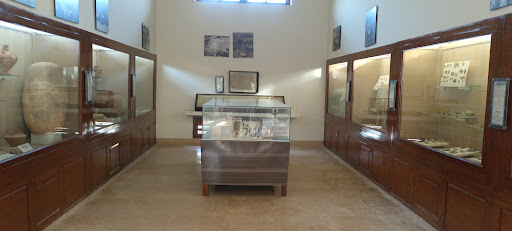
Although archaeological museums throughout Pakistan are pretty poor places - and not surprisingly as these operate without any official development funds (with 90% pr more funds going for salaries) - Bhambore must take the unenviable distinction of probably being the worse. Indeed with entry fee of about 12 US cents hardly anything is possible. The museum comprises one hall with about 10 display windows. The building was put up about 50 years ago and the only additions (to the main building) were two large plaques by an egoistic minister and officials who wanted their names to be part of history (in whatever way - negative or positive). The great innovation in the display windows is that these operate on natural light with a large vent for sunlight to lighten up the displays. A few terribly un-creative structures designed like typical government rest-rooms have been put up on the side-lawns - with the architect having no sense of place (like a facade made of stones that form the fronts of thousands of Karachi's elite homes). There was no water in the wash rooms - fortunately this was warned in advance or else I would have been left stranded. The upkeep of the main display room is pathetic - again not surprisingly as from personal experience I know that the government's actual expenditure of funds is about 30% (rest being pilfered and embezzled through corruption).
See more posts
See more posts
hotel
Find your stay

Pet-friendly Hotels in Mirpur Sakro Taluka

Find a cozy hotel nearby and make it a full experience.

The Bhambore Museum and Fort, located in Banbhore, Sindh, Pakistan, offer a captivating journey through history. Established on August 21, 1960, by the Department of Archaeology and Museums, Government of Pakistan, the museum has been a window into the past since its inauguration on May 14, 1967. Managed by the Culture Department of the Government of Sindh since May 2010, this site offers a rich cultural and historical experience. Navigating to the museum is a breeze, with Google Maps providing a convenient and safe route. After your enriching visit, a return journey of around 10 kilometers awaits you from Cafe Imran. The entry fee, a nominal Rs. 100 per person, grants access to a world of archaeological wonders. Banbhore's potential for improvement is acknowledged, and current efforts are evident through ongoing work at the site. Despite this, the site already boasts a remarkable collection of artifacts that tell the story of a bygone era. From significant tools to exquisite coins and intricate pottery, the museum houses treasures unearthed from the ancient city. Delving into history, the city of Bhanbhore spans from the 1st century BC to the 13th century AD, offering a fascinating glimpse into three distinct periods: Scytho-Parthian (1st century BC to 2nd century AD), Buddhist (2nd century AD to 8th century AD), and early Islamic (8th century AD to 13th century AD). One of the most notable features is the Jamia Masjid of Banbhor, believed to be South Asia's first mosque. Constructed in the 8th century AD after the conquest of Sindh by Arab warrior Muhammad Bin Qasim, this mosque stands as a testament to the rich historical tapestry of the region. Nestled within the ruins of the ancient city, the Jamia Masjid offers a serene and reflective space. Tracing back further in time, Bhambore's history extends to the Scytho-Parthian era, well before the arrival of Muslims. Some historians identify it as Debal, the site where Arab General Muhammad Bin Qasim vanquished local ruler Raja Dahir in the seventh century, marking a significant turning point in the region's history. The Archaeological Site of Bhanbhore, located around 60 kilometers southeast of Karachi on the Gharo Creek's northern bank, stands as a testament to the region's vibrant history. Situated around 40 miles east of Karachi along the highway to Hyderabad, the site offers a captivating journey through time. In conclusion, the Bhambore Museum and Fort provide an immersive experience into the rich historical tapestry of Banbhore, spanning centuries and civilizations. With its ongoing efforts for improvement and a treasure trove of artifacts, this site is a must-visit for anyone seeking to connect with the roots of Sindh's cultural heritage.
Farid Siddiqui

Farid Siddiqui

hotel
Find your stay

Affordable Hotels in Mirpur Sakro Taluka

Find a cozy hotel nearby and make it a full experience.

Get the Appoverlay
Get the AppOne tap to find yournext favorite spots!
Bhambore, also known as Bhambor, holds great historical significance as an ancient archaeological site in Sindh, Pakistan. It is located approximately 64 kilometers east of Karachi and is accessible by road, making it a notable cultural destination. The Bhambore Museum complements this rich historical backdrop, showcasing artifacts and insights into the area's diverse past. The Bhambore Museum serves as a pivotal resource for understanding the region's history, particularly its role in the development of early civilizations. Established near the ruins of the ancient city of Bhambore, the museum houses a compelling collection of artifacts dating back to different periods, providing visitors with a tangible connection to the area's historical depth. The museum's exhibits feature relics from various epochs, including pottery, coins, sculptures, and tools. These artifacts illuminate the societal structures, religious practices, and artistic traditions of the people who inhabited Bhambore and its surrounding regions over the centuries. Visitors can marvel at the craftsmanship of ancient artisans and gain insights into the daily lives of these historical communities. Moreover, the museum offers detailed descriptions and explanations alongside the artifacts, enriching visitors' understanding of each object's significance. This educational approach transforms the museum into more than a mere display of relics; it becomes a journey through time, inviting visitors to explore the complexities of Bhambore's past. One of the standout attractions within the museum is its collection of ancient coins. These coins provide a glimpse into the economic systems and trading networks that once flourished in Bhambore and its environs. They bear witness to the city's role as a vibrant center of commerce and cultural exchange in antiquity. Additionally, the museum's location amidst the atmospheric ruins of Bhambore enhances the overall experience. Visitors can explore the archaeological site and then delve deeper into the exhibited artifacts, fostering a holistic understanding of the area's historical and cultural legacy. In summary, the Bhambore Museum encapsulates the essence of this ancient civilization, making it an essential destination for history enthusiasts and curious travelers alike. Through its well-curated displays and informative presentations, the museum preserves and celebrates the rich heritage of Bhambore, offering a captivating window into Pakistan's storied past.
Abdul Nasir

Abdul Nasir

hotel
Find your stay

The Coolest Hotels You Haven't Heard Of (Yet)

Find a cozy hotel nearby and make it a full experience.

hotel
Find your stay

Trending Stays Worth the Hype in Mirpur Sakro Taluka

Find a cozy hotel nearby and make it a full experience.

Although archaeological museums throughout Pakistan are pretty poor places - and not surprisingly as these operate without any official development funds (with 90% pr more funds going for salaries) - Bhambore must take the unenviable distinction of probably being the worse. Indeed with entry fee of about 12 US cents hardly anything is possible. The museum comprises one hall with about 10 display windows. The building was put up about 50 years ago and the only additions (to the main building) were two large plaques by an egoistic minister and officials who wanted their names to be part of history (in whatever way - negative or positive). The great innovation in the display windows is that these operate on natural light with a large vent for sunlight to lighten up the displays. A few terribly un-creative structures designed like typical government rest-rooms have been put up on the side-lawns - with the architect having no sense of place (like a facade made of stones that form the fronts of thousands of Karachi's elite homes). There was no water in the wash rooms - fortunately this was warned in advance or else I would have been left stranded. The upkeep of the main display room is pathetic - again not surprisingly as from personal experience I know that the government's actual expenditure of funds is about 30% (rest being pilfered and embezzled through corruption).
akif syed

akif syed

See more posts
See more posts